How to Clean and Restore Your Toretto Necklace Cross
Learn how to clean, polish, and maintain your Toretto necklace. Expert tips for removing tarnish from silver crosses and deep-cleaning thick chains.


The Anatomy of a Toretto Necklace: Materials Matter
The Toretto necklace, immortalized by Dominic Toretto in the Fast & Furious franchise, is more than just a piece of cinematic memorabilia; it is a bold, heavy-duty statement of faith, family, and resilience. Whether you own a screen-accurate .925 sterling silver replica, a custom 14k white gold piece, or a durable 316L surgical stainless steel version, maintaining the oversized cross pendant and its thick chain requires a specialized approach. Chunky jewelry traps sebum, environmental pollutants, and tarnish much faster than delicate pieces due to its increased surface area and intricate link crevices.
Before applying any cleaning solution, you must identify your necklace's core material. According to the Gemological Institute of America (GIA), sterling silver (.925) is highly susceptible to sulfur-induced tarnish, requiring chemical or electrochemical intervention. Conversely, 316L stainless steel—common in high-quality, budget-friendly replicas—does not tarnish but will develop a dull, cloudy film from daily skin oils and environmental grime. White gold variants require entirely different care, as aggressive polishing can strip the rhodium plating from the high-friction edges of the cross. This guide focuses primarily on the most common iterations: heavy sterling silver and surgical stainless steel.
Deep Cleaning the Thick Chain: Tackling Cuban & Rope Links
The chain accompanying a Toretto cross is typically a 8mm to 12mm Cuban link or a heavy rope chain. These styles are notorious grime magnets. The overlapping, interlocking links create micro-crevices where dead skin cells, sebum, and soap scum accumulate, forming a hardened, dark paste that dulls the metal's reflectivity.
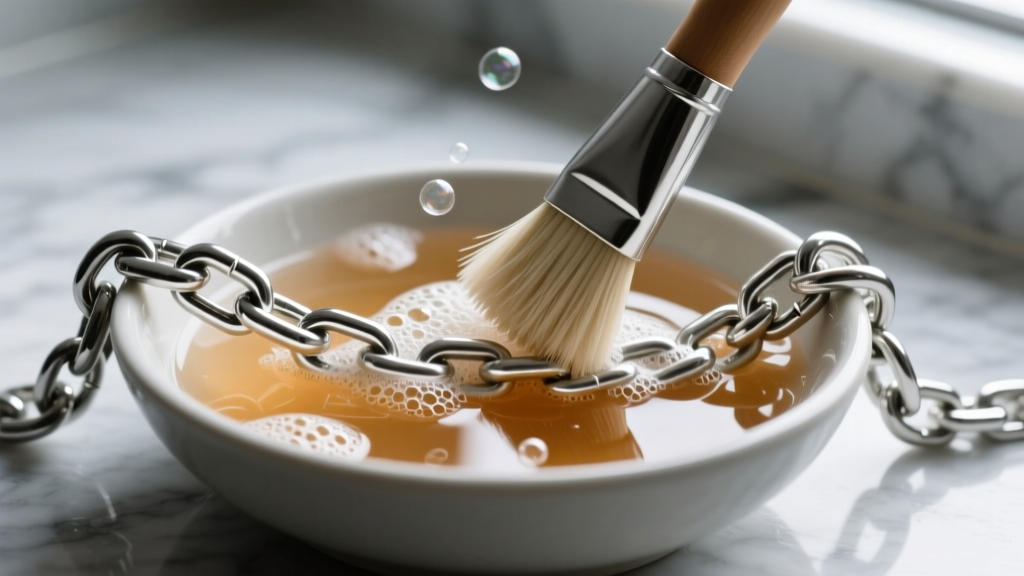
The Degreasing Soak and Agitation Method
To safely break down organic buildup without scratching the metal, follow this three-step deep cleaning protocol:
- Step 1: The Degreasing Bath. Fill a glass bowl with warm (not hot) water and add three drops of a high-quality grease-cutting dish soap, such as Dawn. Submerge the chain and let it soak for 15 to 20 minutes. This softens the keratin and lipid bonds trapping the dirt.
- Step 2: Micro-Crevices Agitation. Using an extra-soft baby toothbrush, gently scrub the chain in a circular motion. Pay special attention to the underside of the links where skin contact is highest. Never use a medium or hard-bristle brush, as these will leave micro-scratches on polished steel and silver surfaces.
- Step 3: The Rinse and Dry. Rinse thoroughly under lukewarm running water. To prevent water spots, pat dry with a lint-free microfiber cloth. For the deep crevices of a Cuban link, use a can of compressed air to blow out trapped moisture, preventing hidden oxidation.
Restoring the Cross Pendant: Tarnish vs. Patina
The Toretto cross pendant features flat, broad surfaces and deeply recessed engravings. Over time, sterling silver crosses develop silver sulfide—a blackish layer caused by exposure to hydrogen sulfide in the air. However, many high-end replicas feature intentional oxidation (antiquing) in the recessed grooves to make the engravings pop. Your cleaning method must strip the tarnish from the high points while preserving the dark patina in the grooves.
The Electrochemical Bath (For Solid Sterling Silver)
For heavily tarnished silver crosses that do not have intentional antiquing, the aluminum foil and baking soda method is the gold standard. This process uses an ion exchange reaction to convert silver sulfide back into pure silver without removing any base metal.
- Line a glass baking dish with heavy-duty aluminum foil, shiny side up.
- Place the silver cross pendant flat on the foil, ensuring direct contact between the silver and the aluminum.
- Boil a kettle of water and carefully pour it into the dish until the pendant is fully submerged.
- Immediately add 2 tablespoons of baking soda per cup of water. The solution will fizz and release a faint sulfur (rotten egg) odor as the tarnish transfers to the foil.
- After 5 minutes, remove the pendant with wooden tongs, rinse with distilled water, and buff dry.
Expert Warning: Never use the electrochemical bath on a cross with intentional blackened recesses, gemstones, or epoxy-filled enamels. The chemical reaction will strip the dark antiquing and loosen adhesives. For antiqued pieces, rely solely on targeted manual polishing.
Polishing Intricate Engravings Without Stripping Detail
For routine maintenance and antiqued crosses, use a jeweler's rouge-impregnated cloth, such as the industry-standard Sunshine Polishing Cloth. These cloths contain micro-abrasives that gently remove surface oxidation. Fold the cloth and use the edge to glide over the raised, flat surfaces of the cross. Avoid jamming the cloth into the deep grooves; if tarnish builds up in the engravings, use a cotton swab lightly dipped in isopropyl alcohol to lift the dirt without abrading the dark patina.

The 2026 Maintenance & Storage Framework
Proper storage is just as critical as active cleaning. Tossing a heavy Toretto necklace into a velvet-lined box with other jewelry guarantees deep scratches and accelerated tarnishing due to trapped humidity. Below is a structured maintenance framework tailored to your specific material.
| Material Type | Cleaning Frequency | Polishing Method | Optimal Storage Environment |
|---|---|---|---|
| .925 Sterling Silver | Every 3-4 weeks | Sunshine Cloth / Electrochemical Bath | Airtight Ziploc bag with anti-tarnish silica gel packets and a piece of chalk. |
| 316L Stainless Steel | Every 2 weeks | Mild dish soap soak & microfiber buff | Individual soft flannel pouch to prevent dust abrasion; no airtight seal required. |
| 14k White Gold | Every 6 months | Professional jeweler ultrasonic & rhodium dip | Original branded box, kept away from direct sunlight and high humidity zones. |
As noted by The Royal Mint, controlling the micro-climate around your silver is the most effective way to halt the sulfurization process before it begins. Anti-tarnish strips (such as 3M brand) absorb airborne sulfur compounds and should be replaced every six months.
Critical Mistakes That Destroy Chunky Silver
When dealing with heavy, masculine jewelry, many owners mistakenly believe that harsher chemicals and more aggressive scrubbing yield better results. This is a fast track to ruining your Toretto necklace. Avoid these common pitfalls at all costs:
- The Toothpaste Myth: Toothpaste contains hydrated silica and calcium carbonate, which are far too abrasive for precious metals. Scrubbing a silver cross with toothpaste will leave a web of permanent micro-scratches, turning a mirror finish into a dull, matte gray.
- Ultrasonic Cleaners on Antiqued Silver: While ultrasonic waves are excellent for shaking dirt out of diamond settings, the high-frequency vibrations will literally shake the intentional black oxidation right out of your cross's engraved grooves, leaving it looking flat and washed out.
- Paper Towels and Tissues: Never dry your necklace with paper products. Wood pulp fibers contain microscopic splinters that act like sandpaper on polished silver and steel, creating swirl marks over time.
- Swimming and Hot Tubs: Chlorine is highly reactive with the copper alloys in sterling silver, causing rapid, severe blackening that often requires professional buffing to remove. Always remove your chain before entering a pool.
By understanding the specific metallurgy of your Toretto necklace and adopting a disciplined, chemistry-based cleaning routine, you ensure that the piece remains as bold and reflective as the day you first clasped it around your neck. Family, faith, and flawless metal—maintain all three with precision.


