How to Clean and Restore Your Favorite WHBM Necklace
Learn how to safely clean, store, and restore your WHBM necklace. Expert tips on protecting fashion jewelry plating, rhinestones, and enamel details.

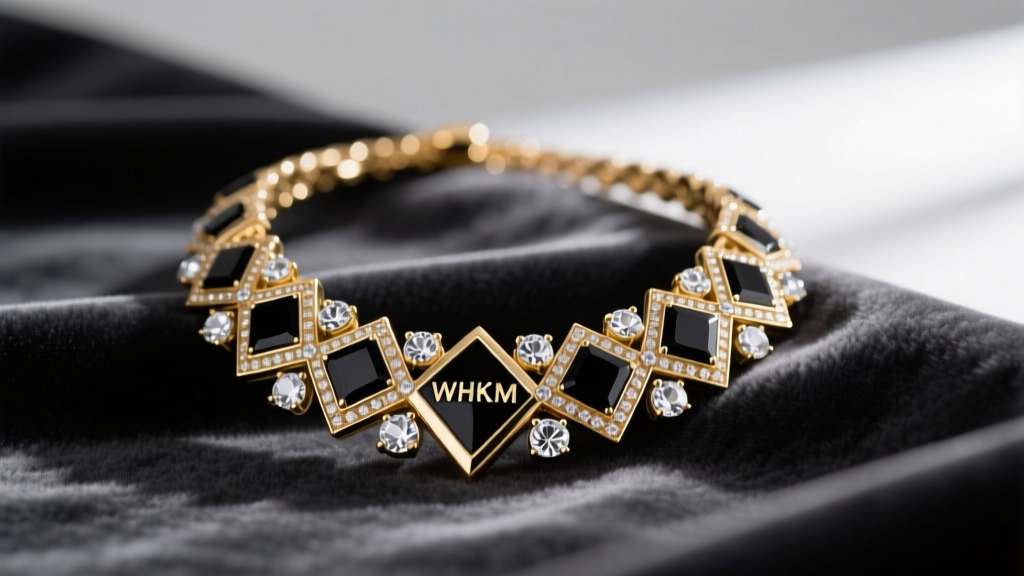
The Anatomy of a WHBM Necklace: Why Standard Cleaning Fails
White House Black Market (WHBM) necklaces are celebrated for their bold, trend-forward designs and intricate mixed-media aesthetics. However, caring for a WHBM necklace requires a fundamentally different approach than caring for fine jewelry. To properly maintain these pieces, you must first understand their construction. Most WHBM necklaces are crafted from base metals like brass or zinc alloys (zamak), which are then 'flash plated' with a microscopically thin layer of gold, silver, or rhodium.
Flash plating typically measures between 0.1 and 0.3 microns thick. By contrast, high-quality vermeil requires at least 2.5 microns. This ultra-thin plating means that standard silver dips, harsh chemical polishes, and ultrasonic cleaners will strip the finish entirely, exposing the reactive base metal beneath. Furthermore, WHBM frequently incorporates glass rhinestones, faux pearls, and enamel work secured with heat-sensitive epoxy adhesives. Submerging these pieces in water or exposing them to high heat will dissolve the glue, causing stones to loosen and fall out. According to the Gemological Institute of America (GIA), understanding the specific material composition of your jewelry is the most critical step in preventing irreversible damage during cleaning.
The 3-Step Dry Cleaning Method for Everyday Maintenance
Because moisture is the primary enemy of flash-plated fashion jewelry, dry cleaning should be your default maintenance routine. Performing this after every few wears prevents the buildup of sebum, dead skin cells, and cosmetic residues that accelerate oxidation.
- Step 1: The Horsehair Brush. Use a clean, soft-bristled horsehair detailing brush to gently sweep out crevices, chain links, and rhinestone settings. Horsehair is naturally anti-static and soft enough not to scratch the 0.2-micron plating or dull the facets of glass crystals.
- Step 2: Untreated Microfiber Wipe. Take a 300 GSM (grams per square meter) untreated microfiber cloth and gently buff the flat surfaces of the metal. Never use treated polishing cloths (like Sunshine cloths), as they contain micro-abrasives designed to remove tarnish by literally sanding away the top layer of metal—which will instantly strip flash plating.
- Step 3: Clasp and Jump Ring Focus. Pay special attention to the lobster clasp and jump rings. These high-friction areas accumulate the most oils and are usually the first spots to show signs of brass oxidation.
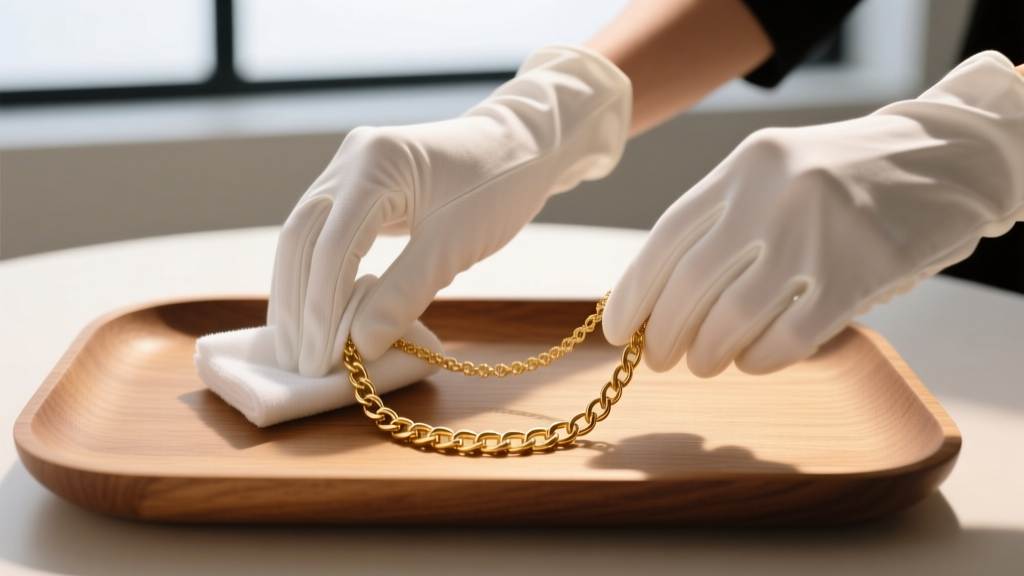
Deep Cleaning: Safely Removing Oils and Tarnish
When dry cleaning is no longer sufficient to remove stubborn lotion buildup or perfume residue, you must use a controlled wet-cleaning technique. Tap water contains chlorine and dissolved minerals that can cause micro-spotting on enamel and accelerate base-metal corrosion if trapped in microscopic pores.
What You Need
- Distilled water (strictly no tap or filtered water)
- pH-neutral surfactant (e.g., original blue Dawn dish soap)
- Lint-free cotton swabs
- Compressed air canister or a hairdryer with a 'cool' setting
The Distilled Water Technique
Mix three drops of the pH-neutral surfactant into a half-cup of distilled water. Dip a lint-free cotton swab into the solution and squeeze it out until it is merely damp, not dripping. Gently roll the swab over the metal surfaces and around the bases of the rhinestones. Avoid rubbing the enamel directly, as friction combined with moisture can cause microscopic crazing in the glaze. Once the grime is lifted, use a second swab dampened only with pure distilled water to rinse the soap residue. Finally, immediately blast the piece with compressed air to force water out of the chain links and stone settings. As noted in comprehensive care guides by Harper's Bazaar, avoiding prolonged moisture exposure is the golden rule for preserving costume and fashion jewelry finishes.
Warning: Never use ultrasonic cleaners or steamers on a WHBM necklace. The high-frequency vibrations will shatter glass stones and shatter enamel, while the heat will melt the UV-cured resins and epoxies holding the piece together.
Troubleshooting Common WHBM Necklace Failures
Even with meticulous care, fashion jewelry is subject to environmental wear and chemical reactions. Below is a diagnostic framework for addressing the most common issues encountered with plated brass and mixed-media necklaces.
| Issue | Root Cause | Actionable Fix |
|---|---|---|
| Green discoloration on skin | Copper in the brass base metal reacting with acidic sweat, lotions, or perfumes. | Wipe the back of the pendant and clasp with rubbing alcohol to remove oils, then apply a thin coat of clear, non-yellowing nail polish or a specialized jewelry shield spray to create a barrier. |
| Cloudy or dull rhinestones | Hairspray, perfume, or body oil buildup on the glass facets, blocking light refraction. | Dampen a cotton swab with 90% isopropyl alcohol and gently swipe the top of the stone. Avoid the base where the glue sits, as alcohol can degrade certain adhesives over time. |
| Flaking or peeling metal finish | Moisture trapped beneath the plating during manufacturing, or severe friction wear exposing the zamak core. | This cannot be reversed at home. The piece requires professional polishing to remove the remaining plating before it can be re-plated. |
| Stiff or stuck lobster clasp | Sebum and dust compacted inside the spring mechanism. | Use a wooden toothpick to gently dislodge debris. Apply a microscopic drop of synthetic watch oil to the hinge. Never use WD-40, which attracts more dust and degrades finishes. |
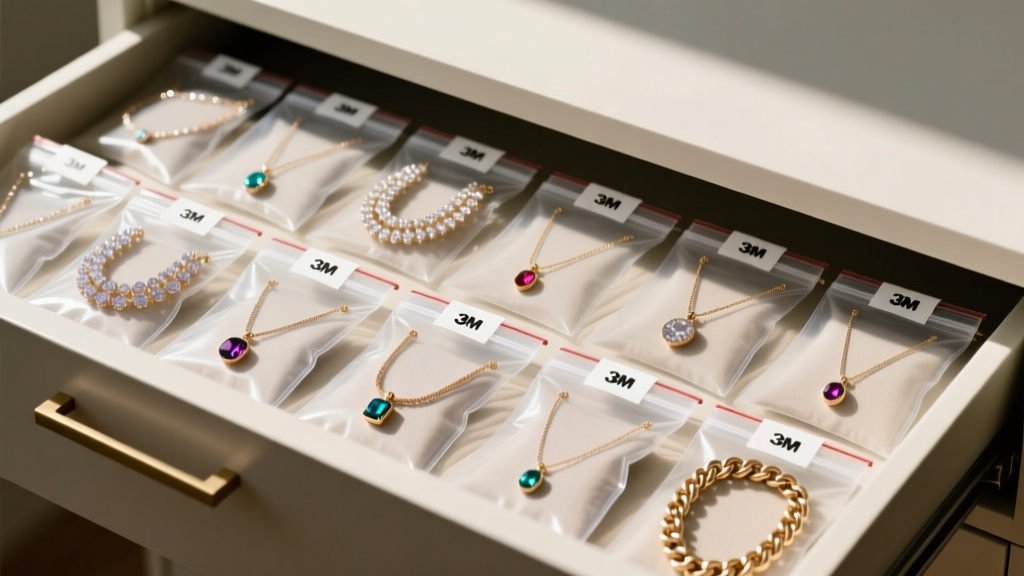
Long-Term Storage: Preventing Plating Oxidation
How you store your WHBM necklace when it is not being worn dictates its lifespan. The primary catalyst for tarnish is sulfur in the air, which reacts with the copper and silver alloys to form silver sulfide or copper sulfide. Furthermore, humidity accelerates this chemical reaction exponentially.
To create an optimal storage environment, maintain a relative humidity (RH) level below 40% in your jewelry storage area. Store each necklace individually in a polyethylene zip bag. It is critical to avoid polyvinyl chloride (PVC) plastics, as PVC off-gasses sulfur compounds and acidic plasticizers that will aggressively tarnish and pit plated metals. Inside each polyethylene bag, include a small packet of color-changing silica gel beads to absorb ambient moisture, alongside a 3M Anti-Tarnish strip. These strips contain copper particles that act as a sacrificial anode, absorbing sulfur gases before they can reach your necklace. Always lay statement necklaces flat; hanging heavy mixed-media pieces can stretch the chain links and weaken the soldered jump rings over time.
When to Retire vs. Restore: Professional Re-Plating
Eventually, the flash plating on a heavily worn WHBM necklace will wear through to the base metal, particularly at high-contact areas like the clasp and the center of the pendant. When this happens, you must weigh the sentimental value of the piece against the cost of restoration.
Professional electroplating services can strip the remaining finish, polish the brass core, and apply a heavy micron layer of 14k gold or rhodium. However, this process typically costs between $75 and $150. Given that most WHBM necklaces retail between $40 and $80, re-plating is rarely economically viable unless the piece holds significant sentimental value or features a discontinued, highly sought-after design. If you choose to restore it, seek out a specialized fashion jewelry electroplater rather than a traditional fine jeweler, as the latter may not have the specific chemical baths required to properly prep zamak or zinc-alloy cores for new plating adhesion.


