How to Clean and Maintain Your Silicone Chewy Necklace Safely
Learn expert cleaning, maintenance, and safety protocols for your silicone chewy necklace. Discover Shore A hardness, sterilization, and clasp care.

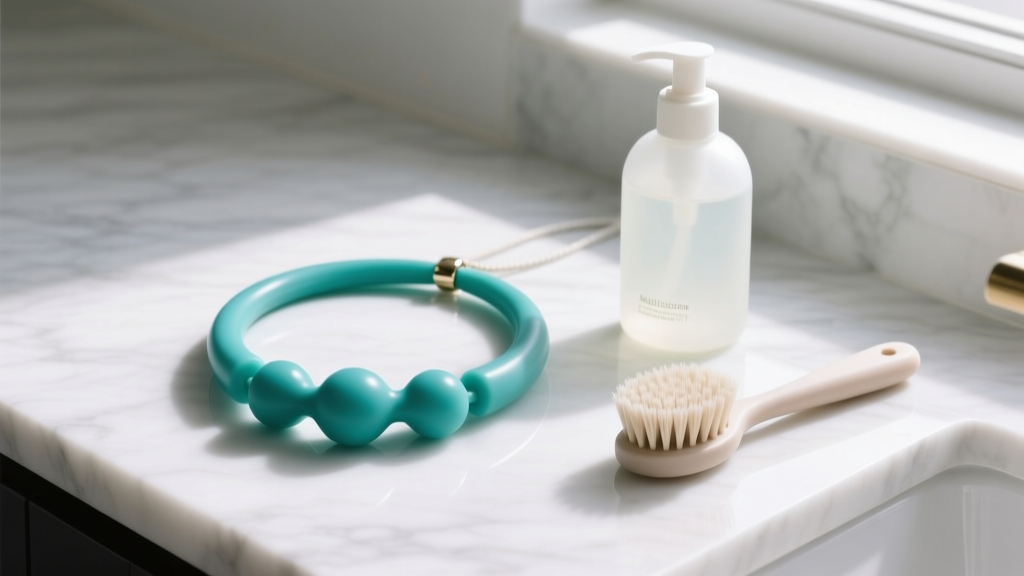
The Evolution of the Chewy Necklace in Modern Jewelry
Once relegated strictly to the realm of infant teething toys, the chewy necklace has undergone a massive design and functional renaissance by 2026. Today, sensory jewelry—often referred to as 'chewelry'—is a staple for neurodivergent individuals, including those with ADHD or Autism Spectrum Disorder (ASD), who utilize oral sensory input for self-regulation and focus. Modern chewy necklaces are no longer just functional tools; they are crafted with sophisticated geometric pendants, matte finishes, and sleek hardware that seamlessly integrate into everyday adult fashion. However, because these pieces are subjected to repetitive biting, chewing, and constant oral contact, their care and maintenance require a much more rigorous protocol than standard metal or gemstone necklaces. Understanding the material science, sterilization techniques, and hardware safety limits is essential for preserving both the aesthetic integrity and the biological safety of your chewy necklace.
Material Science: Platinum-Cured Silicone vs. Alternatives
The gold standard for any high-quality chewy necklace is 100% platinum-cured, food-grade silicone. Unlike tin-cured silicones or cheaper thermoplastic elastomers (TPE), platinum-cured silicone undergoes an addition-curing process that produces zero volatile organic compounds (VOCs) or toxic byproducts. This makes it entirely biocompatible and compliant with stringent FDA regulations for food-contact surfaces, specifically FDA 21 CFR 177.2600. Platinum-cured silicone is non-porous, meaning it will not harbor bacteria, mold, or yeast within its microscopic structure, provided the surface remains unbroken. Furthermore, it is highly resistant to thermal degradation and UV radiation, making it uniquely suited for aggressive sterilization methods that would melt or warp inferior plastics. When shopping for or maintaining a chewy necklace, always verify that the manufacturer explicitly states 'platinum-cured' or 'medical-grade' silicone, as standard craft silicones can degrade into a sticky, toxic sludge when exposed to repeated oral enzymes and high-heat cleaning.
Understanding Shore A Hardness for Sensory Needs
Maintenance and wear-and-tear are directly correlated to the Shore A hardness scale of the silicone used in your pendant. The Shore A scale measures the firmness of elastomeric materials. Chewy necklaces typically fall into three categories:
- Soft (20A - 30A): Similar to a soft gummy bear. Best for light, passive chewers. These require the most frequent inspection, as aggressive biting can easily cause micro-tears.
- Medium (40A - 50A): The industry standard for most adult sensory necklaces. It offers a balance of satisfying resistance and durability against moderate chewing.
- Firm (60A - 70A): Highly dense and rigid, designed for aggressive chewers. While highly resistant to bite-throughs, firm pendants can transfer more kinetic shock to the neck cord and clasp hardware.
Comprehensive Cleaning and Sterilization Protocols
Because a chewy necklace is constantly exposed to saliva, oral bacteria, and environmental debris, a simple wipe-down is insufficient. According to guidelines from the American Academy of Pediatric Dentistry regarding oral sensory tools, regular sterilization is critical to prevent the transmission of pathogens. Below is a detailed breakdown of the safest and most effective cleaning methods for food-grade silicone pendants.
| Cleaning Method | Temperature / Parameters | Duration | Efficacy & Material Impact |
|---|---|---|---|
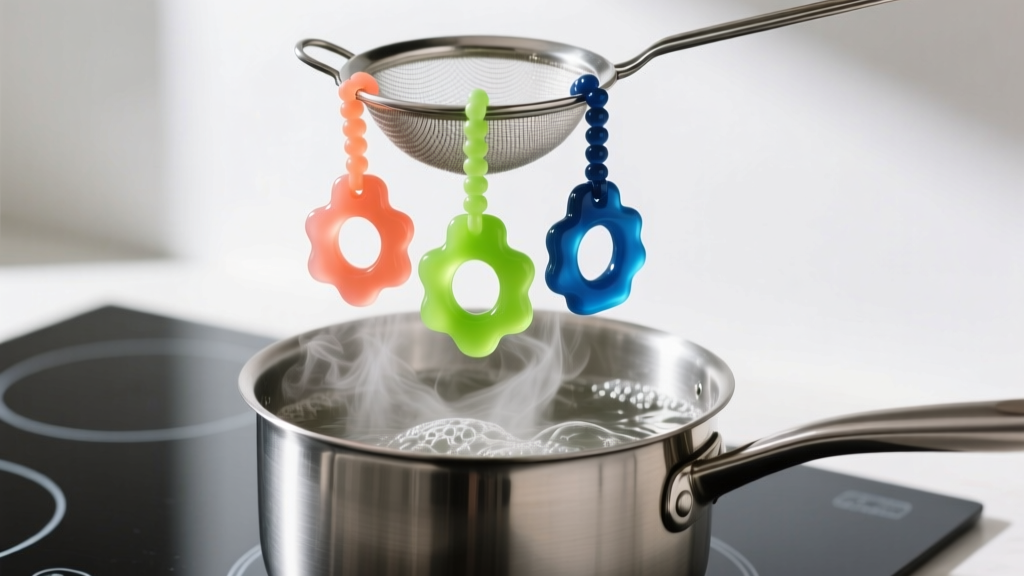
| Boiling Water | 100°C (212°F) | 5 - 7 Minutes | Highest efficacy. Fully sterilizes silicone. Must remove cord and clasp first to prevent melting or fraying. |
| Dishwasher (Top Rack) | 65°C - 75°C (150°F - 165°F) | Standard Cycle | High efficacy. Convenient, but harsh alkaline detergents may cause the silicone surface to 'cloud' or lose its matte finish over time. |
| Mild Soap & Warm Water | 30°C - 40°C (85°F - 105°F) | 2 - 3 Minutes | Moderate efficacy. Safe for daily use and gentle on matte finishes. Does not achieve full medical sterilization. |
| UV-C Sanitizer Box | Ambient / UV-C Light | 3 - 5 Minutes | High surface efficacy. Excellent for quick sanitizing without heat or moisture. Ensure the pendant is rotated to eliminate shadow spots. |
Pro-Tip for Matte Finishes: If your chewy necklace features a premium matte or velvet-touch finish, avoid prolonged exposure to harsh dishwasher detergents or abrasive scrubbing brushes. These can polish the microscopic texture of the silicone, turning it glossy and making it more prone to attracting lint and oils. Stick to boiling or UV-C sanitization for matte pendants.
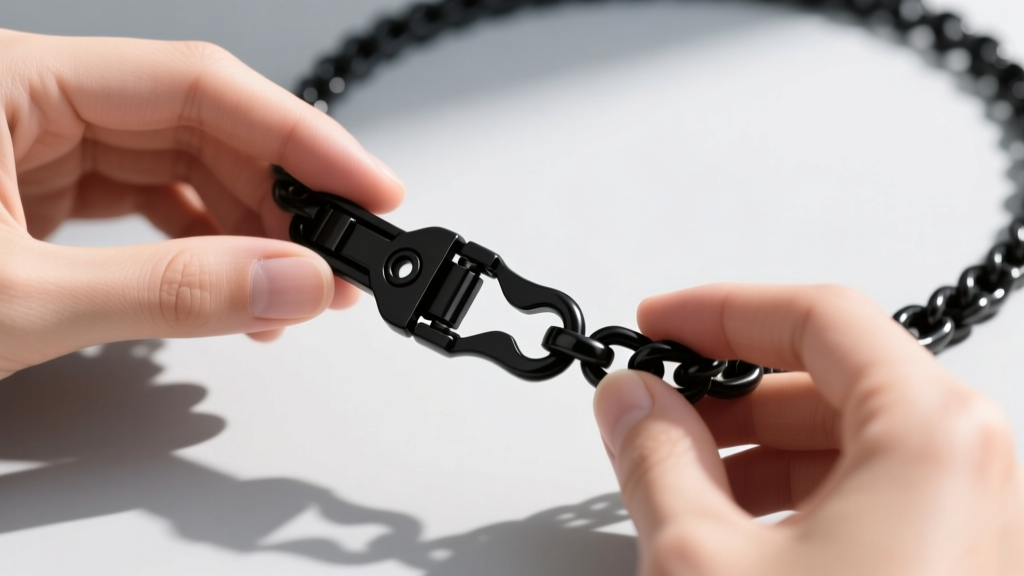
Cord Integrity and Breakaway Clasp Mechanics
The pendant is only one half of the chewy necklace equation; the suspension system is equally critical, particularly regarding safety. Reputable sensory jewelry brands utilize specialized breakaway clasps engineered to separate under 12 to 15 pounds of lateral tension. This safety mechanism is vital to prevent accidental strangulation if the necklace becomes snagged on furniture, door handles, or playground equipment. When cleaning your necklace, never submerge the plastic breakaway clasp in boiling water. The extreme heat can warp the internal tension springs or weaken the polymer housing, causing the clasp to either fail prematurely or, worse, lock up and fail to release during an emergency.
Cord Material Maintenance
The cord material dictates how you should care for the suspension system:
- Satin and Nylon Cords: These are highly durable and can be hand-washed in a bowl of warm water with a drop of antibacterial dish soap. Rinse thoroughly and hang to air dry. Avoid wringing, which can fray the internal fibers.
- Cotton and Hemp Cords: While aesthetically pleasing and eco-friendly, natural fibers are porous and can absorb saliva, sweat, and bacteria. These cords should be spot-cleaned or gently machine-washed in a mesh delicates bag. Ensure they are 100% dry before wearing to prevent mildew growth.
- Stainless Steel Chains: For those who prefer a metal chain, ensure it is crafted from 316L surgical steel to prevent rust and nickel allergies. These can be wiped down with a 70% isopropyl alcohol solution, which is safe for metal but should never be used on the silicone pendant itself, as alcohol can degrade the polymer chains over time.
The Retirement Checklist: When to Discard Your Chewelry
Even the highest quality platinum-cured silicone has a functional lifespan, especially when subjected to the sheer mechanical force of human jaw pressure, which can exceed 120 PSI in the molars. According to sensory processing specialists at the STAR Institute, using a degraded sensory tool can pose a severe choking hazard. You must perform a weekly 'pull-and-inspect' test on your chewy necklace. Retire the pendant immediately if you notice any of the following failure modes:
- Micro-Fissures: Stretch the silicone gently. If you see tiny white stress lines or microscopic tears in the bite zones, bacteria can colonize these crevices where cleaning tools cannot reach.
- Loss of Elasticity: If the silicone remains stretched out or deformed after being pulled, the polymer matrix has broken down.
- Surface Stickiness or 'Blooming': If the pendant feels tacky to the touch or develops a white, powdery residue (blooming), it indicates that the plasticizers or uncured compounds are leaching to the surface due to chemical degradation from saliva enzymes.
- Deep Bite Marks: Surface tooth indentations are normal, but if a canine or incisor has punctured the outer layer, the structural integrity is compromised, and a piece could easily tear off during the next use.
Expert Maintenance Tips for Longevity
To maximize the lifespan of your chewy necklace and keep it looking like a stylish accessory rather than a worn-out tool, implement a few proactive maintenance habits. First, rotate between two or three different pendants throughout the week. This gives the silicone time to 'rest' and return to its original molecular shape, preventing permanent deformation. Second, store your chewy necklace in a breathable cotton pouch or a dedicated hard-shell EVA case when not in use. Tossing it loose into a purse or backpack exposes the silicone to ink, makeup, and environmental dirt, which can stain the porous matte finish. Finally, keep your sensory jewelry away from direct, prolonged sunlight when storing it; while platinum-cured silicone is highly UV resistant, years of cumulative exposure can eventually lead to color fading and surface embrittlement. By treating your chewy necklace with the same care and respect as fine jewelry, you ensure it remains a safe, hygienic, and stylish tool for sensory regulation for years to come.


