How to Clean and Care for a Sterling Silver Hummingbird Necklace
Learn expert techniques to clean, polish, and store your sterling silver hummingbird necklace to prevent tarnish and protect intricate wing details.

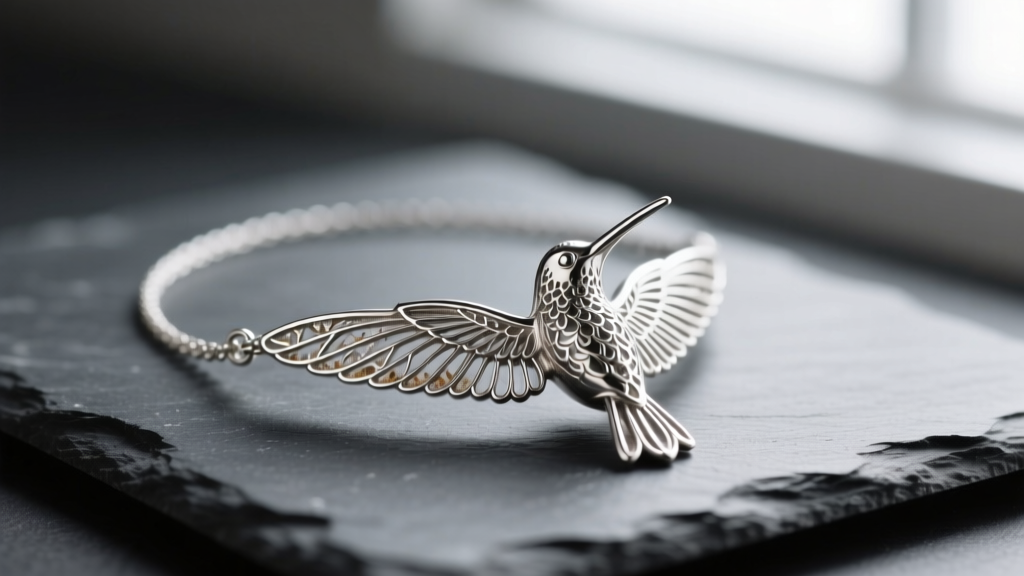
The Metallurgy of 925 Silver and Intricate Avian Designs
When you invest in a sterling silver hummingbird necklace, you are acquiring a piece of wearable art that captures the delicate, kinetic energy of nature. However, the very details that make avian jewelry so captivating—filigree wings, micro-engraved tail feathers, and tiny gemstone eyes—also make these pieces uniquely vulnerable to environmental damage. To properly care for your pendant, you must first understand the metallurgy of the material.
Sterling silver is an alloy composed of 92.5% pure silver and 7.5% base metals, almost always copper. Pure silver is too soft to hold the intricate structural integrity required for a hummingbird’s extended wings or slender beak. The copper provides necessary durability, but it is also the culprit behind tarnishing. When copper reacts with sulfur compounds and moisture in the air, it forms silver sulfide, a dark, dull layer that obscures the brilliant shine of your jewelry. According to the Gemological Institute of America (GIA), this chemical reaction is entirely natural but can be aggressively accelerated by everyday environmental factors.
The Daily Wear Protocol: Prevention is Key
The most effective way to maintain the luster of your sterling silver hummingbird necklace is to minimize its exposure to corrosive elements from the start. Jewelry professionals advocate for the 'last on, first off' rule. Your necklace should be the final item you put on when getting dressed and the first item you remove when you return home.
- Cosmetics and Fragrances: Hairspray, perfume, and body lotions contain alcohols and volatile organic compounds that can leave a cloudy film over detailed silver crevices, trapping moisture against the metal.
- Perspiration: Human sweat is slightly acidic and contains salts that accelerate the copper oxidation process. If you wear your necklace during a hot day or light exercise, wipe it down with a dry, lint-free microfiber cloth immediately upon removal.
- Household Chores: Never wear your pendant while washing dishes or cleaning. The sulfates and chlorides in standard household cleaners will cause rapid, severe tarnishing.
Step-by-Step Cleaning Guide for Detailed Pendants
When preventive measures are not enough and your hummingbird begins to lose its shine, it is time for a targeted cleaning. Because of the deep crevices in the feather detailing, standard polishing cloths are often insufficient on their own.
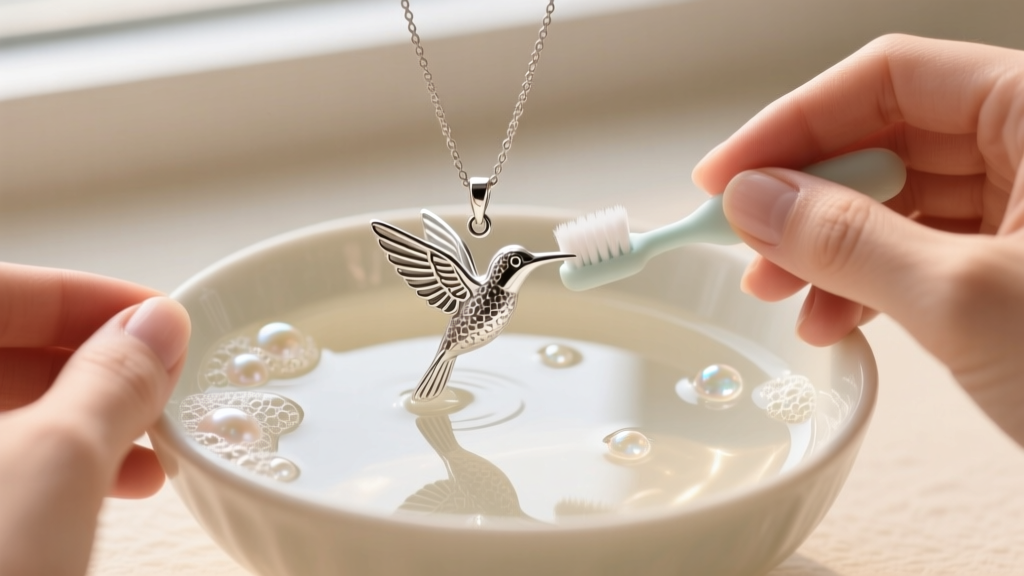
The Mild Soap Bath Method
For routine cleaning to remove body oils and surface dirt, a mild soap bath is the safest approach. This method is highly recommended by Jewelers of America for intricate pieces where abrasive polishing could wear down delicate edges.
- Fill a small glass bowl with warm (not hot) distilled water. Distilled water is preferred because tap water contains chlorine and trace minerals that can leave spots.
- Add three drops of phosphate-free, mild dish soap (such as original Dawn) and stir gently to create suds.
- Submerge your sterling silver hummingbird necklace and let it soak for exactly five to seven minutes. Do not exceed this time, as prolonged water exposure can weaken the chain links.
- Using an ultra-soft baby toothbrush, gently sweep the bristles along the grain of the engraved feathers and into the filigree wings. Apply zero downward pressure; let the bristles do the work.
- Rinse thoroughly under a gentle stream of lukewarm distilled water.
- Pat dry with a lint-free microfiber cloth, then lay the piece flat on a paper towel to air-dry completely before storing.
Tackling Stubborn Tarnish in Feather Crevices
If your hummingbird pendant has developed heavy, dark tarnish in the recessed areas of the wings, you might be tempted to use popular DIY electrochemical cleaning methods, such as the aluminum foil and baking soda bath. Proceed with extreme caution.
Expert Warning: Many artisan hummingbird pendants feature intentional 'oxidation' or 'antiquing'—a process where the jeweler deliberately darkens the recessed areas with liver of sulfur to make the raised silver feathers pop. The aluminum foil and baking soda bath will strip this intentional patina, leaving your pendant looking flat and washing out the intricate 3D detailing.
Instead, use a high-quality liquid silver polish applied with a cotton swab. Dab the polish only onto the heavily tarnished raised edges, avoiding the dark crevices. Buff immediately with a clean cotton pad. If your piece features enamel accents (such as a vibrant green or ruby-throated chest), never use liquid dips or harsh polishes, as they will permanently cloud and degrade the enamel finish.
Chemical Hazards: What to Keep Away From Your Necklace
Certain chemicals do not just tarnish silver; they cause irreversible structural damage. Understanding these hazards is critical for preserving the delicate chain and pendant bail of your necklace.
| Chemical Agent | Common Source | Effect on 925 Sterling Silver |
|---|---|---|
| Chlorine | Swimming pools, hot tubs, bleach | Causes severe pitting and permanent structural weakening of chain links and solder points. |
| Bromine | Spas, hot tubs, some fire retardants | Leads to rapid blackening and surface corrosion that is difficult to polish out. |
| Sulfur Compounds | Hot springs, rubber bands, wool | Accelerates silver sulfide formation, causing thick, crusty black tarnish. |
| Ammonia | Window cleaners, some jewelry dips | Can strip protective rhodium platings and damage porous gemstone inlays. |
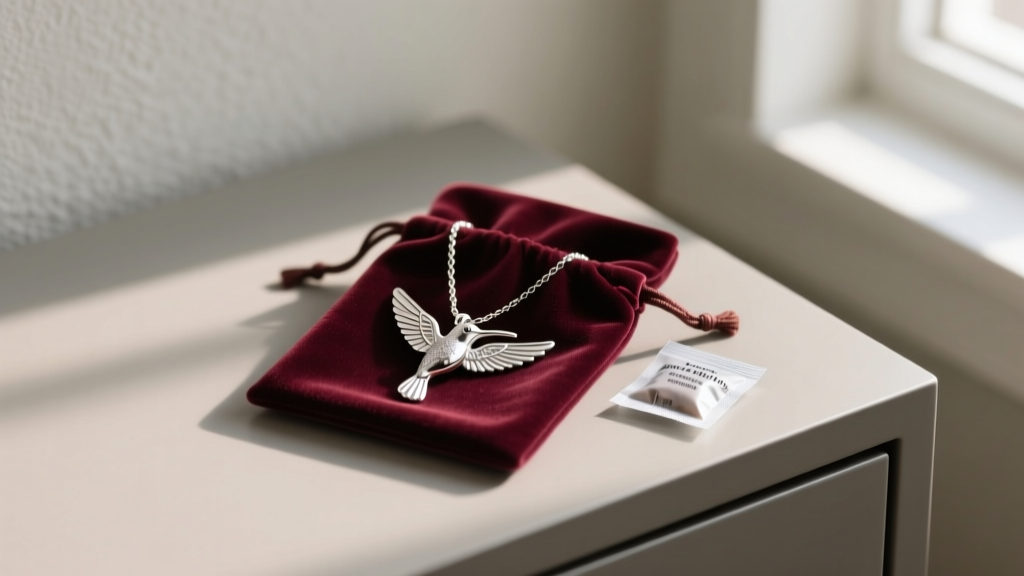
Proper Storage Techniques to Halt Oxidation
How you store your sterling silver hummingbird necklace when it is not being worn is just as important as how you clean it. The goal of proper storage is to create a micro-environment devoid of moisture and airborne sulfur.
- Airtight Containment: Store the necklace in a sealed polyethylene zip-top bag. Squeeze out as much air as possible before sealing. Avoid polyvinyl chloride (PVC) plastics, which emit gases that actively promote tarnishing.
- Anti-Tarnish Strips: Place a 3M anti-tarnish strip inside the bag. These strips absorb airborne sulfur and can protect your silver for up to six months before needing replacement.
- Moisture Control: Include a small silica gel desiccant packet in the storage bag to absorb ambient humidity.
- Location Matters: Never store your jewelry in a bathroom. The constant fluctuations in heat and humidity from showers create an ideal environment for rapid oxidation. Keep your necklace in a cool, dry bedroom drawer or closet.
When to Seek Professional Jeweler Maintenance
While at-home care is sufficient for routine maintenance, there are specific scenarios where your sterling silver hummingbird necklace requires professional attention. If the delicate chain becomes kinked or a jump ring near the clasp shows signs of pulling apart, do not attempt to bend it back into shape with household pliers. Silver work-hardens over time and can snap if manipulated incorrectly.
Additionally, if your pendant features micro-pave gemstones (such as tiny diamonds or sapphires set into the hummingbird's wings), take it to a professional jeweler for an ultrasonic cleaning and prong-tightening once a year. Ultrasonic cleaners can shake loose stones if the settings are already compromised, so a professional assessment is vital. By combining mindful daily wear, gentle cleaning techniques, and climate-controlled storage, your intricate avian pendant will retain its brilliant, lifelike sparkle for generations to come.