How to Clean, Repair, and Style an S Necklace Silver Chain
Learn how to properly clean, fix broken links, and style your S necklace silver chain. Expert tips on 925 sterling silver maintenance and layering.

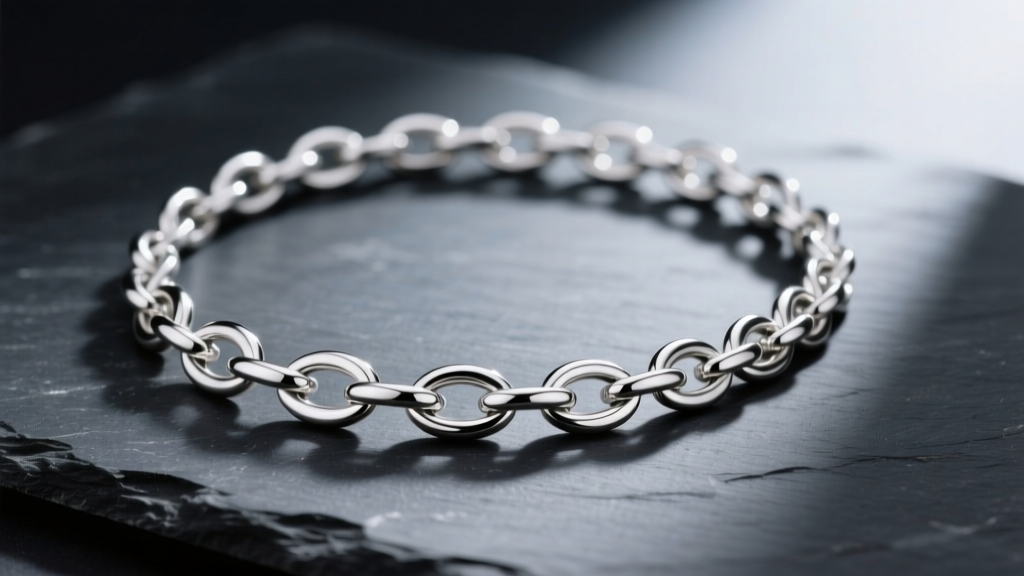
The S-link chain—characterized by its elegant, interlocking S-shaped hooks—is a masterclass in minimalist jewelry design. Unlike soldered cable or curb chains, the structural integrity of an S necklace silver chain relies entirely on wire tension, work-hardening, and precise metallurgical tolerances. While this creates a fluid, draped aesthetic that is highly coveted in 2026, it also means these pieces require specialized care. If you own an S-link or S-clasp silver necklace, understanding the mechanics of its construction is the first step toward lifelong preservation.
Understanding the Metallurgy of Your S Necklace Silver Chain
To properly care for your jewelry, you must first understand the alloy. Authentic S necklace silver pieces are almost exclusively crafted from 925 sterling silver. According to the Gemological Institute of America (GIA), sterling silver consists of 92.5% pure silver and 7.5% alloy metals, usually copper. Pure 999 fine silver is entirely unsuitable for S-links; it lacks the tensile strength required to hold the hook's shape and would stretch out under the mere weight of the chain.
The copper in 925 sterling silver provides the necessary rigidity, but it also introduces a vulnerability: oxidation. When the copper alloy reacts with sulfur compounds in the air, it forms silver sulfide, manifesting as black tarnish. Because S-links have high surface-area exposure and intricate inner curves where skin oils and environmental pollutants accumulate, they tarnish faster than solid, soldered links. Furthermore, the repeated friction of the S-hooks sliding against one another can cause micro-abrasions if the chain is not properly maintained.
Step-by-Step: The Electrochemical Deep Clean
Never use abrasive silver dips or harsh chemical polishes on an S necklace silver chain. Liquid dips often contain thiourea, which can strip the silver's natural luster and leave a chalky residue trapped inside the tight curves of the S-hooks. Instead, utilize an electrochemical redox reaction to reverse the tarnish without removing any base metal.

The Aluminum Foil and Baking Soda Method
- Prepare the Bath: Line a glass or ceramic bowl with aluminum foil, shiny side up. Avoid metal bowls to prevent unintended galvanic reactions.
- Add the Catalysts: Sprinkle 2 tablespoons of baking soda (sodium bicarbonate) and 1 tablespoon of non-iodized salt over the foil. The salt increases the electrical conductivity of the water.
- Activate the Solution: Pour boiling water into the bowl. You will immediately see bubbling as the solution activates.
- Submerge the Chain: Using wooden or plastic tongs, lower your S necklace silver chain into the bath. Ensure the silver is physically touching the aluminum foil. This contact is critical; it completes the electrical circuit, allowing the sulfur ions to migrate from the silver to the aluminum.
- Rinse and Dry: After 3 to 5 minutes, remove the chain. Rinse thoroughly under warm distilled water to remove any alkaline residue, then pat dry with a microfiber cloth. Do not air dry, as water spots will form on the highly polished S-hooks.
How to Repair a Stretched S-Link or S-Clasp
Because S-links are unsoldered, they are prone to stretching if snagged on clothing. A stretched S-hook loses its tension, leading to a compromised clasp or a broken chain. Fortunately, repairing this requires only basic bench tools and an understanding of work-hardening.
Tools Required for S-Link Repair
- Nylon-jaw pliers (to prevent marring the silver)
- A steel bench block
- A rawhide or urethane mallet
- A round-nose mandrel (for reshaping the hook's curve)
Step 1: Reshape the Hook. If the S-link has pulled open, use your nylon-jaw pliers to gently squeeze the hook back to its original tolerance. If the curve is distorted, wrap the wire around a round-nose mandrel to restore the uniform 'S' geometry.
Step 2: Work-Harden the Silver. Simply bending the silver back into shape leaves the metal in an 'annealed' (soft) state. To restore its tensile strength, place the S-link flat on the steel bench block and strike it firmly but evenly with the rawhide mallet. This process, known as planishing, compresses the crystalline structure of the copper-silver alloy, work-hardening the metal so it can withstand daily tension without stretching again. Resources like Rio Grande offer extensive guides on work-hardening sterling silver for jewelry fabrication.
Layering Framework: Styling the S Necklace Silver Chain
The fluid, liquid-like drape of the S-link makes it an exceptional anchor piece for layered neckline styling. In 2026, the trend has shifted away from cluttered, multi-strand tangles toward deliberate, spaced-out layering that highlights the unique texture of each chain.

The Rule of Contrast and Spacing
When styling your S necklace silver chain, pair it with chains that offer visual contrast. Because the S-link is highly reflective and features horizontal, curved geometry, it pairs best with vertical, matte, or geometric chains.
- The 18" + 22" Framework: Wear your S-link at 18 inches (resting on the collarbone) and pair it with a 22-inch oxidized silver box chain or blackened cable chain. The 4-inch gap prevents the chains from tangling and allows the S-link's high polish to pop against the darker, matte background of the longer chain.
- Pendant Pairing: S-links are notoriously difficult to thread with standard pendant bails due to the hook's thickness. Instead of forcing a pendant onto the chain, use a specialized 'clip-on' enhancer bail that hooks directly over the center S-link, allowing you to add a focal gemstone without compromising the chain's structural integrity.
Chain Comparison: S-Link vs. Traditional Weaves
To understand where your S necklace silver chain fits within your broader jewelry collection, compare its physical properties against other standard silver weaves.
| Chain Type | Average Wire Gauge | Tensile Strength | Tarnish Risk | Repair Difficulty |
|---|---|---|---|---|
| S-Link / S-Hook | 16G - 14G | Moderate (Relies on tension) | High (Surface area) | Easy (Reshape & hammer) |
| Cable Chain | 20G - 18G | High (Soldered links) | Moderate | Hard (Requires soldering) |
| Curb Chain | 14G - 10G | Very High (Interlocked) | Low (Flat surfaces) | Moderate |
| Snake Chain | N/A (Woven plates) | Low (Prone to kinking) | High (Traps oils) | Very Hard (Often unfixable) |
Preventative Maintenance and Storage
The longevity of your S necklace silver chain is dictated by how it is stored. Never toss your S-link chain into a communal jewelry box; the exposed hooks will easily snag on delicate prongs of rings or the links of other chains, causing irreversible stretching.
Store the necklace flat in an airtight polyethylene bag equipped with a 3M anti-tarnish strip. The anti-tarnish strip absorbs airborne sulfur compounds before they can react with the copper in your sterling silver. Additionally, always remove your S-link necklace before swimming in chlorinated pools or applying lotions, as chlorine can cause permanent stress-corrosion cracking in sterling silver alloys, leading to sudden and catastrophic link failure.


