How to Clean and Care for Your Tattoo Necklace Cross
Learn expert cleaning and maintenance tips for your tattoo necklace cross. Discover how to care for woven plastic and metal pendants.

Understanding Your Tattoo Necklace Cross Materials
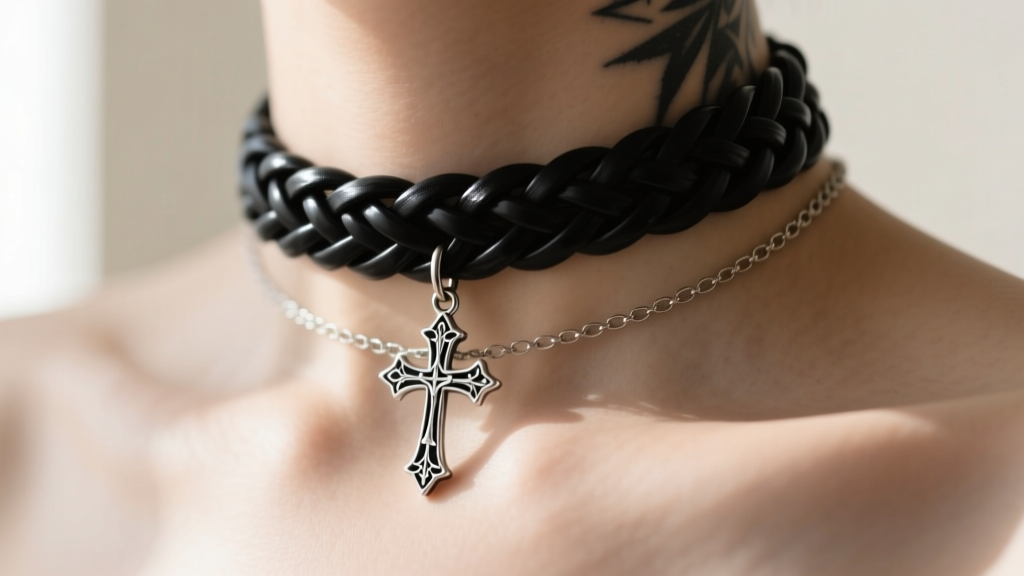
The term 'tattoo necklace cross' typically refers to one of two distinct jewelry styles. The first is the nostalgic 90s-inspired woven plastic or elastane choker featuring a dangling cross pendant. The second is a modern, laser-cut metal choker designed to mimic the intricate lace-like patterns of a tattoo, often incorporating a cross motif directly into the metalwork or as a focal pendant. Because these pieces sit flush against the skin, they are uniquely susceptible to sebum buildup, cosmetic residue, and environmental tarnishing. Proper care requires a bifurcated approach: addressing the flexible choker base and maintaining the metallic cross element.
Human sweat has a naturally acidic pH ranging from 4.5 to 7.0. When this acidity mixes with dead skin cells and lotions, it creates a corrosive environment that can degrade elastic fibers and oxidize base metals. To preserve the structural integrity and aesthetic brilliance of your tattoo necklace cross, you must adopt a routine that targets both organic buildup and metallic oxidation.
Deep Cleaning Woven Elastane and Plastic Chokers
If your tattoo necklace features a woven plastic or elastane base, the primary challenge is the accumulation of microscopic debris within the tight weave. Over time, this buildup can cause the choker to smell musty, lose its elasticity, or even harbor bacteria that leads to contact dermatitis.
The Gentle Surfactant Method
Avoid harsh chemicals, bleach, or boiling water, as high temperatures and strong solvents will melt or snap the elastane fibers. Instead, use a pH-neutral surfactant like mild dish soap (e.g., Dawn).
- Preparation: Fill a bowl with lukewarm water and add two drops of mild dish soap.
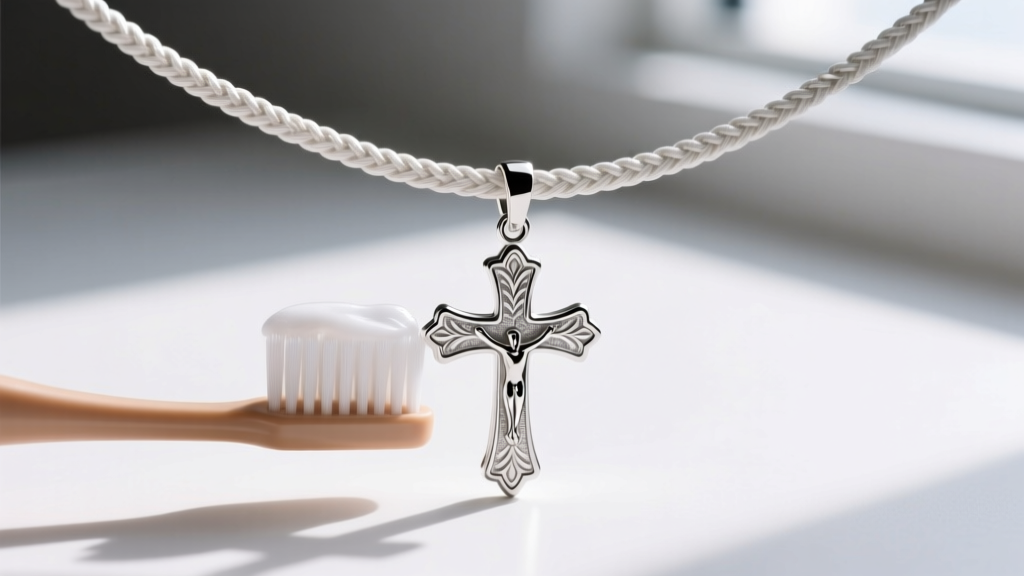
- Agitation: Submerge the choker for 5 to 10 minutes to loosen oils. Use a soft-bristled baby toothbrush to gently scrub between the woven plastic strands.
- Rinsing: Rinse thoroughly under cool, running water until all soap suds are gone.
- Drying: Never wring or twist the choker, as this will permanently deform the elastic memory. Lay it flat on a microfiber towel in a well-ventilated area away from direct sunlight.
Polishing and Maintaining the Cross Pendant
The cross pendant is usually the focal point of the necklace and requires specific care based on its metallurgical composition. According to the Gemological Institute of America (GIA), understanding your metal type is critical to avoiding irreversible damage during the cleaning process.
Caring for 925 Sterling Silver Crosses
Sterling silver (92.5% pure silver, 7.5% copper) is highly prone to tarnishing when exposed to sulfur compounds in the air and sweat. This creates a dark layer of silver sulfide on the surface.
- Light Tarnish: Use a dedicated silver polishing cloth infused with micro-abrasives to gently buff the cross. Do not use tissue paper or paper towels, as wood fibers can cause micro-scratches.
- Heavy Tarnish: Utilize an electrochemical bath. Line a glass bowl with aluminum foil (shiny side up). Add one tablespoon of baking soda and a pinch of salt. Pour boiling water into the bowl, then submerge the silver cross (ensure it touches the foil). The chemical reaction will transfer the silver sulfide from the pendant to the aluminum foil in seconds. Rinse and dry immediately.
For comprehensive guidelines on preserving precious metals, The Silver Institute highly recommends avoiding rubber bands or latex gloves when handling silver, as rubber emits sulfur that accelerates tarnishing.
Maintaining 316L Stainless Steel and Base Alloys
If your cross is made of 316L surgical stainless steel, it is highly resistant to corrosion. Simply wiping it down with a damp microfiber cloth and a drop of isopropyl alcohol (70%) will remove oils and restore its shine. However, if your pendant is made of a cheaper zinc or brass alloy coated in a thin silver or gold plating, avoid abrasive polishing entirely. Once the plating wears off, the underlying copper will react with your skin's acidity, leaving a green residue on your collarbone. The only permanent fix for a failing base-metal cross is to replace the pendant or coat the back with a thin layer of clear polyurethane nail polish to create a moisture barrier.
Inspecting the Attachment Hardware
The most common point of catastrophic failure on a tattoo necklace cross is the attachment hardware. The jump ring or crimp bead that connects the metal cross to the flexible choker undergoes immense mechanical stress every time you put the necklace on or take it off.
Most pendants are attached using a 20-gauge or 22-gauge split jump ring. Over time, the tension on this ring can weaken, causing the gap to open and the cross to slip off and become lost. Every three months, inspect the jump ring. If you notice the gap has widened, use two pairs of flat-nose jewelry pliers to gently twist the ring closed. Never pull the ends apart laterally; always twist them in a spiral motion to maintain the structural integrity of the wire. If the pendant is glued into a bail, check for any micro-movements. A tiny drop of cyanoacrylate (jewelry-grade super glue) applied with a toothpick can re-secure a loose bail before the cross falls out.
Proper Storage to Prevent Degradation
How you store your tattoo necklace cross when it is not being worn is just as important as how you clean it. Improper storage leads to tangled weaves, stretched elastic, and accelerated metallic oxidation.
| Material Component | Primary Environmental Enemy | Ideal Storage Solution |
|---|---|---|
| Woven Elastane / Plastic | UV Light, Extreme Heat, Tension | Lay flat in an opaque, cool drawer. Never hang, as gravity will stretch the elastic over time. |
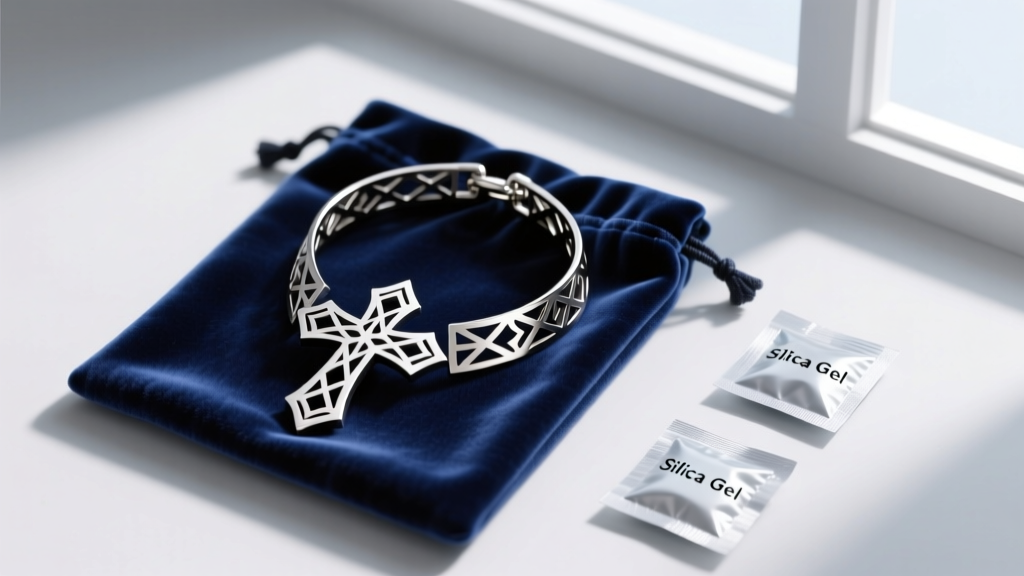
| 925 Sterling Silver Cross | Humidity, Sulfur, Airborne Pollutants | Store in an airtight ziplock bag with an anti-tarnish silica gel packet or activated charcoal strip. |
| Laser-Cut Metal Choker | Moisture, Scratching from other jewelry | Keep in a separate soft velvet pouch to prevent the intricate laser-cut edges from catching on other chains. |
Troubleshooting Common Wear-and-Tear Issues
The Choker Has Lost Its Elasticity
If your woven plastic choker has stretched out and no longer sits snugly against your neck, the elastane core has suffered from heat or UV degradation. Unfortunately, elastic memory cannot be reversed. However, you can salvage the piece by carefully unclasping the end cap, trimming the excess woven material, and reattaching the clasp using a new crimp tube and jewelry pliers.
The Metal Cross is Tangled in the Weave
Because tattoo chokers feature a textured, woven surface, the jump ring or bail of the cross pendant can easily snag and become trapped in the plastic threads. Do not pull forcefully, as this will fray the choker and scratch the metal. Instead, apply a tiny drop of mineral oil or baby oil to the snag point. This lubricates the plastic fibers, allowing you to gently wiggle the jump ring free without causing mechanical damage to either component.
Removing Stubborn Cosmetic Stains
Foundation, self-tanner, and waterproof makeup can stain the porous surface of woven plastic chokers. If soap and water fail, create a paste using baking soda and a few drops of water. Apply the paste to the stained area and let it sit for 15 minutes. The mild alkalinity of the baking soda will help lift the pigment from the plastic fibers. Wipe away with a damp cloth and rinse thoroughly. Avoid using acetone or nail polish remover, as these solvents will melt the plastic weave and ruin the necklace permanently.
Conclusion
A tattoo necklace cross is a versatile piece of jewelry that bridges edgy, nostalgic aesthetics with timeless symbolism. By understanding the distinct material needs of both the flexible choker base and the metallic pendant, you can significantly extend the lifespan of your accessory. Commit to a bi-weekly gentle cleaning routine, inspect the jump rings regularly, and store the piece away from UV light and humidity to ensure your necklace remains a staple in your wardrobe for years to come.


