How to Clean & Restore a Vintage Lapis Lazuli Necklace
Learn expert techniques to safely clean, restore, and store your vintage lapis lazuli necklace without damaging its delicate pyrite and calcite.

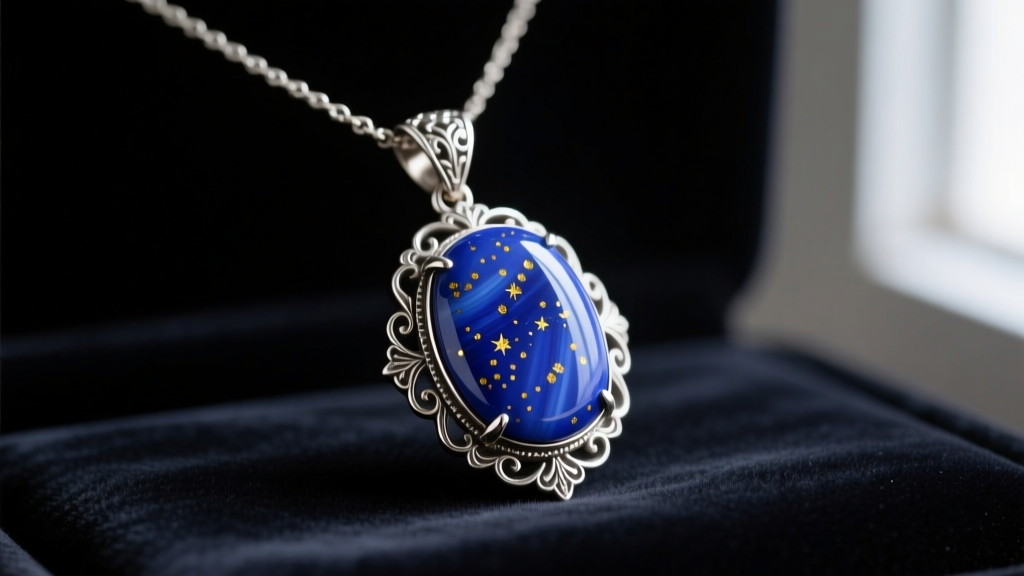
The Mineralogy of Lapis: Why Vintage Pieces Need Special Care
To properly maintain a vintage lapis lazuli necklace, you must first understand that lapis is not a single mineral, but a complex metamorphic rock. According to Mindat.org, its primary components include lazurite (which provides the signature deep blue), calcite (white streaks), and pyrite (the metallic gold flecks). This composite structure creates unique vulnerabilities. With a Mohs hardness ranging from 5 to 6, lapis is relatively soft and easily scratched. More importantly, its porous nature means it readily absorbs oils, lotions, and harsh chemicals, which can permanently alter its color and structural integrity over time.
The Golden Rules: What to Never Do to Your Lapis
Many well-intentioned jewelry owners ruin their vintage pieces by applying modern cleaning methods to antique stones. When caring for a vintage lapis lazuli necklace, avoidance is your best strategy.
The Ultrasonic and Steam Trap
Never place lapis lazuli in an ultrasonic cleaner. The high-frequency vibrations can easily fracture the stone, particularly along the natural fault lines where calcite and pyrite meet. Furthermore, the heat from steam cleaners can melt the historical wax or oil treatments that were applied to vintage stones decades ago, leaving them looking chalky and dull.
Chemical Hazards: Acids and Alkalis
The calcite inclusions in lapis lazuli are highly reactive to acids. Household cleaners, vinegar, lemon juice, and even mildly acidic commercial jewelry dips will literally dissolve the white calcite veins, pitting the surface of your necklace. Similarly, harsh alkalis like ammonia and bleach will strip the stone's natural polish and cause the pyrite inclusions to oxidize rapidly, turning those beautiful gold flecks into brown rust spots.
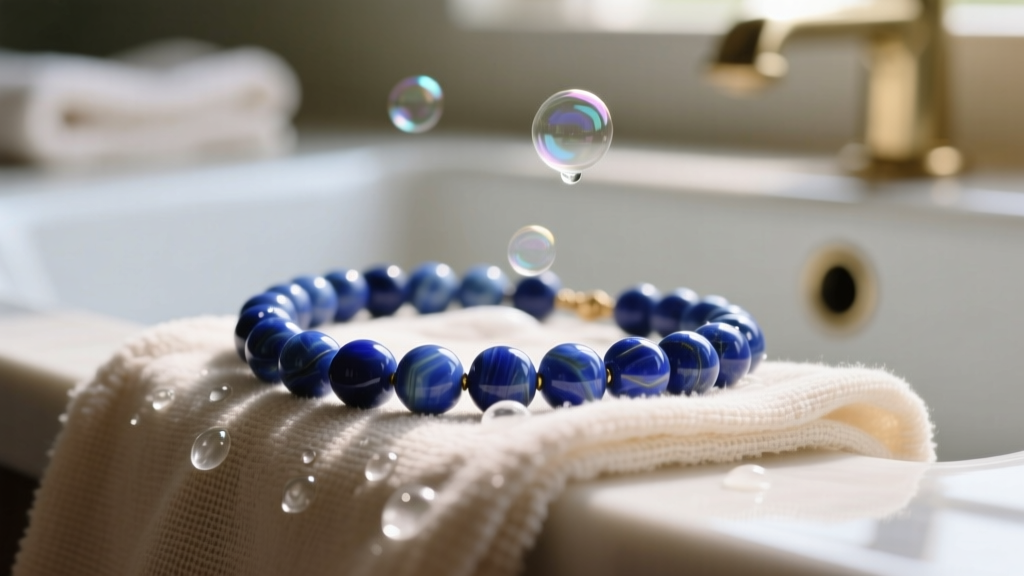
Step-by-Step Wet Cleaning Protocol for Untreated Stones
When your vintage lapis lazuli necklace accumulates skin oils and environmental dust, a gentle wet cleaning is sometimes necessary. The Gemological Institute of America (GIA) recommends using only warm, soapy water, but for vintage pieces, we must be even more cautious.
- Prepare a Mild Solution: Mix a few drops of pH-neutral, phosphate-free dish soap into a bowl of distilled lukewarm water. Distilled water prevents hard water mineral deposits from clinging to the porous stone.
- Dampen, Don't Soak: Never submerge a vintage lapis necklace, especially if it is strung on silk thread or features closed-back foil settings common in Art Deco pieces. Dip a soft, lint-free microfiber cloth into the solution and wring it out until it is only slightly damp.
- Wipe Gently: Wipe each bead or pendant surface gently. Avoid applying pressure to the pyrite flecks, as they can occasionally be loose in older, heavily worn stones.
- Immediate Drying: Use a second, completely dry microfiber cloth to buff the stone immediately. Leaving any moisture on the surface risks water spotting and pyrite oxidation.
Restoring the Luster: Re-Waxing and Oiling Vintage Lapis
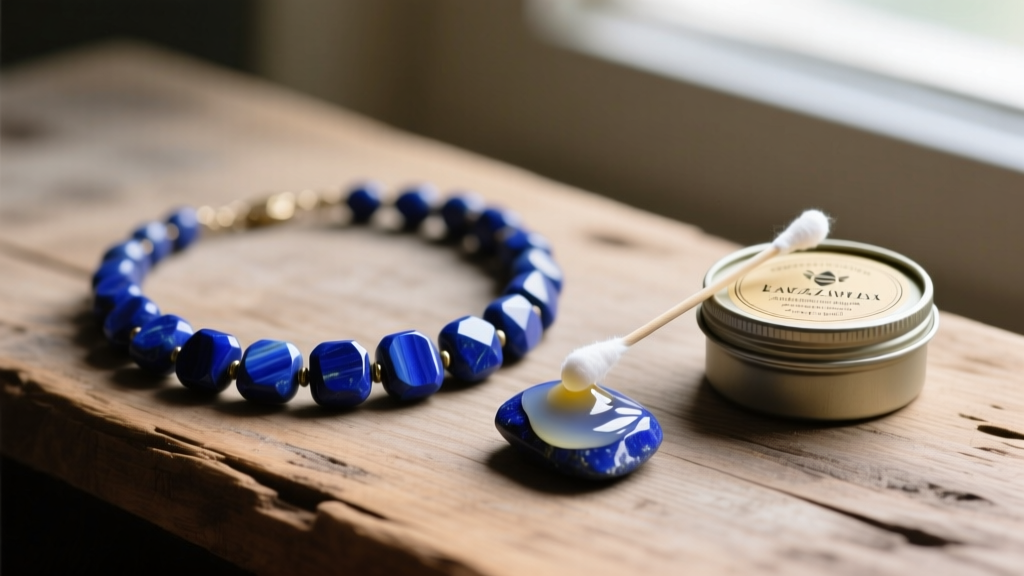
Historically, lapidaries treated porous gems like lapis lazuli and turquoise with colorless wax or mineral oil to enhance their color and provide a moisture barrier. Over 50 to 100 years, this treatment dries out, resulting in a matte, chalky, or grayish appearance. If your vintage lapis lazuli necklace looks dull despite being clean, it likely needs re-waxing.
Use a museum-grade micro-crystalline wax, such as Renaissance Wax. Apply a microscopic amount to a soft cotton swab and rub it gently into the stone in a circular motion. Allow it to dry for 10 minutes, then buff it vigorously with a clean, soft horsehair brush or a dry cotton cloth. This restores the deep, saturated blue and provides a protective barrier against skin acidity. Avoid using baby oil or olive oil, as these can turn rancid over time and attract dust.
Maintaining the Vintage Hardware and Stringing
A vintage lapis lazuli necklace is only as strong as its weakest component. The hardware and stringing materials require distinct maintenance protocols.
Dealing with Pyrite Inclusion Oxidation
If the gold flecks in your lapis have turned brown or black, the pyrite is oxidizing. Unfortunately, you cannot chemically clean rust out of a porous stone without destroying the lazurite. Prevention is key: keep the necklace away from high humidity and avoid wearing it while exercising or swimming.
Cleaning Tarnished Silver and Gold Clasps
Vintage necklaces often feature intricate sterling silver barrel clasps or 14k gold fishhook clasps. When the metal tarnishes, use a specialized silver polishing cloth on the metal hardware only. Ensure the polishing cloth does not touch the lapis beads, as the mild abrasives in the cloth will scratch the stone's 5.5 Mohs surface. For heavy tarnish in clasp crevices, use a wooden toothpick to gently scrape out the grime rather than a metal pin.
| Cleaning Agent | Effect on Lazurite (Blue) | Effect on Calcite (White) | Effect on Pyrite (Gold) |
|---|---|---|---|
| Ultrasonic Waves | Fractures along cleavage planes | Causes micro-shattering | Dislodges loose inclusions |
| Ammonia / Bleach | Strips polish, causes fading | Surface etching | Accelerates oxidation (rust) |
| Vinegar / Acids | Minimal immediate reaction | Dissolves and pits severely | Corrodes metallic structure |
| pH-Neutral Soap | Safe (if not soaked) | Safe | Safe |
| Renaissance Wax | Enhances color and seals | Fills micro-pores safely | Prevents oxygen exposure |
Archival Storage: Preserving Your Necklace for the Next Century
Proper storage is the final pillar of vintage jewelry conservation. The Smithsonian Museum Conservation Institute emphasizes that environmental control is critical for composite rocks. Store your vintage lapis lazuli necklace in a soft, acid-free tissue paper pouch or a tarnish-resistant flannel bag. Never store it in a plastic ziplock bag, as trapped humidity can trigger pyrite disease (the rapid oxidation of iron sulfide minerals).
Furthermore, always store lapis lazuli separately from harder gemstones. A diamond or sapphire pendant resting against your lapis necklace will effortlessly carve microscopic scratches into the lazurite over time. Finally, keep the piece away from prolonged direct sunlight, which can degrade historical stringing materials and fade certain dye treatments used in mid-century costume jewelry adaptations.
Conclusion
Caring for a vintage lapis lazuli necklace requires a departure from modern, aggressive jewelry cleaning habits. By respecting the stone's complex mineralogy, avoiding ultrasonic and chemical hazards, and utilizing museum-grade conservation waxes, you can preserve the deep celestial blues and golden flecks of your heirloom piece for generations to come.


