Ultimate Care Guide for Your Small Emerald Necklace
Learn expert cleaning and maintenance tips for your small emerald necklace. Protect the delicate gemstone and chain from damage with our care guide.

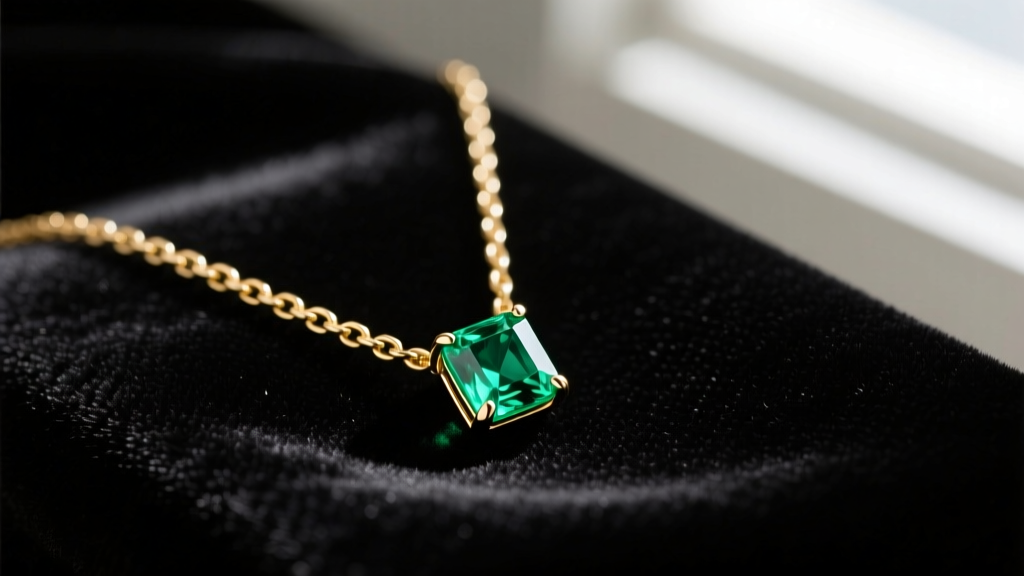
A small emerald necklace is a masterpiece of understated elegance, offering a vibrant flash of green that elevates any neckline. However, unlike diamonds or sapphires, emeralds are notoriously delicate. Their unique internal structure and the treatments used to enhance their beauty demand a highly specific approach to maintenance. If you own a small emerald pendant or a delicate choker featuring these lush green beryls, standard jewelry cleaning methods can cause catastrophic, irreversible damage. This comprehensive guide explores the gemological realities of emeralds and provides a meticulous, step-by-step protocol to keep your necklace pristine for generations.
The Gemology of Emeralds: Why They Require Special Care
To understand how to clean an emerald, you must first understand its physical vulnerabilities. On the Mohs scale of mineral hardness, emeralds rank between 7.5 and 8. While this makes them relatively resistant to scratching, hardness is not the same as toughness. Toughness refers to a gemstone's ability to resist breaking or chipping, and emeralds have notably low toughness.
This fragility is due to a phenomenon known in gemology as jardin (French for garden). Almost all natural emeralds contain a dense network of internal inclusions, fractures, and fissures that resemble the branches of a garden. To improve clarity and color, the vast majority of emeralds on the market undergo clarity enhancement. According to the Gemological Institute of America (GIA), it is standard industry practice to fill these surface-reaching fractures with colorless oils (like cedar oil) or synthetic resins (like Opticon). These fillers mask the fractures and allow light to pass through the stone more effectively, but they also introduce a major vulnerability to heat, chemicals, and ultrasonic vibrations.
The Danger Zone: What Will Ruin Your Small Emerald Necklace
Before reaching for a cleaning cloth, you must know what to avoid. The most common ways jewelry owners destroy small emerald pendants involve modern cleaning technology and harsh household chemicals.
Ultrasonic Cleaners
Ultrasonic cleaners use high-frequency sound waves to create microscopic cavitation bubbles in a liquid solution. When these bubbles implode against the jewelry, they create intense localized shockwaves. While this is excellent for blasting dirt out of diamond settings, these shockwaves will aggressively exploit the jardin in an emerald, often causing the stone to fracture or shatter entirely.
Steam Cleaners
Steam cleaning exposes the gemstone to sudden, intense heat. This thermal shock can cause internal fractures to expand. More importantly, the heat will melt, degrade, or completely dissolve the cedar oil or resin fillers inside the emerald. Once the filler is removed, the stone will suddenly appear cloudy, white, and heavily fractured.
Harsh Chemicals
Ammonia, bleach, acetone, and even standard jewelry dipping solutions are highly corrosive to emerald fillers. Furthermore, exposure to acids can etch the surface of the beryl crystal itself, leaving a permanent dull, frosted appearance.
The Safe Cleaning Protocol (Step-by-Step)
Because small emerald necklaces (typically featuring stones between 3mm and 6mm) are often set in delicate mounts, they require a gentle, manual cleaning approach. Follow this protocol every 3 to 4 weeks to maintain optimal brilliance.
Step 1: Preparation and Soaking
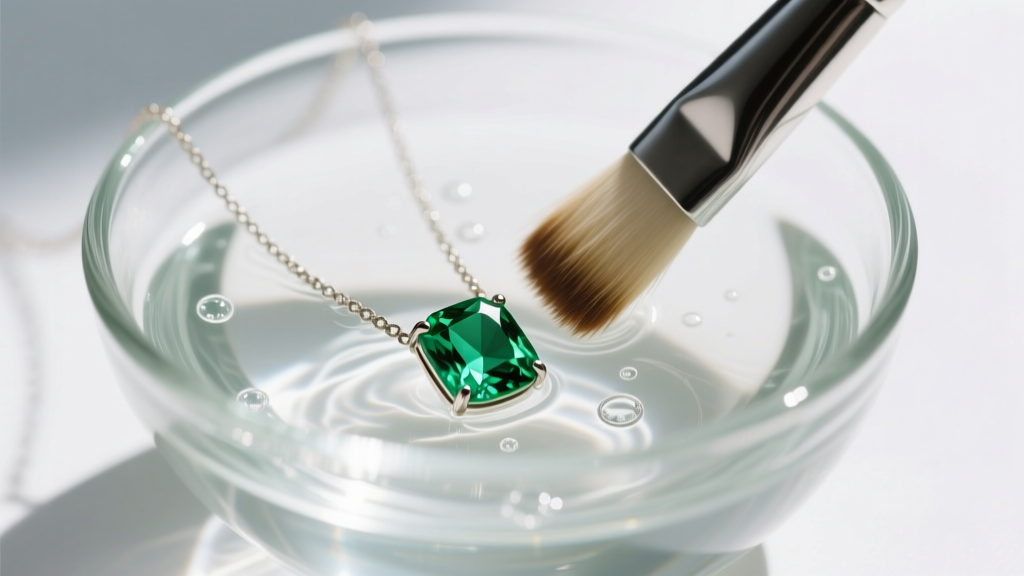
Fill a small glass bowl with distilled water. Distilled water is preferred over tap water because it lacks hard minerals like calcium and magnesium, which can leave microscopic spotting on the facets. Add two drops of a pH-neutral, lotion-free dish soap (such as original blue Dawn). Submerge the necklace and let it soak for no more than 3 to 5 minutes. Prolonged soaking can eventually weaken the structural integrity of certain resin fillers.
Step 2: Gentle Agitation
Remove the necklace from the bowl. Using an extra-soft baby toothbrush (never a standard adult toothbrush, as the bristles are too stiff and can scratch the gold setting or the stone's polish), gently brush the emerald. Use light, circular motions. Pay special attention to the back of the stone (the pavilion), where skin oils and lotions accumulate and block light return. Avoid pressing hard directly against the prongs.
Step 3: Rinsing and Drying
Rinse the necklace under a gentle stream of lukewarm distilled water. Ensure the drain is securely plugged or use a mesh strainer to prevent accidental loss. Pat the chain and setting dry with a clean, lint-free microfiber cloth. Allow the necklace to air dry completely in a warm room before storing it to prevent moisture from trapping against the clasp mechanism.
Chain and Clasp Maintenance for Delicate Pendants
Small emerald pendants are typically suspended on fine chains ranging from 0.6mm to 1.2mm in gauge. These delicate chains, whether they are cable, box, or rope styles, are prone to kinking and tangling.
- Untangling: If your fine chain knots, do not pull. Lay it flat on a hard surface, apply a tiny dusting of baby powder to reduce friction, and use two straight pins to gently work the knot apart.
- Clasp Checks: Inspect the spring ring or lobster claw clasp monthly. Ensure the tiny internal spring still has tension. A failing clasp is the leading cause of lost pendants.
- Jump Ring Security: Check the jump ring connecting the pendant bail to the chain. If the gap in the ring has widened, it must be squeezed shut with jewelry pliers or soldered by a professional.
Cleaning Agents and Methods: Safe vs. Unsafe
To summarize the chemical and mechanical boundaries of emerald care, refer to the table below:
| Cleaning Method / Agent | Safety Level | Reasoning |
|---|---|---|
| Lukewarm Distilled Water | Highly Safe | Prevents mineral spotting; safe temperature for fillers. |
| pH-Neutral Dish Soap | Highly Safe | Cuts through sebum and oils without chemical corrosion. |
| Extra-Soft Baby Brush | Highly Safe | Removes debris without scratching the beryl or metal. |
| Ultrasonic Cleaners | Destructive | Cavitation shockwaves will shatter internal inclusions. |
| Steam Cleaners | Destructive | Thermal shock melts clarity-enhancing oils and resins. |
| Ammonia / Bleach | Destructive | Corrodes metal settings and dissolves fracture fillers. |
| Commercial Silver Dips | Destructive | Highly acidic; will permanently etch the emerald surface. |
Prong Security and Setting Checks
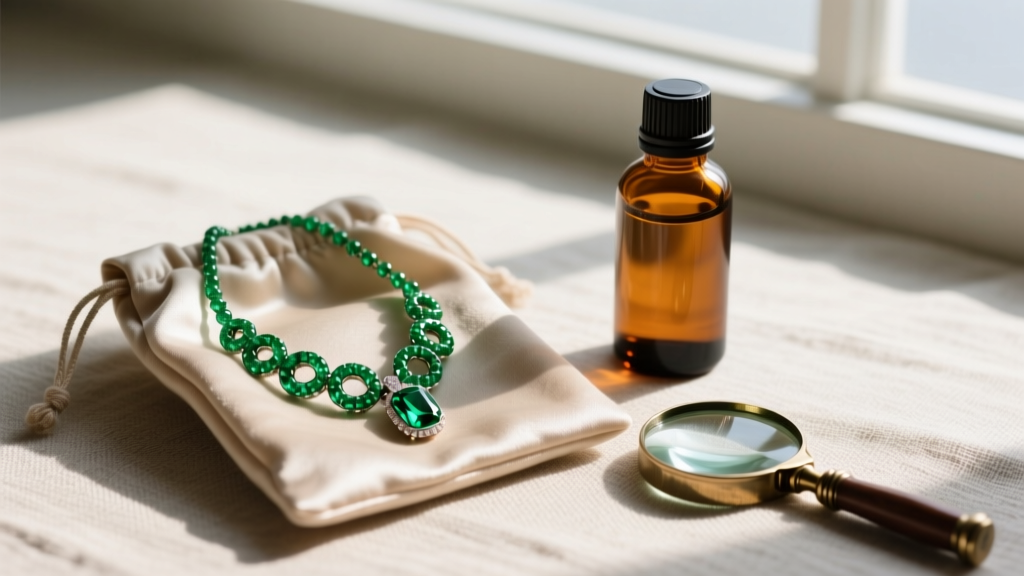
Small emeralds are frequently set in four-prong or bezel settings. Because emeralds are brittle, the corners of square or rectangular cuts (like the classic emerald cut) are particularly vulnerable to chipping if a prong becomes loose or bent. Every six months, run the tip of a silk scarf or a cotton swab over the setting. If the fabric catches on a prong, the metal has lifted away from the gemstone's crown. Stop wearing the necklace immediately and take it to a bench jeweler to have the prong tightened or re-tipped.
Long-Term Storage and Professional Re-Oiling
Proper storage is just as critical as proper cleaning. Never store your small emerald necklace in a communal jewelry box alongside diamonds, sapphires, or rubies. These harder gems will easily scratch the emerald's surface polish during transit. Instead, store the necklace flat in an individual, anti-tarnish flannel pouch to prevent the gold or silver chain from oxidizing and tangling.
Finally, be aware that oil treatments are not always permanent. Over years of wear, exposure to mild soaps, and environmental factors, the cedar oil inside an emerald can dry out or leach away, causing the stone to look noticeably lighter or more included. If your small emerald pendant loses its deep green saturation, consult a certified gemologist or a reputable lapidary. They can professionally clean the stone and perform a controlled re-oiling process under a vacuum chamber to restore its original luster and structural stability. For more on long-term gemstone preservation, refer to the GIA Emerald Care and Cleaning Guide.


