The Anatomy of a Cleavage Necklace: Sizing, Drops & Styling
Master the biomechanics of the cleavage necklace. Explore exact drop lengths, chain architectures, and expert troubleshooting to prevent pendant flip.

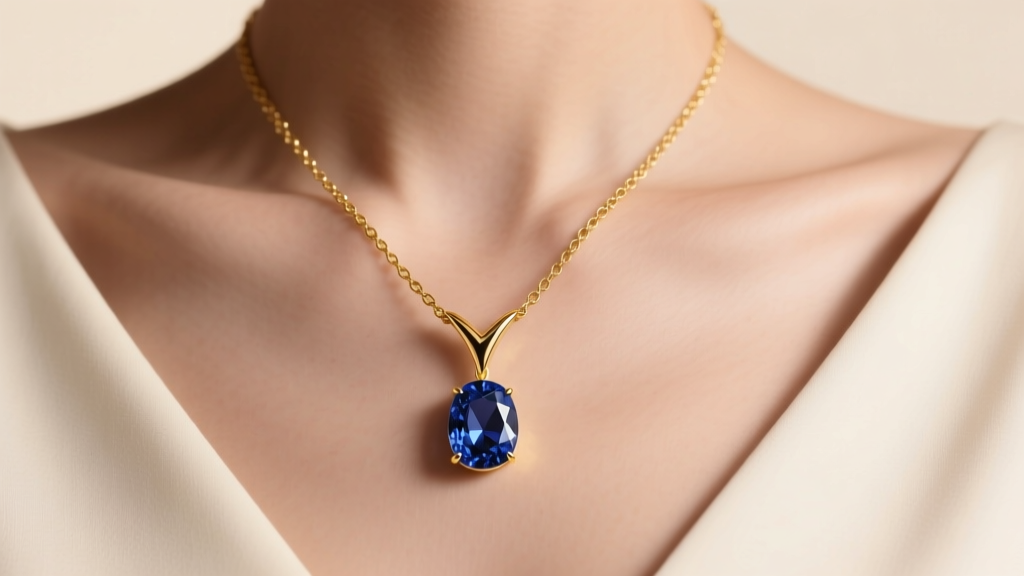
In the realm of fine jewelry, the term 'cleavage necklace' is often used colloquially to describe any piece that rests within the décolletage. However, from a technical and design perspective, engineering a necklace to sit perfectly in this high-mobility anatomical zone requires a deep understanding of biomechanics, weight distribution, and metallurgy. A poorly constructed piece will constantly flip, slide off-center, or cause contact dermatitis. In this expert deep dive, we deconstruct the exact specifications, chain architectures, and troubleshooting techniques required to master the cleavage necklace in 2026.
The Biomechanics of Décolletage Jewelry
The décolletage is a dynamic environment. Unlike the nape of the neck, which remains relatively static, the chest area expands and contracts with respiration and shifts with posture. The primary failure mode of a cleavage necklace is the 'pendulum flip'—a phenomenon where the pendant rotates backward, hiding against the skin while the chain's clasp slides to the front.
This occurs due to a misalignment in the center of gravity. If a pendant weighs more than 4 grams and is suspended on a chain with a width of less than 1.2mm, the chain lacks the torsional rigidity to keep the pendant facing forward. As the wearer moves, the heavier pendant seeks the lowest gravitational point, often slipping beneath the collarbone ridge and flipping entirely. To counteract this, master jewelers utilize Y-drop configurations or integrate micro-counterweights into the rear clasp assembly to balance the anterior load.
Exact Length & Drop Specifications
Styling a cleavage necklace requires precise adherence to standard jewelry lengths, adjusted for the specific 'drop' (the distance the pendant falls below the main chain loop). Selecting the wrong length-to-drop ratio guarantees structural failure in how the piece drapes.
| Classification | Chain Length | Optimal Drop | Best Neckline Pairing | Max Pendant Weight |
|---|---|---|---|---|
| Princess | 18 inches (45 cm) | 1.5 - 2 inches | Scoop,浅 V-Neck, Boatneck | 6 grams |
| Matinee | 20 - 22 inches (50-55 cm) | 2.5 - 4 inches | Sweetheart, Standard Plunge | 12 grams |
| Opera (Modified) | 24 - 26 inches (60-66 cm) | 5+ inches | Deep Plunge, Open Collar | 18 grams |
For a true cleavage-focused drape, the 20-inch Matinee length with a 3-inch drop is the industry gold standard. It anchors the pendant precisely at the sternum's center, utilizing the natural slope of the collarbones to prevent lateral sliding.
Chain Architectures: What Works and What Fails
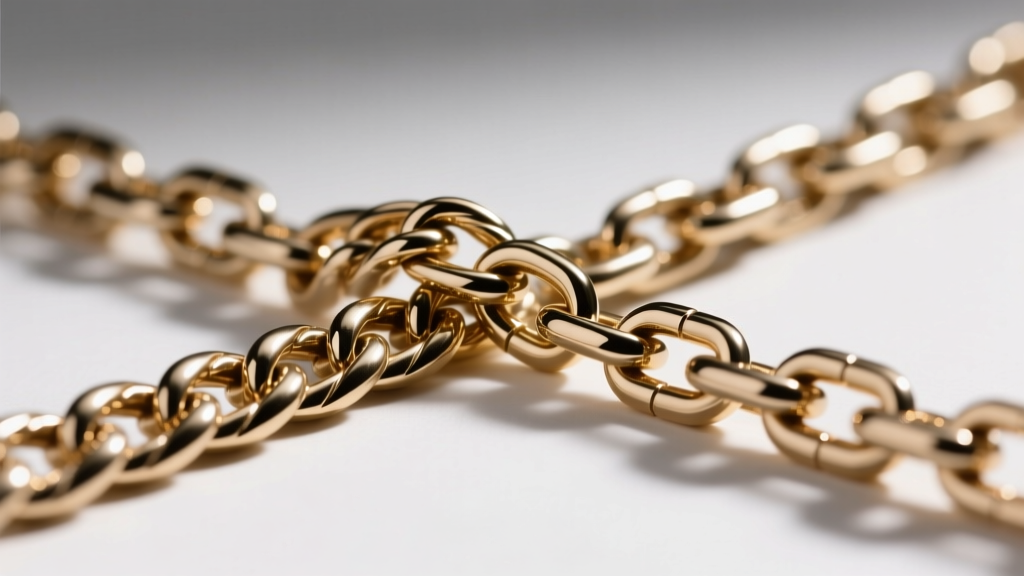
The structural integrity of the chain dictates the lifespan and drape of the necklace. The chest area generates friction against clothing and skin, demanding specific link architectures.
The Problem with Fluid Chains
Herringbone and snake chains are notoriously problematic for cleavage necklaces. While they offer a beautiful, fluid drape that mimics liquid metal, their interlocking flat links possess virtually zero tensile memory. When subjected to the friction of a silk blouse or the natural movement of the chest, these chains easily kink. Once a herringbone chain kinks, the structural damage is permanent, and the metal will eventually snap at the stress point. According to manufacturing guidelines from Rio Grande, fluid chains should be strictly reserved for lightweight pendants (under 2 grams) and worn only on static occasions.
The Superiority of Box and Rope Chains
For daily-wear cleavage necklaces, a 1.2mm to 1.5mm box chain or a 1.8mm rope chain is mandatory. Box chains feature square links that interlock at 90-degree angles, providing exceptional torsional rigidity. This rigidity prevents the chain from twisting, ensuring the pendant remains facing outward. Rope chains, with their helical twist, offer a high degree of flexibility without sacrificing tensile strength, making them ideal for heavier gemstone drops.
Material Considerations for Sensitive Chest Skin
The skin on the chest and décolletage is significantly thinner and more vascular than the skin on the hands or earlobes, making it highly susceptible to contact dermatitis and heavy metal migration. When selecting a cleavage necklace, metallurgical purity is non-negotiable.
- Avoid Brass and Copper Cores: Many vermeil or gold-plated pieces use brass alloys as a base. When exposed to the slightly acidic pH of chest sweat, copper ions leach to the surface, causing green discoloration and severe localized itching.
- Titanium (ASTM F136): For hypoallergenic requirements, Grade 23 Titanium (Ti-6Al-4V ELI) is the benchmark. It contains zero nickel and is entirely biocompatible, making it the ideal choice for sensitive skin resting against the sternum.
- Nickel Migration Limits: If utilizing white gold, ensure the alloy complies with the EU Nickel Directive (EN 1811:2011), which restricts nickel migration to less than 0.5 µg/cm²/week. The GIA Gem Encyclopedia frequently highlights the dangers of unregulated white gold alloys causing sternum rashes in prolonged-wear pieces.
Expert Troubleshooting: Keeping the Pendant Centered
Even with the correct length and chain type, heavy pendants can migrate. Here are three professional techniques to lock your cleavage necklace in place:
1. Silicone O-Ring Stoppers
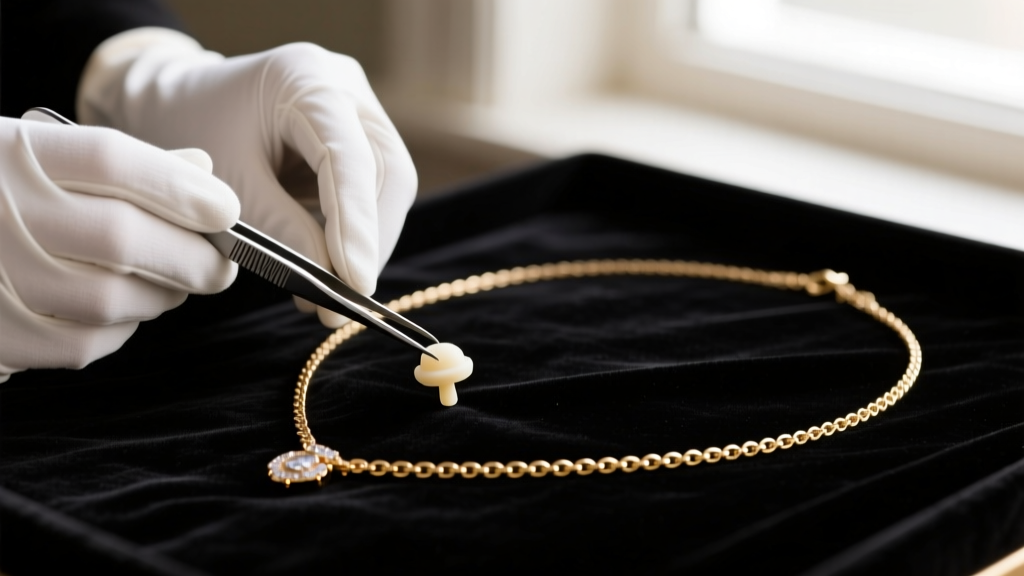
For lariats or Y-drop necklaces where the pendant slides freely along the chain, jewelers use micro-silicone O-rings. Placed exactly 1.5 inches above the pendant bail, these nearly invisible stoppers create enough friction against the metal to prevent the pendant from sliding up the chain and flipping backward during movement.
2. Clasp Counterweighting
If your pendant weighs 10 grams, the clasp at the nape of your neck should weigh at least 3 to 4 grams. By adding a heavy gold end-cap or a secondary decorative charm to the clasp assembly, you create a posterior anchor. This biomechanical counterweight prevents the front of the necklace from being pulled off-center when the wearer turns their head.
3. Magnetic Neodymium Clasps
Expert Insight: Standard lobster clasps require asymmetrical pulling force to open, which can stretch the posterior chain links over time. Upgrading to a 4mm Neodymium magnetic clasp allows for symmetrical weight distribution and eliminates the mechanical stress of snapping a spring-ring shut behind the neck.
However, magnetic clasps should only be used for cleavage necklaces where the total pendant weight does not exceed 12 grams; otherwise, the magnetic shear strength may fail, resulting in the loss of the piece.
Final Styling Matrix for 2026
The modern approach to the cleavage necklace favors intentional layering over solitary drops. In 2026, the prevailing technique involves pairing a rigid 18-inch 14k gold box chain with a 22-inch matte-finish titanium rope chain. This creates a multi-textured décolletage display that anchors visually at the collarbone while drawing the eye downward to the sternum. By respecting the physics of weight distribution and the biology of sensitive skin, you transform a simple accessory into a masterclass of wearable engineering.


