The Ultimate Compass Necklace for Women Buying Guide (2026)
Discover how to choose the perfect compass necklace for women in 2026. Our expert buying guide covers materials, chain lengths, and styling tips.

The Enduring Appeal of the Compass Pendant
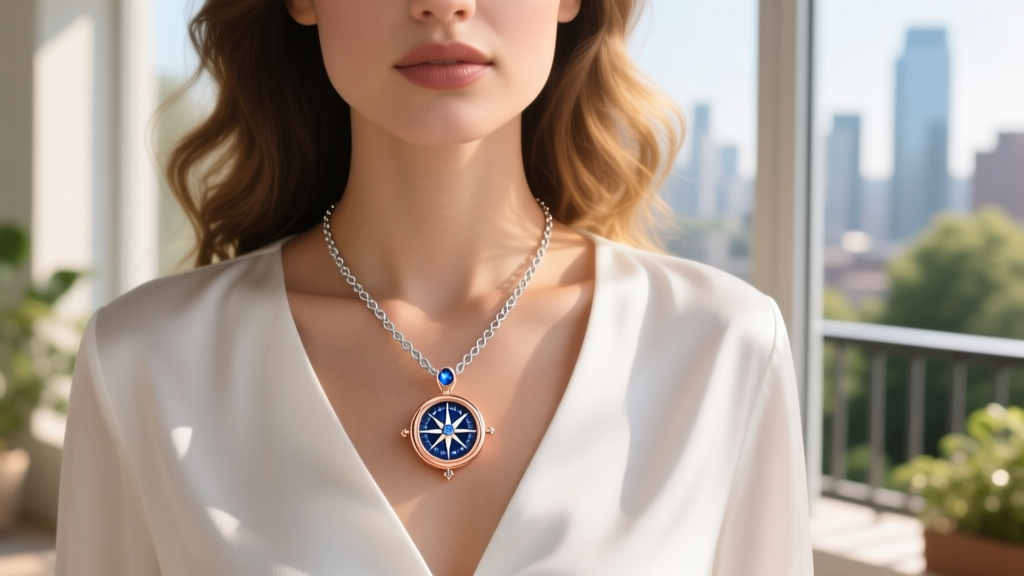
The compass necklace for women has transcended its origins as a mere navigational motif to become a profound symbol of guidance, independence, and finding one's true north. In 2026, the jewelry market has seen a distinct shift away from overly ornate, steampunk-inspired compass designs toward sleek, minimalist, and architecturally precise pendants. Whether you are purchasing a meaningful gift for a graduate, a traveler, or treating yourself to a daily talisman, selecting the right piece requires looking past the aesthetic and understanding the metallurgy and mechanics beneath the surface.
This comprehensive buying guide will equip you with the domain expertise needed to evaluate metal grades, chain load-bearing capacities, and dial durability, ensuring your investment stands the test of time.
Decoding Materials: What to Look For in 2026
The metal composition of your compass pendant dictates not only its price point but also its longevity, weight, and how it interacts with your skin's chemistry. Here is a breakdown of the primary metals used in high-quality compass necklaces today.
Sterling Silver (925) and Rhodium Plating
Sterling silver is an alloy comprising 92.5% pure silver and 7.5% copper. While beautiful, the copper content makes it susceptible to oxidation (tarnishing) when exposed to sulfur in the air and the natural oils on your collarbone. When buying a silver compass necklace for women, always look for pieces that have been flash-plated with rhodium. Rhodium is a platinum-group metal that provides an inert, highly reflective, and tarnish-resistant barrier. According to Jewelers of America, rhodium-plated silver requires significantly less polishing, preserving the intricate engravings on the compass bezel.
Solid Gold: 14k vs. 18k
For an heirloom-quality piece, solid gold is the standard. 14k gold (58.5% pure gold) is alloyed with metals like zinc and copper, making it highly durable and ideal for compass pendants with deep, intricate engraving or functional moving parts. 18k gold (75% pure gold) offers a richer, warmer yellow hue but is softer. If you lead an active lifestyle and plan to wear your necklace daily, 14k gold will better resist the micro-scratches that can obscure a compass dial over time.
Brass and Bronze: The Vintage Appeal
Brass and bronze offer a beautiful, earthy aesthetic that mimics antique maritime instruments. However, these copper-heavy alloys will rapidly oxidize and can leave a green residue on your skin if left untreated. If you opt for brass, ensure the manufacturer has applied a clear, jewelry-grade lacquer coating to seal the metal.

Chain Mechanics: Matching the Pendant Weight
A common failure point in pendant necklaces is the chain snapping under the dynamic load of a heavy charm. Compass pendants, especially those featuring glass domes, functional magnetic needles, or solid bronze casing, can easily weigh between 8 and 15 grams. A standard 0.8mm cable chain will eventually warp and break under this stress.
To ensure structural integrity, consult the following load-bearing framework when selecting your chain:
| Chain Type | Recommended Thickness | Max Pendant Weight | Durability Rating |
|---|---|---|---|
| Box Chain | 1.2mm - 1.5mm | Up to 15g | Excellent (Geometric link distribution) |
| Wheat (Spiga) Chain | 1.0mm - 1.2mm | Up to 12g | Very Good (Woven, multi-directional strength) |
| Rope Chain | 1.5mm - 2.0mm | Up to 20g | Excellent (Twisted links resist pulling) |
| Standard Cable Chain | 0.9mm - 1.1mm | Up to 6g | Fair (Prone to link stretching) |
Additionally, never rely on a standard 5mm spring ring clasp for a heavy compass pendant. Always upgrade to a 10mm or 12mm lobster claw clasp, which features a more robust internal spring mechanism and a wider catch surface.

Dial Details: Enamel, Mother of Pearl, or Resin?
The face of the compass is the focal point of the necklace. The material used for the dial drastically affects both the visual impact and the care requirements of the piece.
- Vitreous Enamel: Created by fusing powdered glass to metal at high temperatures. It offers brilliant, opaque colors (like deep navy or stark white) that will never fade. However, enamel is brittle; dropping the pendant on a tile floor can cause it to chip or crack.
- Mother of Pearl (Nacre): A popular choice for luxury compass necklaces in 2026, offering an iridescent, oceanic shimmer. The Gemological Institute of America (GIA) notes that nacre is highly sensitive to acids. You must apply perfumes, hairsprays, and lotions before putting on a mother-of-pearl compass necklace to prevent the surface from dulling or etching.
- Epoxy Resin: Often used in modern, minimalist designs to create a smooth, glass-like dome over a printed or etched dial. High-grade UV-resistant resin is incredibly durable and shatterproof, making it ideal for everyday wear and travel.
Sizing and Proportion: Finding the Right Drop
The diameter of the compass pendant must be balanced with the wearer's frame and the intended styling method.
The Layering Standard (12mm - 18mm)
If you plan to layer your compass necklace for women with other chains, such as a simple gold herringbone or a small diamond solitaire pendant, keep the compass diameter under 18mm. This ensures the piece acts as a complementary anchor rather than tangling with neighboring chains.
The Statement Piece (25mm - 35mm)
For a standalone statement piece meant to rest over a crewneck sweater or a silk blouse, a diameter between 25mm and 35mm provides the necessary visual weight. Ensure the bail (the loop connecting the pendant to the chain) is proportionally large enough to slide freely over the clasp of a thicker 2.0mm rope chain.
Engraving and Personalization
Because compass pendants inherently symbolize direction and journey, they are prime candidates for custom engraving. When purchasing, look for jewelers who offer laser engraving rather than traditional hand-stamping. Hand-stamping can warp the delicate backing of a hollow compass pendant, whereas fiber laser engraving removes microscopic layers of metal without applying physical stress. Popular 2026 engraving choices include GPS coordinates of a hometown, a short motivational mantra on the backplate, or a significant date formatted in Roman numerals along the outer bezel.
Expert Care and Maintenance
To maintain the structural integrity and brilliance of your compass necklace, implement a strict maintenance routine. Once a month, clean the piece using a few drops of mild, phosphate-free dish soap in lukewarm water. Use a baby-soft toothbrush to gently agitate the crevices around the compass rose and the bail. Never use ultrasonic cleaners on compass pendants featuring mother of pearl, enamel, or glued-in glass domes, as the high-frequency vibrations can shatter delicate components or dissolve industrial adhesives. Store the necklace flat or hanging in a low-humidity environment, ideally with an anti-tarnish silica gel packet to absorb ambient moisture.
By prioritizing high-grade materials, matching the chain's tensile strength to the pendant's weight, and selecting a dial material that suits your lifestyle, you will secure a compass necklace for women that is not only a stunning accessory but a resilient, lifelong companion.