Diamond Pear Necklace Buying Guide: What to Look For & Avoid
Discover what to look for in a diamond pear necklace. Our expert buying guide covers the bow-tie effect, ideal cut ratios, settings, and chain pairings.

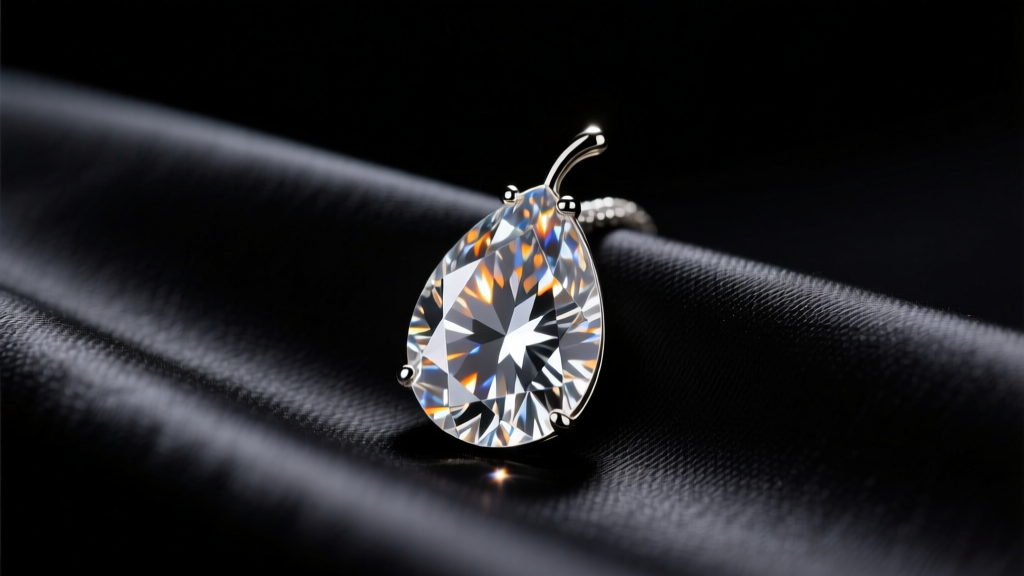
The Allure of the Teardrop: Introduction to Pear Pendants
When shopping for a diamond pear necklace, you are investing in one of the most complex and visually striking fancy shapes in gemology. The pear cut—often referred to as the teardrop—combines the rounded brilliance of an oval with the tapered elegance of a marquise. However, this hybrid anatomy makes evaluating a pear-shaped diamond significantly more challenging than assessing a standard round brilliant. A poorly cut pear will suffer from severe light leakage, asymmetrical shoulders, and structural vulnerabilities at its pointed tip. This comprehensive buying guide will equip you with the exact specifications, grading thresholds, and setting requirements needed to select a flawless pear diamond pendant in 2026.
The Anatomy of the Pear Cut: Ratios and Symmetry
Unlike round diamonds, which are graded on a standardized cut scale, fancy shapes like the pear rely heavily on visual proportions. The most critical metric is the length-to-width (L/W) ratio. This number dictates how elongated or stout the teardrop appears when worn.
- 1.45 to 1.55: The classic, universally flattering pear shape. This ratio provides a balanced teardrop that is neither too stubby nor excessively elongated.
- 1.60 to 1.75: An elongated pear. This creates a dramatic, slender silhouette that can visually elongate the wearer's neck, but it increases the risk of a prominent "bow-tie" shadow.
- Below 1.40: A "chubby" pear. These often look closer to a rounded triangle and lack the elegant taper expected of a high-end pendant.
Symmetry is equally paramount. According to the Gemological Institute of America (GIA), a well-proportioned pear must have a perfectly centered point that aligns exactly with the apex of the rounded end. The shoulders (the curved area near the rounded end) should be gently rounded, not flat, and the wings (the tapering sides) should exhibit a smooth, continuous curve to the tip.
Navigating the Dreaded Bow-Tie Effect
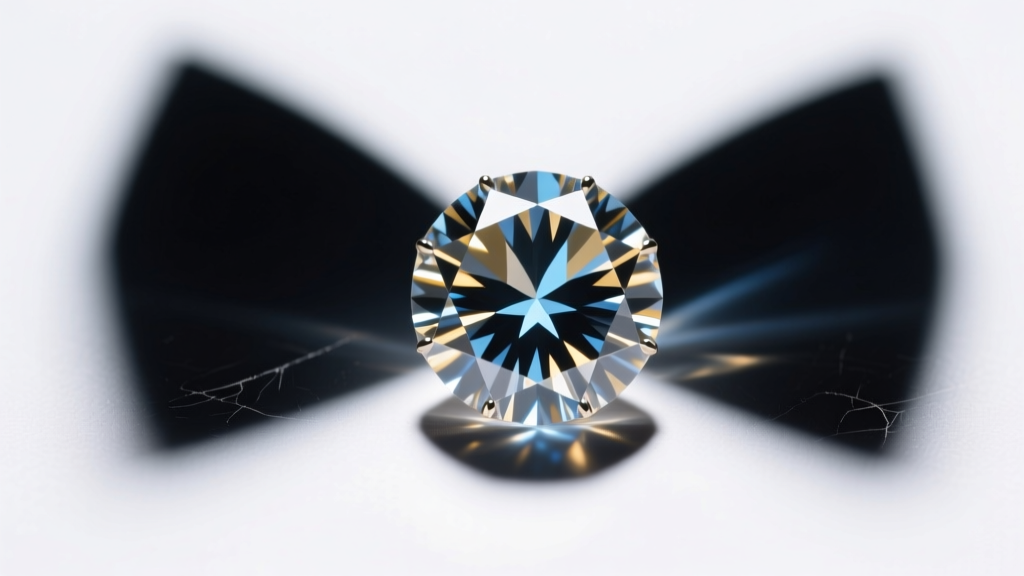
The "bow-tie effect" is a dark, shadowy band that stretches across the width of the diamond's center, resembling a man's bow tie. It occurs when light leaks out of the pavilion rather than reflecting back to the viewer's eye due to misaligned facets. While almost all elongated fancy shapes (ovals, marquises, and pears) exhibit some degree of bow-tie, your goal is to minimize it.
Gemologist Tip: Never evaluate a pear diamond under a single, harsh spotlight. Jewelers often use pinpoint lighting that masks the bow-tie. Instead, examine the stone in diffused, natural daylight or under a fluorescent office light. If the dark shadow obscures more than 20% of the stone's central width, pass on it.
The 4Cs Tailored for Pear Pendants
Applying standard round diamond grading rules to a pear shape will lead to overpaying for specs that don't matter, or worse, missing critical flaws. Because the pear cut features a complex facet arrangement (typically 71 facets), it interacts with color and clarity differently than other shapes.
| Criteria | Ideal Specification for Pendants | Expert Insight & Rationale |
|---|---|---|
| Cut / Polish | Excellent / Very Good | GIA does not grade fancy cut proportions, so rely on Polish and Symmetry grades. Never accept "Fair" symmetry. |
| Color | G or H (White Gold/Platinum) J or K (Yellow/Rose Gold) |
Pears trap color at the pointed tip. If setting in white metal, a G or H prevents the tip from looking yellow. Yellow metals mask lower colors beautifully. |
| Clarity | VS2 to SI1 (Eye-Clean) | The complex faceting hides inclusions well. However, never buy a pear with a "feather" inclusion near the pointed tip, as this creates a chipping hazard. |
| Carat Weight | 0.50ct to 1.50ct | Pears face up larger than rounds of the same carat weight due to their elongated surface area, offering excellent value per millimeter. |
For a deeper dive into how inclusions affect structural integrity, the GIA's Diamond Clarity grading resources emphasize that feathers (small internal fractures) reaching the girdle or tip of a fancy shape compromise the stone's durability.
Setting Styles and Tip Protection
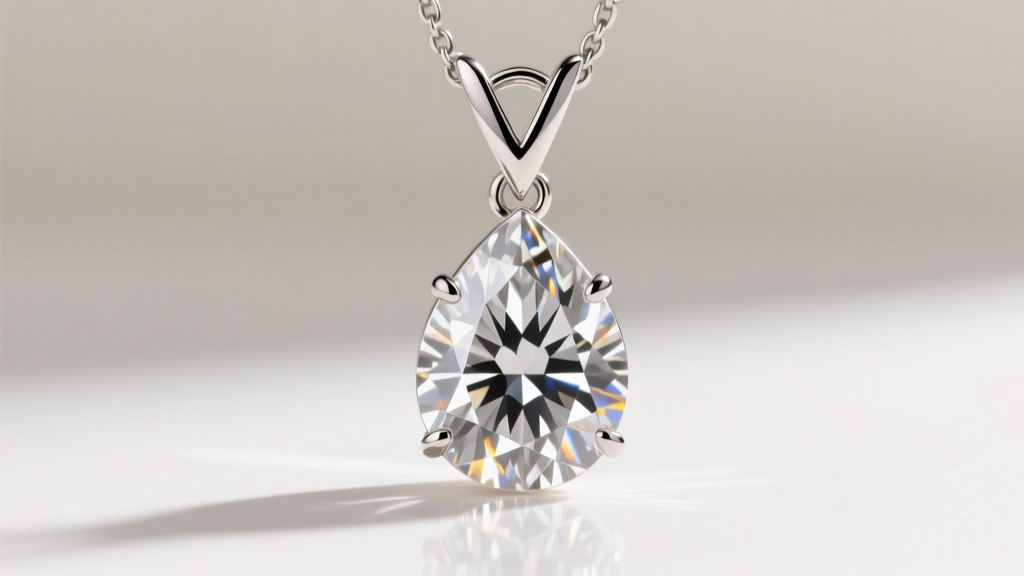
The pointed tip of a pear diamond is its greatest vulnerability. A hard knock against a tabletop or countertop can chip the point, instantly devaluing the stone. When selecting your diamond pear necklace, the setting must prioritize tip protection without sacrificing light return.
- The 5-Prong Setting (Recommended): Uses two prongs on the rounded shoulders, two on the wings, and one specialized prong directly on the tip. This offers superior security for everyday wear.
- The V-Prong Setting: Similar to the 5-prong, but the tip is cradled in a V-shaped wedge of metal. This is the gold standard for protecting sharp points, though it slightly reduces the visible sharpness of the teardrop.
- Bezel Settings: A full metal rim encircles the entire diamond. While it offers maximum protection and a sleek, modern aesthetic, it reduces the diamond's light entry by up to 15%, which can make smaller carat weights look dull.
- Halo Settings: A ring of micro-pavé diamonds surrounds the center stone. This adds significant visual weight and sparkle, making a 0.50ct center stone look closer to 1.00ct, but it can sometimes overwhelm the delicate taper of the pear shape.
Chain Pairings and Bail Mechanics
The bail—the loop that connects the pendant to the chain—dictates how the diamond pear necklace drapes on the collarbone. Because pear pendants are top-heavy, they are prone to flipping upside down if not balanced correctly.
Opt for a hidden bail or a tapered integrated bail that sits flush against the top of the diamond's rounded shoulder. This lowers the center of gravity, keeping the teardrop pointing downward. Avoid long, dangling bails that create a pendulum effect. For the chain itself, a 16-inch or 18-inch cable or box chain in 14k or 18k gold provides the necessary tensile strength to support the pendant's weight without kinking, which is a common failure point for delicate snake chains.
Pricing Expectations and Market Value
Fancy shapes generally cost 10% to 25% less than round brilliant diamonds of the exact same carat weight and quality, making the pear an excellent choice for maximizing visual impact on a budget. As of early 2026, here is what you should expect to pay for a natural, earth-mined pear diamond pendant (excluding the chain and setting metal):
- 0.50 Carat (G Color, VS2 Clarity): $900 – $1,400
- 0.75 Carat (G Color, VS2 Clarity): $1,800 – $2,600
- 1.00 Carat (G Color, VS2 Clarity): $3,500 – $5,500
- 1.50 Carat (G Color, VS2 Clarity): $7,000 – $11,000
Note: Lab-grown pear diamonds offer identical optical and physical properties at roughly 70% to 85% less than these natural price points, an increasingly popular route for pendant buyers prioritizing size and clarity over natural origin.
Final Verdict: Securing Your Perfect Pendant
Choosing the right diamond pear necklace requires looking past the basic carat weight and focusing on the nuances of the cut. Demand a length-to-width ratio between 1.45 and 1.55, scrutinize the stone in diffused light to avoid severe bow-ties, and absolutely insist on a setting that shields the pointed tip. By applying these rigorous standards, you will secure a timeless, brilliant teardrop that drapes elegantly and endures for generations.


