Compass Necklace Silver Buying Guide: What To Look For
Discover how to choose the perfect compass necklace silver piece. Our expert guide covers sterling grades, chain types, and pendant detailing.


The Enduring Allure of the Compass Motif
Few jewelry silhouettes carry as much narrative weight as the compass. Historically worn by sailors and explorers as a talisman for safe passage, the compass pendant has evolved into a universal symbol of guidance, independence, and finding one's true north. When shopping for a compass necklace silver collectors and everyday wearers alike must look beyond the basic silhouette. The market is flooded with mass-produced, low-quality trinkets that tarnish within weeks and feature poorly stamped, illegible dials. As a senior jewelry stylist, I evaluate these pieces based on metallurgical integrity, chain architecture, and the precision of the dial's topography. This comprehensive buying guide will equip you with the exact specifications needed to invest in a silver compass necklace that is both structurally enduring and aesthetically refined.
Decoding Silver Alloys: 925 Sterling vs. Argentium
The foundation of any premium silver pendant lies in its alloy composition. Pure silver (999 fine silver) is far too malleable to hold the intricate, microscopic engravings required for a detailed compass rose. Therefore, alloying metals are introduced to increase tensile strength and durability.
Standard 925 Sterling Silver
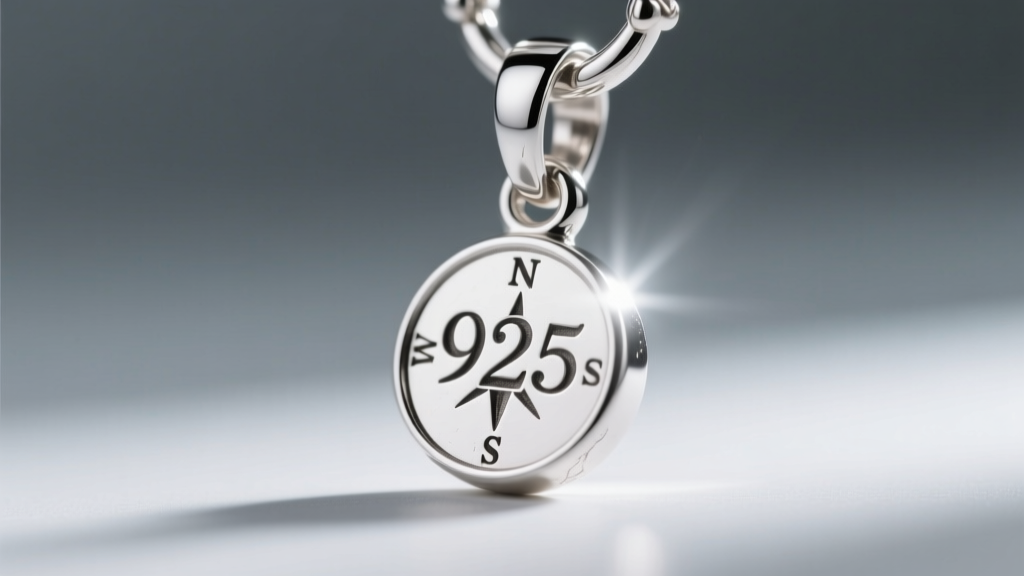
Comprising 92.5% pure silver and 7.5% copper, standard sterling is the industry baseline. The copper provides excellent structural rigidity, allowing jewelers to stamp deep cardinal directions (N, S, E, W) and degree markers without the metal warping. However, copper is highly reactive to sulfur and moisture in the air, meaning standard 925 silver will develop a dark patina (tarnish) over time. While some buyers appreciate this antique oxidation, it requires regular maintenance.
Argentium Silver (The Premium Upgrade)
For a modern, low-maintenance alternative, seek out pendants cast in Argentium silver. This patented alloy replaces a portion of the copper with germanium. According to The Silver Institute, the addition of germanium creates a transparent, protective layer of germanium dioxide on the surface, making Argentium up to seven times more resistant to tarnish than traditional sterling. If you live in a humid coastal climate or prefer a perpetually bright, white-metal finish without weekly polishing, an Argentium compass pendant is worth the 15-20% price premium.
Chain Architecture: Matching the Link to the Pendant
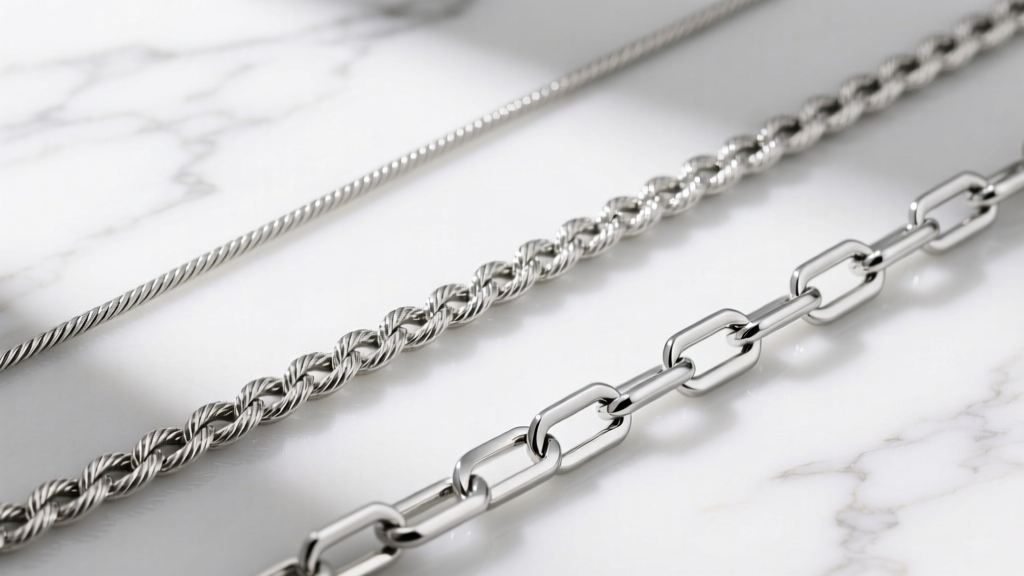
A common mistake buyers make is pairing a heavy, detailed compass pendant with a flimsy, hollow chain. The chain must support the pendant's weight while complementing its nautical or vintage aesthetic. For a standard 25mm to 30mm solid silver compass pendant, you need a chain gauge between 1.2mm and 1.8mm. Anything thinner risks snapping at the jump ring; anything thicker will visually overpower the dial.
| Chain Style | Visual Profile | Best For | Durability Rating |
|---|---|---|---|
| Cable Chain | Classic, uniform oval links | Minimalist, everyday wear; lets the pendant take center stage. | High (if soldered links) |
| Rope Chain | Twisted, helical pattern mimicking nautical rope | Maritime themes; catches light beautifully due to faceted cuts. | Medium (can snag on fabrics) |
| Box Chain | Square links connected to form a smooth, geometric tube | Modern, sleek aesthetics; highly resistant to kinking. | Very High |
| Wheat (Spiga) Chain | Oval links woven in the same direction, resembling wheat stalks | Vintage or antique-style compass pendants; adds rich texture. | Extremely High |
Pendant Dimensions and Dial Detailing
The physical scale and surface treatment of the compass rose dictate how the necklace wears on the body and how legible the design remains over decades of use.
Sizing Guide
- Petite (12mm - 16mm): Ideal for delicate layering alongside shorter chokers or coin necklaces. At this size, the cardinal letters are usually omitted in favor of simple geometric star points.
- Standard (22mm - 28mm): The sweet spot for a standalone statement piece. This diameter allows for a multi-layered dial featuring an outer degree ring, an inner compass rose, and clear N-S-E-W typography.
- Oversized (35mm+): Often favored in men's jewelry or bold bohemian styling. These heavy pieces require a robust chain (like a 2.0mm Figaro or thick Wheat chain) to prevent the pendant from flipping upside down.
Enamel vs. Oxidized Finishes
To create contrast on a silver dial, jewelers use two primary techniques. Oxidation involves applying a sulfur compound to the recessed areas of the engraving, turning them black while the raised surfaces are polished bright. This creates a rugged, antique look but can wear away on high-contact points over years of friction. Guilloché Enamel, on the other hand, involves fusing powdered glass (often deep navy blue or black) into the engraved grooves and firing it in a kiln. Enamel is permanent, impervious to tarnish, and provides a striking, high-contrast backdrop that makes the silver compass rose pop.
Clasp Mechanics and Security
The clasp is the most frequent point of mechanical failure on any necklace. When evaluating a silver compass necklace, inspect the hardware closely.
- Spring Ring Clasps: Common on budget-friendly chains. They rely on a tiny internal spring that frequently fails or gets stuck. Avoid these for pendants weighing more than 5 grams.
- Lobster Claw Clasps: The industry standard for mid-tier to luxury jewelry. They feature a solid, spring-loaded lever that provides a secure grip on the end ring. Look for a lobster clasp that is stamped with the same silver hallmark as the chain.
- Jump Ring Integrity: The split ring connecting the pendant to the chain must be soldered shut or made of heavy-gauge wire. An unsoldered, thin jump ring will easily pull apart under the swinging weight of a solid silver compass.
Hallmarking and Authenticity
Never purchase a silver compass pendant without verifying its hallmark. Reputable jewelers and assayers stamp their pieces to guarantee metal purity. According to Assay Office London, a full traditional hallmark includes the sponsor's mark, the metal fineness (e.g., 925), and the assay office mark. In the US, a simple "925" or "Sterling" stamp alongside a maker's mark is standard. Beware of pieces stamped "Tibetan Silver" or "Alpaca," as these are nickel-based alloys containing little to no actual silver and can cause severe contact dermatitis.
Maintenance: Preserving the Silver Finish
Even the highest quality compass necklace silver requires mindful care to maintain its luster and protect the intricate dial engravings.
Expert Stylist Tip: Never use liquid silver dips or harsh chemical polishes on an oxidized or enameled compass pendant. These solutions will strip the intentional dark patina from the recesses, leaving the dial looking flat, washed out, and entirely illegible. Always use a dry, treated microfiber polishing cloth (like a Sunshine cloth) and gently buff only the raised, high-relief areas of the compass rose.
When not being worn, store your silver necklace in an airtight polyethylene ziplock bag alongside a 3M anti-tarnish strip. This simple step absorbs ambient sulfur compounds and will keep your silver compass gleaming for years, ensuring your symbolic guide remains as bright as the day you acquired it.


