The Ultimate Guide to Buying a Costume Jewelry Cross Necklace
Discover how to choose, style, and care for a costume jewelry cross necklace. Learn about base metals, plating thickness, and avoiding skin irritation.

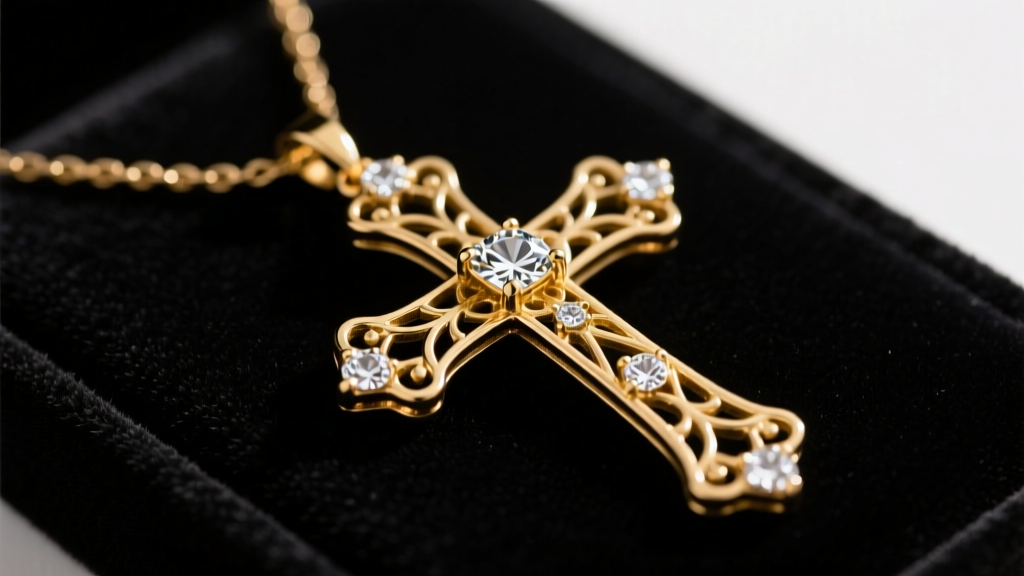
The Renaissance of the Costume Jewelry Cross Necklace
The cross pendant is arguably one of the most enduring symbols in jewelry history, transcending religious boundaries to become a staple of global fashion. However, when shopping for a costume jewelry cross necklace, beginners often find themselves navigating a confusing landscape of misleading descriptions, rapidly tarnishing metals, and fragile chains. In 2026, the costume jewelry market has evolved significantly. Advanced electroplating techniques and superior base alloys mean that 'costume' no longer equates to 'disposable.'
This beginner-friendly explainer will demystify the metallurgy, engineering, and styling of costume cross necklaces. Whether you are looking for an ornate vintage-inspired gothic cross or a minimalist modern pendant, understanding the anatomy of your jewelry is the first step toward making a smart, lasting purchase.
Decoding Base Metals: What Are You Actually Wearing?
By definition, costume jewelry utilizes non-precious base metals. The quality of your necklace depends entirely on which base metal the manufacturer chose, as this dictates the piece's weight, durability, and how well it holds onto its outer plating. According to the Federal Trade Commission's Jewelry Guides, manufacturers must accurately represent metal compositions, but marketing terms can still be tricky.
The Big Three Base Metals
- Jeweler's Brass: An alloy of copper and zinc. Brass is the gold standard for high-quality costume jewelry. It has a warm undertone that mimics gold, possesses excellent structural integrity, and provides a smooth surface for plating. The downside? Its copper content can cause skin discoloration if the plating wears off.
- Zinc Alloy (Zamak): Often marketed as 'Tibetan Silver' or 'Antique Pewter,' Zamak is incredibly cheap to cast, allowing for highly detailed, ornate cross designs. However, it is brittle. If dropped on a hard surface, a Zamak cross pendant is likely to shatter or snap at the bail (the loop where the chain attaches).
- 316L Surgical Stainless Steel: The modern champion of everyday costume jewelry. Steel is hypoallergenic, highly resistant to tarnish, and incredibly strong. While it has a cooler, greyer undertone that makes gold plating slightly more difficult to adhere to, un-plated steel or silver-toned steel crosses are virtually indestructible and safe for sensitive skin.
The Plating Hierarchy: Flash vs. Heavy Electroplate
The outer layer of a gold or silver-toned costume cross necklace is where the magic—and the deception—happens. Plating thickness is measured in microns (one-thousandth of a millimeter). Understanding this metric will save you from buying a necklace that turns grey after a single week of wear.
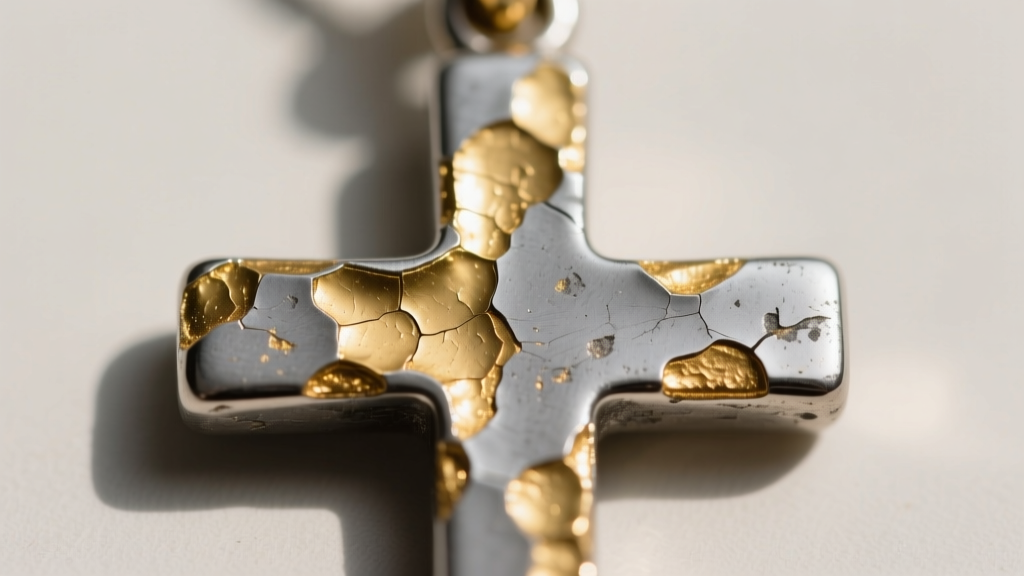
Understanding Plating Thickness
Flash Plating (0.1 to 0.5 microns): This is a microscopic wash of color. It is commonly found on fast-fashion accessories under $20. Flash plating will rub off against the skin and clothing within days, exposing the base metal to oxygen and sweat.
Standard Electroplating (1.0 to 2.0 microns): The industry standard for mid-tier costume jewelry. With proper care and occasional removal before showering, a 2-micron plated cross necklace can easily last 1 to 3 years of regular wear before showing significant wear at the high-friction edges.
Heavy Gold Electroplate (HGE - 2.5+ microns): The pinnacle of costume plating. Often stamped with '14K HGE' or '18K HGE,' this thick layer of gold provides a rich, luxurious color and can last for decades if protected from harsh chemicals.
| Plating Type | Thickness | Expected Lifespan | Price Range |
|---|---|---|---|
| Flash Plate | 0.1 - 0.5 microns | 1 - 4 Weeks | $10 - $25 |
| Standard Plate | 1.0 - 2.0 microns | 1 - 3 Years | $30 - $65 |
| Heavy Electroplate (HGE) | 2.5+ microns | 5 - 15+ Years | $70 - $150 |
Chain Gauges and Hardware: Engineering Your Necklace
A common beginner mistake is pairing a heavy, solid brass cross pendant with a delicate, ultra-thin chain. This creates a structural mismatch that inevitably leads to snapped links and lost pendants. When evaluating a costume jewelry cross necklace, the chain's gauge (thickness) and clasp type are just as critical as the pendant itself.
Proportion and Tensile Strength Guide
- Micro Crosses (Under 1/2 inch): Best paired with 0.8mm to 1.2mm cable or box chains. These delicate chains are lightweight and keep the focus on the neckline.
- Standard Crosses (1 to 1.5 inches): Require a 1.5mm to 2.5mm chain. Rolo chains or Figaro chains in this gauge offer excellent tensile strength and resist kinking, which is vital for supporting a pendant that weighs between 5 and 12 grams.
- Oversized/Gothic Crosses (2+ inches): Demand heavy 3.0mm to 5.0mm chains, such as thick curb or rope chains.
Pro Tip: Always inspect the clasp. Spring-ring clasps are notorious for failing on heavier pendants. Insist on a lobster clasp or a magnetic toggle for any cross pendant weighing over 10 grams to ensure the internal spring mechanism can handle the dynamic tension of daily movement.
Preventing the Dreaded 'Green Neck'
Nothing deters a beginner from costume jewelry quite like the infamous green ring around the neck. This is not an allergic reaction, nor does it mean the jewelry is 'toxic.' It is a simple chemical reaction.

The Science of Verdigris
When the copper inside a brass or copper-alloy base metal is exposed to oxygen, moisture, and the natural salts and acids in your sweat, it oxidizes. This creates copper chloride and copper carbonate—commonly known as verdigris—which transfers to your skin as a green or black smudge. According to the Gemological Institute of America (GIA), maintaining a barrier between the metal and the skin is the most effective prevention method.
Actionable Prevention Strategies
- The Polymer Barrier: Skip the old 'clear nail polish' trick, which yellows and chips unevenly. Instead, use a specialized jewelry coating like Jewelerskin or Renaissance Wax. Apply a thin coat to the back of the cross pendant and the inner links of the chain to seal the metal from your skin's pH.
- Moisture Management: Never wear a plated costume cross necklace in the shower, pool, or gym. Chlorine and saltwater will strip standard electroplating in a matter of hours, exposing the reactive base metal beneath.
- Proper Storage: Store your necklace in an anti-tarnish ziplock bag with a silica gel packet. Humidity in the air can cause the base metal to oxidize even when the necklace is sitting in your jewelry box.
Modern Styling and Layering Frameworks
The beauty of the costume jewelry cross necklace lies in its versatility. In 2026, the trend has shifted away from wearing a single, isolated pendant on a long chain. Instead, modern styling relies on texture mixing and intentional layering.
Stylist's Rule of Thumb: When layering a cross pendant, always make it the anchor piece. Place it on the longest chain (usually 20 to 24 inches), and pair it with shorter, simpler chains (14 to 16 inches) that feature contrasting textures, like a smooth herringbone or a beaded chain.
For a contemporary, edge-meets-elegance look, try pairing an ornate, oxidized silver-toned Zamak cross with a black leather cord and a minimalist stainless steel bar necklace. This juxtaposition of heavy, historical symbolism with sleek, modern industrialism creates a visually striking neckline that works perfectly with both casual streetwear and elevated evening attire.
By understanding the base metals, respecting the plating micron counts, and engineering your chain pairings correctly, you can curate a collection of costume cross necklaces that look luxurious, endure daily wear, and express your personal style without the fine-jewelry price tag.


