The Cowboy Tie Necklace: 2026 Bolo Tie Style & Trend Analysis
Discover how the cowboy tie necklace is dominating 2026 fashion. Explore bolo tie styling, slide materials, cord specs, and modern trend analysis.


The Resurgence of the Cowboy Tie Necklace
Once confined to the realms of traditional Western wear and vintage Americana, the cowboy tie necklace—universally recognized as the bolo tie—has firmly cemented its place in the contemporary fashion lexicon. As we navigate the style landscape of 2026, this iconic accessory has transcended its regional roots, appearing on high-fashion runways, in streetwear lookbooks, and as a staple of gender-fluid styling. According to trend analysts at Vogue Fashion, the modern iteration of the cowboy tie necklace relies on a delicate balance between heritage craftsmanship and avant-garde minimalism. No longer just a novelty piece, it is now a sophisticated alternative to the standard pendant chain or silk necktie, offering unparalleled versatility in both formal and casual settings.
Anatomy and Material Specifications
To truly master the styling of a cowboy tie necklace, one must first understand its structural anatomy. A traditional bolo consists of three primary components: the cord, the slide, and the aiguillettes (metal tips). The material grades and dimensions of these components dictate the piece's formality, durability, and price point.
The Cord: Thickness and Tanning
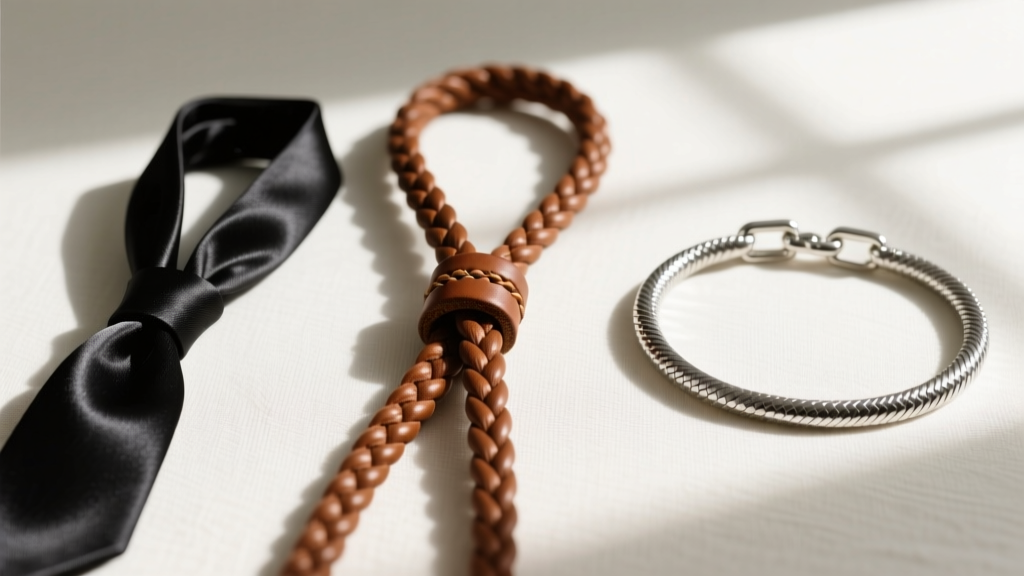
The foundation of any cowboy tie necklace is the cord. Standard braided leather cords range from 3mm to 5mm in thickness. For a refined, high-fashion look, 3mm vegetable-tanned leather is preferred; it develops a rich, dark patina over time as it absorbs the wearer's natural oils. Chrome-tanned leather, while more water-resistant, lacks this aging characteristic and often appears overly glossy. Alternative materials include braided black silk cords for evening wear and sterling silver snake chains (typically 2.5mm to 4mm) for a metallic, jewelry-forward aesthetic.
The Slide: Metallurgy and Stone Matrix
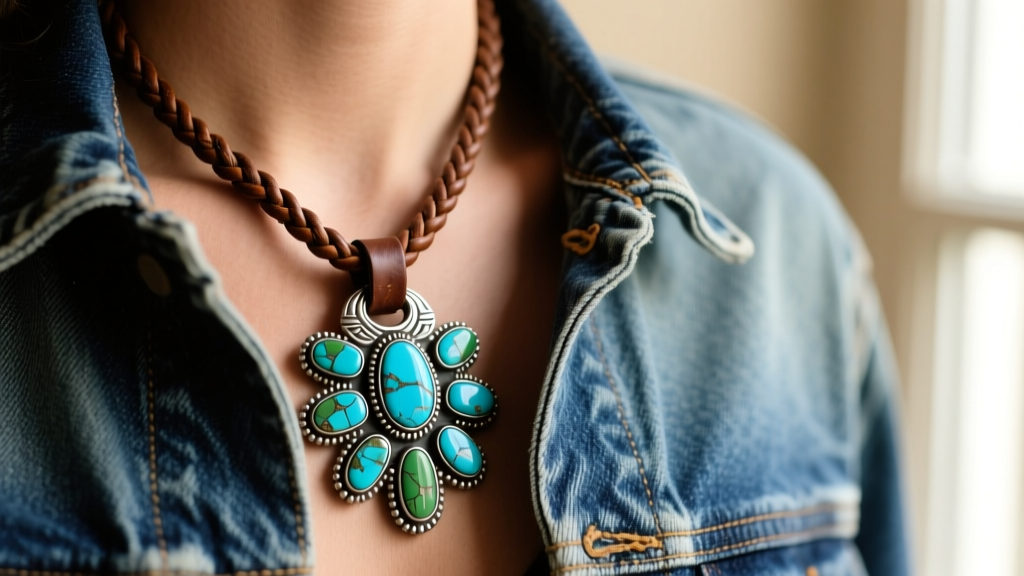
The slide is the focal point of the necklace. In the premium market, slides are cast or hand-stamped from .925 sterling silver or solid brass. Vintage Southwestern pieces often feature intricate Zuni needlepoint or Navajo squash blossom motifs, inlaid with genuine Sleeping Beauty turquoise, spiny oyster shell, or lapis lazuli. When purchasing a slide separately from the cord, pay strict attention to the bail (the loop on the back). A 4mm leather cord requires a bail with an inner diameter of at least 5mm to 6mm to ensure smooth adjustment without fraying the leather.
Aiguillettes: The Weighted Tips
Often overlooked, the metal tips at the end of the cord serve a vital functional purpose: they provide the necessary weight to keep the cord hanging straight and prevent it from slipping entirely through the slide. High-end tips are crafted from solid brass or silver and may feature small agate or turquoise cabochons at the terminal ends.
Material & Durability Comparison Chart
| Cord Material | Standard Gauge | Durability & Care | Best Use Case | Price Range |
|---|---|---|---|---|
| Braided Leather (Veg-Tan) | 3mm - 5mm | High; develops patina. Avoid prolonged water exposure. | Everyday wear, casual to smart-casual. | $25 - $85 |
| Silk Cord | 2mm - 4mm | Medium; prone to fraying if slide bail is rough. | Evening wear, formal events. | $40 - $120 |
| Sterling Silver Snake Chain | 2.5mm - 4mm | Very High; requires occasional silver polishing. | High fashion, jewelry layering. | $90 - $250+ |
2026 Trend Forecast: Three Dominant Aesthetics
The styling of the cowboy tie necklace in 2026 is defined by three distinct aesthetic movements, each catering to different fashion demographics.
1. The Neo-Western Minimalist
This trend strips away the ornate turquoise and silverwork of traditional Western wear in favor of brutalist, geometric slides. Think matte black leather cords paired with brushed steel or unpolished brass rectangular slides. This aesthetic is heavily favored in contemporary streetwear and pairs exceptionally well with unstructured linen suits, oversized knitwear, and monochromatic palettes. It is an exercise in negative space and material contrast.
2. The Heirloom Southwestern Revival
Driven by a renewed appreciation for artisanal craftsmanship and sustainable fashion, collectors are seeking out vintage and contemporary Native American-made slides. As documented by the National Cowboy & Western Heritage Museum, the preservation of traditional silversmithing techniques is vital to Western heritage. In 2026, wearing a genuine, heavy-gauge .925 silver Zuni cluster slide is a status symbol that signals an appreciation for slow fashion and historical provenance. These pieces are often treated as wearable art and command prices upwards of $500 to $1,500.
3. The Gender-Fluid High-Fashion Statement
The bolo tie has completely dismantled traditional gender boundaries in fashion. We are seeing cowboy tie necklaces styled with delicate pearl chokers, layered over sheer mesh tops, or worn as dramatic, low-slung accessories over slip dresses. The slide in this context often features unconventional materials like carved resin, polished wood, or even upcycled vintage brooches converted into bolo slides.
Slide Mechanics and Fit: A Technical Guide
The functionality of a cowboy tie necklace relies entirely on the slide's clutch mechanism. There are two primary types of clutches used in modern and vintage pieces:
- The Rubber O-Ring: Common in vintage and artisan pieces, this consists of a small, thick rubber O-ring hidden inside the slide's backing. It creates friction against the leather cord. Over time, these O-rings can dry out, crack, or lose their elasticity, causing the slide to slip. Replacement O-rings (typically 4mm to 6mm inner diameter) are cheap and easy to source.
- The Metal Spring Clutch: Found in modern and mass-produced pieces, this mechanism uses a tiny internal metal spring and ball bearing to grip the cord. While more durable than rubber, cheap spring clutches can occasionally snag and tear the outer braiding of a leather cord if forced.
Standard Sizing: Unlike fixed-length necklaces, the cowboy tie is adjustable. However, the total cord length generally falls between 38 inches and 42 inches. A 38-inch cord is ideal for wearing the slide high on the chest (choker style), while a 42-inch cord allows the slide to rest lower, creating a deeper V-shape that elongates the torso.
Styling Framework: Necklines and Layering
Mastering the cowboy tie necklace requires an understanding of collar geometry and layering proportions.
The Button-Down Collar
The classic application. Wear the tie with a crisp Oxford or poplin button-down shirt. For a traditional look, button the top collar button and slide the ornament up to the base of the throat. For a relaxed, 2026-appropriate vibe, leave the top two buttons undone and let the slide rest mid-chest, allowing the leather cords to frame the exposed neckline.
The V-Neck and Scoop Neck
When wearing knitwear or t-shirts with V-neck or scoop necklines, the cowboy tie acts as a structural anchor. Choose a thinner 3mm cord and a smaller, delicate slide to avoid overwhelming the soft drape of a cashmere V-neck sweater. The metal tips should hang roughly two inches below the hem of the neckline.
Advanced Layering Techniques
Layering a bolo tie requires strict adherence to length differentiation. Because the bolo is inherently adjustable and creates a dynamic V-shape, it must be paired with fixed-length chains that sit distinctly higher or lower. Pair a low-slung cowboy tie necklace with a tight 14-inch or 16-inch sterling silver choker or a delicate pearl strand. This creates a striking visual triangle and prevents the metallic elements from tangling or competing for attention.
Final Thoughts on the Bolo Renaissance
The cowboy tie necklace is no longer a costume piece; it is a highly technical, deeply historical, and incredibly versatile jewelry staple. Whether you are investing in a vintage Navajo silverwork slide or opting for a minimalist brass geometric design, understanding the material grades, cord gauges, and clutch mechanics will ensure your piece not only looks exceptional but functions flawlessly for decades to come.


