Crafting a Real-World Necklace of Fireball: Technical Jewelry Guide
Discover the metallurgy, gemology, and structural engineering behind crafting a wearable, real-world necklace of fireball pendant for collectors.

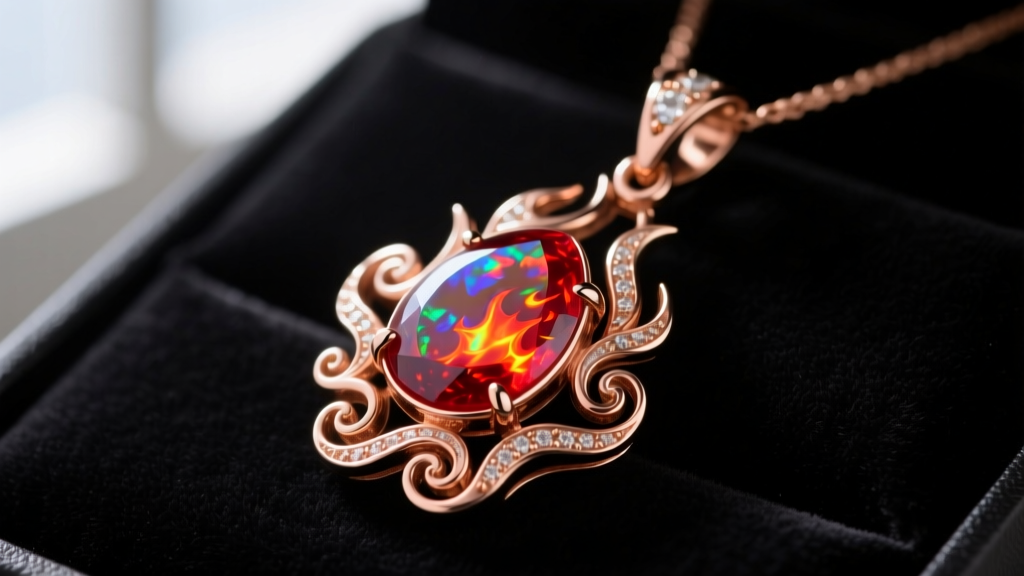
The Anatomy of a Necklace of Fireball Pendant
Translating mythical artifacts into wearable, high-end jewelry requires a mastery of structural engineering, thermal dynamics, and gemological optics. The "necklace of fireball" motif—often associated with fantasy tabletop lore and historical alchemical iconography—presents a unique challenge for bespoke jewelers in 2026. Unlike standard flat pendants, a true fireball design demands a three-dimensional, high-dome housing that securely suspends a heavily included, light-refractive gemstone while withstanding the pendulum stress of daily wear. This expert deep dive explores the exact metallurgical formulas, lapidary techniques, and load-bearing mechanics required to engineer a functional, museum-grade necklace of fireball.
Core Metal Alloys: Heat, Tarnish, and Tensile Strength
The visual impact of a fireball pendant relies heavily on the metal housing mimicking the warm, radiant glow of actual flames. While 18k yellow gold is a traditional choice, 14k Rose Gold is the superior technical choice for this specific design. The higher copper content (typically 22.25% copper, 58.5% gold, and 19.25% silver) not only provides the necessary reddish-copper hue but also increases the Vickers hardness (HV) to approximately 140 HV. This added rigidity is critical for the delicate, tapering flame prongs that wrap around the central stone, preventing them from bending or snagging on textiles.
For the casting process, jewelers utilize the lost-wax method. The wax model of the necklace of fireball must feature a sprue base of at least 3mm to ensure proper metal flow and prevent porosity—a common failure mode where trapped gases create microscopic voids in the flame tips. The flask burnout cycle must reach exactly 1350°F for bronze alternatives, or 1200°F for 14k rose gold, ensuring the investment powder completely vaporizes before the molten alloy is introduced via centrifugal or vacuum casting.
Gemological Selection: Achieving the "Fireball" Effect
The core of the pendant must simulate internal combustion. To achieve this, lapidaries select gemstones with high dispersion, vivid internal inclusions, or unique optical phenomena. The two premier candidates for a high-end necklace of fireball are Mexican Fire Opal and Spessartite Garnet. According to the Gemological Institute of America (GIA), spessartite garnet derives its vivid orange hue from manganese, boasting a high refractive index that creates a deep, glowing "fire" even in low ambient light.
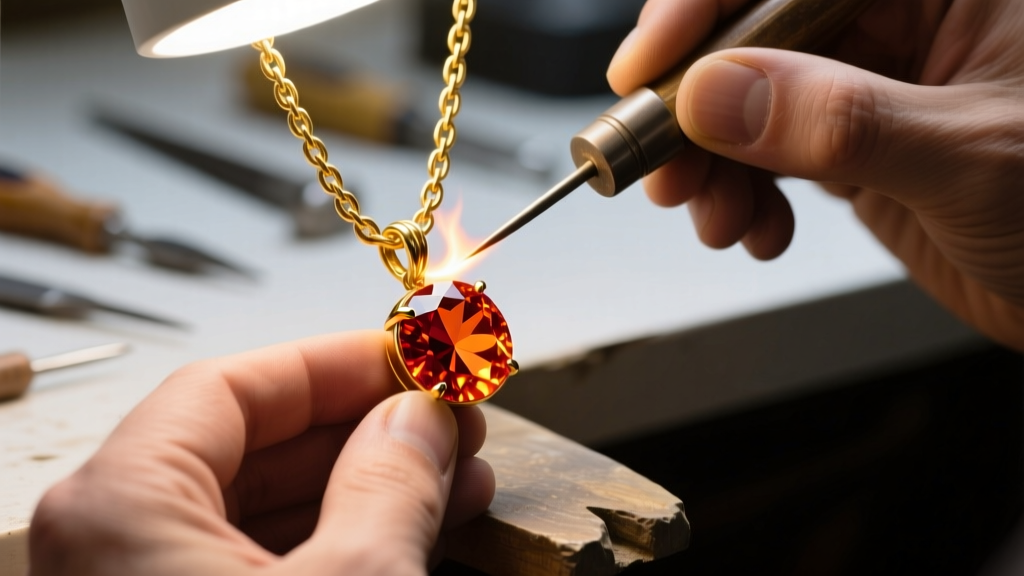
Gemstone Technical Comparison Matrix
Selecting the right stone requires balancing optical brilliance with structural durability. Fire opals are notoriously fragile, requiring protective bezel settings, whereas garnets can withstand more aggressive prong settings.
| Gemstone | Refractive Index (RI) | Mohs Hardness | Cleavage / Fracture | 2026 Market Price (per Carat) |
|---|---|---|---|---|
| Mexican Fire Opal | 1.45 | 5.5 - 6.5 | Conchoidal Fracture | $150 - $400 |
| Spessartite Garnet | 1.74 - 1.76 | 7.0 - 7.5 | None (Uneven Fracture) | $300 - $1,200 |
| Andesine Labradorite | 1.56 | 6.0 | Perfect Cleavage | $40 - $90 |
Note: Mexican fire opals contain trace amounts of water (up to 21%). Exposing a fire opal necklace of fireball to ultrasonic cleaners or extreme thermal shock will cause "crazing"—a network of internal fractures that permanently ruins the stone's optical clarity.
Structural Engineering: Chain Gauges and Bail Mechanics
A meticulously crafted fireball pendant, especially one housing a 15-to-30-carat garnet or opal cabochon, will easily weigh between 18 and 35 grams. Standard jewelry chains will snap or permanently deform under this concentrated, dynamic load. As detailed by technical resources at Rio Grande Jewelry Supply, chain selection must prioritize tensile strength and interlocking link geometry.
Optimal Chain Weaves for Heavy Pendants
- Franco Chain (4mm - 5mm): Features a V-shaped link pattern that distributes weight evenly across four sides of each link. A solid 14k gold 4.5mm Franco chain boasts a tensile strength exceeding 60 lbs, making it virtually impervious to the pendulum stress of a heavy pendant.
- Wheat (Spiga) Chain (3mm+): Woven in a braided, multi-directional pattern. The friction between the overlapping oval links prevents localized stress points, though it requires regular ultrasonic cleaning (if the pendant is removed) to prevent sebum buildup in the tight weaves.
- Avoid Cable and Curb Chains: Standard cable chains rely on single-plane soldered links. Under a 30-gram dynamic load, the solder joints at the 6 o'clock position of the links will experience metal fatigue and eventually shear.
Jump Ring Aspect Ratios and Soldering Protocols
The bail (the loop connecting the pendant to the chain) is the most critical failure point. For a necklace of fireball, the jump ring connecting the bail to the pendant housing must have a specific Aspect Ratio (AR). Using a 16-gauge (1.29mm) wire with a 5mm inner diameter yields an AR of 3.8. This ratio provides enough metal surface area for a robust solder joint without compromising the ring's structural geometry. Jewelers must use medium or hard-grade solder (melting at 1450°F to 1490°F) and laser-weld or torch-solder the seam completely shut. An unsoldered jump ring will inevitably pry open under the lateral torque generated when the wearer bends over or moves quickly.
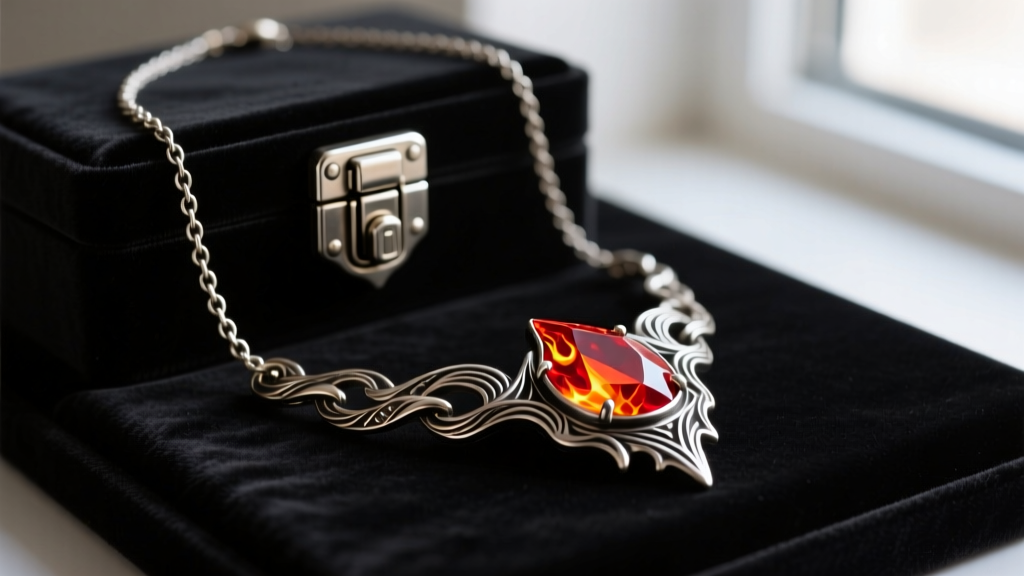
Clasp Mechanics and Load Distribution
The clasp must counterbalance the heavy front-facing pendant while resisting accidental unclasping. Standard lobster clasps are entirely insufficient for a necklace of fireball exceeding 25 grams; the internal spring mechanism will degrade, and the lever can catch on clothing, pulling the clasp open.
"For any bespoke pendant exceeding 20 grams, a custom box clasp with a figure-eight safety catch is non-negotiable. The box mechanism locks the tongue via internal friction and mechanical tension, completely bypassing the reliance on delicate spring-loaded levers." — Master Bench Jeweler Technical Guidelines, 2025
Furthermore, the clasp must be flanked by heavy-duty silicone or metal donut guards to prevent the chain from kinking at the connection point, ensuring the necklace drapes correctly and keeps the fireball pendant perfectly centered on the sternum.
Maintenance and Long-Term Preservation
Maintaining the optical brilliance of a necklace of fireball requires strict adherence to material-specific cleaning protocols. The 14k rose gold flame housing can be polished using a soft muslin wheel charged with red jeweler's rouge (iron oxide), which gently buffs the metal without removing significant surface material. However, the central gemstone dictates the cleaning method. If set with a spessartite garnet, the piece can be safely cleaned in a mild ultrasonic bath with a warm, ammonia-free detergent. If set with a Mexican fire opal, the pendant must be cleaned exclusively with a soft, damp microfiber cloth and a drop of pH-neutral soap, avoiding any immersion that could compromise the bezel seal or the stone's internal hydration.
By respecting the intersection of historical design motifs and modern metallurgical science, artisans can create a necklace of fireball that is not merely a costume piece, but a structurally sound, heirloom-grade artifact capable of surviving generations of wear.


