The Crochet and Bead Necklace: A Technical Construction Deep Dive
Explore the technical construction of a crochet and bead necklace. Master thread weights, bead sizing, tension control, and structural clasping.

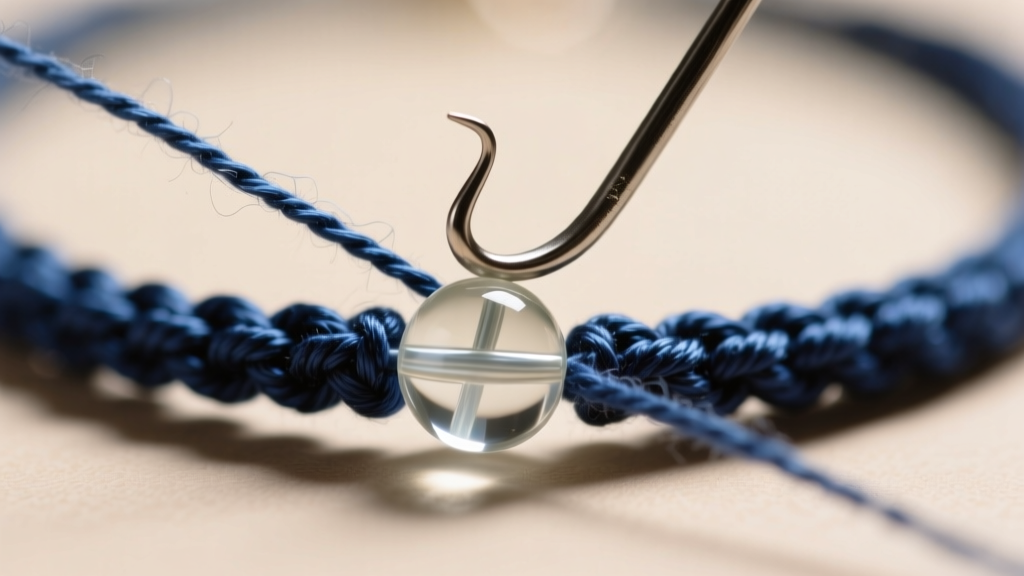
The Anatomy of a Crochet and Bead Necklace
Constructing a high-quality crochet and bead necklace is an exercise in micro-tension engineering. Unlike standard yarn crochet, where the fiber itself provides the structural integrity and visual bulk, bead crochet relies on the precise manipulation of thread to position rigid glass or metal elements into a flexible, continuous tubular or flat matrix. The resulting textile must drape like fabric while bearing the cumulative weight of hundreds of glass beads without stretching, warping, or suffering thread abrasion.
In 2026, the evolution of synthetic threads and precision-manufactured Japanese seed beads has elevated bead crochet from a niche craft to a highly technical jewelry-making discipline. This guide bypasses basic tutorials to explore the exact material specifications, aperture tolerances, and structural finishing techniques required to engineer a heirloom-grade bead crochet rope.
Material Specifications: Thread and Wire Selection
The most common point of failure in a crochet and bead necklace is thread degradation. Natural fibers like cotton or silk are entirely unsuitable for tubular bead crochet; they lack the tensile strength to support the weight of the beads and are highly susceptible to abrasion against the sharp inner edges of glass apertures. Expert constructors rely on specialized synthetic threads or fused polyethylenes.
| Thread Type | Material Composition | Diameter / Test | Stretch Factor | Best Application |
|---|---|---|---|---|
| Nymo (Size D) | Waxed Nylon | 0.30mm | Low-Medium | Standard 8/0 and 6/0 seed bead ropes |
| Fireline (6 lb) | Fused Polyethylene | 0.15mm | Zero | 11/0 and 15/0 micro-crochet, sharp-edged crystals |
| Silamide | 2-Ply Waxed Nylon | 0.28mm | Low | Flat bead crochet and structural warp threads |
| 26-Gauge Wire | Dead-Soft Copper/Silver | 0.40mm | None (Malleable) | Viking knit and rigid wire-crochet collars |
According to technical guidelines from The Beadsmith, fused polyethylene threads like Fireline offer a zero-stretch guarantee, which is critical for maintaining the geometric pattern of a tubular rope over decades of wear. However, because it has no stretch, it requires the crocheter to maintain absolute, uniform tension; a single tight stitch can distort the entire tube.
Bead Sizing and Aperture Tolerances
Understanding the mathematical relationship between bead outer diameter and inner hole aperture is non-negotiable. The Japanese "aught" system (e.g., 11/0, 8/0) denotes how many beads fit into a standard linear inch, but it does not account for the hole size, which dictates your thread capacity.

When executing the slip-stitches required for a crochet and bead necklace, the thread must pass through the bead multiple times during the structural locking phase. According to manufacturing specifications from Miyuki Beads, a standard 11/0 Delica bead measures 1.6mm in diameter but features a remarkably large 0.8mm aperture. This allows a 0.15mm Fireline thread to pass through the bead up to four times without friction-locking, whereas a 0.30mm Nymo thread will max out at two passes.
- 15/0 Seed Beads (1.3mm): Require 0.10mm to 0.15mm thread. Hooks must be 0.50mm or smaller.
- 11/0 Delica (1.6mm): The industry standard for tubular ropes. Accommodates 0.15mm to 0.30mm threads.
- 8/0 Seed Beads (3.0mm): Ideal for heavier, faster-crocheted ropes. Accommodates multi-strand nylon or 0.40mm wire.
- 3mm Czech Glass Rounds: Feature smaller, often sharp-edged holes (0.5mm). Require fused polyethylene threads to prevent shearing.
Tension Mechanics and Gauge Control
The structural integrity of a bead crochet rope relies entirely on the crocheter's tension gauge. In tubular crochet, the beads are pre-strung onto the thread in a specific sequence before the hook is introduced. As you work, the beads are pushed up to the hook, and a slip stitch is formed around the core thread of the previous row.
Hook Selection and Metallurgy
Standard aluminum or bamboo crochet hooks are useless for this application. The hook must slide past glass beads without catching, and it must withstand the lateral torque of pulling thread through a tightly packed tube. Expert constructors use precision-milled steel hooks, typically ranging from 0.6mm to 0.9mm. Brands like Tulip Etimo and Clover Amour offer steel hooks with ergonomic handles that allow for the micro-movements required to catch a 0.15mm thread inside a 1.6mm bead tube.
Stitch Architecture: Slip Stitch vs. Single Crochet
While single crochet can be used for flat bead integration, tubular bead crochet almost exclusively utilizes the slip stitch. The slip stitch creates a dense, highly flexible spiral that allows the necklace to drape like liquid. However, it offers zero vertical forgiveness. If your tension varies by even a fraction of a millimeter, the spiral will warp, causing the geometric pattern to "drift" or collapse inward.
Finishing Hardware and Clasp Integration
You cannot simply tie off a bead crochet rope and attach a jump ring. The core of the rope consists entirely of thread, which will compress, fray, and eventually pull through a standard crimp bead or jump ring. Proper finishing requires structural end caps and chemical adhesives.
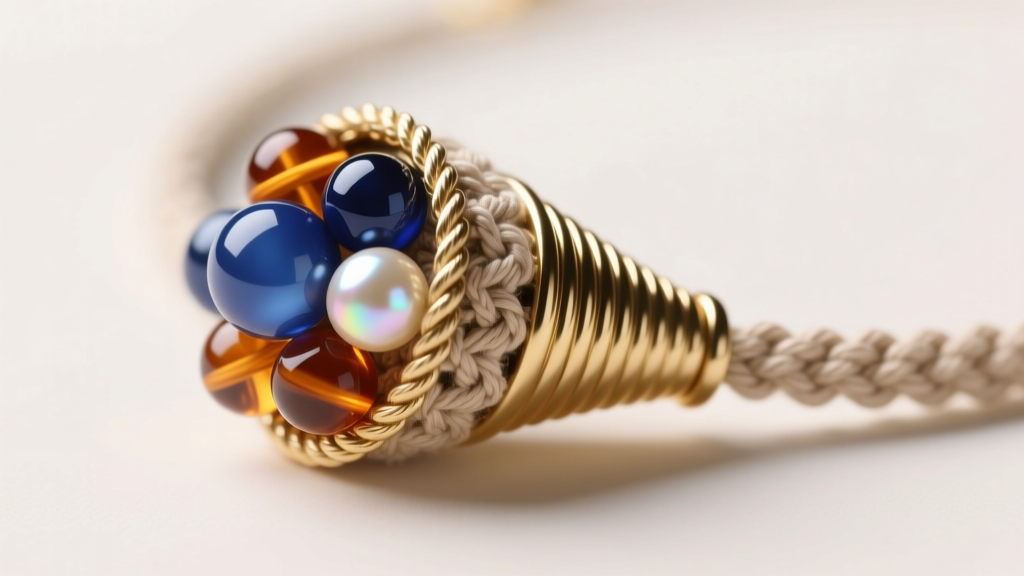
"The transition point between the flexible bead textile and the rigid metal clasp is the highest stress point on any necklace. Mechanical interlocking combined with chemical bonding is the only archival-safe method for finishing." — Interweave Jewelry Technical Archives
To finish a crochet and bead necklace, the final rows are often crocheted with a thicker core thread or a piece of 20-gauge dead-soft wire inserted into the tubular center. The thread tails are then tightly wrapped around this core wire. A ribbed metal cone or barrel end cap is threaded onto the wire, and the interior cavity is flooded with a two-part jeweler's epoxy, such as Devcon 5-Minute Clear. This creates a permanent, rigid plug that distributes the pulling force across the entire interior surface area of the end cap, rather than relying on the tensile strength of a single knot.
Troubleshooting Common Structural Failures
Even master-level artisans encounter structural anomalies when engineering a complex crochet and bead necklace. Here are the technical solutions to the most common failure modes:
- Thread Abrasion and Fraying: If your thread is snapping inside the tube, the inner edges of your beads are likely sharp (common with Czech glass or metallic-finish beads). Solution: Switch to a fused polyethylene thread and apply a synthetic thread conditioner. Avoid natural beeswax, which can become brittle and degrade nylon fibers over time.
- The "Collapsed Tube" Effect: If the rope feels squishy and lacks a defined cylindrical shape, your core tension is too loose, or you are using a thread that is too thin for the bead aperture. Solution: Increase your thread diameter or introduce a flexible silicone cord core into the center of the tube during the final finishing stages to provide internal scaffolding.
- Pattern Drift: If your spiral pattern begins to stagger diagonally rather than stacking vertically, your hook insertion point is inconsistent. Solution: Ensure you are consistently inserting the hook under the horizontal "bump" of the chain stitch directly behind the bead, rather than under the vertical thread bar.
Mastering the technical variables of thread denier, aperture tolerance, and epoxy-set finishing transforms the crochet and bead necklace from a simple craft project into a durable, museum-quality piece of structural jewelry.


