What Does It Mean When Your Cross Necklace Breaks? Expert Fixes
Discover what it means when your cross necklace breaks. We explore spiritual lore versus mechanical failure modes, plus expert repair tips.

The Spiritual Lore vs. The Mechanical Reality
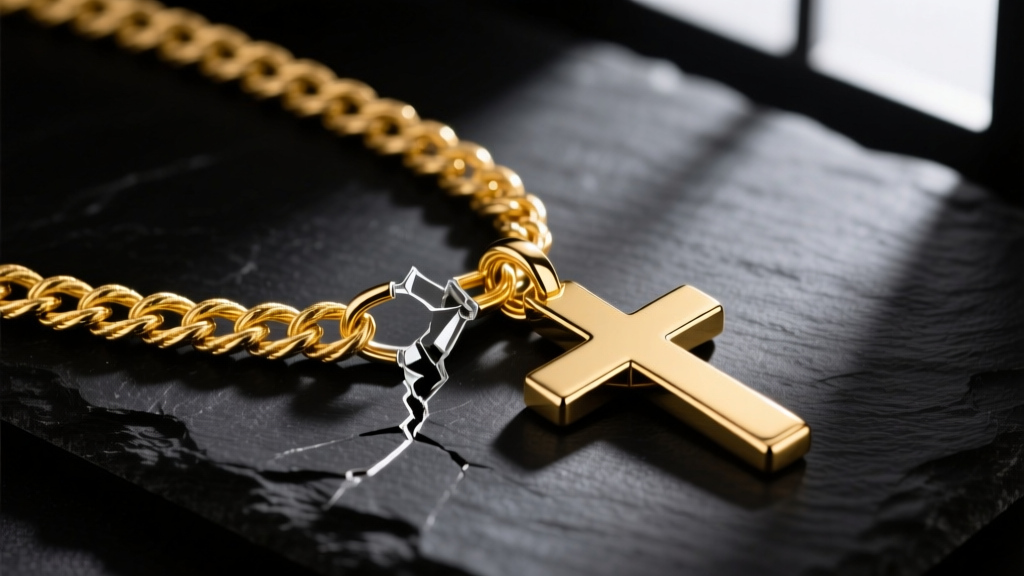
If you are searching for what does it mean when your cross necklace breaks, you have likely encountered a flood of superstitions. In various spiritual traditions, a broken cross necklace is interpreted as a sign that the pendant has absorbed negative energy, fulfilled its protective duty, or is signaling an impending life transition. While these beliefs offer comfort and hold deep personal significance for many wearers, as jewelry experts, we must also look at the physical reality of the piece.
From a metallurgical and mechanical standpoint, a snapping chain or a detached pendant bail is rarely a mystical event. It is almost always the result of metal fatigue, friction wear, chemical corrosion, or manufacturing defects. Understanding the exact mechanical failure point of your jewelry allows you to repair it properly and prevent future breakage. In this comprehensive troubleshooting guide, we bridge the gap between sentimental meaning and material science, giving you the exact frameworks needed to diagnose, repair, and fortify your cross necklace.
Top 5 Mechanical Reasons Your Cross Necklace Snapped
Before rushing to a jeweler, inspect the break point. Where the chain or pendant failed tells a specific story about the structural integrity of your jewelry. Here are the five most common mechanical culprits.
1. Clasp Spring Failure (The Weakest Link)
The most frequent point of failure on any necklace is the clasp. If you are wearing a lightweight cross pendant on a chain with a standard spring-ring clasp, the internal steel spring is highly susceptible to fatigue. Over 18 to 24 months of daily wear, the repetitive compression of the spring, combined with exposure to sweat and cosmetics, causes the mechanism to snap or fail to close. Expert Fix: Upgrade to a solid lobster claw clasp or a magnetic neodymium clasp, which lack the fragile internal springs of traditional closures.
2. Chain Link Fatigue and Friction Wear
The constant movement of your neck creates micro-friction between the chain links. This is especially prevalent in rope chains and cable chains. Over time, the metal literally rubs away at the interior of the link, thinning the wire gauge until it can no longer support the weight of the cross pendant. If the break occurred in the middle of the chain, inspect the adjacent links. If they look oval-shaped or significantly thinner than the links near the clasp, friction wear is your culprit.
3. Solder Joint Degradation on the Pendant Bail
The bail is the loop that connects the cross pendant to the chain. On mass-produced jewelry, the bail is often attached using a low-temperature, lead-free silver solder. If the pendant is heavy (e.g., solid 14k gold or thick sterling silver) and the chain is thin, the pendulum effect of walking places immense shear stress on this solder joint. Eventually, the solder micro-fractures, and the cross detaches from the chain.
4. Metal Porosity from Poor Casting
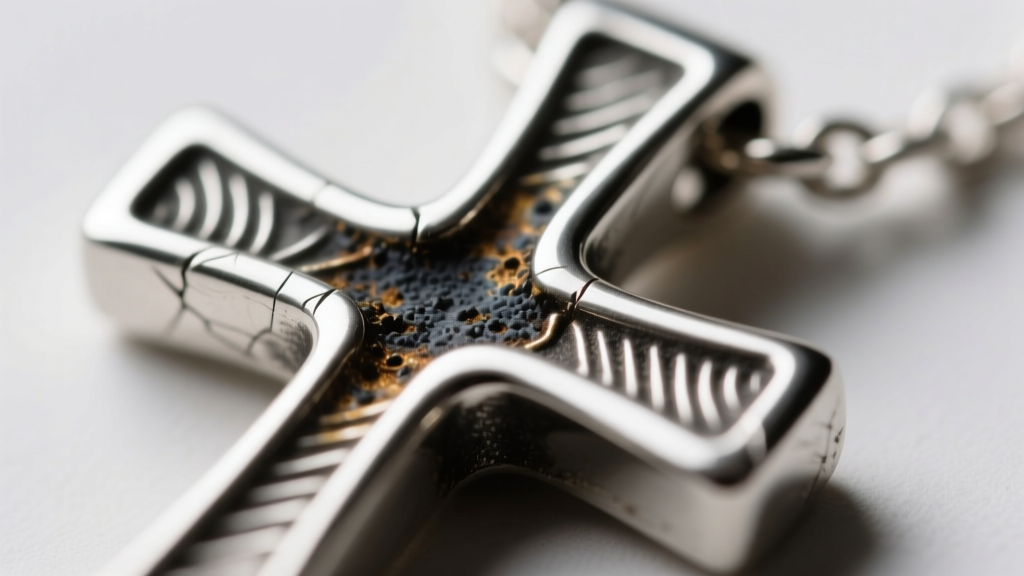
If the cross pendant itself cracked or broke at the arm (rather than the bail), you are likely dealing with casting porosity. When molten metal is poured into a mold, trapped gases can create microscopic air bubbles inside the piece. These bubbles create structural voids. A pendant with high porosity might survive years of gentle wear but will snap cleanly in half if subjected to a sudden impact, like catching it on a shirt collar or a car door.
5. Chemical Corrosion and Tarnish Weakening
Sterling silver (925) and low-karat gold alloys are highly reactive to sulfur, chlorine, and human perspiration. According to the Gemological Institute of America (GIA), prolonged exposure to these elements causes intergranular corrosion, where the chemical bonds between the alloy metals break down at a microscopic level. The metal becomes brittle, losing its tensile strength and snapping under minimal pressure.
Material Vulnerability Chart: Which Metals Break First?
Not all cross necklaces are created equal. The Vickers Hardness (HV) and tensile strength of the metal dictate how well it will withstand daily wear and tear. Below is a diagnostic chart to help you understand your jewelry's baseline vulnerability.
| Metal Type | Avg. Hardness (HV) | Break Risk Profile | Common Failure Mode |
|---|---|---|---|
| Sterling Silver (925) | 60 - 90 HV | High | Stretching, link thinning, severe tarnish brittleness. |
| 10k / 14k Gold | 120 - 160 HV | Moderate | Clasp failure, bail solder fatigue. |
| 18k Gold | 130 - 170 HV | Moderate-High | Bending, prong/catch snagging, link deformation. |
| 24k Gold | 25 - 45 HV | Extreme | Severe warping, chain snapping under minimal weight. |
| 316L Stainless Steel | 200 - 220 HV | Very Low | Clasp mechanism jamming; chain rarely breaks. |
| Titanium (Grade 5) | 340+ HV | Negligible | Almost impossible to break via normal wear. |
Note: Data aligns with standard metallurgical benchmarks referenced by FTC Jewelry Guides regarding metal purity and durability standards.
How to Troubleshoot and Repair a Broken Cross Chain
When evaluating a broken necklace, follow this systematic troubleshooting framework to determine the best course of action.
- Locate the Exact Break Point: Use a 10x jeweler's loupe. Did a single link open, or did the metal snap cleanly? An opened link suggests a manufacturing defect (poor closing), while a clean snap indicates metal fatigue or porosity.
- Assess the Chain Style: Box chains and Figaro chains are highly resilient and easy to solder. Conversely, snake chains, herringbone chains, and omega chains are notoriously difficult to repair invisibly. If a snake chain breaks, the structural integrity of the entire tube is compromised, and a repair will leave a permanent weak, kinked spot.
- Evaluate the Pendant Bail: If the bail broke off the cross, check the remaining metal on the pendant. If there is less than 1.5mm of solid metal left at the top of the cross, a jeweler will need to drill a new hole or laser-weld a completely new bail onto the piece.
- Choose the Right Soldering Method: For standard 14k gold and sterling silver, traditional torch soldering with color-matched solder paste is sufficient. However, if your cross necklace is made of titanium, tungsten, or stainless steel, traditional soldering will not work. These metals require specialized laser welding, which uses concentrated light to fuse the metals without melting the surrounding areas.
Preventative Maintenance for Religious and Fashion Pendants
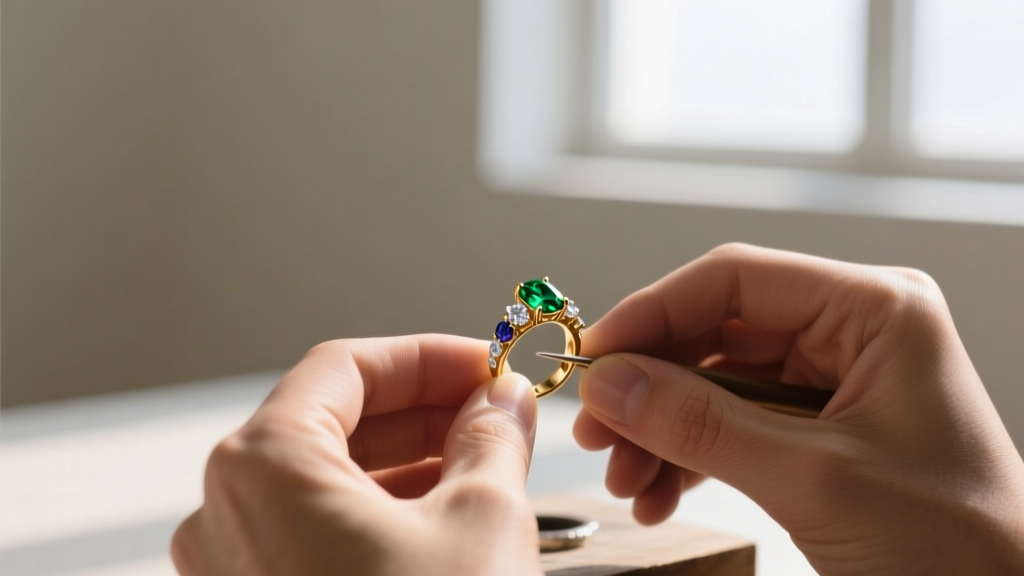
To ensure your cross necklace remains intact for decades, you must match the chain gauge to the pendant's weight and adhere to strict maintenance protocols.
The Golden Ratio of Chain Gauge to Pendant Weight
The most common mistake consumers make is pairing a heavy, solid-metal cross pendant with a delicate, sub-millimeter chain. As a general rule of thumb in jewelry design:
- Pendants under 5 grams: Can be safely worn on 0.9mm to 1.1mm chains (approx. 20-18 gauge).
- Pendants between 5 and 15 grams: Require a minimum of 1.2mm to 1.5mm chains (approx. 16-14 gauge). Box chains or Wheat chains are highly recommended here for their interlocking tensile strength.
- Pendants over 15 grams: Need heavy-duty 2.0mm+ chains (approx. 12 gauge or thicker), preferably in a solid Cuban link or thick Figaro style.
Routine Inspection and Cleaning
Every six months, perform a physical stress test. Hold the clasp and the pendant, and apply gentle, opposing tension. If you hear a faint clicking or see a link gap open, the chain is failing. Furthermore, wash your necklace bi-weekly using warm water, a drop of mild dish soap, and a soft-bristled baby toothbrush. This removes the acidic buildup of sebum and dead skin cells that accelerate intergranular corrosion in silver and low-karat gold alloys.
When to Replace vs. When to Repair
Not every broken cross necklace is worth saving. Use this financial and structural decision matrix to decide your next move.
Opt for Repair ($25 - $85) When:
- The chain is a high-value metal (14k/18k gold or platinum) and the break is a simple link separation.
- The pendant bail has detached, but the cross itself is structurally sound and holds high sentimental or intrinsic value.
- The clasp mechanism has simply failed and can be snipped off and replaced with a heavier lobster claw.
Opt for Replacement ($50 - $300+) When:
- The chain is a hollow snake or herringbone style. The repair will be visible, weak, and prone to snapping again within weeks.
- The chain is gold-plated or gold vermeil over brass. Soldering will burn off the plating, leaving a permanent, unmatchable dark scar on the metal.
- The cross pendant exhibits severe casting porosity (multiple micro-cracks visible under a loupe). Repairing one crack will simply shift the stress to the next void, leading to a cycle of endless breakage.
"A cross necklace is a profound symbol of faith, heritage, and personal identity. While the sudden breaking of such a piece can feel spiritually jarring, treating the jewelry with proper metallurgical respect—matching the correct chain gauge to the pendant weight and understanding the limits of your chosen metal—ensures that your symbol remains unbroken for generations."


