Crown Cross Necklace Buying Guide: What to Look For
Discover what to look for when buying a crown cross necklace in 2026. Expert tips on metal grades, chain pairings, pendant proportions, and pricing.

The Anatomy and Balance of a Crown Cross Pendant
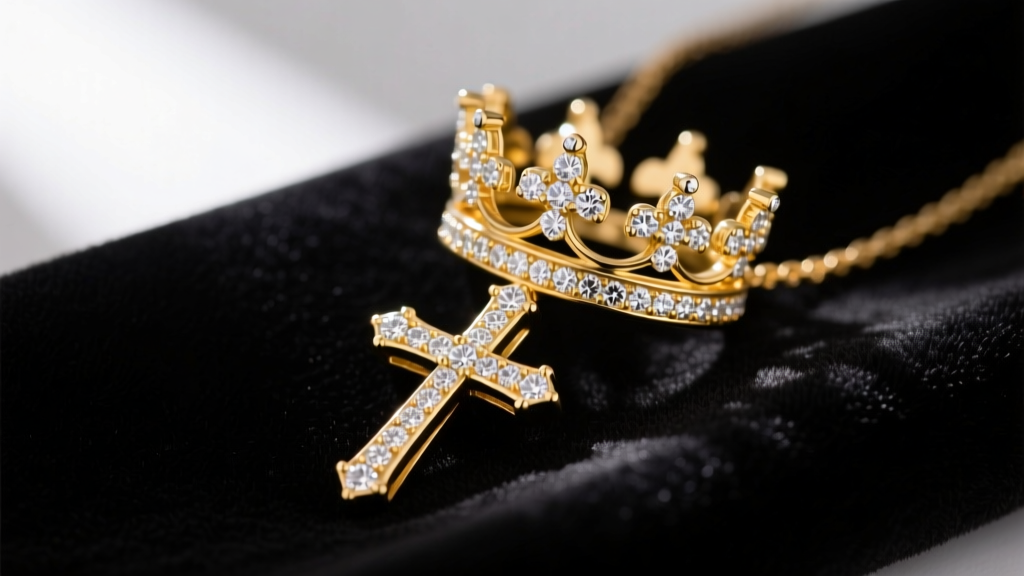
The crown cross necklace is a striking hybrid of religious symbolism and streetwear royalty. Unlike a traditional crucifix, the addition of the crown element fundamentally alters the pendant’s center of gravity. When shopping for a crown cross necklace, the first thing a discerning buyer must evaluate is the physical balance of the piece. Because the crown sits at the top of the vertical axis, poorly manufactured pendants are notoriously top-heavy, causing them to flip upside down or slide awkwardly along the chain.
To counteract this, master jewelers employ a technique called counter-weighting. This involves casting the bottom arm of the cross slightly thicker or denser than the top arms to anchor the pendant against the chest. When inspecting a crown cross in person or reviewing high-resolution images online, look for a tapered bottom or a reinforced lower bail. If the pendant looks uniformly thick from top to bottom, it is highly likely to flip when worn over a t-shirt or hoodie.
The Crown Attachment Method
How the crown attaches to the cross dictates the lifespan of the jewelry. There are two primary methods:
- Cast-as-One (Solid): The crown and cross are molded from a single piece of wax and cast together. This is the gold standard for durability, ensuring the crown will never snap off under the weight of a heavy chain.
- Soldered Overlay: The crown is cast separately and soldered onto the cross base. While this allows for two-tone designs (e.g., a silver cross with a gold crown), you must inspect the solder joints at the base of the crown arches for any porosity or weak seams.
Metal Purity and Base Materials
The metal grade determines not only the price but also the skin compatibility and tarnish resistance of your necklace. According to the Jewelers of America, understanding hallmark stamps is critical to avoid overpaying for plated metals marketed as solid.
| Metal Grade | Stamp | Pros | Cons | Best For |
|---|---|---|---|---|
| 925 Sterling Silver | 925 | Affordable, bright luster | Tarnishes, scratches easily | Everyday wear, budget buyers |
| 10k Gold | 10k, 417 | Highly durable, scratch-resistant | Lower gold content, duller hue | Heavy streetwear chains |
| 14k Gold | 14k, 585 | Perfect balance of purity and strength | Higher price point | Fine jewelry, lifetime pieces |
| 18k Gold | 18k, 750 | Rich, deep yellow color | Soft, prone to denting | High-end luxury pendants |
Pro-Tip for Silver Buyers: If you opt for 925 sterling silver, ensure the piece is rhodium-plated. Rhodium is a precious metal in the platinum family that provides a brilliant, tarnish-resistant finish. Unplated silver crown crosses will oxidize rapidly in the crevices of the crown’s arches, turning black and requiring frequent polishing.
The Bail Bottleneck: Chain Pairings and Weight
The most common mistake buyers make when purchasing a crown cross necklace is ignoring the bail—the loop at the top of the pendant that threads onto the chain. Crown crosses are inherently heavier than standard pendants, often weighing between 20 and 50 grams. Pairing a 40-gram pendant with a delicate 2mm cable chain will result in a snapped chain and a lost pendant.
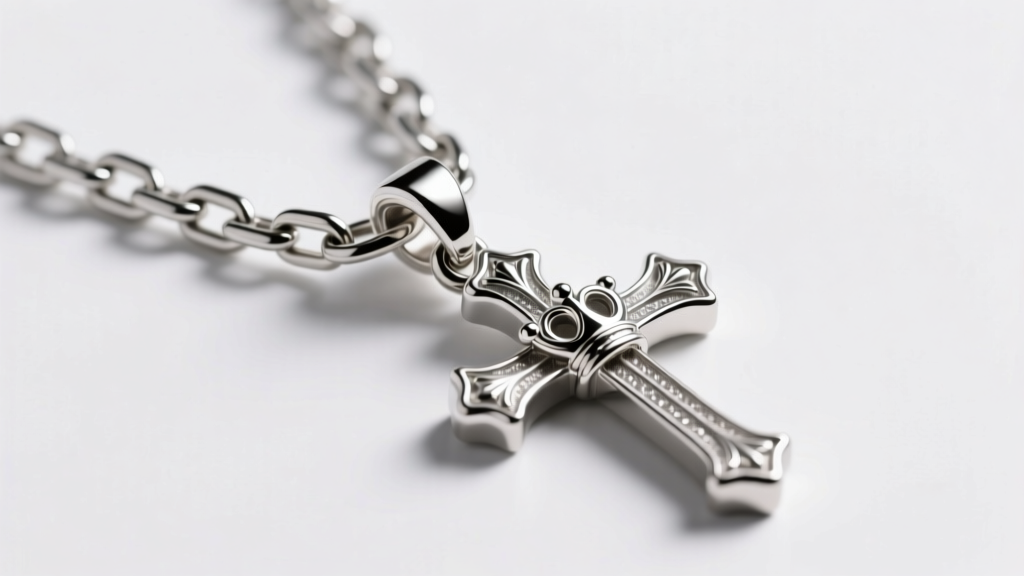
Furthermore, you must ensure the inner diameter of the bail can actually accommodate your preferred chain width. A thick 10mm Cuban link is useless if the pendant’s bail only has a 5mm opening. Use the chart below to match your chain width to the required bail size:
| Chain Width | Minimum Bail Inner Diameter | Recommended Chain Type |
|---|---|---|
| 3mm - 5mm | 6mm - 8mm | Rope, Box, Figaro |
| 6mm - 8mm | 9mm - 12mm | Standard Cuban, Curb |
| 10mm - 12mm | 14mm - 16mm | Thick Cuban, Franco |
| 14mm+ | 18mm+ | Custom Iced Links |
For heavy crown crosses, the Franco chain is widely considered the best pairing. Its V-shaped, interlocking links provide immense tensile strength and a smooth surface that prevents the heavy bail from catching and wearing down the metal over time.
Stone Settings: Iced-Out vs. Minimalist
In 2026, the “iced-out” aesthetic remains a dominant force in pendant design, but not all stone settings are created equal. The crown’s intricate arches and the cross’s sharp corners require precise stone placement.
Prong-Set vs. Glued Stones
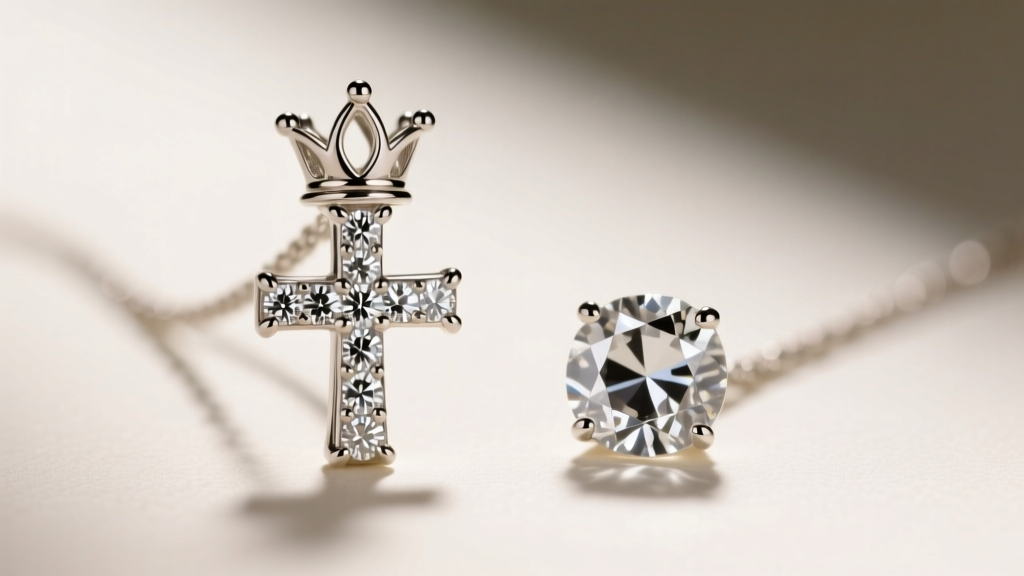
When evaluating a diamond or cubic zirconia crown cross, inspect the setting under magnification. High-quality pendants use micro-pave prong settings, where tiny metal beads are pushed over the girdle of the stone to hold it in place. This allows maximum light to enter the stone, creating the signature “spill” or sparkle effect.
Cheaper alternatives use industrial adhesive to glue stones into a channel. While this creates a smooth surface, the glue degrades over time when exposed to sweat, cologne, and body heat, leading to missing stones. Furthermore, the Gemological Institute of America (GIA) notes that lab-grown diamonds and high-grade moissanite are almost exclusively prong-set, whereas glued settings are a dead giveaway for low-grade cubic zirconia or glass simulants.
Corner Stone Protection
The four outer points of the cross are highly susceptible to impact. Look for pendants that utilize V-prongs at the tips of the cross. V-prongs wrap around the sharp points of the stone, protecting them from chipping if the pendant swings and hits a hard surface.
Pricing Tiers and What to Expect in 2026
The market for crown cross necklaces is vast, ranging from fast-fashion accessories to bespoke high jewelry. Here is a realistic breakdown of pricing tiers based on current precious metal markets and lab-grown diamond valuations.
- Fashion Tier ($40 - $120): Brass or stainless steel bases with gold PVD plating. Stones are glued AAA cubic zirconia. Expect the plating to wear off the high-friction areas (like the bail) within 6 to 12 months of daily wear.
- Mid-Tier ($150 - $600): Solid 925 sterling silver (rhodium-plated) or 10k gold. Stones are typically moissanite or high-quality zircon, micro-pave set. This is the sweet spot for streetwear enthusiasts who want durability without the luxury markup.
- Fine Tier ($800 - $3,500): Solid 14k gold with lab-grown diamonds (VS clarity, F-G color). These pieces come with certificates of authenticity and are built to last generations.
- Luxury Tier ($5,000+): 18k gold or platinum featuring natural, earth-mined VVS diamonds. Often custom-commissioned from specialized jewelers.
Authentication, Hallmarks, and FTC Guidelines
When investing in the Fine or Luxury tiers, always verify the hallmarks. According to the Federal Trade Commission (FTC) Jewelry Guides, any piece sold as solid gold in the United States must be stamped with its karatage (e.g., 14k) and bear a registered trademark of the manufacturer. If your 14k crown cross lacks a manufacturer's hallmark next to the purity stamp, it is a red flag for counterfeit or unverified metallurgy.
“A crown cross is a statement piece that draws the eye directly to the center of the chest. Never compromise on the bail or the chain. A $2,000 pendant hanging on a $30 hollow chain is a recipe for a lost investment.”
Styling and Layering the Crown Cross
Because the crown adds significant vertical height (often adding 15mm to 25mm to the total drop), a crown cross should almost always be the anchor piece in a layered setup. Wear it on a 22-inch or 24-inch chain so the crown rests comfortably on the sternum. Layer above it with an 18-inch or 20-inch minimalist chain, such as a 3mm plain box or wheat chain, to frame the pendant without competing for visual dominance. Avoid layering it with other large pendants, as the intricate details of the crown will become lost in the clutter.


