How to Fix a Faded Footprint Necklace: Expert Troubleshooting
Is your custom footprint necklace fading or tarnishing? Learn expert troubleshooting tips to restore engravings, prevent chain breakage, and preserve memories.

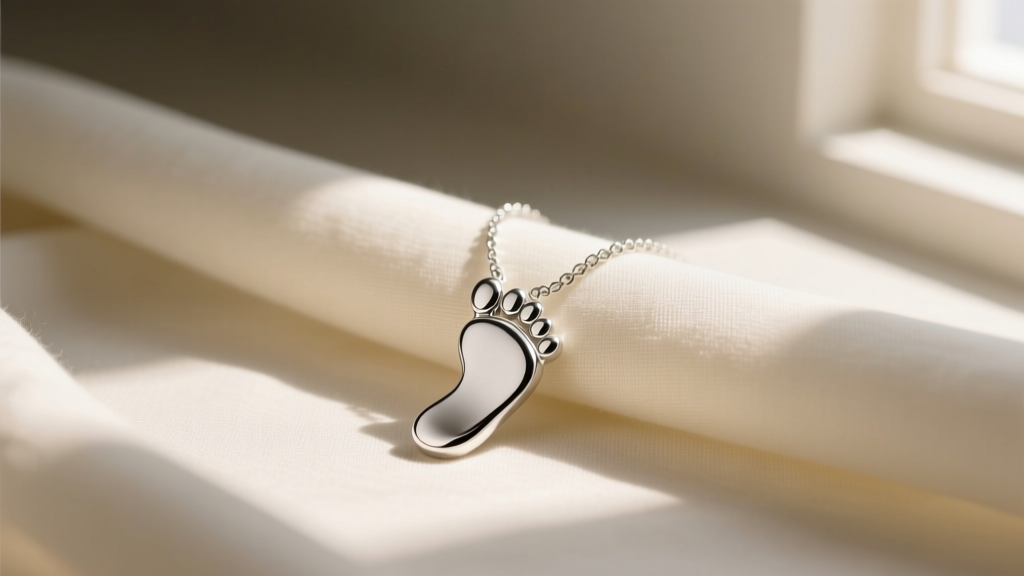
The Heartbreak of a Fading Memory: Why Footprint Necklaces Degrade
A custom footprint necklace is more than just an accessory; it is a tangible, wearable memory of a fleeting moment in time. Whether it captures the tiny toes of a newborn or the paw pads of a beloved pet, these keepsakes are often worn daily, resting directly against the skin. However, this constant wear exposes the pendant to a harsh environment of friction, body oils, lotions, and environmental pollutants. Over time, parents and pet owners frequently notice two devastating issues: the intricate details of the footprint engraving begin to smooth out and fade, and the metal itself develops a dull, tarnished patina.
Troubleshooting a degraded footprint necklace requires understanding the intersection of metallurgy, jewelry fabrication techniques, and daily wear mechanics. Unlike mass-produced stamped pendants, custom footprint jewelry relies on surface-level or shallow-groove engravings that are highly susceptible to micro-abrasions. In this comprehensive guide, we will diagnose the most common failure modes of custom footprint pendants and provide actionable, expert-level solutions to restore and protect your precious keepsake.
Troubleshooting Engraving Loss: Laser vs. Diamond Drag
The most common complaint with custom footprint jewelry is the gradual disappearance of the engraved ridges and whorls. To fix this, you must first identify the fabrication method used by the original manufacturer. The longevity of your pendant depends entirely on the depth and technique of the initial engraving.
The Problem with Surface Laser Engraving
Many online retailers and mall kiosks use rotary or fiber lasers to etch footprints onto metal. Laser engraving works by burning or oxidizing the surface of the metal, creating a dark contrast. However, the physical depth of a laser engraving is typically less than 0.05 millimeters. Because the footprint is essentially 'drawn' on the surface, daily friction from clothing and skin will polish away the oxidized layer within six to twelve months, leaving behind a smooth, blank metal disc.
The Solution: Diamond Drag and CNC Milling
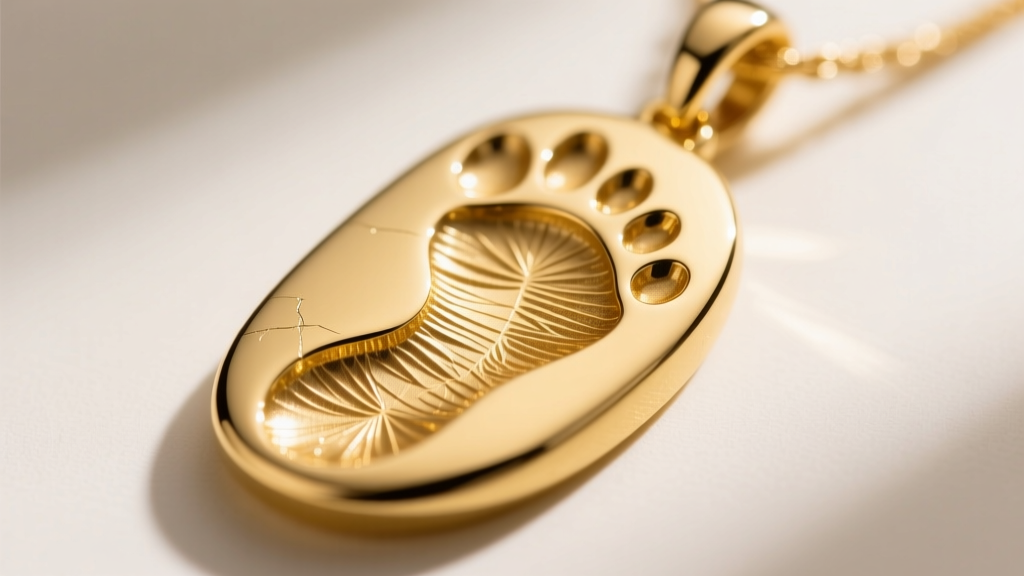
For a permanent footprint necklace, the engraving must be physically carved into the metal. High-end jewelers use a diamond drag engraver or a CNC milling machine equipped with a V-bit carbide cutter. This process physically removes metal, creating grooves that are 0.2mm to 0.5mm deep. The sharp, deep valleys of a diamond-drag engraving will not polish away with daily wear.
How to Restore Faded Grooves
If your laser-engraved footprint has already faded, do not attempt to polish it, as this will only accelerate the removal of the remaining etching. Instead, take the pendant to a local bench jeweler and request a 're-strike' or 're-cut'. The jeweler can use a pantograph machine or a CNC mill to trace the faint remaining lines and physically carve them deeper into the metal. Expect to pay between $45 and $85 for this restoration service. For an added layer of protection, ask the jeweler to apply a dark enamel or rhodium plating into the grooves to create high contrast without relying on surface oxidation.
Metal Tarnish and Skin Reactions: A Material Breakdown
Tarnish is a chemical reaction, not a defect in the jewelry. When a footprint necklace turns black or dull, it is usually the result of the alloy metals reacting with sulfur compounds in the air, or with the natural acidity and lotions on your skin. Understanding your metal grade is critical for troubleshooting discoloration and skin irritation.
| Metal Grade | Alloy Composition | Tarnish Risk | Re-engraving Difficulty |
|---|---|---|---|
| 925 Sterling Silver | 92.5% Silver, 7.5% Copper | High (Copper reacts with sulfur) | Easy (Soft metal) |
| 14k Solid Gold | 58.5% Gold, 41.5% Alloy | Low (Highly stable) | Moderate (Requires sharp carbide) |
| 316L Surgical Steel | Iron, Chromium, Nickel, Molybdenum | None (Passive oxide layer) | Very Hard (Requires fiber laser) |
According to the Gemological Institute of America (GIA), the copper used to strengthen sterling silver is the primary culprit behind black silver sulfide tarnish. If your sterling silver footprint necklace is turning your skin green or black, it is a sign of high acidity in your sweat reacting with the copper. To solve this, you can have the pendant electroplated with a thin layer of rhodium. Rhodium is a platinum-group metal that provides a brilliant, tarnish-proof barrier between the silver and your skin.
Conversely, if you are dealing with 316L stainless steel, you will never face tarnish, but you will face a different problem: re-engraving is nearly impossible for a standard jeweler. Steel is too hard for traditional diamond drag bits, meaning if a steel footprint fades, it must be re-etched by a specialist using a high-wattage fiber laser.
Chain Snags and Clasp Failures: Securing the Keepsake
A heavy custom cast footprint pendant requires a chain that can support its weight without stretching or snapping. The most frequent mechanical failure in footprint necklaces is the chain breaking at the solder joint near the clasp, or the pendant bail wearing through the chain links.
Chains to Avoid
- Box Chains (Under 1.0mm): While they look sturdy, thin box chains are notorious for snapping at the geometric corners where the solder joints are weakest.
- Snake Chains: These flexible tubes easily kink and trap hair, making them a poor choice for parents who frequently hold infants while wearing the necklace.
- Spring Ring Clasps: The internal spring mechanism frequently fails when subjected to the constant downward pull of a heavy footprint pendant.
The Expert Recommendation
Upgrade to a 1.2mm to 1.5mm Rolo or Wheat chain crafted in the same metal as your pendant. Rolo chains feature interlocking circular links that distribute weight evenly, while Wheat chains offer a braided structure that is virtually impossible to kink. Always ensure the chain is finished with a heavy-duty lobster clasp, which features a solid cast body and a much stronger internal spring than a standard spring ring. As noted in the care guidelines by Jewelers of America, regularly inspecting the clasp and jump rings for micro-gaps can prevent catastrophic loss of your irreplaceable keepsake.
The Pre-Production Problem: Capturing a Crisp Impression
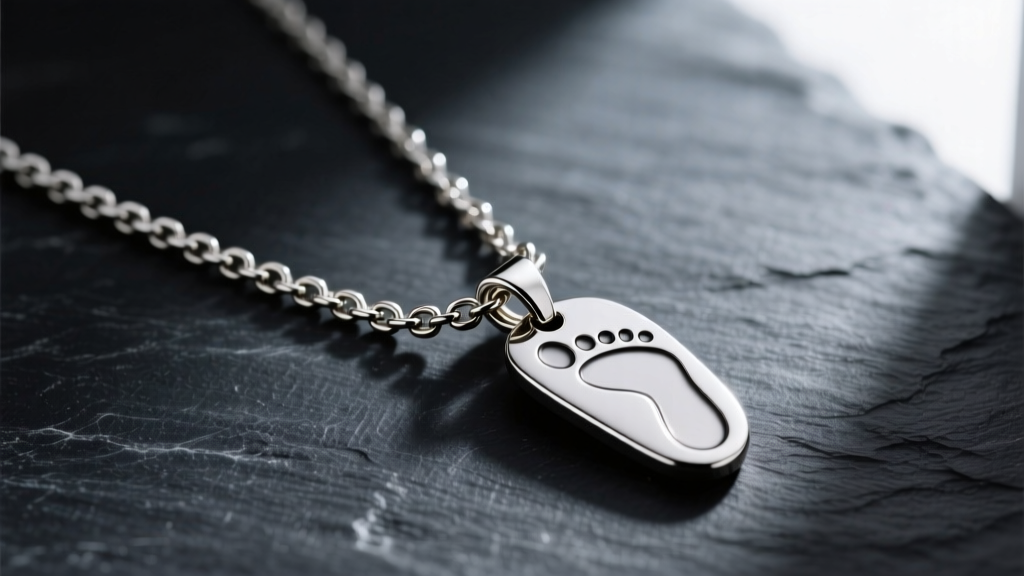
Sometimes, the troubleshooting must happen before the necklace is even manufactured. A blurry, poorly defined footprint necklace is usually the result of a flawed initial impression. Traditional ink pads often result in 'blobbing,' where the ink pools between the toes and obscures the unique friction ridges of the footprint.
Pro-Tip for New Parents: Skip the traditional ink pads and clay molds. Instead, use hospital-grade inkless wipes (such as Pearson's Inkless Wipes). These wipes use a specialized chemical that only turns dark when exposed to the moisture and oils naturally present on the skin. They capture microscopic ridge details without any mess, and they eliminate the pressure-distortion common when pressing a baby's foot into heavy polymer clay.
If you are commissioning a 3D cast footprint necklace (where the actual depth of the baby's foot is molded), ensure the jeweler uses a two-part platinum-cure silicone mold rather than alginate. Alginate dries out and shrinks within minutes, which can warp the proportions of the toes before the plaster cast is even poured.
Daily Maintenance Protocol for Custom Keepsakes
To preserve the contrast and structural integrity of your footprint necklace, you must adopt a specific cleaning protocol. Never use ultrasonic jewelry cleaners on a footprint pendant that features oxidized (blackened) grooves or enamel fill. The high-frequency vibrations and heated chemical baths will strip the dark contrast right out of the engraved lines, leaving you with a flat, illegible silver or gold disc.
Instead, clean your necklace weekly using a few drops of mild, phosphate-free dish soap (like Dawn) and warm water. Use a specialized jewelry polishing cloth to gently buff the raised, flat surfaces of the pendant. Avoid using the treated side of the cloth on the engraved grooves; instead, use a soft-bristled baby toothbrush to gently sweep away trapped skin cells and lotion from deep within the footprint lines. By combining deep physical engraving, the correct chain gauge, and mindful maintenance, your footprint necklace will remain a crisp, legible tribute for generations to come. For more detailed information on metal stamping and quality marks, refer to the Federal Trade Commission's Jewelry Guides, which outline the strict standards for precious metal purity and consumer protection in custom jewelry.


