How to Buy an Authentic Antique Mother of Pearl Necklace
Discover how to authenticate, price, and care for an antique mother of pearl necklace. Expert tips on nacre, clasps, and avoiding fakes.

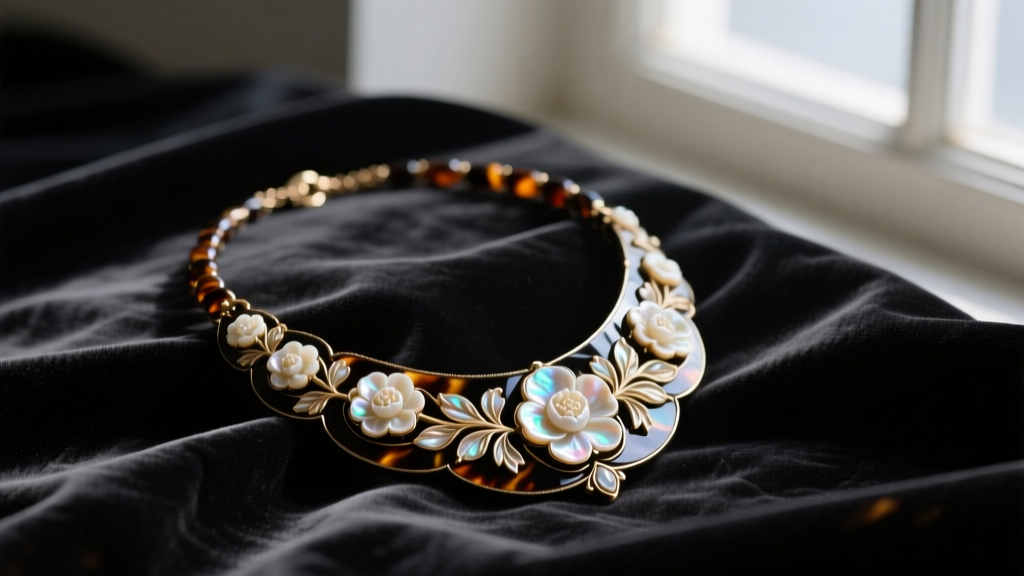
The market for organic gemstones has evolved dramatically, and the hunt for a genuine antique mother of pearl necklace is more complex in 2026 than ever before. With modern synthetic resins and lab-grown nacre composites mimicking the iridescent luster of natural shell with frightening accuracy, buyers must look far beyond surface-level shimmer. Whether you are pursuing a Victorian pique work collar, an Edwardian beaded strand, or an early Art Deco inlay pendant, understanding the material anatomy, historical findings, and common failure modes is essential. This comprehensive buying guide provides the exact frameworks and technical specifications required to authenticate, evaluate, and preserve pre-1920s shell jewelry.
Defining True Antique Status in the 2026 Market
In the jewelry trade, the term "antique" is strictly reserved for pieces that are at least 100 years old. As of 2026, the cutoff year for antique classification is 1926. This means that genuine antique pieces will originate from the Victorian (1837–1901), Edwardian (1901–1915), or early Art Deco (1915–1926) eras. Anything produced after 1926 is classified as vintage. This distinction is critical because the manufacturing techniques, backing materials, and clasp mechanisms changed drastically in the late 1920s with the introduction of mass-produced celluloid and early plastics.
True antique shell jewelry primarily utilizes nacre harvested from the Pinctada maxima (gold or silver-lipped pearl oyster) or the Pinctada margaritifera (black-lipped oyster). These species yield the thick, deeply iridescent nacre layers that characterize high-end historical pieces, unlike the thinner, flatter nacre found in modern freshwater mussel shells often used in contemporary reproduction strands.
Material Anatomy and Authentication Protocols
Authenticating an antique mother of pearl necklace requires a multi-sensory approach. Fakes from the mid-20th century, such as Galalith (a milk-protein plastic) or early celluloid, can visually mimic the play-of-color seen in natural nacre. To separate historical shell from synthetic imposters, utilize the following testing protocols:
1. Magnification and Striation Analysis
Under a 10x jeweler's loupe, natural mother of pearl will reveal concentric growth lines, microscopic striations, and subtle surface undulations. These are the natural layers of aragonite platelets secreted by the mollusk. Conversely, molded plastics and resins will display perfectly smooth surfaces, uniform swirl patterns from the molding process, or tiny air bubbles trapped just beneath the surface.
2. Thermal Conductivity
Natural shell is an excellent thermal conductor. When you press an authentic MOP bead or pendant against your cheek or the inside of your wrist, it will feel distinctly cold and take several seconds to warm to your body temperature. Celluloid, resin, and Galalith will feel room-temperature or warm almost instantly upon contact.
3. Ultraviolet (UV) Fluorescence
According to the GIA Gem Encyclopedia, natural nacre often exhibits a dull, chalky blue or pale green fluorescence under longwave UV light due to trace organic proteins in the conchiolin matrix. Early plastics like celluloid may fluoresce a bright, unnatural yellowish-white, while Galalith typically shows no fluorescence or a very faint, milky glow.
Dating by the Clasp and Findings
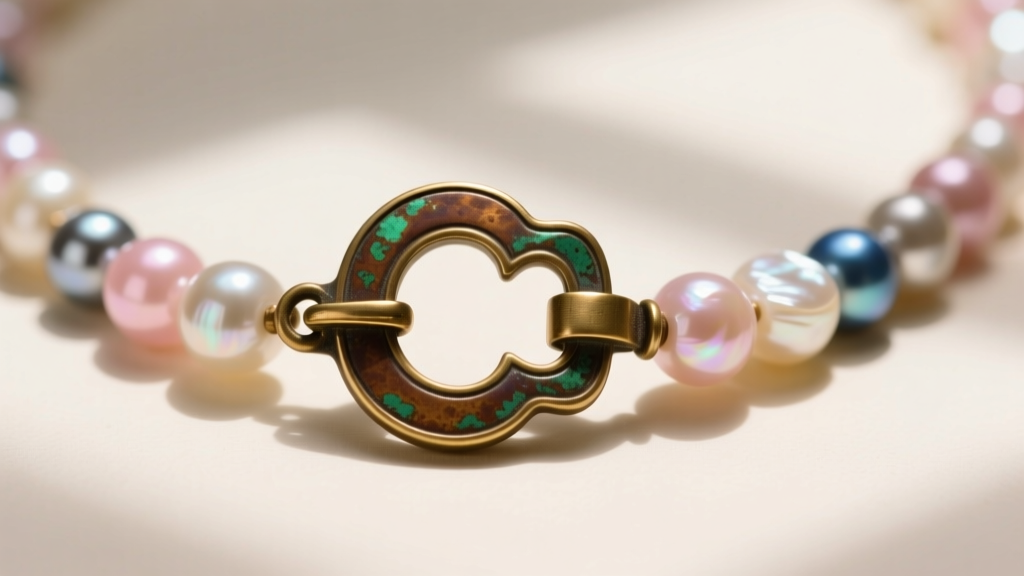
The hardware on an antique mother of pearl necklace is often more telling than the beads themselves. Clasps were frequently updated or replaced, but original findings provide a reliable timestamp for the piece's origin. Referencing the historical jewelry archives at Lang Antiques University, we can date pieces based on their closure mechanisms:
- The C-Clasp (Pre-1900): A simple C-shaped wire hook with no locking mechanism. Common on Victorian MOP cameos and early beaded strands. The pin stem usually extends slightly past the edge of the C-curve.
- The Trombone Clasp (1890–1940): A push-pull mechanism featuring a barrel-shaped tube that slides over the pin to lock it. Highly prevalent on European Edwardian and early Art Deco shell necklaces.
- The Early Safety Catch (Post-1910): A hinged latch that snaps over the pin. If a piece features a modern lobster clasp or a spring-ring clasp with a seamless soldered loop, it has likely been altered, or the piece is a later vintage reproduction.
Market Valuation: 2026 Pricing Matrix
The value of an antique mother of pearl necklace is dictated by era, craftsmanship, and the complexity of the inlay or carving. Below is a current market valuation guide for authentic, well-preserved pieces.
| Era & Style | Defining Characteristics | 2026 Market Value Range |
|---|---|---|
| Victorian Pique (1850–1890) | MOP intricately inlaid into tortoiseshell or horn; floral or geometric motifs. | $400 – $1,500 |
| Scottish Pebble (1860–1900) | MOP cabochons set alongside agates and citrine in sterling silver frames. | $300 – $800 |
| Edwardian Beaded (1900–1915) | Hand-carved MOP beads strung on silk with silver or gold-filled trombone clasps. | $150 – $450 |
| Art Deco Inlay (1915–1926) | Geometric MOP, onyx, and coral set in platinum or white gold; high contrast. | $900 – $3,500+ |
Condition Reports: Spotting Fatal Flaws
Because organic gems are inherently fragile, condition is the primary driver of value. When inspecting an antique mother of pearl necklace, actively look for the following structural failures:
Delamination and Crazing
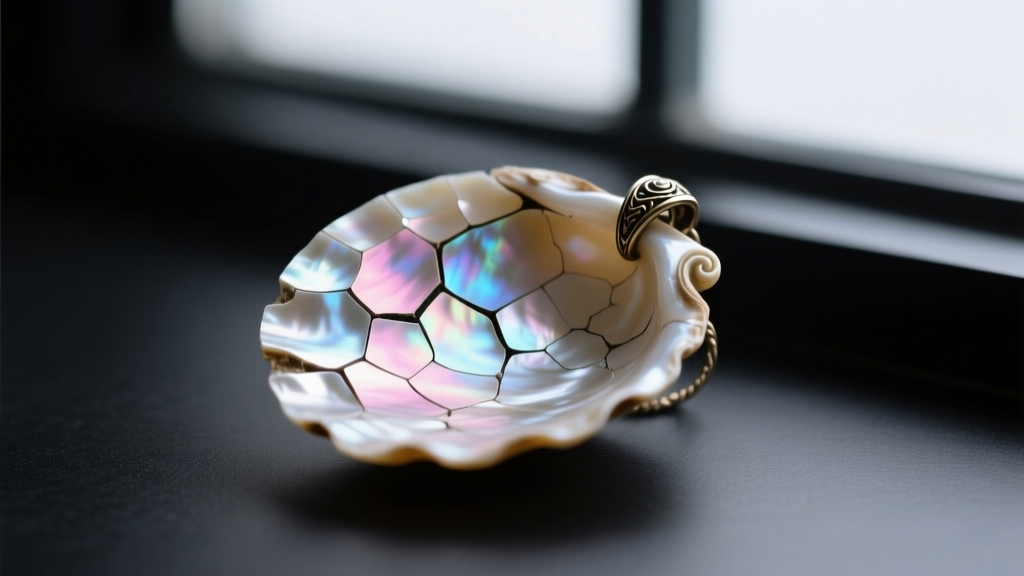
Nacre is composed of microscopic aragonite tiles glued together by conchiolin (an organic protein). Over a century, this protein can dry out, leading to "crazing"—a network of microscopic surface cracks. In severe cases, the nacre layers will physically separate from the underlying shell matrix, a failure mode known as delamination. If you see flaking edges or a hollow sound when the pendant is gently tapped, the structural integrity is compromised.
Adhesive Decay in Inlaid Pieces
For Victorian pique work or Boulle-style inlays, the MOP is glued into a substrate like tortoiseshell, brass, or wood. Historical animal glues and early shellacs degrade over time, especially in fluctuating humidity. Check the edges of the inlay with a wooden toothpick; if the MOP lifts or rocks, the adhesive has failed, requiring immediate professional conservation.
Acid Etching and Surface Dulling
Mother of pearl is highly sensitive to acids. Decades of contact with acidic skin pH, perfume, or hairspray can literally dissolve the top layers of aragonite, leaving the surface chalky, dull, and devoid of its signature iridescence. Unlike metal, this chemical etching cannot be polished out without removing significant layers of the nacre, permanently destroying the antique value.
Archival Warning: Never attempt to clean an antique MOP necklace in an ultrasonic cleaner. The high-frequency vibrations will instantly shatter the brittle, dehydrated nacre and detach historical inlays from their settings.
Archival Care and Preservation
Preserving an antique mother of pearl necklace requires mimicking its ideal environmental conditions. Unlike opals, which can crack from the moisture in human skin, MOP actually benefits from the natural, non-acidic oils of the skin, which prevent the conchiolin from drying out. However, if you live in an arid climate or store the piece in a safety deposit box, you must maintain a relative humidity (RH) of 40% to 50%.
Store the necklace flat in a sealed archival plastic bag with a lightly dampened (not wet) cellulose sponge to maintain ambient moisture. Always wipe the piece with a soft, damp microfiber cloth after wearing to remove acidic sweat and cosmetic residues. For further reading on the preservation of historical organic gems, the Victoria and Albert Museum offers exceptional guidelines on storing 19th-century pique and inlaid jewelry.
Acquiring an authentic antique mother of pearl necklace is an exercise in historical detective work. By scrutinizing the clasp mechanisms, verifying the thermal and visual properties of the nacre, and rigorously assessing the piece for dehydration and adhesive failure, you can confidently navigate the 2026 market and secure a wearable piece of oceanic history.


