A Beginner's Guide to Wearing a Crystal Beaded Necklace
Discover how to choose, style, and care for your first crystal beaded necklace. Learn about bead grades, stringing materials, and neckline pairings.

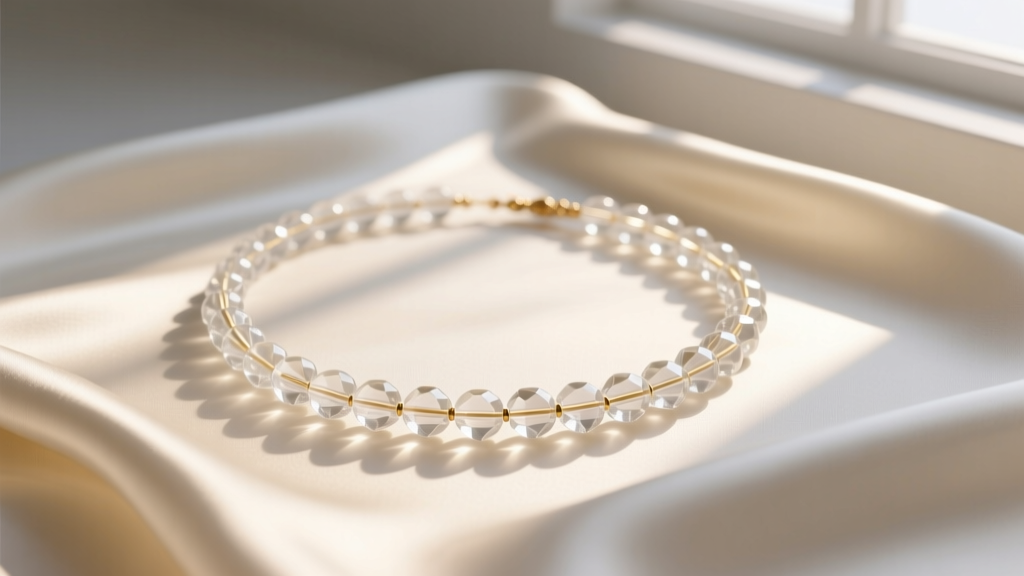
What Defines a Quality Crystal Beaded Necklace?
When shopping for your first crystal beaded necklace, it is crucial to understand that the jewelry industry uses the word 'crystal' to describe two entirely different materials. The first is natural crystal quartz (such as amethyst, citrine, or clear quartz), which is a naturally occurring mineral with a Mohs hardness rating of 7. Natural crystals often feature internal inclusions, ice fractures, and subtle color zoning that prove their earthly origin. The second is manufactured crystal glass, famously pioneered by brands like Swarovski and Preciosa. Modern manufactured crystals are lead-free (often using barium oxide or zinc oxide for weight and brilliance) and possess a Mohs hardness of roughly 5.5 to 6. While slightly softer than natural quartz, high-end manufactured crystals are precision-cut to maximize light refraction, offering a diamond-like sparkle that natural stones rarely achieve without extensive lapidary work.
For beginners, distinguishing between these two types dictates how you will wear and care for the piece. Natural crystal beaded necklaces lean toward bohemian, earthy, or spiritual aesthetics, while precision-cut glass crystals offer a formal, glamorous, and highly reflective finish perfect for evening wear or bridal styling. Always check the product description for terms like 'genuine gemstone' versus 'precision-cut crystal glass' to ensure you are getting exactly what you expect.
The Anatomy of the String: Why Material Matters
The most common failure point in any beaded necklace is not the bead itself, but the stringing material. Beginners often purchase inexpensive elastic-strung necklaces, only to experience catastrophic snapping within a few months. Elastic (like Stretch Magic) degrades rapidly when exposed to skin oils, lotions, and UV light, leading to dry rot and sudden breakage. If you are investing in a quality crystal beaded necklace, you must prioritize professional stringing materials.
The gold standard for non-stretch beaded necklaces is 49-strand nylon-coated stainless steel beading wire (often referred to by the leading brand name, Soft Flex). Unlike 7-strand or 19-strand wires, which can permanently kink if bent, 49-strand wire mimics the fluid drape of silk thread while offering the tensile strength of steel. A diameter of 0.018 inches (0.46mm) is the ideal sweet spot, as it easily passes through the 1mm to 1.5mm drill holes of most 4mm to 8mm crystal beads without leaving excessive slack.
| Stringing Material | Best Use Case | Durability & Drape | Common Failure Modes |
|---|---|---|---|
| 49-Strand Beading Wire (0.018') | High-end glass & natural crystals | Excellent drape,极高 tensile strength | Fraying at the clasp if crimped poorly |
| Size F or G Silk Thread | Pearls and soft, opaque gemstones | Supple, traditional, knots between beads | Stretching over time, water damage, fraying |
| 0.8mm Elastic Cord | Casual slip-on bracelets and lightweight beads | Stretchy, convenient, no clasp needed | Dry rot, snapping, degradation from oils |
Equally important is the clasp and crimping hardware. A high-quality necklace will use a 10mm or 12mm sterling silver or gold-filled lobster clasp. Avoid spring-ring clasps, as their internal tension springs are notoriously weak and frequently fail under the weight of glass or stone beads. The wire should be secured using 2x2mm seamless metal crimp tubes, folded into a neat U-shape with a specialized crimping tool, and optionally covered with a crimp cover bead for a seamless, professional finish.
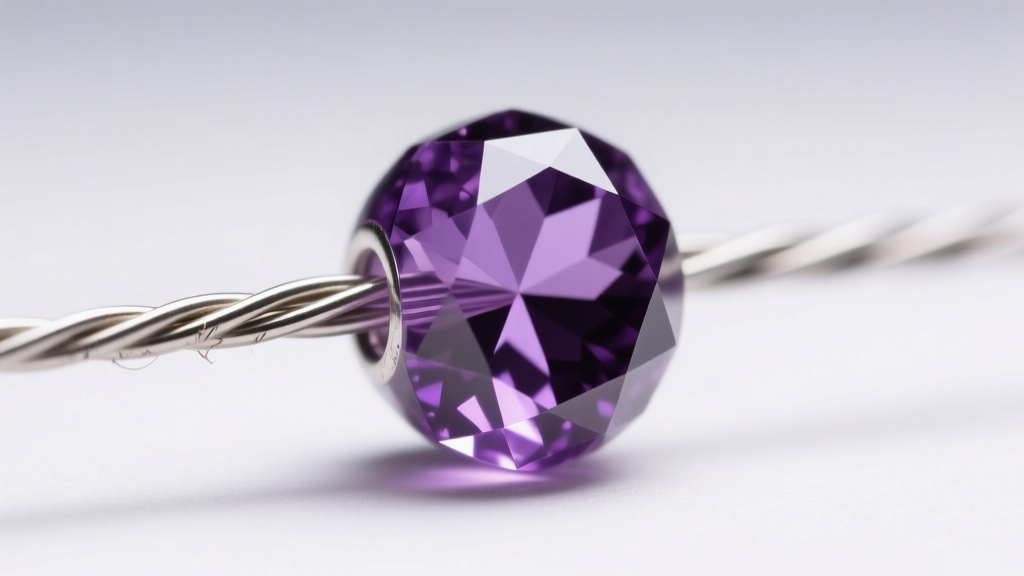
Sizing and Proportions: Choosing the Right Bead Diameter
The diameter of the crystal beads drastically alters the weight, drape, and visual impact of the necklace. Understanding bead sizing will help you select a piece that aligns with your personal style and comfort level.
- 4mm Beads (Delicate & Minimalist): A 16-inch strand of 4mm beads weighs very little and sits elegantly on the collarbone. This size is perfect for everyday wear, layering with gold or silver chains, and pairing with office attire. Because the beads are small, the focus remains on the subtle sparkle rather than bold color blocks.
- 6mm Beads (The Versatile Standard): This is the most common size for crystal beaded necklaces. A 16-inch or 18-inch strand of 6mm beads offers noticeable presence without feeling heavy. It provides excellent color saturation for stones like amethyst, rose quartz, or lapis lazuli, making it ideal for both casual and semi-formal outfits.
- 8mm to 10mm Beads (Bold & Statement): Large beads create a heavy, substantial piece that draws the eye immediately. An 8mm necklace is best worn at a shorter 16-inch choker length or a longer 24-inch opera length. Wearing 8mm beads at a standard 18-inch princess length can feel cumbersome and visually overwhelming on smaller frames.
Neckline Pairing Framework for Beginners
Styling a crystal beaded necklace requires balancing the bead size and necklace length with the neckline of your garment. Use this practical framework to ensure your jewelry complements rather than competes with your clothing.
- The V-Neck: Pair with an 18-inch or 20-inch necklace featuring 6mm beads. The V-shape of the beads should mirror the V-shape of the neckline, elongating the neck. Avoid choker lengths, which will visually 'cut' the neck and clash with the garment's lines.
- The Crew Neck: A 16-inch choker-length necklace with 4mm or 6mm beads sits perfectly just above the fabric line of a standard crew neck t-shirt or sweater. Alternatively, a 24-inch opera-length strand worn over the fabric creates a striking, bohemian contrast.
- The Scoop Neck: This wide, curved neckline provides a large canvas. Layer a 16-inch 4mm crystal strand with an 18-inch 6mm strand to fill the negative space elegantly. The mixed sizes create a cascading effect that highlights the collarbones.
- The Button-Down Shirt: Wear a delicate 16-inch 4mm crystal beaded necklace tucked just inside the unbuttoned collar. The subtle refraction of light against the skin adds a sophisticated touch to professional or smart-casual wear.

Care and Maintenance: Preventing Common Failures
Proper maintenance extends the lifespan of your crystal beaded necklace and preserves its optical brilliance. According to the Gemological Institute of America (GIA), different gemstones and manufactured crystals require vastly different cleaning protocols. Never assume that one cleaning method works for all beads.
For Manufactured Crystal Glass: These beads accumulate skin oils and makeup, which dull their faceted surfaces. Clean them using a few drops of mild dish soap (like Dawn) in lukewarm water. Gently agitate the strand, rinse thoroughly, and dry immediately with a lint-free microfiber cloth. Never use ultrasonic cleaners on manufactured crystal, as the high-frequency vibrations can cause internal stress fractures or chip the precise facet junctions.
For Natural Dyed Crystals: Many affordable natural beads (such as dyed agate, dyed quartz, or enhanced howlite) are treated with chemical dyes to achieve vibrant colors. According to resources from Fire Mountain Gems, dyed stones are highly susceptible to UV fading and chemical stripping. Keep dyed crystal necklaces out of direct sunlight when storing, and never clean them with harsh chemicals, alcohol, or commercial jewelry dips, which will strip the color and leave the beads looking patchy and dull.
Expert Restringing Tip: If you notice the wire of your necklace becoming stiff, or if you see a 'gap' of bare wire appearing between the beads near the clasp, the internal nylon coating is failing, or the wire has stretched. Take the necklace to a professional jeweler for restringing immediately. A $30 restringing fee will save you from losing hundreds of dollars worth of crystal beads to a sudden snap.
By understanding the materials, mastering the proportions, and adhering to proper care protocols, your crystal beaded necklace will remain a versatile, sparkling staple in your jewelry collection for years to come.


