Cuff Necklace Care: Expert Cleaning and Maintenance Guide
Learn expert techniques for cleaning, storing, and maintaining your cuff necklace. Prevent tarnish, metal fatigue, and stone damage with our guide.

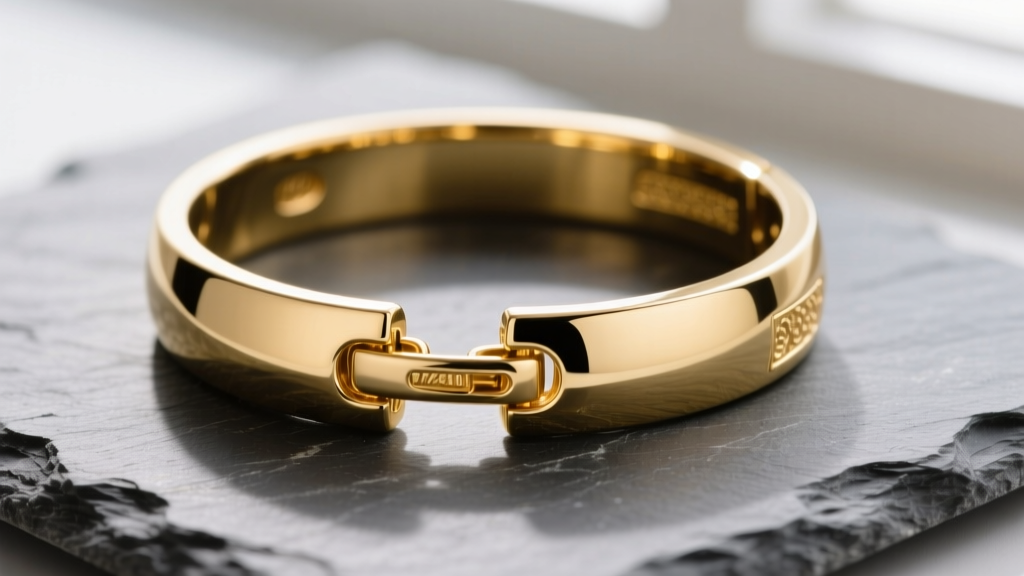
Cuff necklaces represent a bold structural statement in fine and fashion jewelry. Unlike fluid chain necklaces that drape and flex, a cuff necklace is engineered with rigid or semi-rigid geometry, often incorporating complex hinges, tension clasps, and mixed-media inlays. Because of their architectural nature, standard jewelry care routines can actually damage a cuff's structural integrity or ruin specialized finishes. Proper cuff necklace care requires an understanding of metal fatigue, hinge mechanics, and material-specific cleaning protocols.
Whether you own a heavy solid gold collar, a hinged sterling silver piece, or a fashion cuff with delicate enamel work, this comprehensive maintenance guide will help you preserve its structural soundness and visual brilliance for decades.
The Anatomy of a Cuff Necklace: Why Specialized Care Matters
The primary vulnerability of any cuff necklace lies in its hardware. While a standard chain distributes stress evenly across hundreds of interlocking links, a cuff concentrates mechanical stress at two specific points: the hinge and the clasp.
- Hinge Pins: Most hinged cuffs use microscopic friction-fit pins or e-clips. If debris accumulates or corrosion sets in, the pin can seize or, conversely, wear down and slip out, causing the necklace to snap open and drop.
- Box Clasps and Safety Catches: Heavy cuffs rely on box clasps with internal springs. Oils and lotions can gum up the spring mechanism, preventing the locking tab from fully engaging.
- Metal Memory and Fatigue: Semi-rigid cuffs (often made of braided wire or thin sheet metal) can suffer from metal fatigue if repeatedly bent to fit over the neck. Over time, this bending causes microscopic fractures that lead to sudden snapping.
Material-Specific Cleaning Protocols
According to the Jewelers of America, matching your cleaning method to the specific material grade is critical to avoiding irreversible damage. Here is how to approach the most common cuff materials.
Solid Gold (14k-18k) and Gold Vermeil
Solid gold cuffs are highly resistant to tarnish but easily accumulate skin oils and cosmetic residue, which dulls their luster. For gold vermeil (which, by FTC guidelines, must have a minimum gold thickness of 2.5 microns over sterling silver), aggressive polishing is strictly prohibited. Using a standard silver polishing cloth on vermeil will strip the gold layer, exposing the silver core. Always use a microfiber cloth and a mild dish soap solution (like Dawn) with lukewarm water.
Sterling Silver (925) and Oxidized Finishes
Silver cuffs are prone to sulfur-induced tarnishing. However, many designer cuffs feature oxidized finishes (intentional blackening in the crevices to highlight texture). Submerging an oxidized cuff in a liquid silver dip (which contains thiourea) will strip the intentional patina, ruining the contrast. Instead, use a treated silver polishing cloth only on the high-polish raised areas, avoiding the recessed textures entirely.
Mixed Media: Enamel, Resin, and Pave Settings
Cuffs featuring guilloché enamel, epoxy resin, or tight pave diamond settings require extreme caution. Never place these in an ultrasonic cleaner. The high-frequency cavitation bubbles generated by ultrasonic waves can shatter enamel, cloud resin, and vibrate pave stones right out of their microscopic bead settings.
Step-by-Step Deep Cleaning Routine
For a standard solid metal cuff without porous gemstones (like turquoise or opal, which require specialized GIA-recommended care), follow this deep cleaning protocol every 4 to 6 weeks:
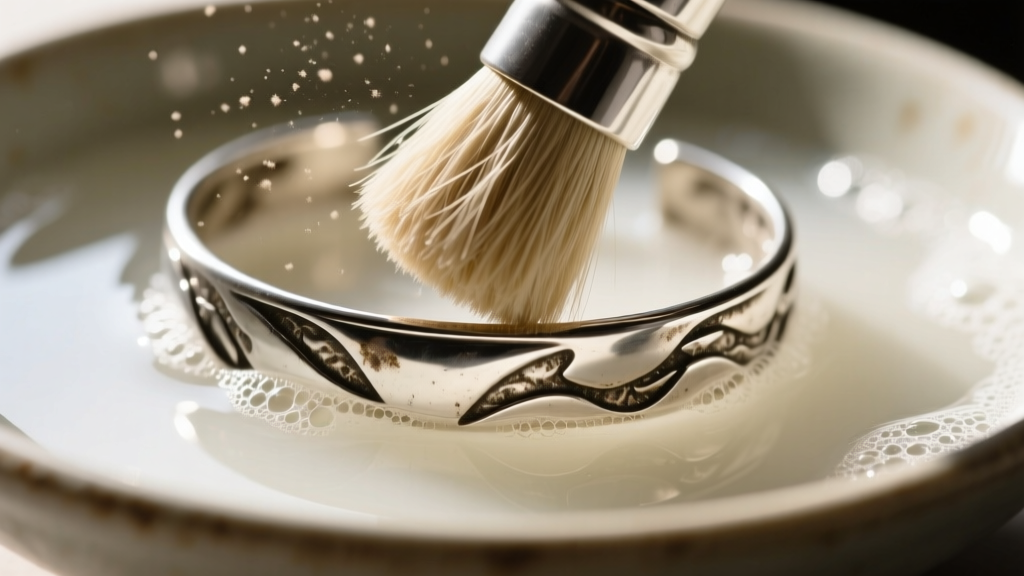
- The Soak: Mix three drops of mild, phosphate-free dish soap into a bowl of lukewarm (not hot) distilled water. Submerge the cuff for exactly 5 minutes to loosen sebum and cosmetic buildup.
- The Agitation: Using an extra-soft baby toothbrush or a specialized horsehair jewelry detailing brush, gently sweep the bristles along the seams, hinge joints, and the interior curve of the cuff where dead skin cells accumulate.
- The Rinse: Rinse thoroughly under a gentle stream of lukewarm water. Ensure the drain is securely plugged.
- The Critical Dry: Moisture trapped inside a hinge barrel will cause the steel pin to rust, eventually seizing the joint. Pat the exterior dry with a lint-free cloth, then use a hairdryer on the cool, low-air setting to blow out any microscopic water droplets trapped inside the clasp or hinge mechanisms.
Preventative Maintenance: Hinges, Clasps, and Metal Fatigue
Routine inspections are just as important as cleaning. Use the following diagnostic table to identify early warning signs of structural failure in your cuff necklace.
| Component | Common Failure Mode | Preventative Action & Warning Signs |
|---|---|---|
| Hinge Barrel | Pin displacement / Seizure | Listen for a "gritty" sound when opening. Apply a microscopic drop of synthetic watch oil to the pin head annually. Never force a stiff hinge. |
| Box Clasp | Spring tension loss / Debris lock | Test the locking tab with a toothpick. If it doesn't snap back instantly, flush the clasp with isopropyl alcohol to dissolve trapped lotions. |
| Safety Catch (Figure-8) | Wire fatigue / Snapping | Check the wire loop for thinning or kinks. Replace the safety wire at a jeweler every 3-5 years if worn daily. |
| Cuff Body (Semi-Rigid) | Stress fractures from bending | Never bend the cuff wider than necessary to slip over the collarbone. Slide it on at an angle rather than prying the ends apart. |
Expert Insight: If your hinged cuff necklace suddenly feels "loose" or wobbles at the joint, the hinge pin is backing out. Immediately stop wearing it and place it in a sealed plastic bag to catch the pin if it falls out, then take it to a bench jeweler for a friction-pin replacement.
Proper Storage Techniques to Prevent Warping and Scratching
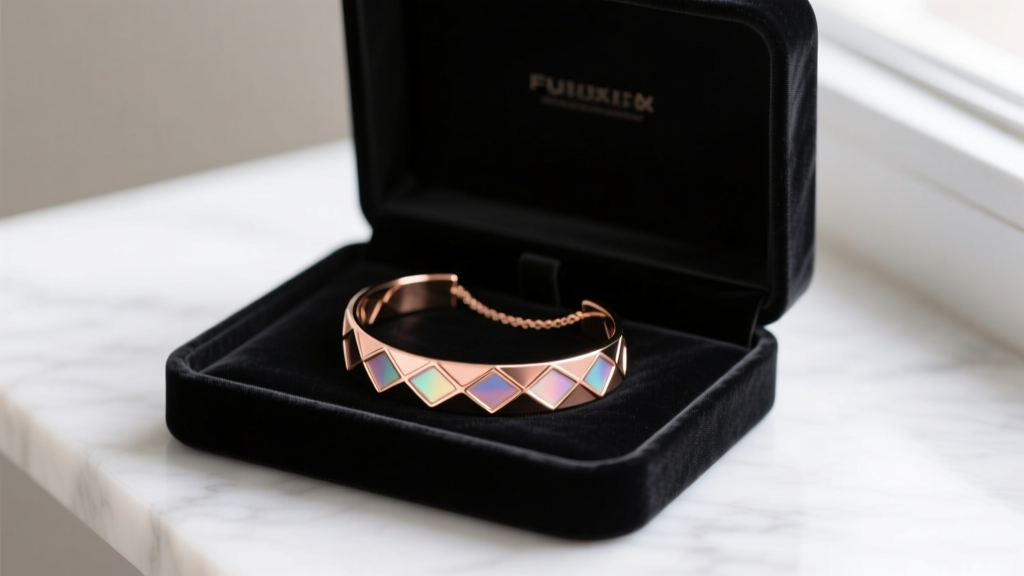
How you store a cuff necklace is fundamentally different from how you store chains. Hanging a heavy cuff on a standard jewelry tree or hook introduces gravitational stress that can slowly warp the collar's geometry, altering how it sits on the clavicle. Furthermore, tossing a cuff into a communal jewelry box guarantees that its interior will be scratched by diamond rings or other abrasive pieces.
The Ideal Storage Protocol:
- Flat Storage: Always store cuffs flat in a dedicated, velvet-lined compartment that supports the entire length of the piece.
- Anti-Tarnish Environments: For silver and copper-based cuffs, store them inside sealed zip-lock bags with 3M anti-tarnish strips. Ensure the strip does not physically touch the metal or any enamel inlays.
- Climate Control: Avoid storing cuffs in bathrooms or humidors. High humidity accelerates the oxidation of base metals and can degrade the adhesives used in inlay work.
When to Seek Professional Jeweler Intervention
While home maintenance keeps a cuff clean, certain issues require the precision tools of a professional bench jeweler. You should seek professional intervention if you notice:
- Deep Scratches on High-Polish Finishes: Removing deep scratches requires machine polishing, which removes a microscopic layer of metal. A jeweler will ensure the structural integrity (especially near thin hinges) isn't compromised during the buffing process.
- Cracked Enamel or Resin: Unlike metal, enamel cannot be polished. It must be carefully drilled out and re-fired or re-poured by a specialist.
- Clasp Misalignment: If the tongue of the box clasp no longer aligns perfectly with the slot, a jeweler can use specialized nylon-jawed pliers to realign the housing without marring the precious metal exterior.
By treating your cuff necklace as a piece of precision engineering rather than just an accessory, you ensure that its bold architectural lines and intricate details remain flawless for a lifetime of wear.


