How to Style and Layer a Mother of Pearl Teardrop Necklace
Learn how to style, layer, and authenticate a mother of pearl teardrop necklace with our expert guide on proportions, pairings, and nacre care.

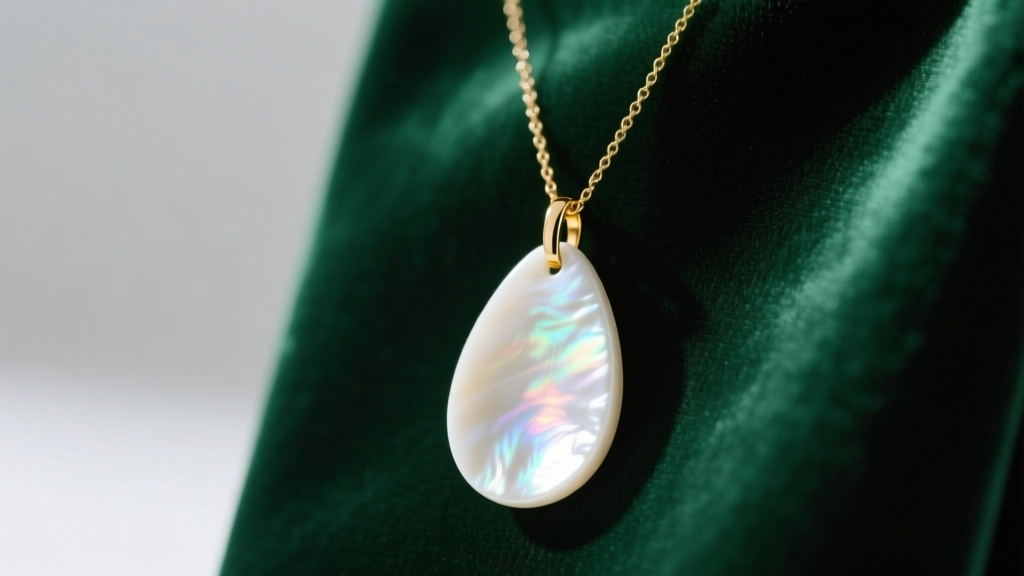
The mother of pearl teardrop necklace has cemented its status as a cornerstone of organic gemstone jewelry. As we navigate the style landscape of 2026, the shift toward sustainable, naturally derived materials has pushed nacre-based accessories to the forefront of luxury and everyday wear. However, owning a stunning piece is only half the equation; knowing how to properly layer, style, and care for this delicate organic gem is what separates a novice from a true jewelry connoisseur. This comprehensive, step-by-step guide will walk you through the exact mechanics of styling your pendant, matching it to necklines, and preserving its iridescent luster for decades.
The Anatomy of a Perfect Mother of Pearl Teardrop Pendant
Before attempting to layer or style your jewelry, you must understand the physical parameters of your specific piece. Mother of pearl (nacre) is typically carved from the inner shell lining of oysters like the Pinctada maxima. A standard teardrop cabochon or briolette ranges from 15x20mm for a delicate, minimalist look, up to 25x40mm for a bold, statement-making silhouette.
The bail—the loop that connects the pendant to the chain—is the most critical structural component. For a mother of pearl teardrop necklace, the bail dictates your layering capabilities. A standard glued loop bail usually has an inner diameter of 2.5mm to 3mm, meaning it will only accommodate delicate chains like a 1.2mm cable or a 1.5mm box chain. If your teardrop features a wire-wrapped bail or a screw-top cap, you have the freedom to use thicker chains, such as a 3mm rope or a 4mm Figaro, which fundamentally changes the weight and drape of the necklace.
Step-by-Step: Layering Your Teardrop Pendant Without Tangling
Layering organic gems requires a strategic approach to weight distribution and chain friction. Mother of pearl has a Mohs hardness rating of 2.5 to 4.5, making it highly susceptible to scratching if it constantly rubs against harder metals or gemstones. To achieve a curated, tangle-free stack, follow the 'Two-Inch Drop Rule'.

The Layering Matrix
Use the following framework to build a balanced stack that keeps your teardrop pendant as the focal point while preventing metal-on-nacre friction.
| Layer Position | Chain Length | Chain Style & Weight | Pendant / Charm |
|---|---|---|---|
| Base (Closest to neck) | 14 to 15 inches | 1.0mm Snake Chain | None or tiny 3mm gold bead |
| Middle (The Focal Point) | 16 to 18 inches | 1.5mm Box Chain | 15x20mm Mother of Pearl Teardrop |
| Outer (The Anchor) | 20 to 22 inches | 2.0mm Rope Chain | Heavier medallion or bar charm |
Pro-Tip: If you are wearing a 20x35mm teardrop, skip the base layer entirely and opt for a two-chain stack. The visual weight of a large nacre pendant requires negative space around the collarbone to prevent the neckline from looking cluttered.
How to Match Your MOP Teardrop to Specific Necklines
The teardrop shape naturally draws the eye downward, creating an elongating effect on the neck and torso. However, its impact is entirely dependent on the garment's neckline. Here is a practical decision framework for pairing your mother of pearl teardrop necklace with your wardrobe.
- The V-Neck and Plunge: This is the most synergistic pairing. Align the point of the teardrop so it sits exactly one inch above the apex of the V-neck. This creates a continuous geometric line that elongates the torso. Opt for an 18-inch chain length for standard V-necks.
- The Crew Neck and Turtleneck: A mother of pearl teardrop resting directly on a tight crew neck can look trapped. Instead, layer it over a turtleneck using a longer 22-inch or 24-inch chain, allowing the pendant to rest on the sternum. The high contrast between the dark fabric and the bright, iridescent white nacre creates a striking, modern aesthetic.
- The Off-the-Shoulder and Boatneck: These wide, horizontal necklines require vertical disruption. A shorter 16-inch choker-style chain with a prominent 25x40mm teardrop pendant will break up the horizontal line of the collarbone, providing visual balance and drawing attention to the face.
The Authentication Test: Genuine Nacre vs. Glass or Resin
With the rising popularity of organic jewelry, the market has seen an influx of high-quality resin and glass imitations. As a collector or stylist, you must know how to authenticate a mother of pearl teardrop necklace on the spot. According to the Gemological Institute of America (GIA), genuine nacre possesses distinct physical properties that synthetic materials cannot perfectly replicate.
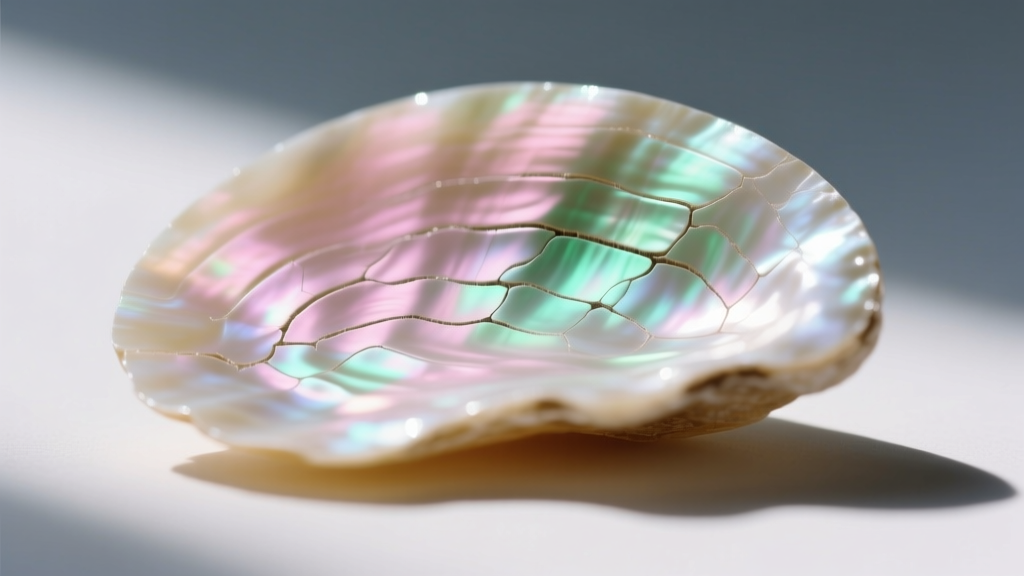
Three-Step Field Authentication
- The Tooth Test: Gently rub the edge of the teardrop against the biting edge of your front tooth. Genuine mother of pearl is composed of microscopic aragonite platelets, which will feel slightly gritty or sandy. Glass or resin imitations will feel perfectly, unnaturally smooth.
- The Temperature Test: Hold the pendant against your inner wrist or cheek. Genuine nacre is a dense, organic composite that feels distinctly cool to the touch and takes several seconds to warm to your body temperature. Resin and plastic will feel room-temperature immediately, while glass will warm up much faster than nacre.
- The Magnification Test: Use a 10x jeweler's loupe to inspect the surface. Real mother of pearl will show subtle, overlapping growth striations and a 'stacked' iridescence that shifts between pink, green, and silver depending on the angle. Molded resin will often display uniform, painted-on swirls or tiny air bubbles trapped beneath the surface.
Longevity Protocol: Cleaning and Storing Organic Gems
Mother of pearl is highly sensitive to acids, extreme heat, and harsh chemicals. The American Gem Trade Association (AGTA) strictly advises against using ultrasonic cleaners or steamers on any organic gemstone, as the high-frequency vibrations can fracture the nacre layers or dissolve the epoxy used to secure the bail.
Step-by-Step Cleaning Routine
To maintain the deep, watery luster of your teardrop pendant, follow this specific cleaning protocol every three to four months, or whenever the nacre begins to look dull from skin oils and cosmetics.
- Prepare the Solution: Mix one cup of distilled water (never tap water, as chlorine and fluoride can etch the nacre) with two drops of unscented, pH-neutral liquid castile soap.
- The Wipe Down: Dip a ultra-soft microfiber cloth into the solution and wring it out until it is only slightly damp. Never submerge your mother of pearl teardrop necklace in water, especially if the bail is secured with jewelry adhesive, as prolonged moisture will degrade the glue.
- Polish: Gently wipe the surface of the teardrop in circular motions. Pay special attention to the back of the pendant, which rests against the skin and accumulates the most sebum and dead skin cells.
- Dry and Store: Allow the pendant to air dry completely on a soft towel before storing. Store the necklace flat in a breathable cotton pouch. Avoid airtight plastic bags, as nacre requires a minimal amount of ambient humidity to prevent cracking and dehydration over time.
"Treat your mother of pearl not as a stone, but as a living archive of the ocean. Its luster is a direct reflection of the care, humidity, and gentle handling it receives over its lifetime."
By mastering the physical nuances of your mother of pearl teardrop necklace—from calculating the exact chain drop for layering to executing a safe, non-abrasive cleaning routine—you ensure that this timeless organic gem remains a versatile, luminous staple in your jewelry rotation for years to come.


