The Engineering of a Custom Baseball Necklace: Metals and Casting
Discover the technical specs behind a premium custom baseball necklace. Explore metal alloys, chain tensile strength, and casting methods for athletes.

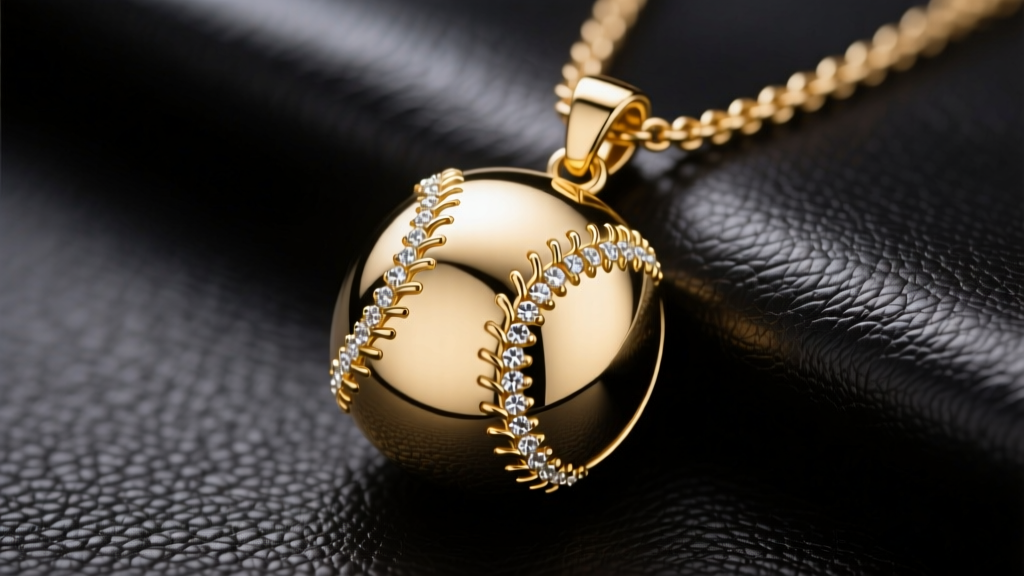
The Metallurgical Requirements of Athletic Jewelry
Designing a high-performance custom baseball necklace requires a fundamental understanding of sports metallurgy. Unlike standard fashion jewelry, athletic pieces are subjected to extreme environmental stressors: high-velocity impacts, continuous friction, and prolonged exposure to human perspiration. Human sweat is a complex electrolyte solution with a pH ranging from 4.5 to 7.0, heavily laden with chloride ions and urea. These chloride ions are highly corrosive to standard base metals and can rapidly degrade poorly alloyed silver.
When selecting the base metal for a custom baseball necklace, jewelers must evaluate the Vickers hardness (HV) and the pitting corrosion resistance of the alloy. According to the Gemological Institute of America (GIA), pure 24k gold is far too soft (HV ~25) for athletic wear, as it will easily deform upon impact with a baseball or bat. Instead, 14k gold (58.5% pure gold alloyed with copper, silver, and zinc) offers an optimal hardness of HV 130-150, providing the necessary structural integrity to survive the diamond.
Alloy Comparison for High-Sweat Environments
- 316L Surgical Stainless Steel: Contains 2-3% molybdenum, which specifically prevents pitting corrosion from chloride ions in sweat. It is the most durable, hypoallergenic, and cost-effective choice for everyday athletic wear, though it lacks the prestige and resale value of precious metals.
- 925 Sterling Silver: Composed of 92.5% silver and 7.5% copper. The copper content makes it highly susceptible to tarnishing when exposed to the sulfur and chlorides in sweat. If chosen, it must be plated with a thick layer of rhodium (at least 0.75 microns) to create an impermeable barrier against oxidation.
- Solid 14k Yellow or White Gold: Highly inert and resistant to sweat corrosion. White gold requires periodic rhodium flashing to maintain its bright white luster, whereas 14k yellow gold maintains its color indefinitely without surface plating.
Chain Architecture and Tensile Failure Points
The pendant is only half the equation; the chain of a custom baseball necklace must possess adequate tensile strength to withstand sudden yanks or snagging on equipment. The most common failure point in athletic chains is the link seam. Mass-produced, machine-made rope chains often rely on microscopic laser welds that can fracture under sudden kinetic loads (measured in kilogram-force, or kgf).
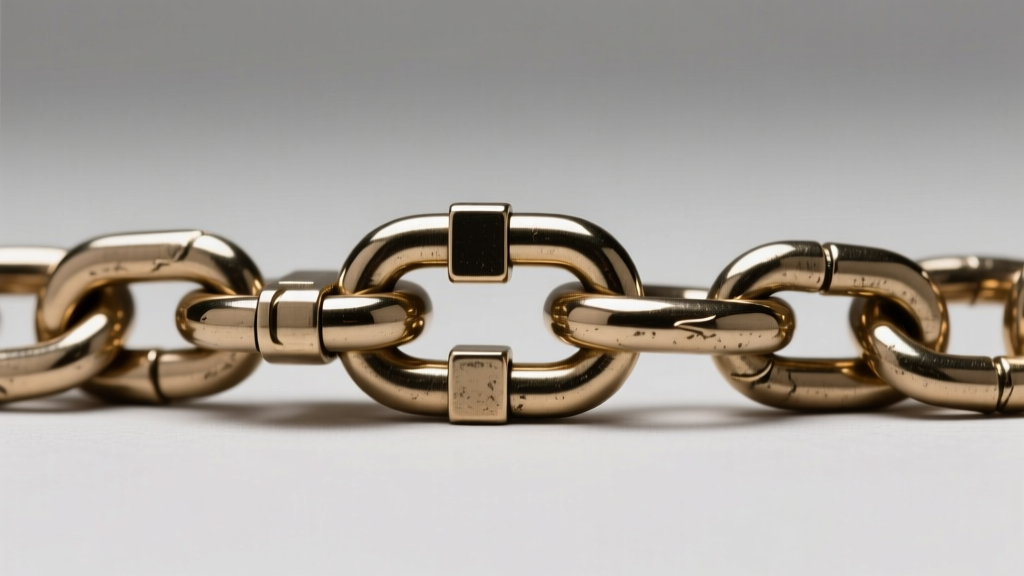
For serious athletes, a solid-core Cuban link chain or a fully soldered rope chain is mandatory. In a fully soldered chain, every individual link is closed and fused with a precise application of hard solder (which has a higher melting point and greater tensile strength than the base metal itself). According to manufacturing standards outlined by Stuller Metals, a properly soldered 5mm rope chain can withstand upward of 40 kgf of tensile pressure before yielding, compared to just 8-12 kgf for an unsoldered equivalent.
Clasp Mechanics: Securing the Hardware
A standard spring-ring clasp is entirely insufficient for sports jewelry. The internal spring mechanism is prone to failure when exposed to sweat buildup and repetitive kinetic shock. A premium custom baseball necklace should utilize a heavy-duty lobster clasp with a reinforced trigger, or ideally, a box clasp equipped with a figure-eight safety catch. The box clasp distributes tension evenly across the housing, while the figure-eight wire provides a secondary mechanical lock in the event the primary tongue dislodges during a slide into home plate.
Pendant Manufacturing: Die-Striking vs. Lost-Wax Casting
The geometry of the baseball pendant dictates the manufacturing methodology. Flat, two-dimensional designs (such as a baseball bat crossing a home plate) are best suited for die-striking, while complex, three-dimensional objects (like a wrapped baseball with raised stitching) require lost-wax casting.
| Manufacturing Method | Best Application | Pros | Cons |
|---|---|---|---|
| Die-Striking | Flat medallions, 2D bats, flat gloves | High density, excellent tensile strength, lower cost per unit at scale. | Limited to 2D or shallow bas-relief designs; requires expensive steel die creation. |
| Lost-Wax Casting | 3D baseballs, wrapped bats, complex figures | Allows for infinite 3D complexity, deep undercuts, and intricate surface textures. | Results in a slightly more porous metal structure; requires extensive sprue removal and polishing. |
| CNC Machining | Precision geometric shapes, flat nameplates | Unmatched dimensional accuracy, perfectly flat surfaces for engraving. | High waste material (subtractive process), limited to relatively simple geometries. |
In lost-wax casting, a master model is 3D printed in castable resin, encased in investment plaster, and burned out in a kiln at 1,350°F. Molten metal is then forced into the cavity via centrifugal force or vacuum assist. For a 3D baseball pendant, the casting must include deep, precise grooves for the stitching, which are later filled with enamel or set with melee stones.
Enamel Durability and Melee Stone Setting
The red and blue stitching on a baseball pendant is traditionally achieved through enameling. However, not all enamels are created equal. Cold enamel (epoxy resin) is frequently used in low-tier jewelry due to its ease of application and low curing temperature. Unfortunately, epoxy resin has a low Mohs hardness (around 2.5) and will scratch, yellow, and degrade when exposed to UV light and abrasive infield dirt.
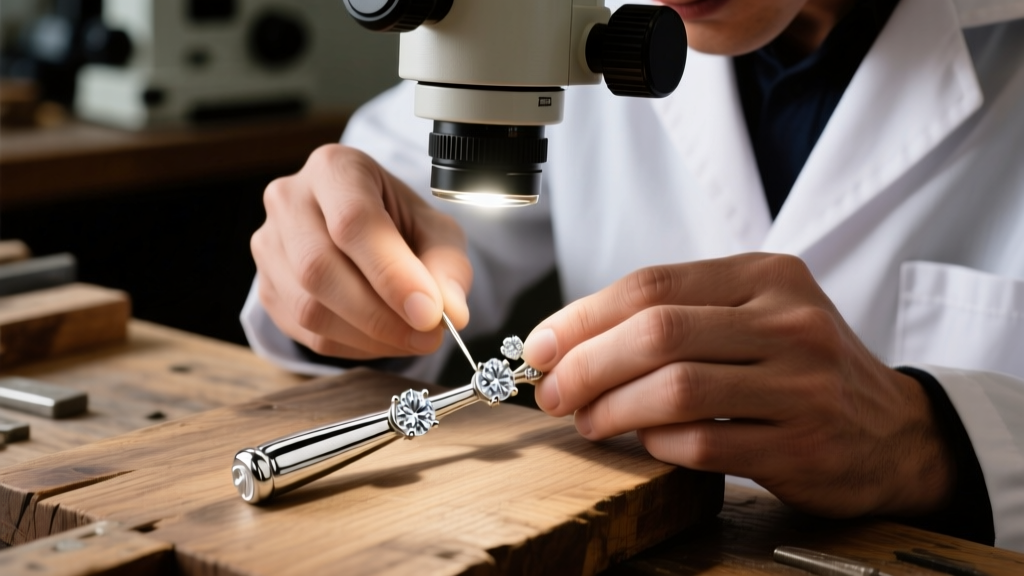
For a heirloom-quality custom baseball necklace, vitreous enamel is the superior choice. Vitreous enamel is essentially powdered glass fused to the metal substrate at temperatures exceeding 1,400°F. This creates a chemical bond resulting in a surface with a Mohs hardness of 5.5 to 6.0, making it highly resistant to scratching and completely impervious to UV fading or sweat degradation.
Stone Setting for High-Impact Zones
If the design incorporates diamond melee or cubic zirconia along the baseball stitching or bat barrel, the setting style is critical. Prong settings, while maximizing light return, leave the girdle of the stone exposed and vulnerable to chipping upon impact. Bezel settings, where a collar of metal is burnished over the entire girdle of the stone, reduce light return by approximately 15% but increase impact resistance exponentially. For athletic jewelry, a flush (gypsy) setting or a heavy bezel is the only responsible choice to prevent stone loss during gameplay.
Cost Breakdown and Sourcing Framework
Understanding the pricing matrix for custom sports jewelry helps buyers and team coordinators allocate budgets effectively. Prices fluctuate based on the spot price of precious metals and the complexity of the CAD (Computer-Aided Design) modeling required for the master pattern.
| Material & Method | Estimated Unit Cost (1-10 pcs) | Estimated Unit Cost (50+ pcs) | Durability Rating |
|---|---|---|---|
| 316L Steel / Die-Struck | $45 - $75 | $25 - $40 | Excellent |
| 925 Silver / Lost-Wax Cast | $120 - $180 | $85 - $110 | Moderate (Requires Rhodium) |
| 10k Gold / Lost-Wax Cast | $350 - $500 | $280 - $350 | Very Good |
| 14k Gold / Cast + Vitreous Enamel | $800 - $1,200 | $650 - $850 | Exceptional |
When sourcing a manufacturer for a team run of custom baseball necklaces, always request a CAD rendering with exact millimeter dimensions and metal weight estimates before casting begins. A reputable manufacturer will provide a tolerance report and specify the exact alloy composition, ensuring the final hardware can withstand the rigorous demands of the sport while maintaining its structural and aesthetic integrity for years to come.


