Custom Letter Necklace Materials: Gold, Silver & Steel
Discover the best metals for your custom letter necklace. Compare solid gold, sterling silver, and stainless steel for durability, price, and skin safety.

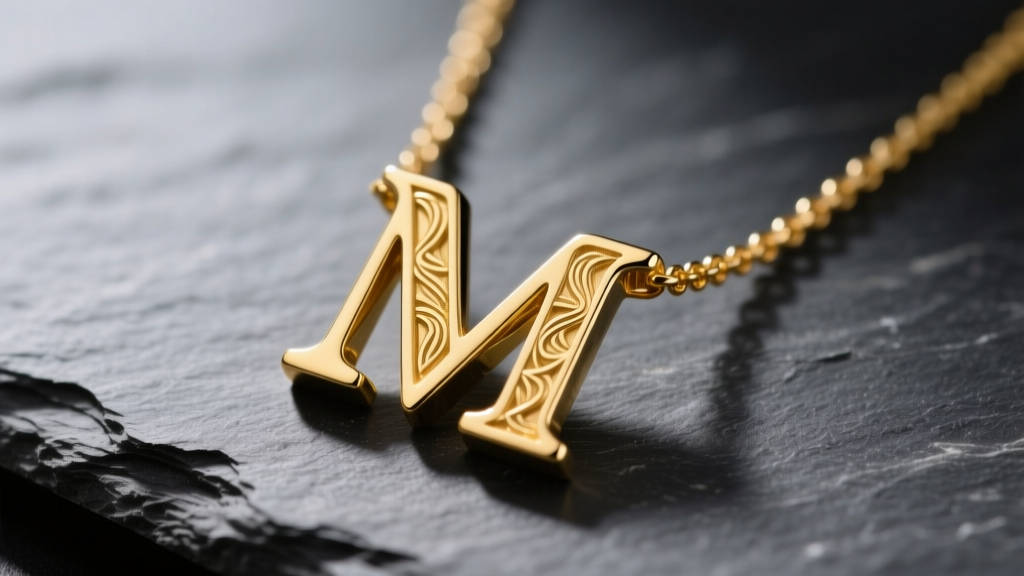
A custom letter necklace is more than just an accessory; it is a wearable piece of personal identity. Whether you are commemorating a child's initial, honoring a loved one, or claiming your own monogram, the sentimental value of the piece is ultimately anchored by its physical foundation. In 2026, advancements in laser-cutting and 3D casting have made intricate typography more accessible than ever, but this precision introduces new structural vulnerabilities. The delicate crossbars of an 'A' or the sweeping loops of an 'S' require specific metallurgical properties to survive daily wear.
Choosing the right material for your custom letter necklace is not merely an aesthetic decision between yellow, white, or rose hues. It is a critical calculation involving Vickers hardness, galvanic corrosion, and skin biocompatibility. This comprehensive guide breaks down the exact material properties of the most popular metals used in initial pendants, providing you with a data-driven framework to make an investment that lasts a lifetime.
The Anatomy of a Custom Letter Necklace: Why Material Dictates Survival
Unlike cast geometric pendants, custom letter necklaces feature extreme variations in thickness. A block letter 'I' is structurally sound, but a script letter 'M' features incredibly thin stems and sharp angles that act as stress concentrators. When a pendant catches on a sweater or is subjected to the tensile force of a heavy chain, the metal must possess adequate yield strength to resist deformation.
Furthermore, the manufacturing method plays a role. Die-stamped and laser-cut letters have a tighter grain structure than cast letters, making them inherently stronger. However, if the metal alloy is too soft, even a laser-cut script font will bend at the solder joint where the bail meets the letter. Understanding the metallurgical profile of your chosen metal is the first step in preventing catastrophic failure.
Solid Gold: The Benchmark for Heirloom Initials
Solid gold remains the undisputed champion for fine jewelry, but not all karats are created equal when it comes to custom typography. According to the Gemological Institute of America (GIA), pure 24k gold is far too malleable for daily wear jewelry. Therefore, alloying metals like copper, silver, and zinc are added to increase hardness.
14k Gold vs. 18k Gold: A Structural Showdown
For a custom letter necklace, 14k gold (58.5% pure gold) is often superior to 18k gold (75% pure gold) if you are choosing a delicate script font. 14k gold boasts a Vickers hardness of approximately 140-150 HV, providing the rigidity needed to keep thin letter stems from warping. Conversely, 18k gold, while offering a richer, deeper yellow hue and higher intrinsic value, is softer and more prone to micro-scratches and bending under stress. If your custom design features a chunky, block-letter font, 18k gold is perfectly safe and offers superior luster.
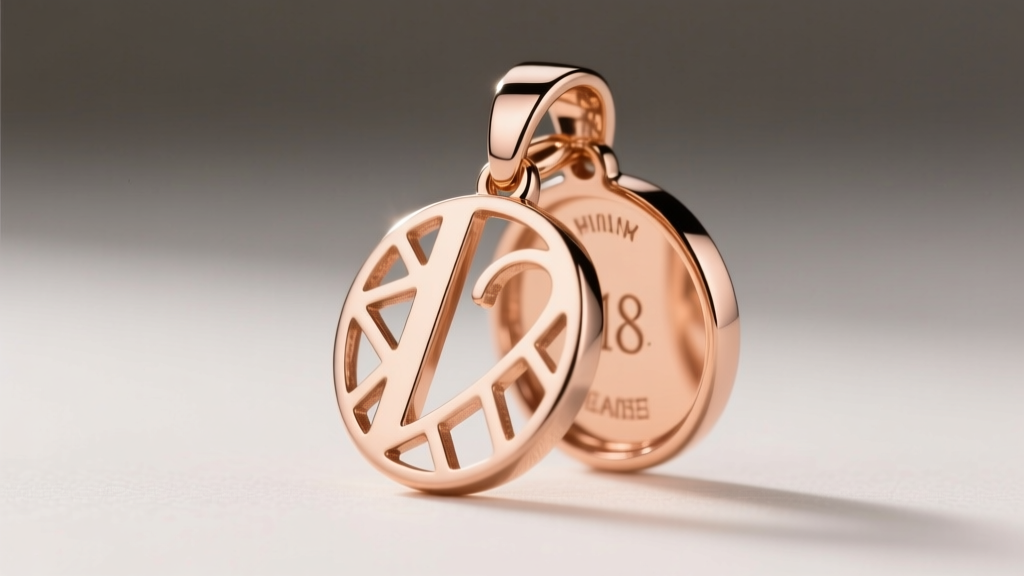
Expert Insight: White gold custom letters are typically plated with rhodium to achieve a bright white finish. Over time, friction will wear this plating away, revealing the slightly yellowish underlying alloy. If you want a white metal letter necklace that requires zero replating, consider platinum or palladium instead.
Sterling Silver & Gold Vermeil: The Mid-Tier Contenders
Sterling silver (925) is the most popular entry point for custom jewelry, prized for its brilliant reflectivity and affordability. However, the 7.5% copper content required to harden the silver makes it highly susceptible to oxidation. If you live in a humid climate or have naturally acidic skin, a sterling silver letter pendant will develop a dark patina within weeks. While this can be polished away, the micro-abrasions from constant polishing will eventually soften the sharp edges of laser-cut typography.
The Truth About Gold Vermeil
Gold vermeil is frequently marketed as a premium alternative to solid gold, but buyers must exercise extreme vigilance. By Federal Trade Commission (FTC) guidelines, true vermeil must consist of a sterling silver base coated with a minimum of 2.5 microns of 10k or higher gold. Many fast-fashion brands sell 'gold plated' brass or silver with a mere 0.5-micron flash, which will wear off the high-friction edges of a custom letter pendant in a matter of months. Always demand a micron thickness specification from the jeweler before purchasing a vermeil initial piece.
Stainless Steel & Titanium: The Hypoallergenic Budget Heroes
For those seeking maximum durability on a budget, surgical stainless steel and titanium offer unparalleled resilience. These metals are entirely immune to the tarnishing that plagues silver and will not bend under the stresses that would warp 18k gold.
316L Stainless Steel: The Marine-Grade Standard
When shopping for a steel custom letter necklace, ensure the product description specifies '316L' surgical steel. The 'L' stands for low carbon, and the alloy includes molybdenum, which drastically increases resistance to pitting corrosion from chlorides (like sweat and swimming pool water). 316L steel is incredibly rigid, meaning a laser-cut script letter will hold its sharp, dangerous-looking edges indefinitely. The primary drawback is that steel cannot be easily resized or repaired by traditional jewelers if the chain breaks or the bail snaps.
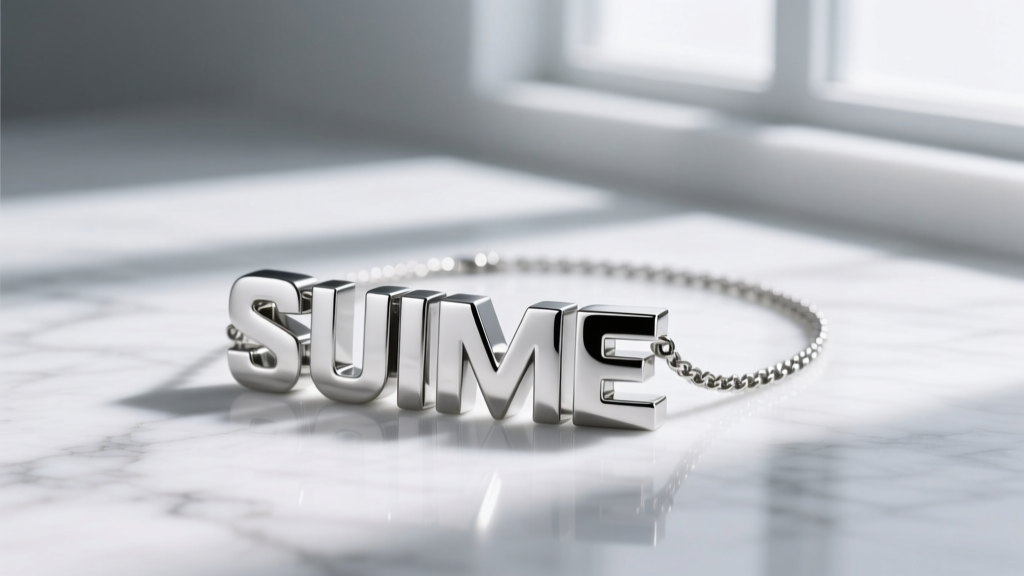
Material Comparison Matrix
Use the following data table to evaluate the physical properties and market positioning of the most common metals used in custom letter necklaces.
| Metal Type | Vickers Hardness (HV) | Tarnish Risk | Avg Price (Pendant Only) | Best Font Style |
|---|---|---|---|---|
| 14k Solid Gold | 140 - 150 | None | $150 - $350 | Delicate Script |
| 18k Solid Gold | 120 - 130 | None | $250 - $600 | Chunky Block |
| Sterling Silver (925) | 60 - 70 | High | $40 - $90 | Medium Serif |
| Gold Vermeil (2.5μm) | 60 - 70 (Base) | Moderate (Edge Wear) | $80 - $150 | Medium Block |
| 316L Stainless Steel | 220 - 240 | None | $25 - $60 | Sharp Geometric |
| Grade 2 Titanium | 150 - 160 | None | $60 - $120 | Minimalist Sans-Serif |
How to Choose Based on Wear Frequency and Skin Type
Selecting the right metal requires an honest assessment of your lifestyle and biology. Here is a practical decision framework to guide your purchase:
- The 'Never Take It Off' Wearer: If you plan to shower, swim, and sleep in your custom letter necklace, solid 14k gold or 316L stainless steel are your only viable options. Silver will tarnish rapidly in the shower, and vermeil will strip down to the base metal within weeks of continuous water exposure.
- The Severe Nickel Allergy Sufferer: Many people assume surgical steel is hypoallergenic, but 316L steel does contain trace amounts of nickel. While the nickel is tightly bound in the alloy and safe for most, highly sensitive individuals should opt for Grade 2 commercially pure titanium or nickel-free 14k yellow gold (ensure the jeweler uses a silver/copper alloy mix rather than a nickel bleaching agent for white gold).
- The Generational Heirloom Seeker: If this custom letter necklace is intended to be passed down to a child or grandchild, only solid 18k or 14k gold will suffice. Plated metals and steel lack the intrinsic generational value and cannot be easily melted down and recast by future jewelers.
Care and Maintenance by Metal Type
Proper maintenance extends the life of your typography pendant, but the cleaning method must match the material. Never use ultrasonic cleaners on custom letter necklaces that feature pave diamonds or micro-prong settings; the high-frequency vibrations can easily shake stones loose from their delicate settings.
For solid gold and titanium, a simple soak in warm water with a few drops of mild dish soap, followed by a gentle brushing with a baby-soft toothbrush, will remove sebum and lotion buildup from the crevices of the letter. For sterling silver, avoid harsh chemical dips, which can strip the oxidized detailing often used to make the lettering pop. Instead, use a specialized silver polishing cloth, rubbing gently along the grain of the metal to preserve the crisp edges of your custom initial.


