How to Design and Care for a Custom Writing on Rice Necklace
Learn how to design, commission, and preserve a custom writing on rice necklace. Expert tips on vials, micro-calligraphy, and chain pairings.

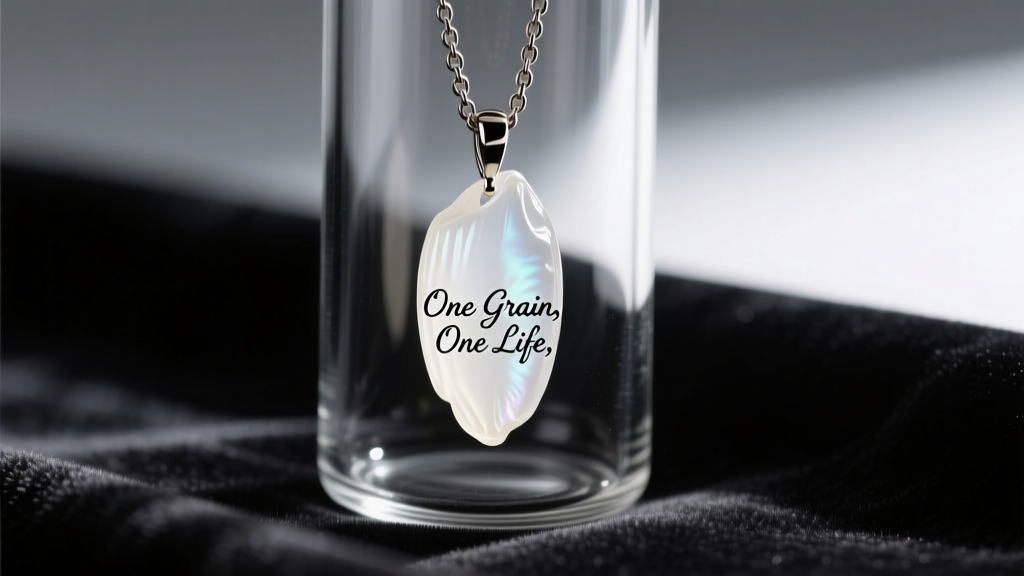
The art of the writing on rice necklace is a fascinating intersection of microscopic calligraphy, jewelry design, and preservation science. While often associated with nostalgic mall kiosks and tourist markets, a truly high-quality custom writing on rice necklace requires meticulous attention to material grades, moisture control, and archival ink chemistry. Whether you are commissioning a bespoke piece from a micro-artist or attempting the intricate DIY micro-calligraphy process yourself, understanding the structural anatomy of these pendants is crucial for ensuring the artwork survives for decades without degrading, molding, or fading.
The Anatomy of a Rice Grain Pendant
A rice grain pendant is not simply a grain of rice dropped into a glass tube. It is a carefully engineered micro-environment designed to halt organic decay while showcasing microscopic artistry. The three primary components—the organic canvas, the glass enclosure, and the suspension medium—must be perfectly balanced.
Rice Selection and Dehydration
The ideal canvas for micro-calligraphy is an aged, long-grain white rice, typically Basmati or Jasmine. These varieties offer a smooth, elongated surface area (averaging 6mm to 8mm in length) with minimal surface ridges. More importantly, the rice must be rigorously dehydrated before any ink touches its surface. According to conservation standards outlined by the American Institute for Conservation, organic materials encased in sealed environments must have a moisture content below 5% to prevent fungal growth and bacterial rot. Professional micro-artists achieve this by baking the grains at a low temperature (around 150°F or 65°C) for several hours, or by using chemical desiccants like silica gel in a controlled vacuum chamber prior to painting.
Glass Vial Specifications
The enclosure is typically a cylindrical glass vial capped with metal or cork. For fine jewelry applications, borosilicate glass is vastly superior to standard soda-lime glass. Borosilicate offers higher thermal shock resistance and, crucially, better UV light filtration, which helps protect the ink from photodegradation. The vial walls should be thin enough (approximately 1.5mm to 2mm) to prevent severe optical distortion, which can make the microscopic text illegible when viewed from an angle.
Step-by-Step: Commissioning Custom Micro-Calligraphy
If you are ordering a custom writing on rice necklace, you must work within the physical constraints of the medium. A standard grain of rice provides a usable writing surface of roughly 5mm x 1.5mm per side.
- Character Limits: Most master calligraphers cap the text at 10 to 15 characters per side, including spaces. Attempting to cram a 30-character sentence onto a single grain forces the artist to use a nib size below 0.03mm, resulting in ink pooling and illegible blurring.
- Font Selection: Sans-serif or simple serif fonts translate best at the micro-scale. Highly ornate scripts with thick-to-thin line variations (like traditional copperplate) are incredibly difficult to execute on the porous, curved surface of a rice grain and often result in jagged edges.
- Proofing: Always request a digital macro-photograph of the rice grain before the artist seals it in the vial. Once the suspension liquid is introduced, the grain is permanently locked, and the liquid's refractive index will alter the visual contrast of the ink.
Selecting the Right Chain and Hardware
The hardware connecting the vial to the chain is the most common point of failure in rice necklaces. The vial is typically sealed with a metal bail cap using a jeweler's epoxy or cyanoacrylate adhesive.
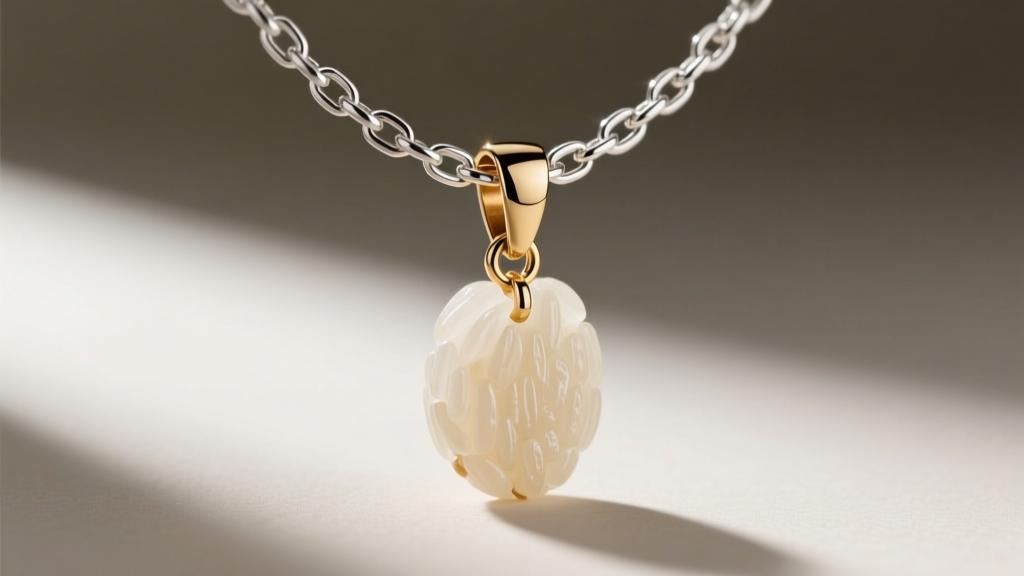
When selecting a chain, consider the weight and scale of the vial. A standard glass rice vial with a brass bail weighs between 3 and 5 grams. According to guidelines from the Jewelers of America, delicate chains below 1.0mm in thickness are prone to kinking and snapping under the pendulum stress of a swinging vial. Opt for a 1.2mm to 1.5mm sterling silver or 14k gold box chain or cable chain. Box chains are particularly recommended because their interlocking square links distribute weight evenly and resist tangling. Always ensure the jump ring connecting the bail to the chain is at least 24-gauge (0.5mm) and is soldered shut or features a secure lobster clasp mechanism to prevent the heavy glass vial from pulling the ring open over time.
DIY Micro-Calligraphy: Tools and Techniques
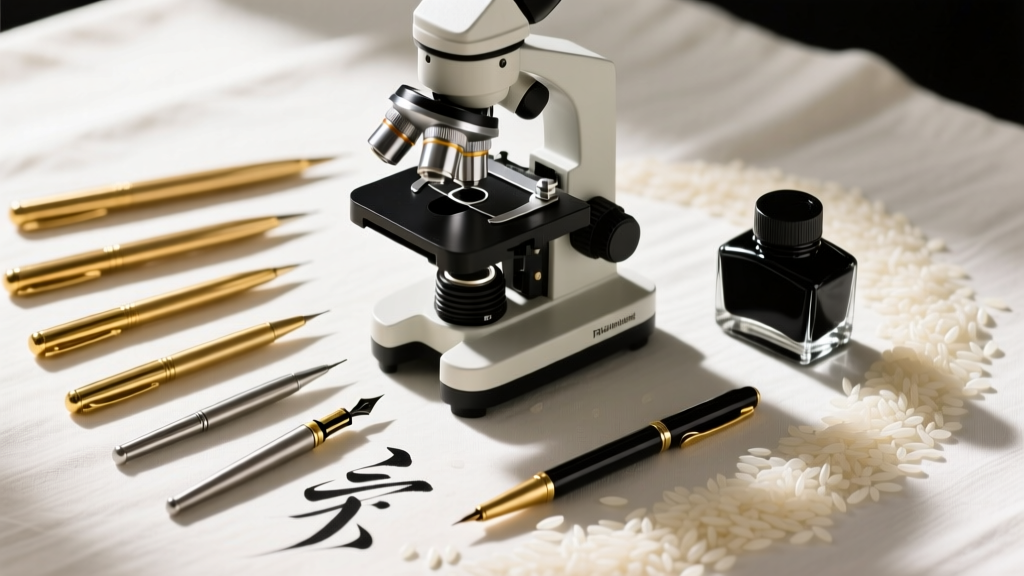
For the dedicated crafter, creating your own writing on rice necklace is a test of extreme patience and fine motor control. You cannot rely on the naked eye; the human eye's resolving power is insufficient for the precise stroke control required at this scale.
Magnification and Nib Sizing
A standard jeweler's loupe is inadequate because it requires you to hold the magnifying glass while simultaneously manipulating the pen. You must use a stereo microscope (also known as a dissecting microscope) with a magnification range of 10x to 20x, equipped with a boom arm stand to allow your hands to work freely underneath the lenses. For the nib, you will need specialized micro-nibs, typically sized between 0.05mm and 0.1mm. Standard technical drawing pens (like Micron or Rotring) often fail on rice because the porous surface catches the metal tip, causing ink bleeds. Instead, use a flexible micro-quill or a custom-ground tungsten carbide needle dip pen.
Ink Chemistry
Do not use standard water-based fountain pen inks. Water will rehydrate the dehydrated rice grain, triggering immediate mold growth inside the sealed vial. You must use an anhydrous, archival-grade ink. Carbon-based India inks (such as Winsor & Newton or Higgins Eternal) suspended in an alcohol or shellac base are the industry standard. The carbon black pigment is highly resistant to UV fading, and the alcohol carrier evaporates instantly without introducing moisture to the organic canvas.
Preservation and Long-Term Care
The liquid inside the vial serves two purposes: it magnifies the text slightly through refraction, and it displaces oxygen to prevent the rice from oxidizing and turning yellow. However, the wrong liquid will destroy the necklace.
Expert Conservation Warning: Never use distilled water or alcohol-based liquids as a suspension medium inside a rice vial. Water promotes biological decay, while alcohol will dissolve the shellac binder in archival India inks, causing the microscopic text to instantly dissolve into an illegible black cloud.
The safest and most stable suspension medium is highly refined, cosmetic-grade mineral oil or a specialized anhydrous glycerin solution. Mineral oil is chemically inert, will not evaporate over time, and will not react with the carbon pigments. When caring for your necklace, avoid prolonged exposure to direct sunlight and extreme temperature fluctuations, which can cause the liquid to expand and break the adhesive seal of the bail cap. Clean the exterior glass only with a soft microfiber cloth and a mild, ammonia-free glass cleaner.
Suspension Mediums and Vial Materials Matrix
To help you evaluate the quality of a custom writing on rice necklace, or to plan your own DIY build, refer to the material matrix below:
| Suspension Medium | Chemical Reactivity with Ink | Moisture Risk to Rice | Optical Clarity & Refraction | Longevity Rating |
|---|---|---|---|---|
| High-Grade Mineral Oil | None (Inert) | Zero (Hydrophobic) | High (1.46 Refractive Index) | Excellent (50+ Years) |
| Anhydrous Glycerin | Very Low | Low (Hygroscopic if exposed) | Very High (1.47 Refractive Index) | Good (20-30 Years) |
| Distilled Water | Low | Critical (Causes Mold/Rot) | Moderate (1.33 Refractive Index) | Poor (Fails in months) |
| Isopropyl Alcohol | Critical (Dissolves Inks) | High (Dries out grain) | Low (High Evaporation Rate) | Very Poor (Days/Weeks) |
By understanding the precise material requirements—from the dehydration of the Basmati grain to the refractive index of the mineral oil and the gauge of the sterling silver chain—you elevate the writing on rice necklace from a fragile novelty into a genuine piece of enduring micro-art. For further reading on the optical properties of gemstones and glass enclosures in jewelry design, the Gemological Institute of America (GIA) offers extensive resources on light refraction and material durability that apply directly to micro-pendant engineering.


