The Ultimate Red Garnet Necklace Buying Guide (2026)
Discover how to choose the perfect red garnet necklace in 2026. Learn about species, grading, ethical sourcing, and pricing in our expert buyer's guide.

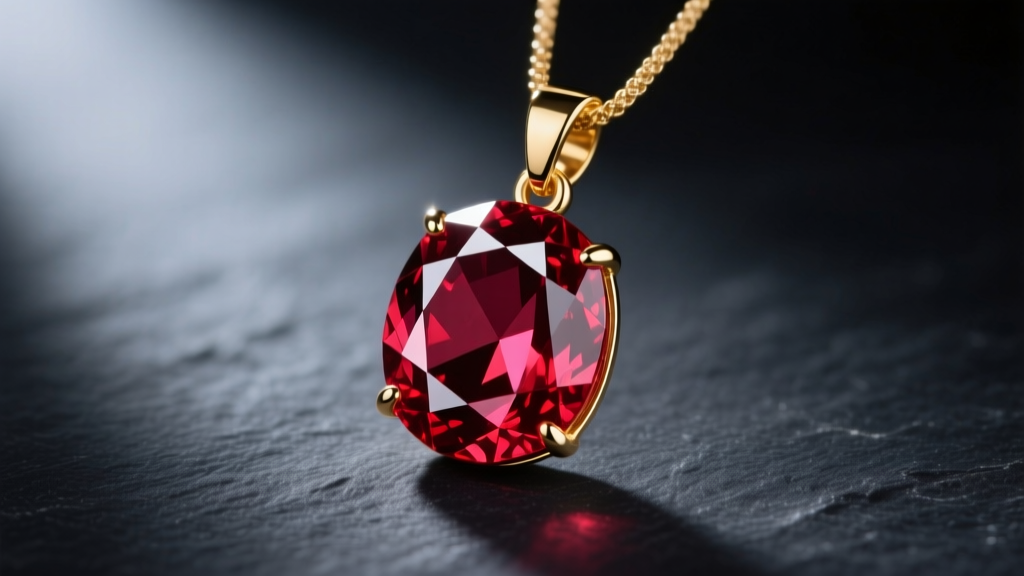
The appeal of a red garnet necklace transcends fleeting jewelry trends. As we navigate the 2026 market, consumers are increasingly gravitating toward gemstones that offer both historical romance and verifiable natural integrity. Unlike many of its precious counterparts, garnet is almost never subjected to heat treatment or fracture filling, making it a darling among purists and ethical jewelry buyers. However, the term "garnet" encompasses a complex group of silicate minerals, each with distinct optical properties, color profiles, and price points. This comprehensive buying guide will equip you with the gemological knowledge required to select a high-quality red garnet pendant and chain that perfectly suits your style and budget.
Decoding Garnet Species: Almandine, Pyrope, and Rhodolite
To buy intelligently, you must first understand that "garnet" is not a single mineral, but a group. When shopping for a red garnet necklace, you will primarily encounter three species or solid-solution mixtures:
Almandine
Almandine is the most abundant red garnet species. It is iron-rich, resulting in a deep, dark red that often carries subtle brownish or burgundy undertones. Because it is so common, almandine is highly affordable. However, lower-grade almandine can be so dark that it appears nearly black in low light. When evaluating almandine, hold the pendant up to a direct light source to ensure it possesses a vibrant, translucent crimson glow rather than an opaque, muddy appearance.
Pyrope
Pyrope is the classic "blood red" garnet, prized for its pure, saturated crimson hue without the brown modifiers found in almandine. High-quality pyrope is magnesium-rich and historically sourced from Bohemia, though today, premium specimens often originate from Africa. Pyrope commands a higher price point than almandine due to its superior color saturation and rarity in larger carat weights.
Rhodolite
Rhodolite is a highly sought-after solid-solution mixture of pyrope and almandine (typically in a 70:30 ratio). It is celebrated for its vivid purplish-red or raspberry-red color and exceptional brilliance. According to the Gemological Institute of America (GIA), rhodolite's high refractive index (RI of 1.714 to 1.742) gives it a fiery sparkle that rivals more expensive precious gemstones, making it the top choice for luxury red garnet necklaces.
The Untreated Advantage: Clarity and Color Grading
One of the most compelling reasons to invest in a red garnet necklace is the gemstone's natural integrity. The global gemological standard dictates that garnets are virtually never treated. When you buy a ruby, you must scrutinize lab reports for heat treatment, beryllium diffusion, or lead-glass filling. With garnet, the color you see in the display case is exactly what came out of the earth.
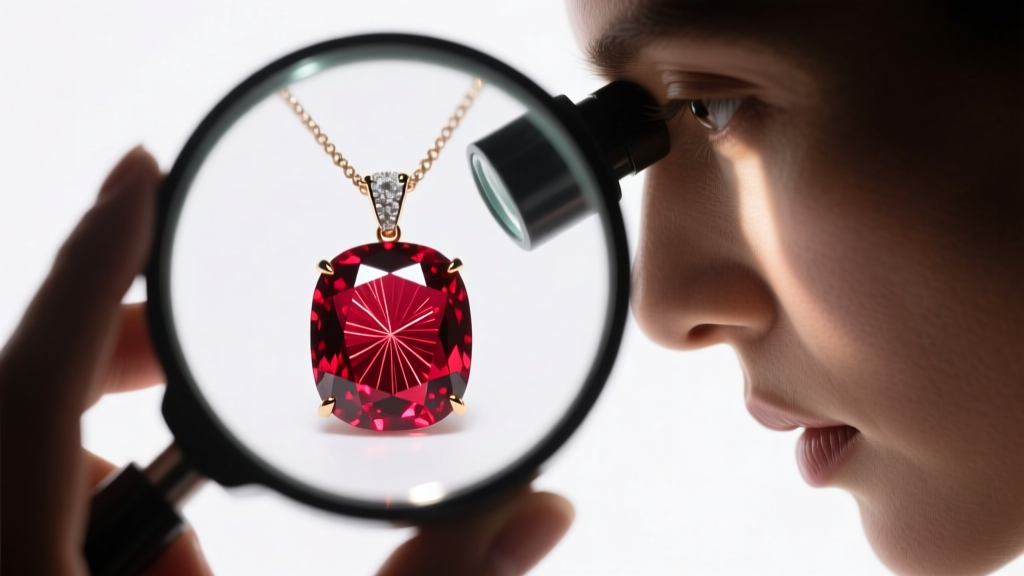
Regarding clarity, the standard for red garnets is "eye-clean." While almandine may contain tiny rutile needles or zircon crystals with halos (often called "zircon halos"), these inclusions are usually microscopic and do not impact the stone's durability or beauty. In fact, under a 10x loupe, these natural fingerprints prove the stone's terrestrial origin. Avoid stones with surface-reaching fractures or heavy clouding, as these will severely dampen the gem's light return.
Metal Pairings and Chain Mechanics
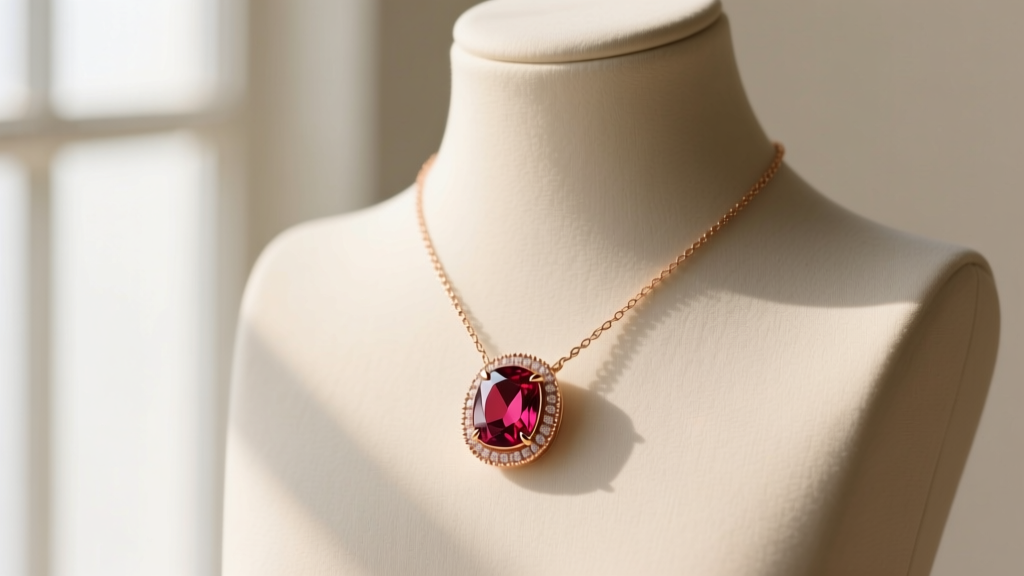
The metal you choose for your pendant setting and chain dramatically alters the visual impact of the red garnet.
- Yellow Gold (14k or 18k): Enhances the warm, fiery tones of pyrope and almandine. It provides a vintage, romantic aesthetic that aligns with Victorian and Art Nouveau revival trends.
- Rose Gold: The copper alloys in rose gold perfectly complement the purplish-pink undertones of rhodolite garnet, creating a cohesive, monochromatic warmth.
- White Gold or Platinum: Creates a stark, modern contrast. The cool, silvery metal makes the deep red of the garnet pop, ideal for contemporary, minimalist bezel settings.
Chain Selection: For a standard 1-carat to 5-carat garnet pendant, a 1mm to 1.5mm cable or box chain is ideal. Box chains offer superior tensile strength compared to delicate snake chains, which are prone to kinking. Always ensure the clasp is a sturdy lobster claw rather than a flimsy spring ring, which can easily catch on clothing and snap under the weight of a solid gold pendant.
Red Garnet Species Comparison Chart
| Species | Color Profile | Refractive Index | Mohs Hardness | Avg. Price (per carat) |
|---|---|---|---|---|
| Almandine | Deep red, brownish-burgundy | 1.780 - 1.820 | 7.0 - 7.5 | $20 - $60 |
| Pyrope | Pure blood red, crimson | 1.714 - 1.742 | 7.0 - 7.5 | $50 - $150 |
| Rhodolite | Purplish-red, raspberry | 1.714 - 1.742 | 7.0 - 7.5 | $150 - $500+ |
Sourcing and Ethical Considerations in 2026
While the Kimberley Process strictly regulates diamonds, colored gemstones like garnet fall under different ethical frameworks. Today, the finest rhodolite and pyrope garnets are primarily mined in Mozambique, Tanzania, and Madagascar. When purchasing a high-value red garnet necklace, look for jewelers who align with the Responsible Jewellery Council (RJC) or who provide verifiable mine-to-market traceability. Artisanal and small-scale mining (ASM) initiatives in East Africa have made significant strides in ensuring fair wages and safe working conditions, and supporting brands that source from these vetted cooperatives adds a layer of ethical value to your purchase.
Pricing Guide: What Should You Actually Pay?
Pricing a finished red garnet necklace requires separating the cost of the gemstone from the precious metal setting. Here is a realistic breakdown for the 2026 market:
- Commercial Tier ($150 - $400): Features 1 to 2-carat almandine or lower-grade pyrope, usually set in 925 sterling silver or 10k gold. The stones may have slight visible inclusions or heavy brown modifiers.
- Fine Jewelry Tier ($500 - $1,500): Features a 2 to 5-carat eye-clean rhodolite or vibrant pyrope, set in 14k or 18k gold with a high-quality cable chain. The cut will be precision-faceted for maximum light return.
- Investment/Bespoke Tier ($2,000+): Features exceptionally rare, large-carat (8+ carats) unheated pyrope or top-color Mozambican rhodolite, set in platinum or 18k gold with diamond melee accents and custom artisan metalwork.
Care, Maintenance, and Ultrasonic Warnings
Garnet ranks between 7.0 and 7.5 on the Mohs scale of hardness. While this makes it highly suitable for necklace wear—where it is protected from the heavy impacts and abrasions that rings endure—it is still softer than sapphire or diamond. Store your red garnet necklace in a separate soft pouch to prevent it from being scratched by harder gemstones in your jewelry box.
Cleaning Protocol: The safest and most effective way to clean a garnet pendant is with warm water, a mild dish soap, and a soft-bristled baby toothbrush. Warning: Avoid ultrasonic cleaners. While many garnets can withstand ultrasonic vibrations, stones with liquid inclusions, internal stress fractures, or heavy rutile needles can shatter or fracture further under high-frequency sound waves. Furthermore, never use steam cleaners, as sudden thermal shock can cause the gemstone to crack.
Final Verdict: Building Your Garnet Collection
A red garnet necklace is a masterclass in accessible luxury. By prioritizing rhodolite or pure pyrope for optimal color, insisting on eye-clean clarity, and selecting a durable chain with a secure clasp, you secure a piece of jewelry that is both historically rich and visually stunning. Because garnets remain largely untreated by the gem trade, you are purchasing a piece of the earth in its most authentic, unadulterated form—a rare feat in the modern jewelry landscape.


