The Ultimate Material Guide to a Dainty Gold Butterfly Necklace
Discover how to choose the perfect dainty gold butterfly necklace. Compare 10k, 14k, and 18k gold, chain gauges, and vermeil for lasting wear.

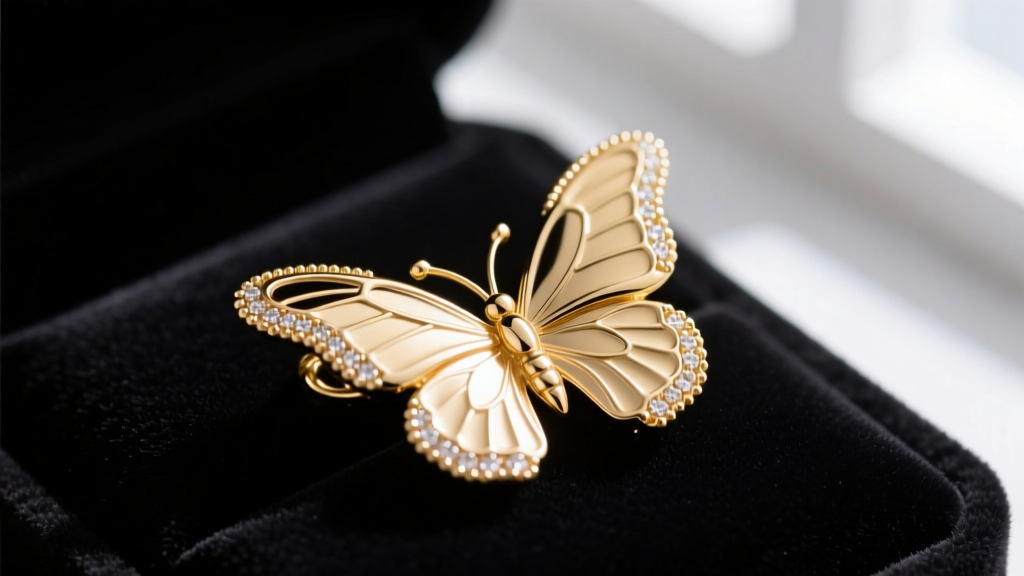
The Anatomy of a Dainty Gold Butterfly Necklace
The dainty gold butterfly necklace has transcended fleeting trends to become a permanent staple in modern jewelry wardrobes. However, the very characteristics that make these pieces so alluring—ultra-thin chains, lightweight pendants, and delicate wing motifs—also make them structurally vulnerable. When a pendant features a wide wingspan (typically 10mm to 15mm) but a razor-thin profile (under 1.2mm), the material's metallurgical properties dictate whether the necklace will last a lifetime or warp within a month.
Understanding the intersection of aesthetic delicacy and material science is critical. A dainty necklace is generally defined by a chain width between 0.8mm and 1.2mm, paired with a lightweight charm. Because the gold volume is so low, there is very little margin for error regarding tensile strength, alloy composition, and surface wear. This guide breaks down the exact material specifications you need to evaluate before investing in your next butterfly pendant.
Solid Gold Karats Compared: 10k vs. 14k vs. 18k
Pure 24-karat gold is far too malleable for dainty jewelry; it would bend under the weight of a heavy sweater. Therefore, gold is alloyed with metals like copper, silver, and zinc to increase its hardness, measured on the Vickers Hardness (HV) scale. According to the Gemological Institute of America (GIA), the karat weight directly impacts both the durability and the color of the final piece.
10k Gold: The Durability Champion
Composed of 41.7% pure gold, 10k gold is the hardest standard karat used in jewelry, boasting a Vickers hardness of approximately 135-145 HV. For ultra-thin 0.8mm chains, 10k gold offers superior tensile strength, resisting the micro-stretches that cause chains to snap. However, the high alloy content (often copper and nickel) gives it a paler yellow hue and increases the risk of contact dermatitis for sensitive skin.
14k Gold: The Industry Sweet Spot
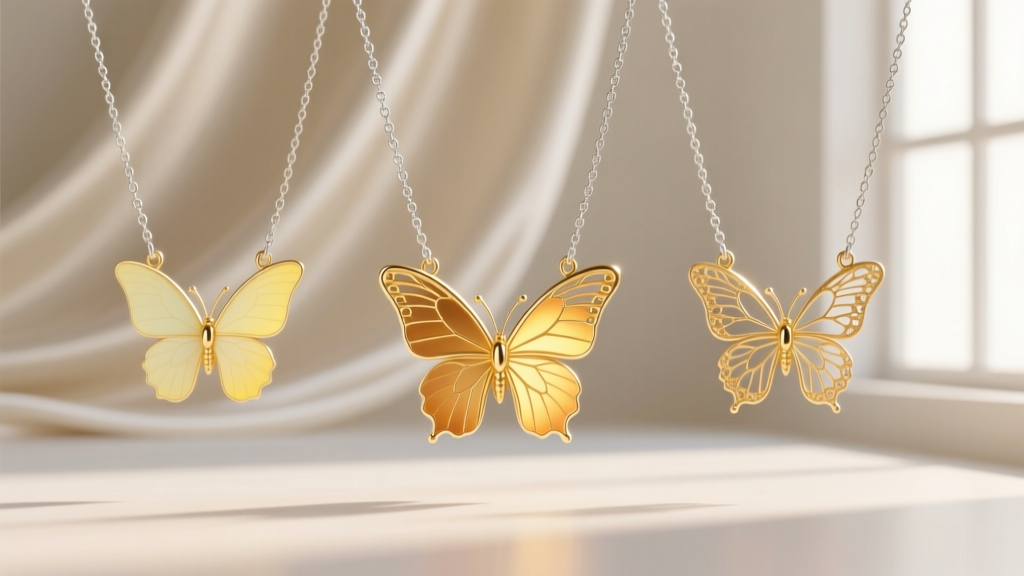
At 58.3% pure gold, 14k gold (approx. 125-135 HV) is the undisputed standard for a dainty gold butterfly necklace. It provides an optimal balance: it is hard enough to maintain the structural integrity of delicate butterfly wings if the piece is accidentally sat upon, yet it retains a rich, warm yellow color. Most high-end artisan jewelers default to 14k for chains under 1.0mm because it resists permanent kinking better than higher karats.
18k Gold: The Luxury Liability
Containing 75% pure gold, 18k gold (approx. 115-125 HV) offers a deeply saturated, luxurious color. However, its softer nature makes it a liability for dainty designs. An 18k gold butterfly pendant with elongated, thin wings is highly prone to warping. If you choose 18k, ensure the pendant has a slightly thicker profile (at least 1.5mm) or features structural reinforcements like a solid cast back rather than a hollow stamping.
| Karat | Gold Purity | Vickers Hardness (HV) | Best Use Case | Warp Risk |
|---|---|---|---|---|
| 10k | 41.7% | ~140 | Ultra-thin chains (<0.8mm), daily rough wear | Very Low |
| 14k | 58.3% | ~130 | Standard dainty chains (0.9mm-1.1mm), everyday wear | Low |
| 18k | 75.0% | ~120 | Thicker pendants, occasional/evening wear | Moderate to High |
Gold-Filled vs. Gold Vermeil: The Budget Alternatives
If solid gold exceeds your budget, you will likely encounter gold-filled and gold vermeil options. While both offer the look of a dainty gold butterfly necklace at a fraction of the cost, their manufacturing processes result in vastly different lifespans.
Gold-Filled: Mechanical Bonding
Gold-filled jewelry is created by mechanically bonding a thick layer of solid gold (usually 12k or 14k) to a brass core using extreme heat and pressure. By law, the gold layer must constitute at least 5% of the total weight of the item. For dainty chains, gold-filled is an excellent choice. The mechanical bond means the gold will not flake or peel off the thin chain links, and it can withstand years of friction against the skin.
Gold Vermeil: The Electroplating Standard
Vermeil (pronounced ver-may) consists of a sterling silver base that has been electroplated with gold. The Federal Trade Commission (FTC) Jewelry Guides strictly dictate that for a piece to be legally labeled as vermeil, the gold plating must be at least 10k and have a minimum thickness of 2.5 microns.
The Micron Thickness Trap
Many overseas manufacturers sell "gold plated" jewelry with a mere 0.1 to 0.5 microns of gold. On a dainty necklace, where the chain constantly rubs against the collarbone and the pendant bail experiences friction, a 0.5-micron plating will wear through to the base metal within three to six months. Always verify that a vermeil piece explicitly states a 2.5-micron thickness; otherwise, you are buying disposable jewelry.
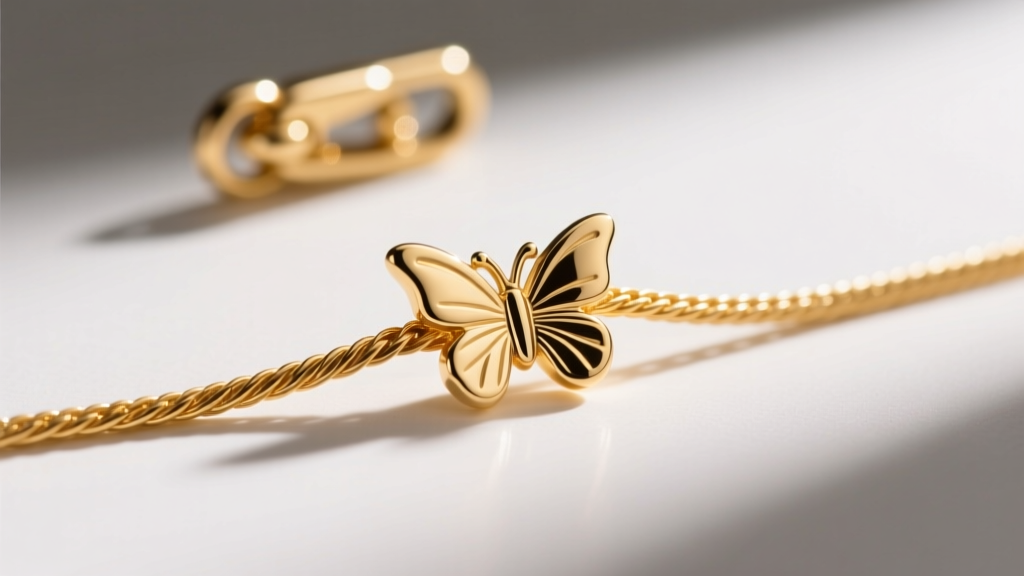
Chain Gauge and Clasp Mechanics for Delicate Pendants
The pendant is only half the equation; the chain is where structural failures usually occur. When selecting a dainty gold butterfly necklace, pay close attention to the chain style and clasp mechanics.
Cable vs. Box Chains
- Cable Chains (0.9mm - 1.1mm): Made of uniform oval or round links. They are highly flexible and, crucially, easy to repair. If a link breaks, a jeweler can simply solder it shut. However, they can snag on knitwear.
- Box Chains (0.8mm - 1.0mm): Composed of square links that create a smooth, continuous surface. They rarely snag on clothing, making them ideal for delicate butterfly pendants. The fatal flaw? Once a box chain kinks, the structural integrity of the link is permanently compromised, and it cannot be easily soldered without leaving a visible, stiff knot.
The Clasp: Spring Ring vs. Lobster
For chains under 1.2mm, avoid spring ring clasps. The internal tension spring in a miniature spring ring is notoriously weak and prone to failing when subjected to the lateral torque of a swinging pendant. A miniature lobster clasp (typically 9mm or 10mm in length) features a solid, spring-loaded lever that provides vastly superior security for lightweight butterfly charms.
Care and Maintenance to Prevent Structural Failure
A standard 14k gold 0.9mm cable chain has a tensile breaking strength of roughly 3.5 to 4 pounds. While this sounds sufficient for a lightweight butterfly pendant, catching the chain on a towel or sweater can generate up to 8 pounds of localized, instantaneous torque. To preserve your necklace, adhere to these strict maintenance protocols:
- The Slide-Off Method: Never pull a dainty chain over your head. The friction of hair and the stretching required to clear your jawline will micro-stretch the links over time, leading to premature snapping.
- Bail Friction Checks: The bail (the loop connecting the butterfly to the chain) acts as a saw against the chain links. Every six months, inspect the inside of the bail for sharp edges or burrs that might be filing through your chain.
- Chemical Avoidance: Chlorine in swimming pools reacts with the copper and silver alloys in 10k and 14k gold, causing a phenomenon called stress corrosion cracking. This makes dainty chains brittle and prone to shattering under minimal weight.
"When investing in dainty motifs like butterflies, prioritize 14k solid gold or high-micron vermeil over 18k gold. The slight sacrifice in color richness is entirely offset by the dramatic increase in structural longevity for thin-profile jewelry."
By understanding the metallurgical realities of gold alloys, chain gauges, and plating thicknesses, you can confidently select a dainty gold butterfly necklace that is as resilient as it is beautiful. Whether you opt for the rugged durability of 10k, the balanced perfection of 14k, or the budget-friendly longevity of gold-filled, prioritizing material properties ensures your delicate accessory survives the rigors of daily wear.


