What Does Dark Blue Mean on a Mood Necklace? Care & Cleaning Guide
Discover what dark blue means on a mood necklace and learn expert cleaning, maintenance, and storage tips to protect thermochromic jewelry.

Decoding the Colors: What Does Dark Blue Mean on a Mood Necklace?
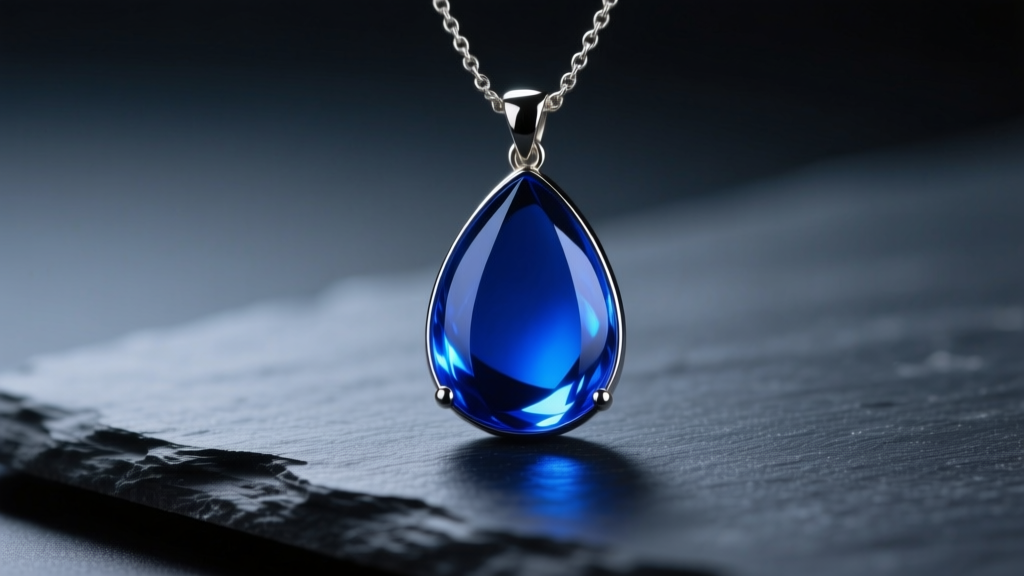
When consumers ask, "what does dark blue mean on a mood necklace," they are usually looking at a pendant that has settled into a deep, oceanic hue. In the lexicon of thermochromic jewelry, dark blue represents a state of calm, relaxation, and baseline equilibrium. It indicates that the wearer's skin temperature is resting comfortably between 82°F and 86°F (28°C to 30°C). Unlike the erratic shifts to green or red—which signal increased blood flow, excitement, or environmental heat—dark blue is the "happy medium" of the mood necklace color spectrum.
However, maintaining this vibrant dark blue, and ensuring the pendant doesn't degrade into a permanent, lifeless black, requires a strict understanding of thermochromic materials and specialized care techniques. Mood jewelry is notoriously fragile, and standard jewelry cleaning methods will permanently destroy the color-changing mechanism. This guide will walk you through the science of your pendant and provide an expert-level maintenance protocol.
The Science of Thermochromic Pendants (And Why They Fail)
Mood pendants do not actually read emotions; they read surface temperature. The "stone" is typically a hollow glass or quartz cabochon filled with cholesteric liquid crystals. According to the principles of thermochromism, these crystals twist and reflect specific wavelengths of light depending on thermal fluctuations. When the crystals are cool, they are tightly packed and absorb light (appearing black or dark brown). As they warm to that 82°F sweet spot, they loosen, reflecting the longer wavelengths that create a rich dark blue.
If your necklace is consistently dark blue, it simply means your environment and body temperature are perfectly stable. But if the colors look muddy, or if the blue has a cloudy, cracked appearance, the structural integrity of the pendant has been compromised. The three primary failure modes for mood jewelry are:
- Water Ingress: Moisture seeps through the bezel, oxidizing the inner foil backing and permanently turning the crystals black.
- UV Degradation: Prolonged exposure to direct sunlight breaks down the chemical bonds in the liquid crystals, causing the pendant to lose its ability to shift colors.
- Thermal Shock: Sudden, extreme temperature changes (like jumping into a cold pool while wearing the necklace) can crack the glass cabochon or separate the liquid crystal suspension.
Step-by-Step Cleaning Guide for Mood Jewelry
The most common mistake owners make is treating mood pendants like traditional gemstones. The Gemological Institute of America (GIA) notes that porous and treated gemstones require specialized, non-invasive cleaning, and thermochromic pendants are even more fragile. Follow these strict guidelines to keep your necklace pristine without ruining the dark blue hue.
What NOT To Do
NEVER use an ultrasonic cleaner. The high-frequency cavitation bubbles will shatter the delicate glass cabochon and instantly destroy the liquid crystal suspension. Furthermore, never submerge the pendant in water, soapy or otherwise. The metal bezel holding the glass is usually glued or lightly crimped; water will inevitably seep through microscopic gaps. Avoid all commercial jewelry dips, polishing creams, and isopropyl alcohol, as these chemicals will eat away at the adhesive sealing the pendant.
The Safe Cleaning Method
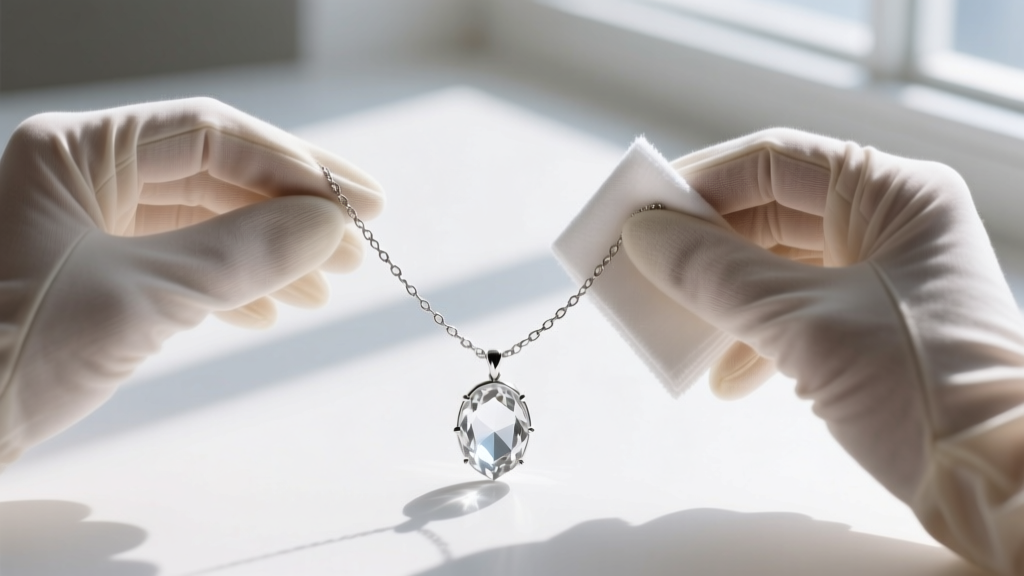
- Prep the Surface: Lay the necklace on a clean, dry microfiber towel.
- Clean the Glass: Use a separate, dry, lint-free microfiber cloth to gently buff the surface of the glass cabochon. This removes skin oils, sweat, and lotions that create a cloudy film, which can dull the dark blue color and make it look murky.
- Clean the Chain: Mix a single drop of mild, phosphate-free dish soap into a small bowl of warm water. Dip a cotton swab or a soft-bristled baby toothbrush into the solution, and gently scrub the metal chain and clasp. Meticulously avoid the pendant bezel.
- Dry Immediately: Use a dry cloth to immediately wipe down the chain. Do not allow water to air-dry near the pendant setting.
Maintenance Checklist: Keeping Your Colors Vibrant
Proper storage and daily wear habits are just as critical as cleaning. Use the table below as a quick-reference framework for your daily jewelry routine.
| Care Category | Do This | Avoid This |
|---|---|---|
| Wearing | Put the necklace on after applying perfumes, hairsprays, and lotions. | Wearing the necklace while swimming, showering, or exercising heavily. |
| Storage | Store in a dark, velvet-lined box at room temperature (68°F - 72°F). | Leaving the necklace on a sunny windowsill or in a hot car dashboard. |
| Handling | Handle by the metal chain or the outer metal bezel. | Constantly touching the glass surface, which transfers acidic skin oils. |
| Travel | Keep in a hard-shell jewelry case to prevent glass scratching. | Tossing the necklace loosely into a suitcase or handbag. |
Troubleshooting: When Your Necklace Gets "Stuck"
Sometimes, wearers panic when their pendant remains dark blue for hours, or worse, turns entirely black. Before you throw the necklace away, run through this diagnostic checklist:
Scenario A: It is stuck on dark blue, but you feel hot.
If you are warm but the pendant remains dark blue, the thermal transfer is being blocked. This is usually caused by a thick layer of lotion, dead skin cells, or sebum on the back of the glass cabochon, or on the metal backing plate. Gently clean the back of the pendant with a dry microfiber cloth to restore direct thermal contact with your skin.
Scenario B: The pendant has turned solid black and won't change.
If the pendant is black at room temperature, it has likely suffered water damage or extreme cold. Try the "recalibration trick": hold the pendant in your closed fist for five minutes, or place it in a warm (not hot) pocket close to your body. If it slowly transitions from black to brown, to green, and finally back to dark blue, the crystals are intact and it was just temporarily frozen. If it remains pitch black or develops a cloudy, cracked appearance after warming, the liquid crystals have been destroyed by moisture, and the pendant must be replaced.
Chain and Clasp Maintenance
While the thermochromic pendant gets all the attention, the chain requires its own maintenance protocol. Most mass-produced mood necklaces come with zinc alloy or base-metal chains. These materials are highly susceptible to oxidation when exposed to the sulfur and salts in human sweat, often resulting in the dreaded "green skin" effect.
Expert Tip: If you wear your mood necklace daily, consider removing the pendant from its original chain and threading it onto a 925 sterling silver or 316L surgical stainless steel chain. This prevents skin irritation and elevates the look of the jewelry.
If you choose to upgrade to a sterling silver chain, be aware that silver tarnishes when exposed to airborne sulfur. Jewelers of America recommends storing silver chains in anti-tarnish ziplock bags with silica gel packets to absorb ambient moisture. When polishing a silver chain, use a treated silver polishing cloth, but ensure you do not rub the cloth against the mood pendant, as the mild abrasives in the cloth can scratch the glass cabochon.
Final Thoughts on Thermochromic Care
Understanding what does dark blue mean on a mood necklace is only the first step in owning thermochromic jewelry. The deep, calming blue is a sign of a perfectly balanced temperature and a healthy, functioning liquid crystal matrix. By avoiding water, rejecting ultrasonic cleaners, and storing your pendant away from UV light, you can ensure your mood necklace continues to accurately reflect your baseline calm for years to come. Treat the glass cabochon with the same reverence you would a fragile opal, and your jewelry will remain a vibrant, dynamic accessory.


