The Ultimate Darkmoon Faire Necklace Crafting Guide
Master the art of jewelry making with our expert guide to crafting a darkmoon faire necklace, covering metal alloys, patinas, and cabochon setting.

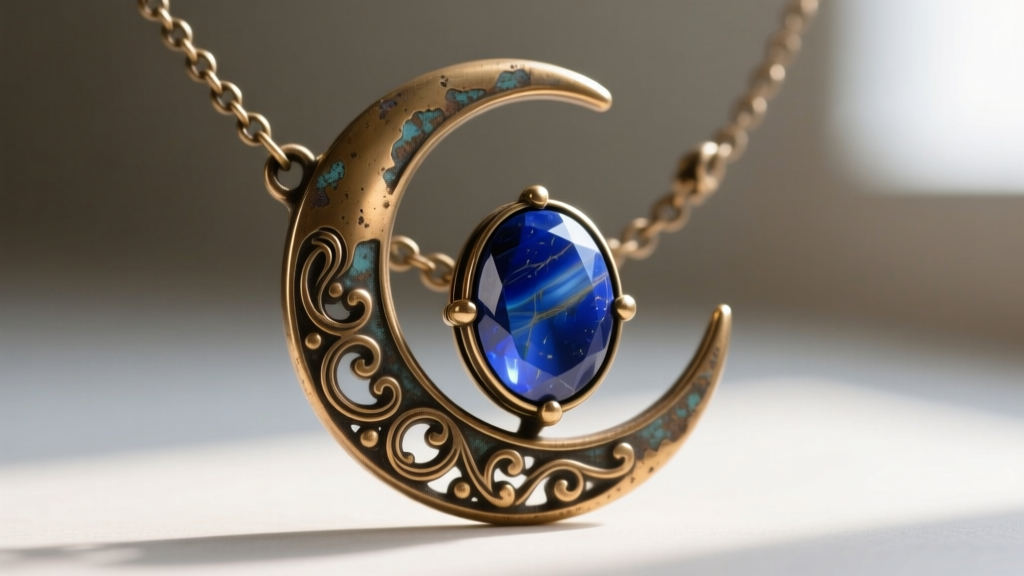
The Anatomy of Fantasy Carnival Jewelry
The aesthetic of a darkmoon faire necklace occupies a unique intersection in the jewelry world, blending mystical fantasy, steampunk industrialism, and traveling carnival motifs. For bench jewelers and advanced crafters, replicating this aesthetic requires moving far beyond cheap, mass-produced cast alloys. A true masterwork replica demands a deep understanding of metallurgy, lapidary arts, and chemical patination to achieve that authentic, weathered "traveler" look. In this expert deep dive, we will deconstruct the technical specifications required to fabricate a high-end, durable, and visually striking darkmoon faire necklace from raw materials.
Base Metals: Brass vs. Bronze vs. Oxidized Silver
The foundation of any carnival-inspired jewelry piece is its base metal. While sterling silver is a staple in fine jewelry, it often looks too pristine and modern for the darkmoon aesthetic unless heavily oxidized. Instead, copper-based alloys are the industry standard for this specific genre due to their warm undertones and excellent patina reactivity.
| Alloy | Composition | Patina Reactivity | Best Application |
|---|---|---|---|
| 260 Cartridge Brass | 70% Cu, 30% Zn | High (Ammonia/Salt) | Stamped motifs, bezels, structural backplates |
| Silicon Bronze | 95% Cu, 1% Si, 4% Zn | Medium (LOS, Heat) | Heavy chain links, load-bearing clasps |
| 353 Leaded Brass | 62% Cu, 35% Zn, 3% Pb | Medium (Chemical Darkeners) | Machined gears, intricate cast components |
For the main pendant body, 18-gauge 260 Cartridge Brass sheet is ideal. It possesses a Vickers hardness that allows for crisp stamping of celestial or tarot motifs while remaining malleable enough for dome-forming using a dapping block. According to Rio Grande, cartridge brass offers the best balance of tensile strength and workability for hand-fabricated jewelry components.
Lapidary Focus: Selecting and Setting the Centerpiece
A darkmoon faire necklace is defined by its centerpiece—often a large, mystical cabochon that mimics the "all-seeing eye" or a captured star. Dendritic agate, with its natural fern-like inclusions, or deep blue lapis lazuli with heavy pyrite flecks, are the premier choices for this design language.
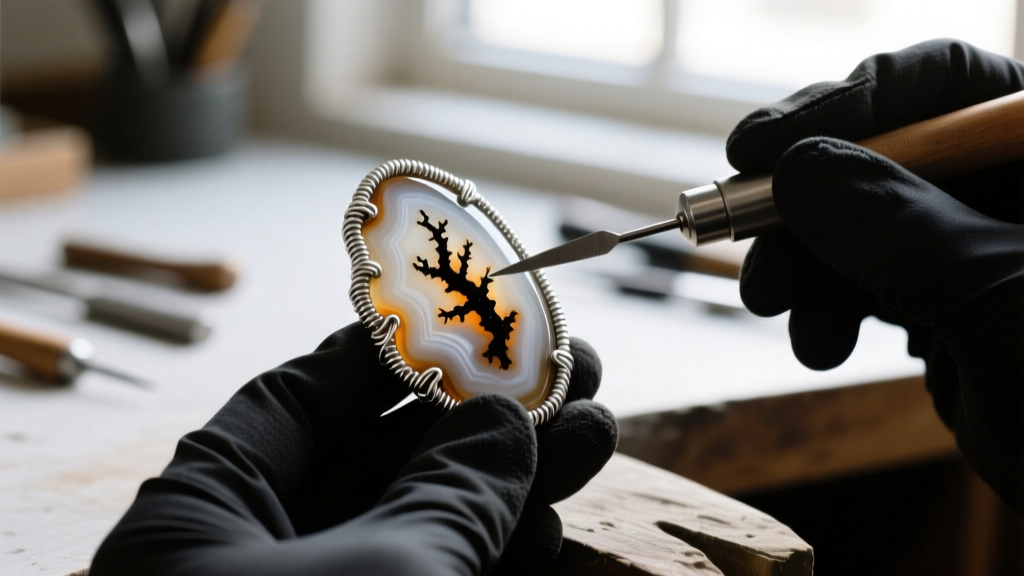
Bezel Setting Techniques for Uneven Fantasy Stones
Fantasy-cut or natural cabochons rarely have perfectly calibrated edges. When setting a 30x40mm dendritic agate, you must use a flexible bezel material. 20-gauge fine silver bezel wire (1.5mm height) is the professional standard here. Fine silver (.999) has a lower yield strength than sterling, allowing it to be pushed smoothly over the stone's girdle without springing back.
Because the backplate will be brass and the bezel wire is silver, you must use a bi-metal soldering approach. Apply a medium-temperature silver solder (flow point approximately 1450°F / 788°C) using a fluoride-based flux to prevent the brass from oxidizing excessively during heating. After soldering, the piece must be quenched and placed in a warm Sparex #2 (sodium bisulfate) pickle solution at 140°F for 10 minutes to dissolve copper oxides and borax fire scale. As detailed in the bench guides at Ganoksin, failing to properly pickle brass-silver joints will result in localized galvanic corrosion over time, especially when exposed to skin acids.
Chain Selection and Findings: Achieving the "Traveler" Aesthetic
The chain supporting a heavy, 40mm cabochon pendant cannot be a delicate cable link. The darkmoon aesthetic demands weight, history, and structural integrity. Custom chainmaille or heavy rolo chains are mandatory.
Gauge and Link Specifications
For a pendant weighing between 45 and 60 grams, the chain must have a minimum breaking strength of 150 pounds. We recommend fabricating a Byzantine weave using 14 AWG (American Wire Gauge) silicon bronze wire. Silicon bronze is incredibly tough and resists stretching under the dynamic load of a heavy pendant swinging during wear.
- Inner Ring AR (Aspect Ratio): 3.5 (e.g., 14g wire with a 3.1mm inner diameter)
- Outer Ring AR: 4.6 (e.g., 14g wire with a 4.1mm inner diameter)
- Clasp: A custom-fabricated brass toggle clasp with a 25mm ring and an 18mm tapered T-bar, soldered with easy silver solder (1325°F) to prevent melting the primary structural joints.
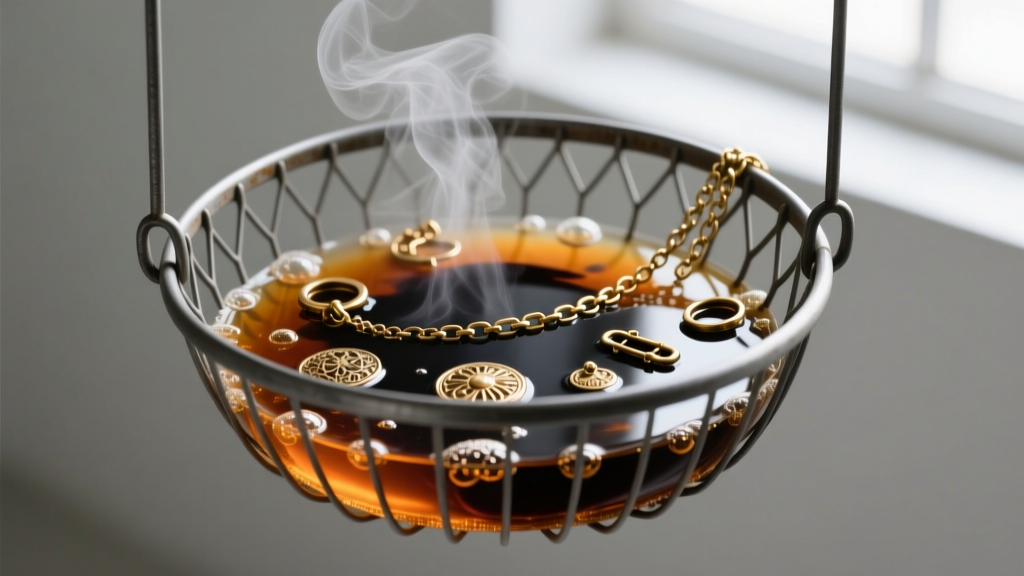
Advanced Antiquing: Chemical Patination
The magic of a darkmoon faire necklace lies in its finish. A high-polish brass pendant looks like a modern reproduction; an antiqued, chemically darkened piece looks like an artifact unearthed from a wandering carnival. Achieving this requires controlled chemical oxidation.
The Ammonia Fuming Technique for Brass
Unlike silver, which reacts predictably to Liver of Sulfur (potassium sulfide), brass requires a different approach to achieve deep, mottled greens and browns. The ammonia fuming method is a professional technique that yields unparalleled results.
- Suspend the polished brass components on copper wire inside a sealed glass or plastic container.
- Place a small open dish of household ammonia (ammonium hydroxide) and a pinch of non-iodized salt at the bottom of the container, ensuring the liquid does not touch the metal.
- Seal the container and leave it in a warm, dark area for 12 to 24 hours.
- The ammonia vapor, catalyzed by the salt, will react with the copper in the brass to form cupric chloride and copper carbonate, creating a stunning, organic verdigris and dark brown patina.
Safety Warning: Ammonia fuming must only be performed in a well-ventilated fume hood or outdoors while wearing a half-face respirator with acid gas/organic vapor cartridges. The fumes are highly toxic and corrosive to lung tissue.
Once the desired patina is achieved, neutralize the metal in a baking soda and water bath. Use 0000 steel wool or a brass bristle brush to selectively polish the high-relief areas (the raised edges of the crescent moons, stars, or gear teeth), leaving the dark oxidation trapped in the recesses. This creates the high-contrast, three-dimensional depth essential for fantasy jewelry.
Sourcing and Pricing Breakdown
Creating a masterwork replica is an investment in raw materials and bench time. Below is a realistic cost analysis for fabricating a single, high-end darkmoon faire necklace using professional-grade supplies.
Cost Analysis for a Masterwork Replica
| Component | Specification | Estimated Cost (USD) |
|---|---|---|
| Base Metal | 260 Brass Sheet (18g, 6x6 inch) | $18.50 |
| Centerpiece Stone | 30x40mm Dendritic Agate Cabochon | $35.00 - $60.00 |
| Bezel & Solder | Fine Silver Wire + Medium Solder + Flux | $12.00 |
| Chain Wire | 14g Silicon Bronze (1 troy oz) | $24.00 |
| Chemicals & Consumables | Ammonia, Salt, Pickle, Polishing Compounds | $8.50 |
| Total Materials | Excluding Bench Labor | $98.00 - $123.00 |
When factoring in approximately 12 to 15 hours of bench labor—including sawing, dapping, soldering, chainmaille weaving, and chemical patination—the retail value of a genuine, hand-fabricated darkmoon faire necklace typically ranges from $450 to $850, depending on the rarity of the cabochon and the complexity of the celestial motifs. By mastering these metallurgical and lapidary techniques, jewelers can elevate fantasy-inspired designs from simple cosplay accessories to heirloom-quality wearable art.


