The Debra Choker Necklace: 2026 Luxury Gift Guide & Styling
Discover why the Debra choker necklace is the ultimate 2026 luxury gift. Explore carat weights, metal grades, and occasion matching.

The Resurgence of the Debra Choker Necklace
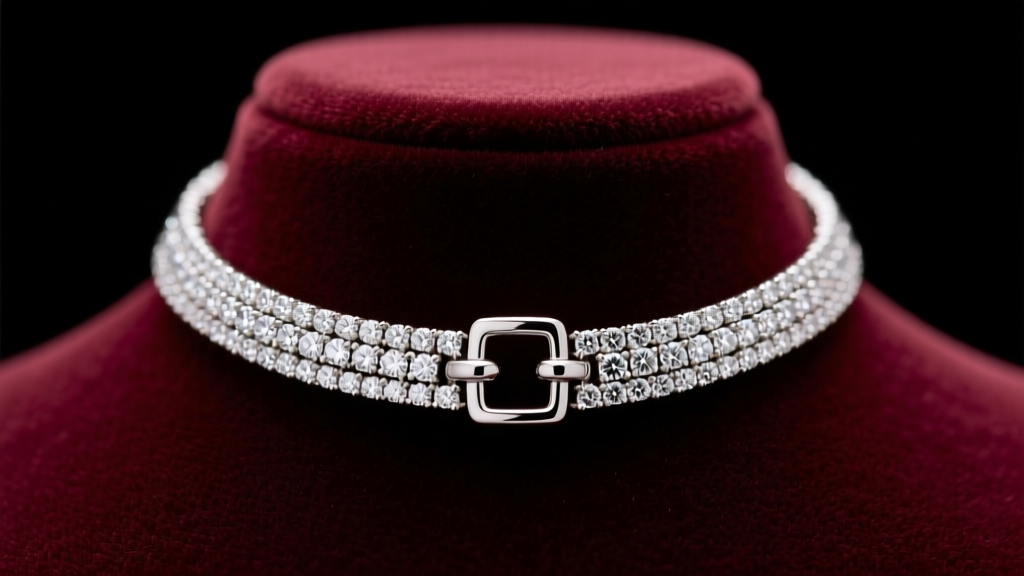
When it comes to high-impact luxury gifting, few pieces command a room quite like the Debra choker necklace. Originally popularized on red carpets and elite galas, the Debra silhouette—a continuous, articulated line of diamonds or gemstones sitting flush against the collarbone—has evolved from a fleeting celebrity trend into a permanent staple of the modern fine jewelry wardrobe. As we navigate the 2026 luxury market, the Debra choker has become the definitive gift for major milestones, offering a bold alternative to the traditional pendant or long-layered chain.
But gifting a high-carat choker requires precision. Unlike a pendant that can be adjusted with a simple chain swap, a choker is an architectural piece that demands exact sizing, superior articulation, and meticulous attention to clasp security. This comprehensive guide breaks down the anatomy, pricing, and occasion-matching strategies for gifting the perfect Debra choker necklace.
Anatomy of a True Debra Choker
Not every short tennis necklace qualifies as a Debra choker. The defining characteristic of this specific style is its fluid drape. A standard tennis necklace adapted for the neck will buckle and stiffen. A true Debra choker utilizes micro-hinged links or individually articulated prong settings, allowing 8 to 15 carats of stones to lay perfectly flat against the hollow of the throat, moving like liquid metal when the wearer turns her head.
Metal Grades and Rhodium Considerations
For diamond Debra chokers, the metal choice dictates both the visual temperature and the long-term maintenance of the piece. 18k White Gold is the industry standard, but it requires rhodium plating to achieve a bright white finish. Because chokers sit against the skin where body oils and friction are constant, the rhodium on the back of the settings may wear off within 12 to 18 months, revealing the natural yellowish tint of white gold. For a maintenance-free heirloom gift, Platinum is vastly superior. It is naturally white, hypoallergenic, and develops a soft patina rather than wearing away.
Diamond Specifications: Color and Clarity
Because the Debra sits directly beneath the jawline, it catches the eye immediately. According to the GIA Diamond Color Scale, you should aim for D-F colorless grades if setting in platinum or white gold to prevent any warm reflections against the skin. For clarity, the GIA Clarity Grading System suggests VS1 or VS2 as the optimal sweet spot. Inclusions in VS-grade stones are completely invisible to the naked eye at a conversational distance, allowing you to reallocate budget toward a higher Total Carat Weight (TCW) without sacrificing visual perfection.
Occasion Matching Matrix
The Debra choker is a statement of confidence. It frames the face and draws attention upward, making it ideal for occasions where the recipient will be the focal point. Use this matrix to match the occasion with the appropriate specifications.
| Occasion | Ideal TCW | Metal Recommendation | Estimated Budget (Natural) |
|---|---|---|---|
| 10th Anniversary | 8 - 10 ct | 18k White Gold | $18,000 - $28,000 |
| Milestone 40th Birthday | 10 - 12 ct | Platinum | $30,000 - $45,000 |
| Red Carpet / Gala | 15+ ct | 18k Yellow Gold | $75,000+ |
| Bridal / Wedding Day | 5 - 8 ct | Platinum | $12,000 - $20,000 |
"A Debra choker is not just jewelry; it is an architectural frame for the face. The articulation of the links is what separates a $5,000 piece from a $50,000 masterpiece." — Master Jeweler Insight
The Sizing Imperative: How to Measure for a Surprise
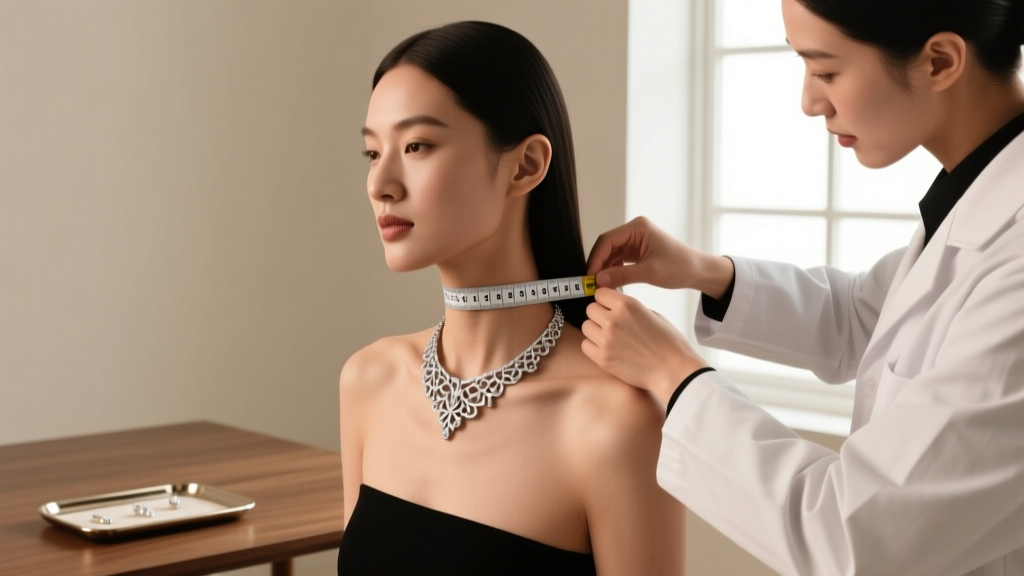
The most common point of failure when gifting a choker is incorrect sizing. A pendant can rest anywhere from 16 to 22 inches, but a choker operates in millimeters. A 14-inch choker will sit tightly on the base of the neck, while a 15.5-inch choker will rest elegantly on the collarbones. Furthermore, neck circumference fluctuates throughout the day due to hydration, temperature, and posture.
The Two-Finger Rule
If you are measuring the recipient secretly, use a flexible measuring tape while she is relaxed. Wrap the tape around the base of the neck where a collar would naturally sit, and slide two fingers flat between the tape and her skin. This ensures breathing room and comfort. If you are purchasing from a high-end jeweler, always insist on a piece that includes a discreet 1-inch articulated extender chain. This allows the recipient to adjust the drape depending on whether she is wearing it over bare skin or a thin silk blouse.
Clasp Security
Never gift a high-carat Debra choker with a standard lobster clasp. The lateral tension on a 14-inch collar requires a tongue box clasp equipped with a figure-eight safety catch or a secondary safety chain. This dual-lock mechanism prevents catastrophic loss if the primary tongue mechanism snags on a garment or is accidentally compressed.
Budgeting: Natural vs. Lab-Grown in 2026
The 2026 jewelry market has been fundamentally reshaped by the maturation of lab-grown diamond technology. For gifting purposes, this means the once-exclusive red-carpet Debra silhouette is now accessible across a much wider spectrum of budgets.
- Lab-Grown (8-10 TCW): Priced between $3,500 and $7,000, lab-grown Debra chokers offer identical optical and chemical properties to mined diamonds. They are an exceptional choice for milestone birthdays where maximum visual impact (larger carat weights) is the primary goal.
- Natural (8-10 TCW, VS1/VS2, F/G): Ranging from $18,000 to $35,000, natural diamond chokers retain their status as traditional heirloom assets, favored for major anniversaries and bridal gifts where provenance and rarity are paramount.
- High Jewelry (15+ TCW, D/E, VVS): Starting at $75,000 and scaling into the hundreds of thousands, these bespoke pieces feature perfectly matched, large-diameter stones and are typically sourced through private jewelers or heritage houses.
Styling the Gift: Neckline Pairings
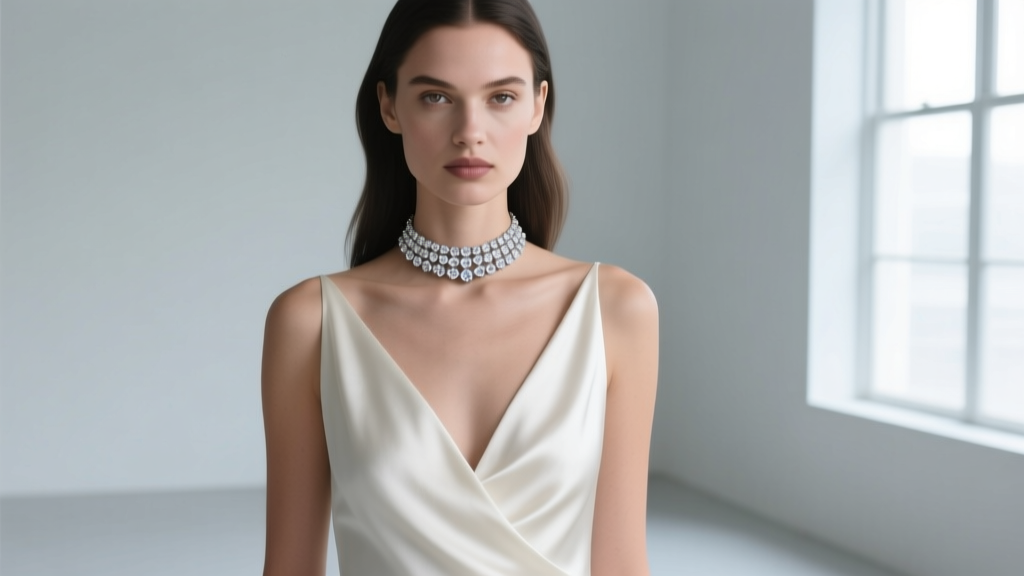
When presenting the Debra choker, it is helpful to guide the recipient on how to style it. Because the piece is inherently loud, it requires negative space to breathe.
What Works
Off-the-Shoulder and Sweetheart Necklines: These expose the entire décolletage, allowing the choker to act as the sole focal point without competing with fabric edges. Deep V-Necks: A delicate silk V-neck creates a vertical line that contrasts beautifully with the horizontal geometry of the choker. Halter Tops: A sleek halter frames the neck and draws the eye directly to the diamond line.
What to Avoid
Avoid high collars, turtlenecks, or garments with heavy embellishments, ruffles, or busy patterns around the neckline. The Debra choker needs a clean canvas; competing textures will diminish its brilliance and cause the prongs to snag on delicate fabrics.
Final Gifting Considerations
Presentation is everything. A Debra choker should be gifted in a rigid, velvet-lined box specifically molded to hold the piece in a perfect circle or oval, preventing the articulated links from being bent or kinked during storage. Include a specialized jewelry polishing cloth and a recommendation for an annual professional ultrasonic cleaning to maintain the fire of the stones. By understanding the mechanics, sizing, and styling of the Debra choker necklace, you are not just giving a piece of jewelry—you are gifting an heirloom designed to command attention for decades to come.


