Scarf Necklace Mechanics: Silk Momme & Metal Bail Sizing
Discover the technical mechanics of the scarf necklace. We analyze metal bail diameters, silk momme weights, and friction-reduction hardware designs.

The Anatomy of a Scarf Necklace: Beyond the Aesthetic
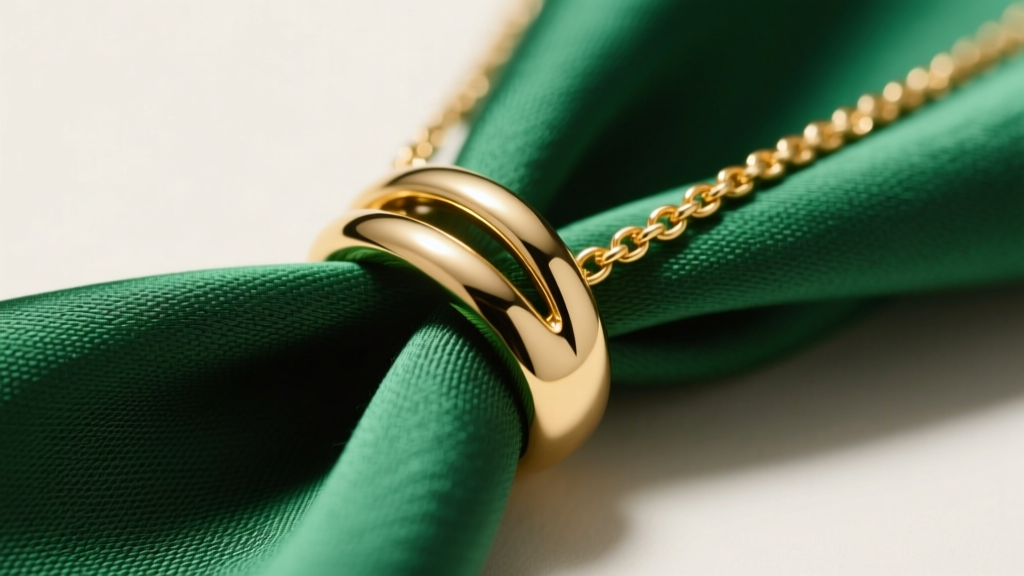
The modern scarf necklace is not merely a long strand of beads or a simple silk tie. In high jewelry and advanced accessory design, the scarf necklace represents a modular hybrid system. It bridges the gap between heavy metalwork and delicate textiles, functioning as both a structural collar and a dynamic textile anchor. At its core, a true scarf necklace consists of a high-tensile chain terminating in an oversized, low-friction central slide (often referred to as a bail or scarf ring). This hardware is engineered specifically to accommodate the warp and weft of silk or fine wool without causing microscopic shearing or structural degradation to the fibers.
Designing or selecting a scarf necklace requires a rigorous understanding of material science. The interaction between cold-forged metals and organic protein fibers is fraught with friction, tension, and potential chemical reactivity. To master the scarf necklace, one must look past the surface aesthetics and examine the precise engineering of bail diameters, chain gauges, and silk momme weights that dictate the piece's longevity and wearability.
Hardware Engineering: Chain Gauges and Tensile Requirements
The foundational element of any scarf necklace is the chain. Because the central slide and the gathered fabric act as a heavy, swinging pendulum, the chain is subjected to immense dynamic torque. A standard 1.5mm cable chain will inevitably snap at the solder points under the kinetic load of a swinging 36-inch silk scarf paired with a solid brass or gold slide.
For a functional scarf necklace, the chain must meet strict tensile specifications:
- Gauge Width: A minimum of 4.0mm to 5.5mm. This provides the necessary surface area to distribute the weight across the cervical spine without digging into the skin.
- Link Architecture: Interlocking weaves, such as the wheat (Spiga) or rope chain, are mandatory. These designs distribute kinetic stress across multiple interlocking planes, whereas flat links (like Cuban or Figaro) can twist and pinch delicate textile fibers if the scarf wraps around the neck.
- Clasp Mechanics: The anterior weight of a scarf necklace can easily exceed 80 grams. A standard spring-ring clasp will fail. The piece must utilize a locking lobster clasp or a box clasp equipped with a figure-8 safety catch, ensuring the fulcrum point remains secure during movement.
The Mathematics of the Bail: Inner Diameter vs. Silk Momme
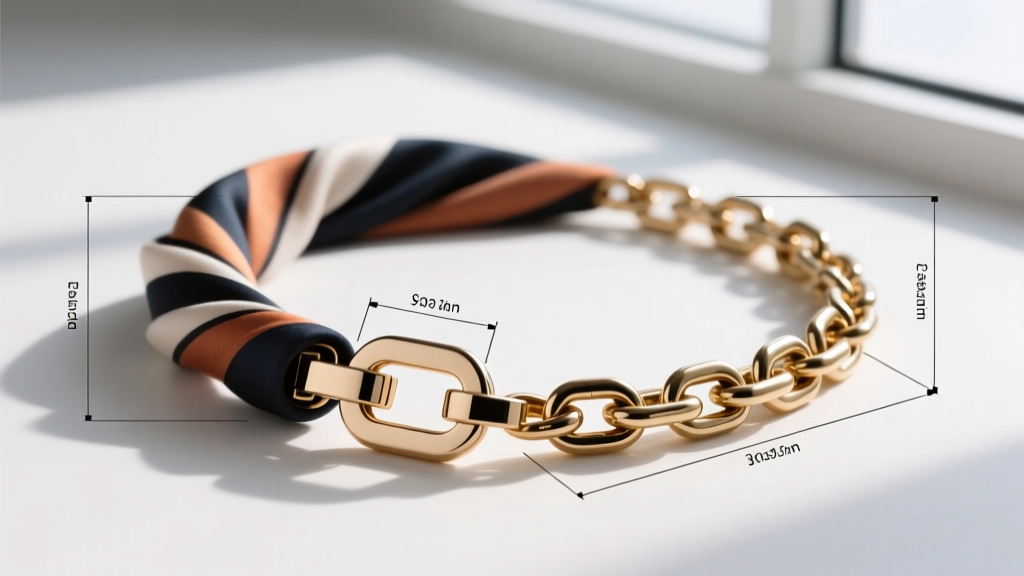
The central slide, or bail, is the most critical component of the scarf necklace. If the inner diameter (ID) is too narrow, it will crush the silk fibers, causing permanent creasing and weakening the structural integrity of the fabric. If the ID is too wide, the scarf will slip through uncontrollably, failing to hold the desired drape. The correct sizing depends entirely on the "momme" (mm) weight of the silk being used.
Momme is the traditional Japanese unit used to measure the weight and density of silk. A higher momme indicates a heavier, more opaque, and more durable weave. Below is the engineering matrix for matching scarf necklace bail sizes to specific textile weights.
| Bail Inner Diameter (ID) | Max Silk Momme Weight | Recommended Scarf Width | Best Use Case |
|---|---|---|---|
| 10mm - 12mm | 12 - 14 Momme | 20" - 25" (Skinny) | Lightweight summer layering, delicate twill |
| 13mm - 15mm | 16 - 19 Momme | 26" - 35" (Standard) | Standard luxury scarves, optimal drape retention |
| 16mm - 20mm | 22 - 30 Momme | 36" - 55" (Oversized) | Heavyweight winter silk, wool-blend squares |
Textile Science: Silk Fibroin and Friction Degradation
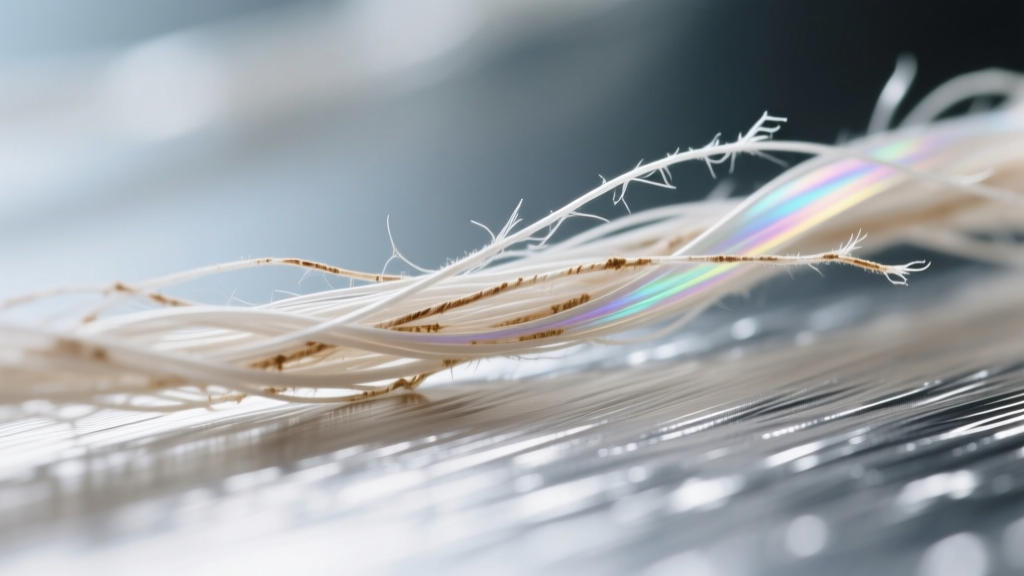
To understand why hardware finishing is paramount, we must examine the microscopic structure of silk. According to the Victoria and Albert Museum Silk Archive, silk fibers are composed of fibroin proteins that naturally form a triangular prism-like structure. This unique geometry is what gives silk its characteristic refractive luster. However, these microscopic prisms are highly susceptible to abrasion.
When a silk scarf is pulled through a metal scarf necklace bail, the coefficient of friction dictates the level of wear. Metals with a brushed, matte, or hammered finish possess microscopic peaks and valleys (surface roughness average, or Ra, > 0.4 µm). As the silk is threaded and adjusted throughout the day, these microscopic metal burrs act like tiny saws, shearing the fibroin prisms. Over time, this results in "fuzzing," loss of luster, and eventual tearing of the warp threads.
The #8000 Grit Mirror Polish Standard
To mitigate fibroin degradation, the inner circumference of a scarf necklace bail must undergo a multi-stage polishing process. High-end manufacturers begin with a #400 grit sanding to remove casting porosity, progress to a #1200 grit for leveling, and finish with a #4000 to #8000 grit rouge polish. This achieves a mirror finish with an Ra of < 0.05 µm, effectively creating a frictionless surface that allows the silk to glide without catching. For added protection, a 0.5-micron layer of rhodium plating over sterling silver or white gold provides an ultra-hard, glass-like barrier that resists micro-scratching.
Metal Alloys and Chemical Reactivity with Textiles
Beyond physical friction, chemical interactions between metal alloys and textiles can ruin a luxury scarf. The GIA Gem Reference notes that different karats and alloys of gold possess varying levels of chemical stability and Vickers Hardness (HV).
- 18k Yellow Gold (75% Au): While luxurious, the copper and silver alloys used in yellow gold can oxidize when exposed to human perspiration. This oxidation can transfer onto light-colored silk scarves, leaving stubborn green or brownish stains along the hem where the fabric rests against the metal bail.
- Platinum (95% Pt): Platinum is chemically inert and will never oxidize or stain a textile. However, it is a dense, heavy metal. A solid platinum scarf ring can add an unnecessary 40 grams of anterior weight, altering the necklace's ergonomic balance.
- Titanium (Grade 5): An emerging choice in avant-garde scarf necklaces. Grade 5 titanium (Ti-6Al-4V) is highly resistant to corrosion, completely hypoallergenic, and possesses a Vickers Hardness of roughly 349 HV, making it virtually impossible to scratch during daily textile threading. It also weighs 45% less than steel or gold, solving the ergonomic weight issue.
Structural Styling: Ergonomics and Weight Distribution
A frequently overlooked aspect of the scarf necklace is biomechanics. When you thread a 36-inch, 19-momme silk scarf through a heavy metal slide, the gathered fabric creates a dense knot of textile that can weigh between 40 and 60 grams. Combined with a 30-gram metal bail and a heavy wheat chain, the anterior load (the weight pulling down on the front of the neck) can exceed 100 grams.
"A poorly balanced modular necklace acts as a fulcrum, constantly migrating forward and applying localized pressure to the trachea and cervical spine. Proper jewelry engineering requires posterior counter-weighting to anchor the piece against the nape of the neck." — Principles of Ergonomic Jewelry Design
To solve this, expert jewelers integrate a counter-weight into the posterior chain. This is often achieved by using an oversized, solid metal branding tag (weighing 15-20 grams) at the clasp, or by designing the clasp itself as a heavy, decorative box mechanism. This posterior weight anchors the necklace, keeping the central bail perfectly centered on the sternum and preventing the chain from choking the wearer.
Maintenance: Ultrasonic vs. Steam Cleaning for Hybrid Pieces
Cleaning a scarf necklace requires a bifurcated approach, as the maintenance needs of the metal hardware directly contradict the needs of the silk textile. Never submerge the assembled piece in an ultrasonic cleaner. The high-frequency cavitation bubbles will not harm the metal, but they will violently agitate and destroy the delicate sericin and fibroin bonds of any residual silk fibers trapped in the bail's crevices.
Instead, detach the silk scarf completely. The metal chain and bail should be cleaned using a mild, ammonia-free jewelry dip or a soft-bristled brush with warm water and a pH-neutral dish soap. For the silk scarf, spot-clean any metal oxidation stains using a specialized silk detergent and cold water, avoiding harsh enzymatic cleaners that break down protein-based fibers. By respecting the distinct material properties of both the metal and the textile, a well-engineered scarf necklace will remain a functional, luxurious staple for decades.