Gold Necklace Choker for Women: Troubleshooting Fit & Tarnish
Is your gold necklace choker for women turning skin green or snapping? Learn expert troubleshooting for fit, tarnish, clasp failure, and chain kinks.

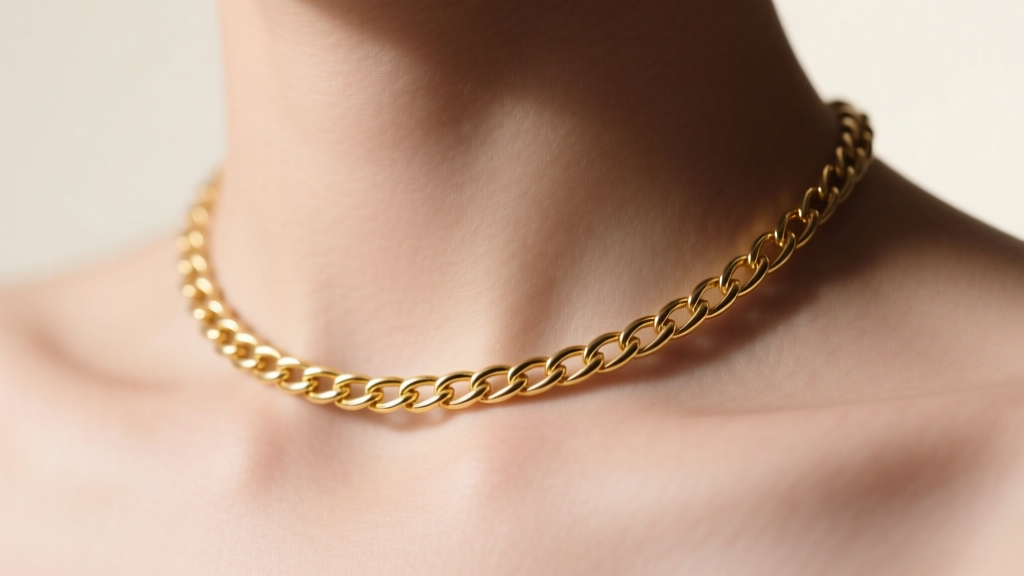
The gold necklace choker for women remains a cornerstone of modern jewelry styling, offering a sleek, minimalist frame for the collarbone. However, the anatomy of a choker—sitting tightly against the skin, subjected to constant friction, sweat, and bending—makes it uniquely vulnerable to mechanical and chemical failures. From stubborn chain kinks and broken clasps to the dreaded 'green neck' phenomenon, these issues can quickly turn a luxurious accessory into a frustrating liability.
As jewelry specialists, we see countless high-end and vintage chokers retired due to preventable damage. This comprehensive troubleshooting guide bypasses generic care advice and dives deep into the metallurgical and structural realities of gold chokers, providing actionable frameworks to diagnose, repair, and optimize your necklace.
The 'Green Neck' Dilemma: Solving Skin Irritation & Tarnish
Pure 24-karat gold is entirely hypoallergenic and immune to tarnish. Unfortunately, 24k gold is far too soft to withstand the tension of a choker; it would stretch and snap within days. Therefore, a durable gold necklace choker for women must be alloyed with harder metals like copper, silver, zinc, and occasionally nickel.
When you experience skin discoloration or contact dermatitis, you are not reacting to the gold itself. You are reacting to the copper or nickel alloys. According to the GIA Gem Encyclopedia, 10k gold contains only 41.7% pure gold, leaving a massive 58.3% of the alloy exposed to environmental factors. When copper mixes with the chlorides, sulfides, and lactic acid in human sweat, it creates copper chloride—a green salt that transfers directly to your epidermis.

Actionable Fixes for Alloy Reactions
- The Rhodium Barrier: Take your 10k or 14k yellow gold choker to a bench jeweler and request a flash-plating of rhodium on the inner surface. This creates an inert, hypoallergenic barrier between the copper alloys and your skin.
- The Polymer Seal: For an immediate, zero-cost fix, paint the inner links of the choker with a thin layer of clear, non-toxic nail polish. This seals the copper from your sweat. Reapply every three weeks as the polish degrades from friction.
- Upgrade the Karat: If you have highly acidic sweat (often linked to high-protein diets or certain medications), bypass 10k and 14k entirely. Invest in an 18k gold choker (75% pure gold), which drastically reduces the copper content and virtually eliminates the green residue.
Chain Kinking and Stiffness: Restoring the Drape
Nothing ruins the fluid elegance of a choker faster than a permanent kink. The structural vulnerability of a chain depends entirely on its weave geometry. Flat and tubular weaves look stunning but are mechanical nightmares when subjected to the twisting forces of daily wear.
| Chain Weave | Kink Risk | Repairability | Troubleshooting Strategy |
|---|---|---|---|
| Herringbone | Extreme | Very Low | Store perfectly flat. If kinked, lay on a steel bench block and gently tap with a rawhide mallet to flatten the folded links. |
| Snake | High | Low | Use a smooth, cylindrical metal rod (like a jewelry mandrel) to gently roll out minor dents. Never pull a kinked snake chain. |
| Rope | Low | High | Twisted links hide kinks well. If tangled, use two fine sewing needles to gently pick the knot apart while submerged in baby oil. |
| Cable / Link | Minimal | Very High | Standard soldering easily fixes broken links. Kinks are rare due to the open, rounded geometry of the individual rings. |
Pro-Tip: Never sleep in a herringbone or snake chain choker. The unconscious tossing and turning applies localized torsional stress that will permanently crease the metal lattice, creating a weak point that will eventually snap.
Clasp Slippage and Neck Hair Pulling
The clasp is the most frequent point of mechanical failure on any gold necklace choker for women. Because chokers sit high on the neck, they interact constantly with hair follicles and the natural oils from your scalp.
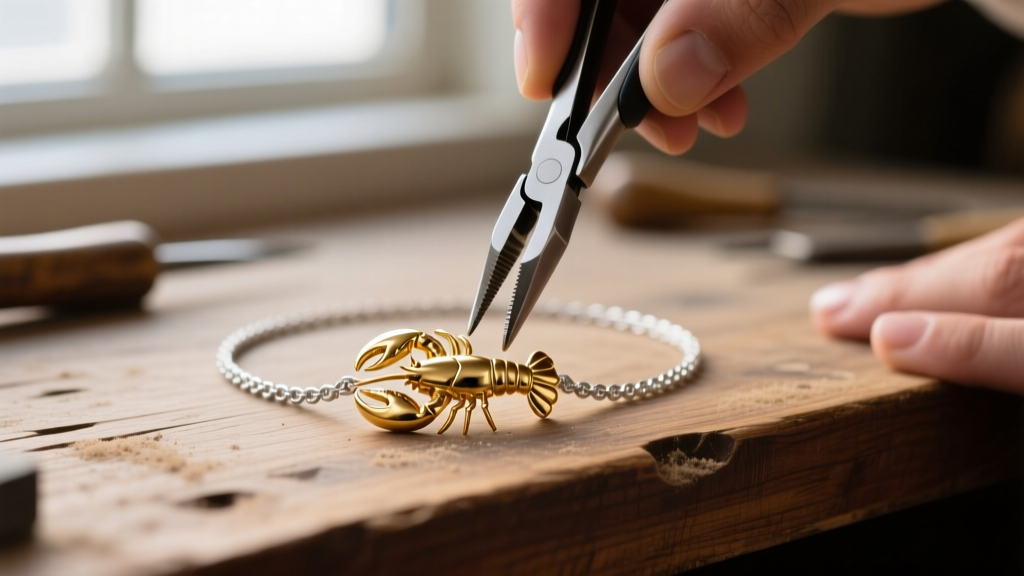
Diagnosing Clasp Failures
The Spring Ring: This circular clasp contains a microscopic steel spring inside a gold shell. Over time, lotions, perfumes, and sweat seep into the seam, causing the internal steel spring to rust or lose its temper. If your spring ring feels 'mushy' or fails to snap back, do not force it. The internal mechanism is compromised and requires a total clasp replacement by a jeweler.
The Lobster Clasp: While more robust, lobster clasps are notorious for catching and pulling fine neck hair. Furthermore, the trigger mechanism can become stiff due to debris buildup.
Jeweler's Insight: If your lobster clasp is stiff, do not use WD-40 or harsh chemical lubricants, which will degrade the gold's finish. Instead, use a drop of synthetic watch oil applied with a needle tip directly into the trigger hinge, then cycle the trigger twenty times to distribute the lubricant.
The Ultimate Solution: If you suffer from severe hair pulling or clasp slippage, have your bench jeweler swap the standard clasp for a hidden box clasp with a figure-eight safety latch. This provides a seamless, flush connection that eliminates gaps where hair can snag, and offers dual-locking security that a simple spring ring cannot match.
Sizing Disasters: When Standard Lengths Fail
The jewelry industry often categorizes 14 inches to 16 inches as the 'standard' choker length. However, applying a rigid standard to human anatomy leads to uncomfortable, restrictive fits that stretch the chain and accelerate metal fatigue.
According to guidelines referenced by Jewelers of America, a properly fitted choker should allow for natural neck expansion during breathing and swallowing without sliding up toward the jawline.
The Precision Sizing Framework
- Measure the Base: Use a flexible tailor's measuring tape. Wrap it snugly around your neck exactly where you want the choker to sit (usually the base of the neck, just above the collarbone).
- Apply the Expansion Multiplier: Take your exact measurement and add 1.5 to 2 inches. If your neck measures 13 inches, your ideal choker length is 14.5 to 15 inches. A 14-inch chain will act as a tourniquet.
- Account for Chain Width: Thicker, wider chains (like a 5mm Cuban link) sit further away from the skin, effectively reducing the inner circumference. For chains wider than 4mm, add an extra 0.5 inches to your final calculation to compensate for the interior displacement.
If you have already purchased a choker that is too tight, avoid the temptation to forcefully pull it over your head, which will warp the links. Instead, purchase a 14k or 18k gold chain extender (typically 2 inches long with multiple loop options). This not only solves the sizing issue but allows you to adjust the drape depending on your neckline.
Weekly Maintenance & Storage Checklist
Preventative maintenance is vastly cheaper than structural repairs. Integrate these specific steps into your jewelry care routine to maximize the lifespan of your choker:
- The Flat Storage Rule: Never hang a herringbone or snake choker on a standard jewelry tree. Gravity will pull the chain taut, stretching the links over time. Store them flat in a velvet-lined drawer or rolled loosely around a soft, acid-free tissue tube.
- Chemical Isolation: Apply all perfumes, hairsprays, and serums before putting on your choker. The alcohol and volatile organic compounds (VOCs) in cosmetics can strip the polished finish of the gold and accelerate the oxidation of the copper alloys.
- Ultrasonic Warnings: While plain gold cable chains can safely be cleaned in an ultrasonic jewelry cleaner, never use this method on chokers featuring porous gemstones (like opals, pearls, or turquoise) or chokers with hollowed-out links, as the high-frequency vibrations can shatter the stones or collapse the hollow metal.
By understanding the metallurgical limits and structural vulnerabilities of your jewelry, you can ensure your gold necklace choker for women remains a flawless, comfortable, and enduring staple in your wardrobe for decades to come.


