The Ultimate Guide to Styling a Mother of Pearl Long Necklace
Discover how to choose, style, and care for a mother of pearl long necklace. Our beginner-friendly guide covers lengths, layering, and spotting real nacre.

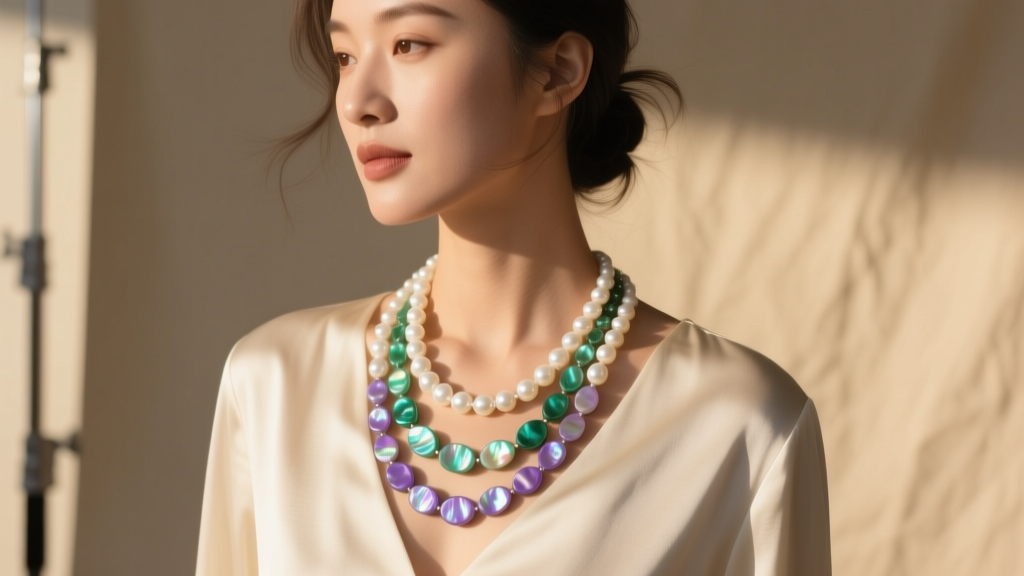
If you are stepping into the world of organic gemstones, few materials offer the same ethereal, light-catching beauty as nacre. As we move through 2026, the trend of organic, nature-inspired jewelry continues to dominate, and the mother of pearl long necklace has emerged as a versatile staple for both minimalist and maximalist wardrobes. Unlike traditional pearls, which are spherical gems grown inside a mollusk, mother of pearl is the iridescent inner lining of the shell itself. When cut into beads, pendants, or links, it offers a larger canvas for that signature rainbow-like luster. However, buying, styling, and caring for these pieces requires specific knowledge. This beginner-friendly explainer will decode everything from aragonite structures to the mechanics of the tooth test, ensuring your first foray into long nacre necklaces is a success.
What Exactly is Mother of Pearl? (Nacre 101)
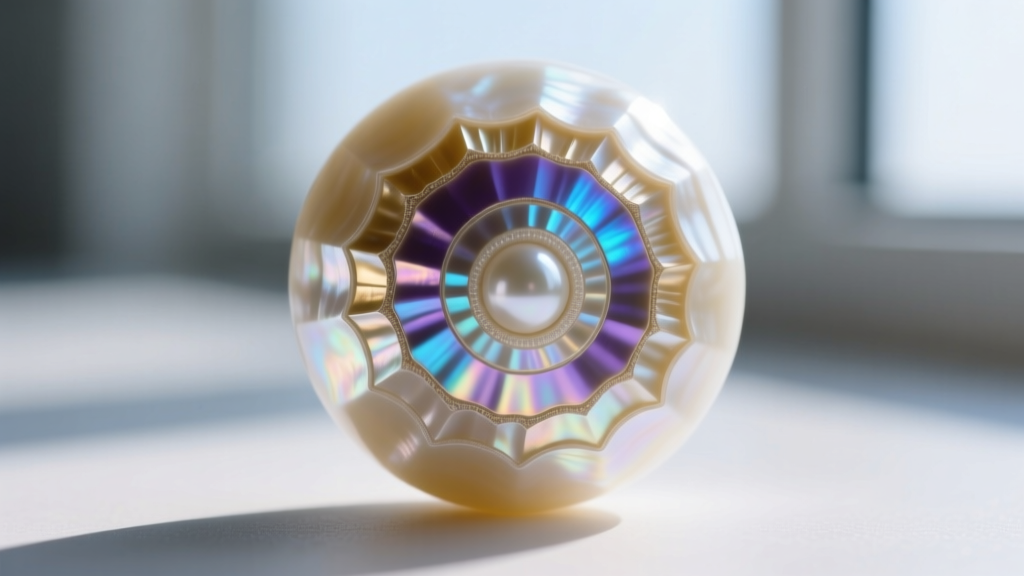
To understand the value of your jewelry, you must understand its biology. Mother of pearl is composed of nacre, a composite material produced by mollusks like the Pinctada maxima (South Sea oyster) and freshwater mussels like Hyriopsis cumingii. Nacre consists of microscopic hexagonal platelets of aragonite (a form of calcium carbonate) glued together by an organic polymer called conchiolin. When light hits these layered platelets, it refracts and interferes with itself, creating the optical phenomenon known as iridescence or 'orient'.
While a traditional pearl is a 360-degree sphere of this material, mother of pearl is sliced directly from the shell's inner wall. This means the beads or pendants in a mother of pearl long necklace are often flatter, larger, or uniquely shaped compared to standard round pearls. Because it is sliced from a broader surface area, high-quality mother of pearl is generally more abundant and accessible than perfectly matched strands of spherical pearls, making it an excellent entry point for luxury organic jewelry.
Decoding Lengths: Why 'Long' Matters
In the jewelry industry, 'long' is not a vague descriptor; it refers to specific, standardized measurements that dictate how the necklace interacts with your clothing. A mother of pearl long necklace typically falls into the Opera or Rope categories. Because nacre beads can be heavy, understanding the weight distribution at these lengths is crucial for comfort.
| Length Category | Inches | Best Necklines | Ideal Clasp Type |
|---|---|---|---|
| Opera | 28 to 36 inches | V-necks, Scoop necks, Button-downs | Lobster Claw or Spring Ring |
| Rope | 37 to 45 inches | Turtlenecks, Crew necks, Deep plunges | Toggle or Magnetic (for easy removal) |
| Lariat | 45+ inches (no fixed clasp) | Open collars, Wrap dresses | None (Slip-knot or Y-drop) |
According to the Gemological Institute of America (GIA), the uniformity of bead size in longer strands is critical for maintaining structural integrity. A 40-inch rope necklace made of 10mm mother of pearl beads will carry significant weight; therefore, ensure the stringing material is high-tensile silk or nylon wire, knotted between every single bead to prevent catastrophic loss if the strand breaks.
The Authenticity Test: Real Nacre vs. Imitations
The market is flooded with glass, plastic, and coated-shell imitations. Because a mother of pearl long necklace requires dozens of beads, the cost difference between genuine nacre and factory-made fakes is substantial. Here is how to verify your piece using gemological field tests.
1. The Tooth Test
Gently rub a bead against the biting edge of your front tooth. Genuine mother of pearl will feel distinctly gritty, like fine sandpaper. This friction is caused by the overlapping edges of the aragonite platelets. Glass, plastic, and resin-coated beads will feel perfectly, unnaturally smooth.
2. The Temperature Test
Real nacre is a dense, inorganic-organic composite that feels distinctly cool to the touch and takes a few seconds to warm up to your body heat. Plastic and resin imitations will feel room-temperature immediately upon handling.
3. Magnification and Orient
Under a 10x jeweler's loupe, genuine mother of pearl reveals a labyrinthine pattern of growth lines and overlapping crystalline structures. Imitations will show a uniform, painted-on sheen or the swirl marks of molded glass. Furthermore, real nacre exhibits 'orient'—a play of color that shifts as you rotate the bead—while cheap pearlescent paints only offer a flat, static white shine.
Hardware and Pricing: What to Expect in 2026
When investing in a long strand, the hardware (clasps, jump rings, and spacer beads) is just as important as the nacre. Because long necklaces are frequently looped, knotted, and pulled over the head, the clasp endures high mechanical stress.
- Freshwater Mother of Pearl: Typically ranges from $40 to $150 for a 36-inch opera strand. Often paired with gold-filled or sterling silver hardware.
- Saltwater Pinctada Maxima: Ranges from $250 to $800+. Features thicker, more intensely iridescent nacre and is usually fitted with solid 14k or 18k gold clasps to match the investment grade of the beads.
Avoid long necklaces where the nacre beads are drilled too close to the edge of the shell slice, as this creates a weak point that can snap under the swinging momentum of a 36-inch rope strand.
3 Beginner-Friendly Styling Techniques
A long necklace offers geometric versatility that shorter chokers or princess-length chains simply cannot match. Here are three ways to manipulate your mother of pearl long necklace to alter your silhouette.
The Asymmetric Drape
Instead of centering the necklace, let one side hang down to your sternum while the other rests near your collarbone. This breaks up the visual weight of the nacre and creates a modern, avant-garde look that pairs beautifully with structured blazers and deep V-neck blouses.
The Overhand Knot
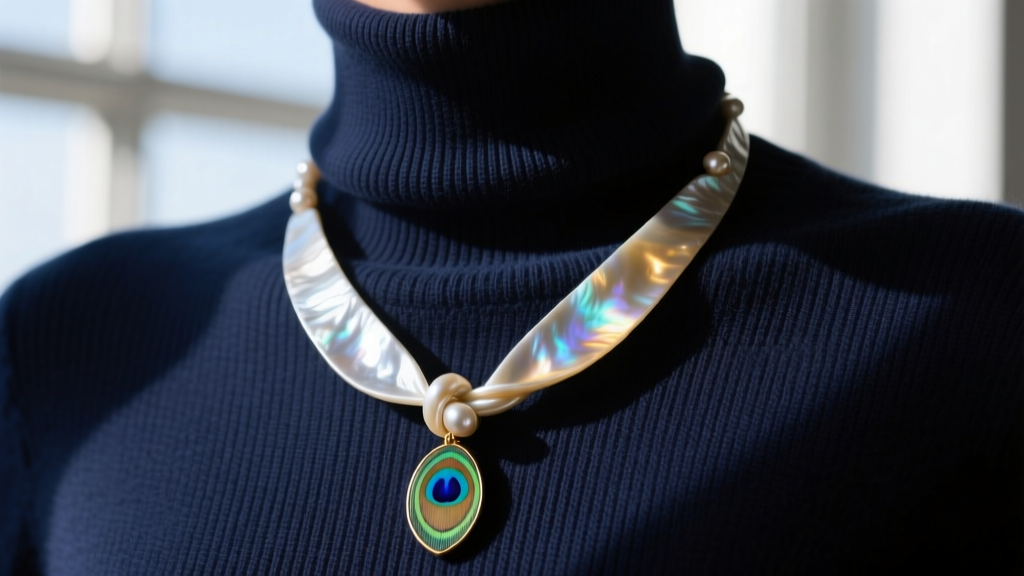
Gather the center of the rope-length necklace and tie a loose, single overhand knot. This instantly transforms a 40-inch rope into a layered, textured Y-necklace. The knot acts as a focal point, drawing the eye downward and elongating the torso. This technique works exceptionally well over dark, solid-colored turtlenecks, where the white iridescence of the nacre provides maximum contrast.
The Double-Loop Layer
Loop the necklace twice around your neck to create a faux-choker and princess-length layered effect. Ensure the inner loop sits snugly at the base of your throat (around 16 inches) while the outer loop rests on your upper chest. Use a small, clear silicone jewelry cinch at the back of the neck to prevent the two loops from tangling or slipping out of place.
Care and Maintenance for Organic Nacre
Mother of pearl is delicate. On the Mohs scale of mineral hardness, nacre ranks between 2.5 and 4.5. For context, a copper penny is a 3.5, and quartz dust (found in everyday household dirt and air) is a 7. This means simply wiping your necklace with a dry, dusty cloth can cause micro-scratches that will permanently dull the iridescence over time.
"The golden rule of organic gemstones is 'last on, first off.' Nacre is highly susceptible to the acids in human sweat, the alcohols in perfume, and the chemicals in cosmetics."
To preserve your mother of pearl long necklace, follow the GIA Pearl Care Guidelines: always apply your perfumes, hairsprays, and lotions at least 15 minutes before putting on your jewelry. After wearing, gently wipe the beads with a soft, lint-free microfiber cloth slightly dampened with distilled water to remove skin oils and environmental acids. Never use ultrasonic cleaners, steam cleaners, or ammonia-based jewelry dips, as these will dissolve the conchiolin binder and cause the aragonite platelets to peel away from the bead's core. Store the necklace flat in a soft pouch; hanging a heavy, long rope necklace for months on end can permanently stretch the silk or nylon stringing thread, leading to dangerous gaps between the beads.


