Knights of Columbus Necklace: Metal Comparison & Care Guide
Compare metals for your Knights of Columbus necklace. Explore sterling silver, gold, and steel properties, chain gauges, and enamel care tips.

The Weight of Brotherhood: Why Material Matters
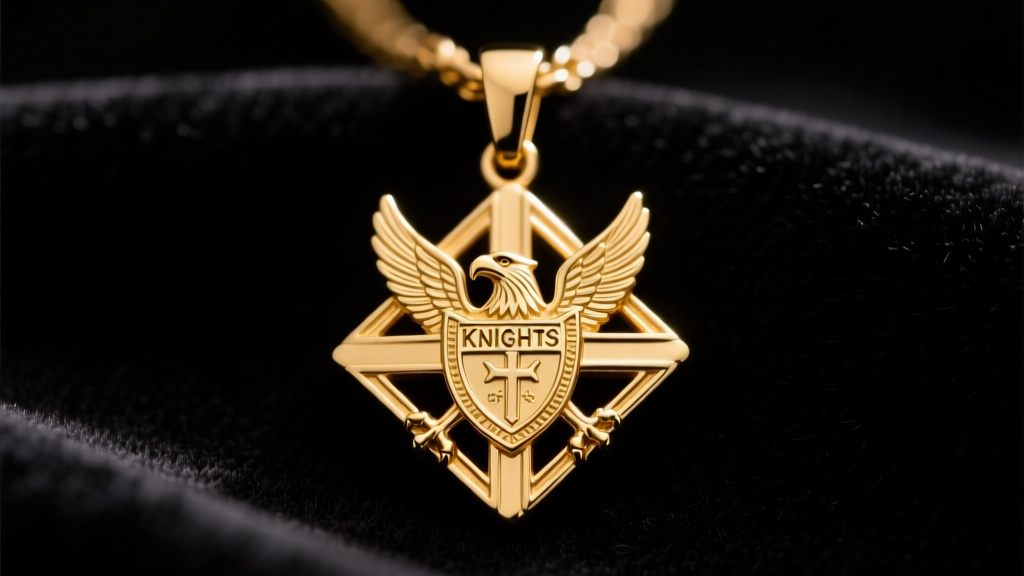
A Knights of Columbus necklace is far more than a standard piece of men's jewelry; it is a profound symbol of faith, fraternity, and charitable service. Whether you are wearing the classic Maltese cross of the First through Third Degrees or the majestic eagle and shield of the Fourth Degree Patriotic Group, the physical construction of your regalia matters. Because these pendants are often cast in solid, three-dimensional designs, they carry significant weight—frequently ranging from 15 to over 40 grams. This mass dictates strict requirements for the metallurgy of the pendant and the structural engineering of the chain.
Choosing the right material for your Knights of Columbus necklace ensures that the emblem will not only withstand daily wear, exposure to the elements, and the rigors of ceremonial gatherings, but also serve as a lasting heirloom. According to the Knights of Columbus official regalia guidelines, members are encouraged to maintain their emblems in a state of dignity and respect, which begins with selecting high-quality, durable metals.
Metallurgical Breakdown: Precious Metals vs. Base Alloys
The market is flooded with K of C jewelry ranging from $20 imported novelties to $2,000 bespoke heirloom pieces. Understanding the exact alloy composition is critical for longevity, skin safety, and structural integrity.
Sterling Silver (925) and Rhodium Plating
Sterling silver is an alloy consisting of 92.5% pure silver and 7.5% copper. The copper is necessary to provide the tensile strength that pure silver lacks. However, copper is highly reactive to sulfur and moisture in the air, leading to the formation of silver sulfide—commonly known as tarnish. For a Knights of Columbus necklace worn close to the skin (where sweat and body oils accelerate oxidation), tarnish is a guaranteed eventuality. To combat this, premium silver K of C pendants are plated with a microscopic layer of rhodium, a platinum-group metal that is highly inert and brilliantly reflective. Be aware that rhodium plating on high-friction areas (like the back of the shield or the eagle's wings) will wear off in 1 to 3 years, requiring professional re-plating.
Karat Gold (10K, 14K, and 18K)
Gold is alloyed with metals like zinc, copper, and nickel to increase its hardness. The Gemological Institute of America (GIA) notes that the karatage directly impacts both the color and the Vickers hardness (HV) of the metal.
- 10K Gold (41.7% Au): With an HV of roughly 160, 10K is the hardest and most scratch-resistant gold alloy. It is highly recommended for daily-wear K of C necklaces subjected to manual labor or active lifestyles.
- 14K Gold (58.3% Au): The industry standard. It offers an excellent balance of rich yellow color, hypoallergenic properties, and a hardness of ~135 HV, making it strong enough to hold the intricate details of a cast Maltese cross without bending.
- 18K Gold (75.0% Au): While luxurious, 18K gold is relatively soft (~110 HV). For a heavy, 30-gram Fourth Degree eagle pendant that might swing and impact a table or pew, 18K gold is prone to deep gouging and clasp deformation. It is best reserved for ceremonial-only wear.
Surgical Stainless Steel (316L)
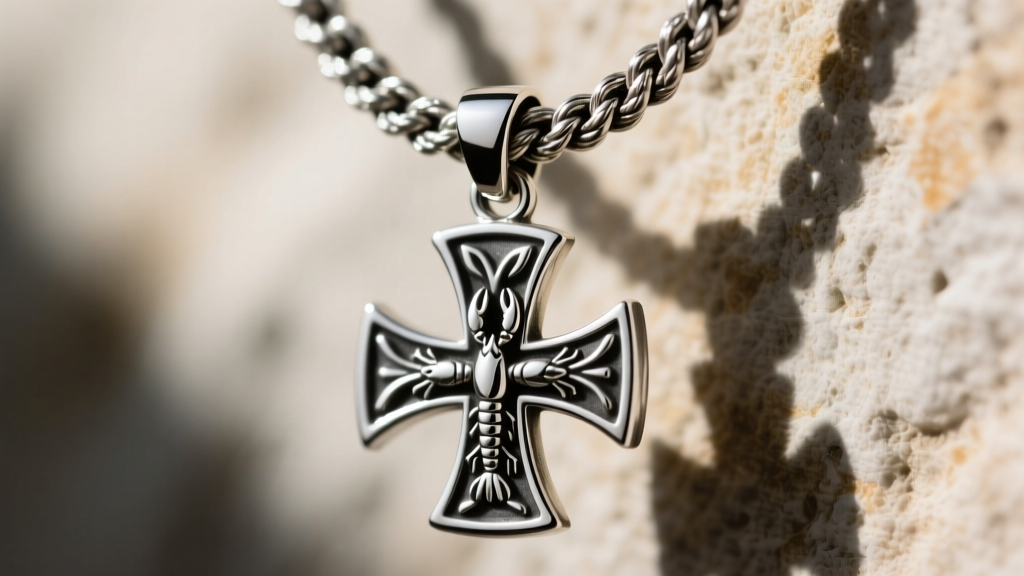
For members seeking maximum durability without the premium cost of gold, 316L marine-grade stainless steel is an exceptional choice. The 'L' stands for low carbon, and the alloy includes 2-3% molybdenum, which drastically increases resistance to chlorides and industrial solvents. 316L steel will not tarnish, rust, or react with acidic sweat. Furthermore, its high density gives it a satisfying, heavy hand-feel that perfectly matches the gravitas of a solid cast K of C pendant. It is also entirely nickel-free in its final polished state, making it completely hypoallergenic.
The Hidden Dangers of Zamak and Zinc Alloys
Cheap imported Knights of Columbus necklaces are often die-cast from Zamak (an alloy of zinc, aluminum, magnesium, and copper) and then flash-plated with a thin veneer of gold or silver. While they look acceptable on day one, these base metals are highly susceptible to 'zinc pest'—a slow, intergranular oxidation that causes the metal to crumble from the inside out. Once the microscopic plating chips on the edge of the shield or the eagle's beak, moisture enters the porous core, leading to irreversible green corrosion and structural failure. Avoid these alloys for any piece intended to be an heirloom.
Material Comparison Chart: Durability, Tarnish, and Cost
| Metal / Alloy | Composition | Mohs Hardness | Tarnish Risk | Best Use Case |
|---|---|---|---|---|
| 316L Stainless Steel | Iron, Chromium, Molybdenum | 5.5 - 6.0 | None | Daily wear, high-activity, budget-conscious |
| 10K Yellow Gold | 41.7% Au, Copper, Zinc | 3.0 - 3.5 | Low | Rugged daily wear, high scratch resistance |
| 14K Yellow Gold | 58.3% Au, Copper, Silver | 2.5 - 3.0 | None | Heirloom daily wear, ceremonial events |
| Sterling Silver (925) | 92.5% Ag, 7.5% Cu | 2.5 - 2.7 | High | Ceremonial wear, requires regular polishing |
| Zamak (Pot Metal) | Zinc, Aluminum, Copper | 1.5 - 2.0 | Extreme (Core) | Short-term novelty, not recommended |
Chain Engineering: Matching Gauge and Clasp to Heavy Pendants
A common and costly mistake is pairing a heavy, solid-cast Knights of Columbus pendant with an inadequate chain. The pendant is only as secure as the weakest link in the assembly.
Chain Gauge and Link Style
For standard First to Third Degree Maltese cross pendants (typically 10-15 grams), a 2.5mm to 3.0mm chain is sufficient. However, for the large Fourth Degree eagle and shield pendants (often 25-45 grams), you must step up to a 4.0mm to 5.5mm gauge.
Rope chains and Cuban curb chains are the superior choices. Rope chains distribute tensile stress across multiple interwoven links, while curb chains lay flat against the chest, preventing the heavy pendant from flipping and catching on clothing. Avoid box chains or snake chains for heavy pendants; their rigid or hollow structures are prone to kinking and snapping under the dynamic load of a swinging pendant.
Clasp Mechanics: Spring Ring vs. Lobster Claw
Never use a standard spring-ring clasp for a K of C necklace weighing over 15 grams. Spring rings rely on a tiny, fragile internal coil spring that easily fails when subjected to sudden kinetic shocks (e.g., catching the pendant on a steering wheel or door handle). Instead, insist on a 12mm to 15mm solid cast lobster claw clasp. Lobster claws utilize a solid internal lever mechanism that provides vastly superior shear strength. Ensure the jump ring connecting the clasp to the chain is soldered shut or features a secure screw-thread mechanism.
Preserving the Emblem: Enamel and Metal Care
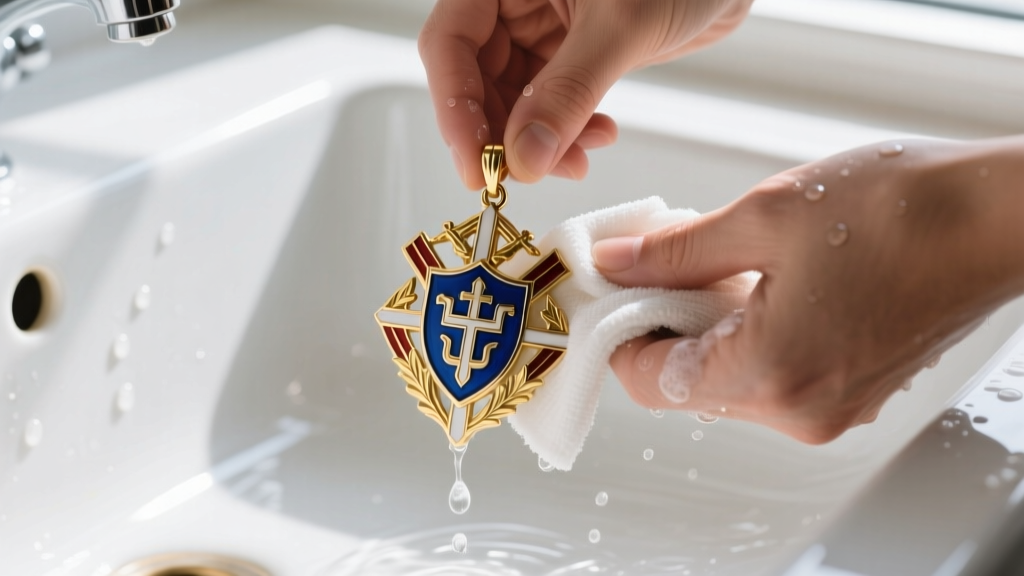
Many Knights of Columbus necklaces, particularly those of the Fourth Degree, feature striking red, white, and blue enamelwork. This enamel is either vitreous (fired glass) or a hardened jewelry epoxy. Both require specialized care.
The Danger of Ultrasonic Cleaners
Never place an enameled K of C pendant in an ultrasonic jewelry cleaner. These machines use high-frequency acoustic waves (typically 40kHz) to create microscopic cavitation bubbles in the cleaning solvent. When these bubbles implode against the surface, they generate localized shockwaves. While this safely blasts dirt out of diamond settings, it will easily shatter vitreous glass enamel or cause epoxy resin to cloud, micro-fracture, and delaminate from the metal base.
Proper Cleaning Protocol
- Preparation: Mix a few drops of mild, phosphate-free dish soap into a bowl of lukewarm (not hot) water.
- Agitation: Submerge the necklace for 3 to 5 minutes to loosen skin oils and environmental dust.
- Brushing: Use an extra-soft baby toothbrush to gently sweep the crevices of the Maltese cross or the eagle's feathers. Do not scrub the enameled sections aggressively.
- Drying: Rinse under distilled water to prevent hard water spots, then pat completely dry with a lint-free microfiber cloth. Ensure the area around the clasp and jump rings is bone-dry to prevent hidden moisture buildup.
Final Recommendations by Degree
If you are purchasing a Knights of Columbus necklace as a gift for a new member or upgrading your own regalia, align the metal with the wearer's lifestyle. For the active, working-class member who wants to wear their emblem daily beneath a work shirt, a 316L stainless steel or 10K gold setup on a 3.5mm curb chain offers indestructible reliability. For the Past Grand Knight or ceremonial officer who wears their regalia proudly at councils and parades, a 14K gold or rhodium-plated sterling silver piece on a 4.5mm rope chain provides the brilliant, dignified luster that the fraternity's rich history demands.


