The Ultimate Florenza Necklace Buying Guide & Authentication Tips
Discover how to authenticate, price, and style vintage Florenza necklaces. Learn hallmark identification, condition checks, and market values.

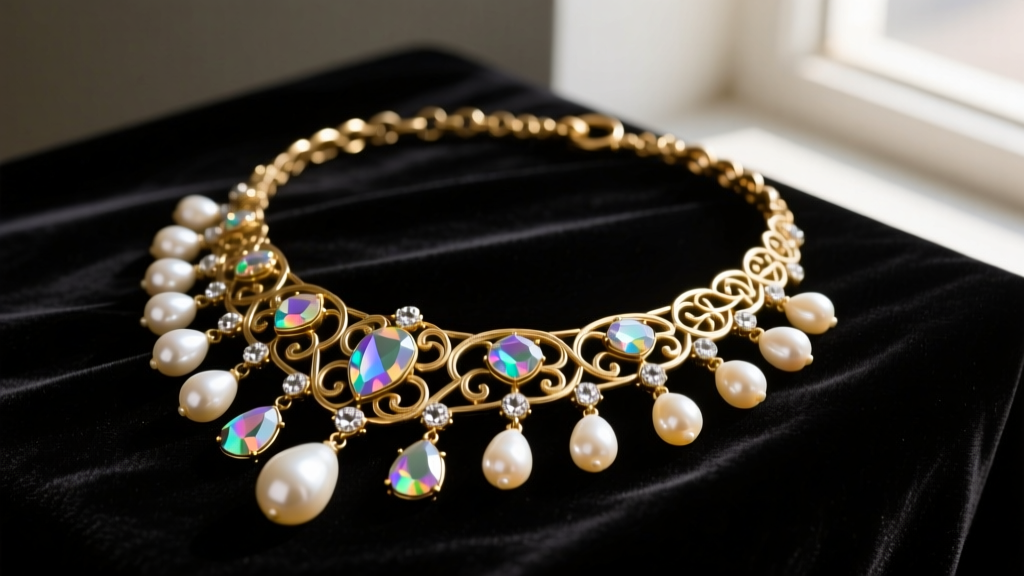
The Legacy of Florenza: A Vintage Jewelry Powerhouse
For serious collectors of mid-century costume jewelry, finding an authentic vintage Florenza necklace is akin to striking gold. Founded by Dan Kaslo in the late 1940s, the Florenza brand quickly became synonymous with opulent, Renaissance-revival designs, intricate metalwork, and heavy antiqued plating. Unlike the minimalist trends of the late 20th century, Florenza embraced baroque motifs, Victorian cameos, and lavish rhinestone encrustations. The company operated until the late 1970s, leaving behind a highly coveted catalog of statement pieces that continue to appreciate in today's vintage market.
Whether you are hunting for a heavy gold-tone bib necklace or a delicate faux-pearl choker, navigating the secondary market requires a deep understanding of mid-century manufacturing techniques. This comprehensive buying guide will equip you with the exact specifications, hallmark knowledge, and condition-checking frameworks necessary to confidently acquire a genuine Florenza necklace.
Decoding the Hallmarks: Authentication Guide
Authenticating vintage costume jewelry requires looking beyond the overall design and focusing on the microscopic details of the hardware and signatures. Florenza's marking practices evolved significantly over its three decades of operation.
The Evolution of Florenza Signatures
- Pre-1955 Pieces: Early Florenza pieces were frequently unsigned on the metal itself. Instead, they relied on paper hangtags that have almost always been lost to time. If a piece from this era is presented as Florenza, it must be verified through exact catalog matches or provenance.
- Post-1955 Cartouche: Following the enactment of the Copyright Act of 1954, Florenza began stamping their pieces with a copyright symbol (©). The most common hallmark is the word 'Florenza' in a distinct serif or script font, stamped inside an oval or rectangular cartouche on the back of the pendant or the reverse of the clasp.
- Retailer Signatures: Occasionally, you will find a Florenza necklace stamped with a department store name (such as Macy's or Gimbels). Florenza manufactured private-label lines for major retailers; these are still genuine Florenza productions, provided the accompanying hangtag or clasp design matches known Florenza hardware.
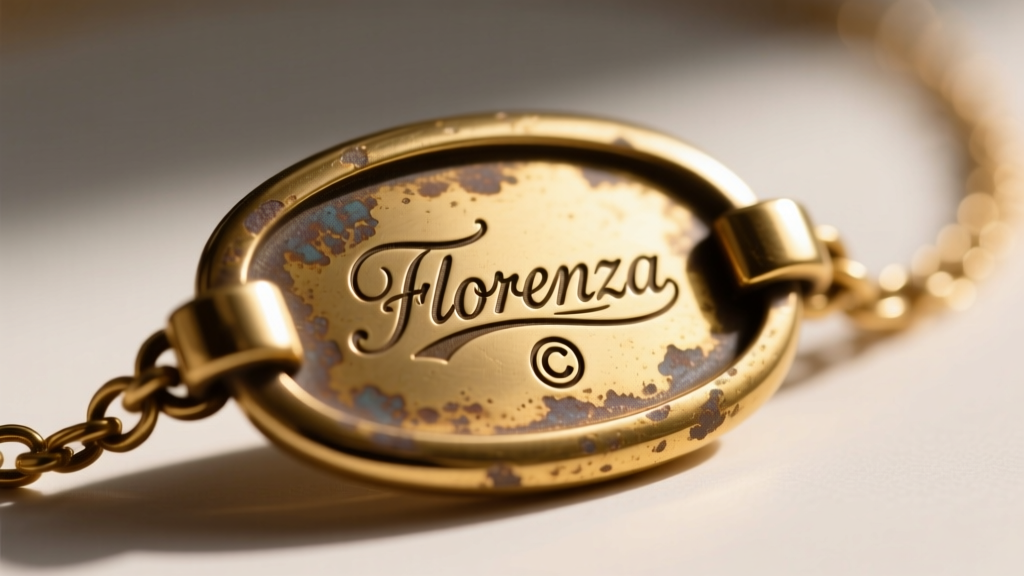
According to the Vintage Fashion Guild, the presence of a crisp, deeply stamped cartouche with the © symbol is the most reliable indicator of a post-1955 authentic piece. Beware of laser-etched or shallow, modern-looking stamps, which are hallmarks of contemporary reproductions.
Evaluating Condition: Critical Failure Modes
Vintage Florenza jewelry was crafted from pot metal (a zinc-based alloy) that was heavily plated in gold or silver-tone finishes, then antiqued by hand. Because these materials are inherently reactive, evaluating the structural and cosmetic condition of a Florenza necklace is paramount. Here are the specific failure modes you must inspect before purchasing:
1. Rhinestone Foil Degradation
Florenza frequently utilized high-quality glass rhinestones, including the highly sought-after Aurora Borealis (AB) stones introduced by Swarovski in 1956. These stones rely on a delicate metallic foil backing to create their sparkle. If moisture has penetrated the setting, the foil will oxidize, turning the stone black, grey, or completely clear ('dead stones'). Re-foiling vintage stones is a specialized, expensive restoration process that can diminish the piece's original collector value.
2. Base Metal Corrosion and 'Zinc Pest'
Inspect the high-relief areas of the metalwork for bubbling, pitting, or a white, powdery substance. This indicates that moisture has breached the plating and is causing the underlying pot metal to oxidize and expand. Once this structural degradation begins, it cannot be halted, and the metal will eventually crumble.
3. Clasp and Hardware Integrity
Original Florenza necklaces typically feature sturdy J-hook clasps, fold-over safety clasps, or heavy barrel clasps. If a modern, lightweight lobster claw has been soldered or glued onto the chain, the piece has been altered. While this may improve wearability, it significantly reduces the value for strict collectors.
Market Value & Pricing Tiers
The pricing of a vintage Florenza necklace varies wildly based on rarity, complexity, and condition. Based on recent market data from antique shows and verified vintage dealers, here is a structured pricing framework to help you gauge fair market value.
| Tier | Description & Style | Estimated Market Value (USD) |
|---|---|---|
| Tier 1: Entry | Simple cable or snake chains with small, single-stone pendants or basic faux-pearl drops. | $45 - $85 |
| Tier 2: Mid-Range | Ornate cameos, multi-strand faux-pearl chokers, and medium-sized rhinestone pendants with intact AB stones. | $120 - $250 |
| Tier 3: Collector | Heavy Renaissance-revival bib necklaces, intricate enamel work, and large baroque pearl collars. | $300 - $550 |
| Tier 4: Museum/Rare | Documented parures (matching necklace, bracelet, earrings, brooch) in pristine condition with original hangtags. | $600 - $1,200+ |
For further reference on valuation and historical context, the Costume Jewelry Collectors International (CJCI) provides excellent archival resources and community appraisals for mid-century American manufacturers.
Care and Maintenance: Preserving the Patina
One of the most common mistakes new buyers make is attempting to 'clean' a vintage Florenza necklace with modern jewelry dips or ultrasonic cleaners. The dark, oxidized crevices in Florenza's metalwork are intentional—this is the hand-applied antiquing that gives the pieces their signature three-dimensional, Old World depth.
- Dusting: Use a clean, dry, soft-bristled makeup brush to gently sweep dust out of the intricate metal filigree and rhinestone settings.
- Surface Cleaning: If the gold-tone plating is cloudy, lightly dampen a microfiber cloth with distilled water and a tiny drop of pH-neutral soap. Wipe the smooth metal surfaces gently, avoiding the stone settings entirely. Dry immediately.
- Storage: Pot metal and plating are highly susceptible to humidity. Store your necklace flat in an acid-free tissue-lined box with a silica gel packet to prevent moisture-induced foil rot and plating loss.
Styling Vintage Florenza in a Modern Wardrobe
The sheer scale and ornate nature of Florenza designs can feel intimidating to integrate into contemporary fashion. The key to styling a vintage Florenza necklace is to treat it as the focal point of an otherwise structured, minimalist outfit. Let the baroque metalwork and sparkling rhinestones do the heavy lifting.

A heavy, antiqued gold Florenza bib necklace looks exceptionally striking layered over a crisp, unbuttoned white Oxford shirt or a sleek black turtleneck. The contrast between the masculine tailoring of a modern blazer and the hyper-feminine, historical motifs of the jewelry creates a sophisticated, high-fashion tension. Avoid pairing these statement pieces with busy prints or other heavy vintage jewelry; the intricate details of the Florenza metalwork require negative space to be fully appreciated.
Final Thoughts on Sourcing
When hunting for your perfect piece, prioritize specialized vintage dealers, reputable estate auctions, and vetted online platforms over unverified flea market finds. Always request high-resolution, macro photographs of the clasp, the back of the pendant, and the stone settings before committing to a purchase. By understanding the specific hallmarks, material vulnerabilities, and market tiers outlined in this guide, you can confidently build a collection of authentic Florenza jewelry that retains both its historical integrity and its financial value.


