The Significance of Wishbone Necklace Metals: Durability & Meaning
Explore the significance of wishbone necklace jewelry through a metallurgical lens. Compare gold, silver, and platinum for optimal durability.

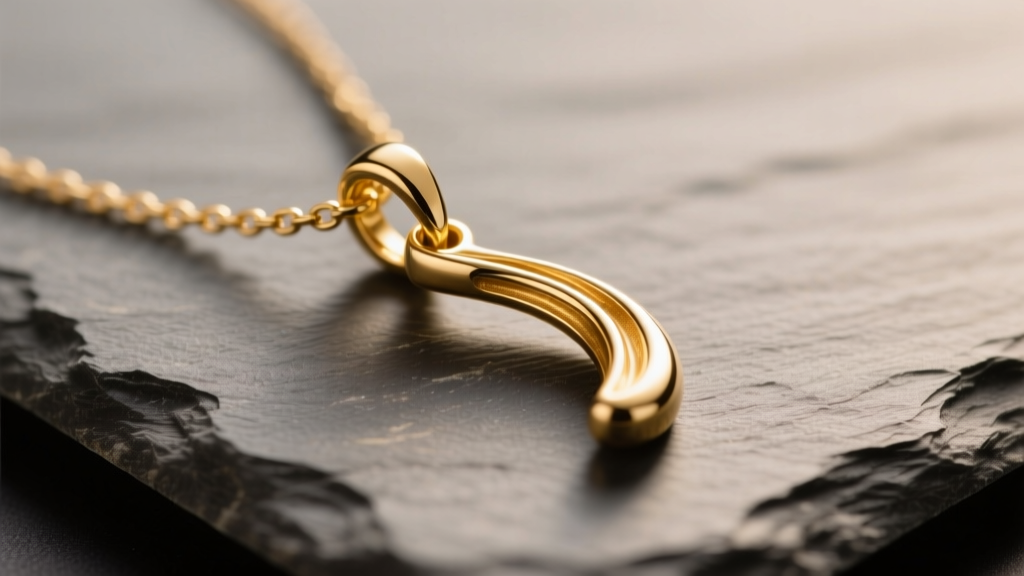
The Symbolic Weight: Understanding the Significance of Wishbone Necklace Jewelry
The wishbone has served as a talisman of hope, luck, and fortune for centuries. Originating from the Etruscan belief that birds were divine oracles, the clavicle (or furcula) of a fowl was preserved as a conduit to the gods. When translated into fine jewelry, the significance of wishbone necklace designs transcends mere aesthetics; it becomes a deeply personal emblem of making a wish and holding onto optimism. However, as a piece of jewelry meant to be worn daily as a protective charm, the physical endurance of the pendant is just as critical as its symbolic weight.
A broken talisman is often viewed as a bad omen, making the structural integrity of your necklace paramount. In 2026, modern jewelry buyers are increasingly looking past the surface polish to understand the metallurgical properties of their everyday pieces. When you wear a wishbone, you are wearing a shape that inherently defies optimal structural distribution. Choosing the right metal is not just about skin tone or budget; it is about ensuring your symbol of luck survives the physical rigors of daily life.
The Structural Vulnerability of the "V" Junction
To understand why material choice dictates the lifespan of a wishbone pendant, one must understand the mechanics of its shape. The wishbone is essentially a "V" with a curved bail at the apex. In engineering terms, the interior crotch of the "V" is a stress concentrator. When the necklace chain pulls laterally—such as when you turn quickly, catch the pendant on a garment, or sleep in it—tensile and shear forces converge precisely at that interior angle.
If the metal is too soft, the junction will bend and eventually suffer from metal fatigue. If the metal was poorly cast, microscopic air pockets (porosity) will hide inside the "V", creating a hidden fault line that leads to catastrophic snapping. Therefore, the significance of wishbone necklace longevity relies entirely on the metal alloy's tensile strength and its Vickers hardness rating.
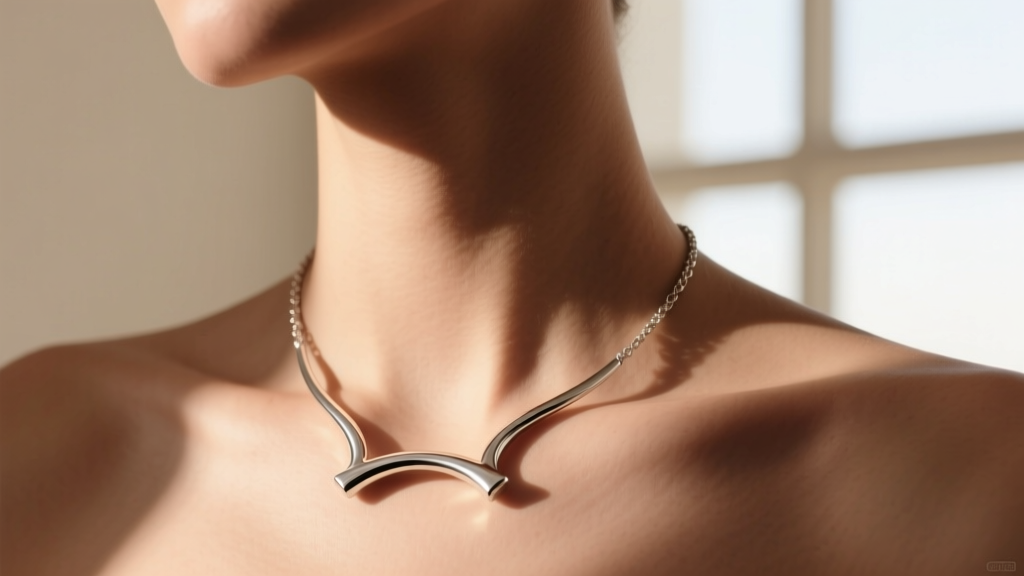
Material Comparison: Which Metal Best Honors Your Wish?
Not all precious metals behave identically under stress. Here is a deep dive into how the most popular jewelry metals perform when forged into the demanding wishbone silhouette.
Sterling Silver (925): The Affordable Classic
Sterling silver is an alloy of 92.5% pure silver and 7.5% copper. The copper adds necessary hardness, bringing the Vickers hardness (HV) to roughly 65-75 in its annealed state, and up to 120 HV when work-hardened. While it is the most accessible option, silver has a relatively low tensile strength (around 250-300 MPa). For a wishbone pendant, sterling silver is perfectly adequate if the "V" junction is cast with a generous, rounded fillet rather than a sharp, acute angle. However, silver is prone to sulfide tarnishing, requiring regular polishing which can slowly wear down delicate details over a decade of use.
14k vs. 18k Gold: The Karat Dilemma
Gold purity drastically alters structural integrity. Pure 24k gold is far too malleable for jewelry. 18k gold (75% pure gold) offers a rich, warm hue but possesses a lower hardness (approx. 110-125 HV). If an 18k gold wishbone features thin, delicate arms, the lateral torque from the chain can slowly warp the "V" shape over time.
Conversely, 14k gold (58.5% pure gold) is alloyed with higher amounts of copper, silver, and zinc. This increases its Vickers hardness to 130-150 HV and boosts its tensile strength to over 400 MPa. For a daily-wear wishbone necklace where the junction is less than 2mm thick, 14k gold is metallurgically superior to 18k gold. It resists bending and maintains the crisp geometry of the wishbone far better under physical stress.
Platinum 950: The Heirloom Standard
Platinum 950 (typically alloyed with 5% ruthenium or iridium) is the heavyweight champion of fine jewelry. With a density of 21.45 g/cm³, it feels substantial against the skin. While its Vickers hardness (approx. 135 HV) is similar to 14k gold, platinum's true advantage is its malleability and work-hardening properties. When platinum is scratched or stressed, the metal is displaced, not lost. Furthermore, as platinum is worn and subjected to minor impacts, it work-hardens, actually becoming more durable over time. According to specialists at Hoover & Strong, platinum's fatigue resistance makes it the ultimate choice for intricate, high-stress junctions like the wishbone crotch, ensuring the piece can be passed down through generations without fracturing.
Grade 5 Titanium: The Modern Indestructible
For those seeking a modern, hypoallergenic option, Grade 5 Titanium (Ti-6Al-4V) offers an astounding tensile strength of up to 900 MPa. It is virtually impossible to bend a titanium wishbone pendant by hand. However, this extreme hardness comes with a trade-off: titanium cannot be traditionally soldered or resized. If the bail breaks, it requires specialized laser welding. It is an excellent choice for active lifestyles, provided the initial casting or CNC milling is flawless.
Metallurgical Data: Hardness and Tensile Strength Chart
To make an informed decision, refer to the comparative data below. These metrics highlight why certain metals are better suited for the structural demands of a wishbone pendant.
| Metal Alloy | Vickers Hardness (HV) | Tensile Strength (MPa) | Density (g/cm³) | Best Use Case |
|---|---|---|---|---|
| Sterling Silver (925) | 65 - 120 | 250 - 300 | 10.36 | Occasional wear, budget-friendly talismans |
| 14k Yellow Gold | 130 - 150 | 400 - 500 | 12.90 | Daily wear, optimal balance of color and strength |
| 18k Yellow Gold | 110 - 125 | 300 - 350 | 15.50 | Luxury pieces with thicker, reinforced V-junctions |
| Platinum 950 (Ru) | 130 - 145 | 350 - 450 | 21.45 | Heirloom pieces, high fatigue resistance |
| Grade 5 Titanium | 330 - 360 | 850 - 950 | 4.43 | Active lifestyles, ultra-lightweight durability |
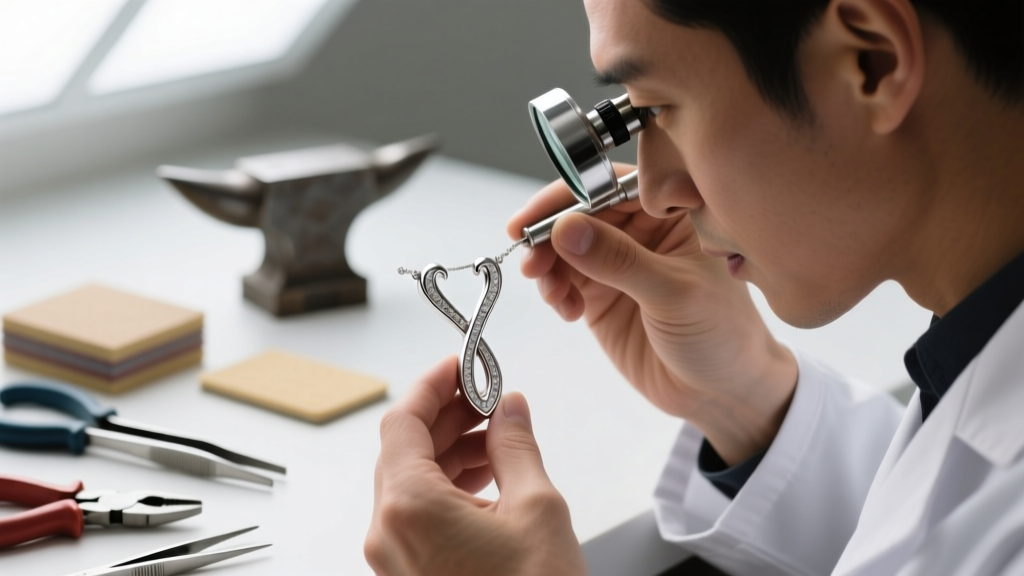
Manufacturing Methods: Cast vs. Die-Struck
Beyond the raw material, the manufacturing process dictates the structural reality of the wishbone's "V". The vast majority of commercial wishbone pendants are cast using the lost-wax method. While casting allows for intricate 3D designs, it is prone to shrinkage porosity—tiny internal voids that form as the metal cools. If a void forms precisely at the stress concentrator of the "V", the pendant will eventually snap without warning.
For superior durability, seek out die-struck or CNC-milled wishbone pendants. Die-striking involves subjecting the metal to immense hydraulic pressure, compressing the grain structure and eliminating internal porosity. A die-struck 14k gold wishbone will possess a significantly higher fatigue limit than a cast equivalent, making it a far safer vessel for your most cherished wishes.
Chain Pairing and Clasp Mechanics
The significance of wishbone necklace longevity is also tied to the chain you select. The bail (the loop connecting the pendant to the chain) experiences constant friction. If you pair a soft 18k gold wishbone bail with a heavy, textured chain like a Cuban link or a rough rope chain, the chain will act as a microscopic saw, slowly cutting through the bail from the inside out.
Actionable Advice: Always pair precious metal wishbone pendants with smooth, tightly linked chains such as a box chain, a snake chain, or a fine cable chain. Ensure the inner diameter of the bail is at least 20% larger than the thickness of the chain to allow for free movement, which reduces localized friction and wear.
Care, Maintenance, and Preventing Junction Fractures
"A wishbone is a promise to the future. Treat the metal with the same respect you treat the wish itself."
To maintain the structural integrity of your pendant, remove it before engaging in activities that involve heavy lateral pulling, such as weightlifting, rock climbing, or even vigorous towel-drying. When cleaning, avoid ultrasonic cleaners if your wishbone features tension-set stones near the "V" junction, as the high-frequency vibrations can exacerbate microscopic metal fatigue. Instead, use a soft-bristled brush, warm water, and a mild, phosphate-free dish soap.
Ultimately, the true significance of wishbone necklace jewelry lies in the harmony between its poetic meaning and its physical resilience. By understanding the metallurgical properties of gold, silver, and platinum, and respecting the mechanical vulnerabilities of the "V" junction, you ensure that your symbol of luck remains unbroken, ready to carry your hopes for years to come.


