Why the Infinity Necklace White Gold is Trending in 2026
Discover why the infinity necklace white gold style dominates 2026 trends. Explore karat options, chain pairings, and expert layering techniques.

The Resurgence of the Infinity Motif in 2026
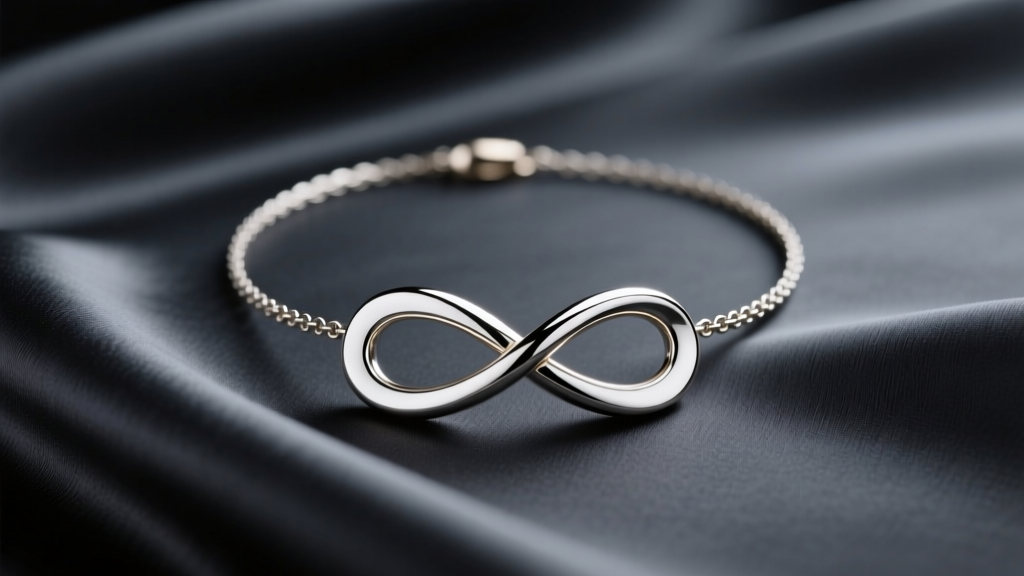
The jewelry landscape of 2026 has decisively pivoted toward what industry analysts call 'meaningful minimalism.' Moving away from the heavy, diamond-encrusted statement pieces that defined the early 2010s, today's consumers are seeking symbols that offer personal resonance without overwhelming their daily aesthetic. At the center of this shift is the infinity necklace white gold category. The lemniscate (the mathematical symbol for infinity) has been reimagined by contemporary designers through architectural asymmetry, negative space, and flush-set melee diamonds. According to the Bain & Company Global Luxury Report, sentimental fine jewelry worn as an everyday 'second skin' has outpaced occasion-based purchases by 22% this year. White gold, with its cool, reflective surface and modern undertone, has become the definitive metal for this trend, offering a sleek alternative to traditional yellow gold and a more durable, scratch-resistant option compared to platinum.
Material Deep Dive: 14K vs. 18K White Gold Alloys
To truly understand the value and wearability of an infinity pendant, one must look beneath the rhodium plating. Pure gold is inherently yellow; therefore, white gold is an alloy. The specific alloy metals used drastically alter the piece's durability, color, and hypoallergenic properties. The Gemological Institute of America (GIA) notes that 14K white gold (58.5% pure gold) is typically alloyed with nickel, zinc, and copper. This creates a highly durable, scratch-resistant metal that is ideal for active wearers. However, nickel is a common contact allergen. Conversely, 18K white gold (75% pure gold) is often alloyed with palladium or silver. Palladium-whitened 18K gold is naturally hypoallergenic and possesses a richer, warmer gray base color before plating, though it is softer and more prone to micro-scratches.
| Feature | 14K White Gold | 18K White Gold |
|---|---|---|
| Gold Purity | 58.5% | 75.0% |
| Primary Alloys | Nickel, Zinc, Copper | Palladium, Silver |
| Pre-Plating Color | Faint Yellow-Gray | Warm Gray |
| Durability | High (Excellent Scratch Resistance) | Moderate (Softer, Prone to Patina) |
| Hypoallergenic | Rarely (Nickel Allergy Risk) | Yes (If Palladium Alloyed) |
| 2026 Price Range | $150 - $450 | $600 - $1,800+ |
Regardless of the karat weight, the brilliant 'white' finish is achieved through rhodium electroplating. Standard commercial plating is roughly 0.75 microns thick, but premium 2026 releases from high-end jewelers are utilizing 'heavy flash' plating at 1.5 to 2.0 microns, extending the time between necessary re-dips from 12 months to over three years.
Chain Pairings: Beyond the Standard Cable
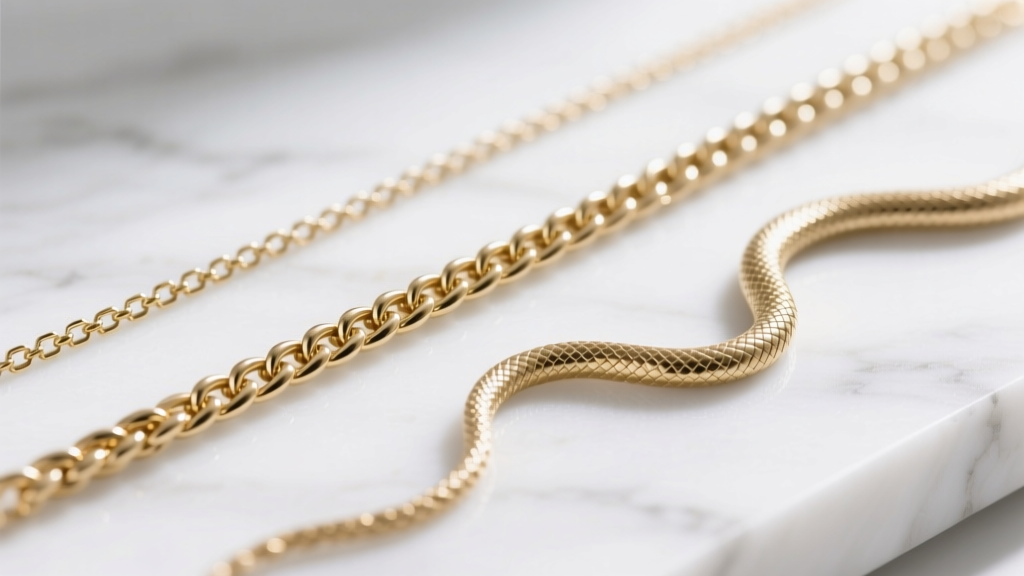
The pendant is only half the equation. In 2026, the chain is treated as an integral design element rather than a mere delivery system for the clasp. When styling an infinity necklace white gold pendant, the chain's gauge and texture must complement the motif's geometry. A standard 15mm infinity pendant requires a chain that provides structural support without visually competing with the symbol.
- The Box Chain (0.9mm - 1.1mm): Featuring square links that create a continuous, geometric surface, the box chain is the top choice for modern, asymmetrical infinity pendants. It offers excellent tensile strength and a mirror-like reflection that matches the high-polish rhodium of the pendant.
- The Wheat Chain (1.0mm - 1.2mm): Composed of braided, teardrop-shaped links, the wheat chain introduces a subtle vintage texture. This is the preferred pairing for infinity lockets or pendants featuring milgrain detailing and pavé diamond accents.
- The Snake Chain (0.7mm - 0.9mm): Tightly joined wavy rings create a smooth, tubular 'liquid metal' drape. While incredibly sleek and perfect for minimalist, solid gold infinity loops, snake chains are highly susceptible to kinking. They must be removed before sleeping and stored flat or hanging to prevent permanent structural damage.
The 2026 Layering Framework
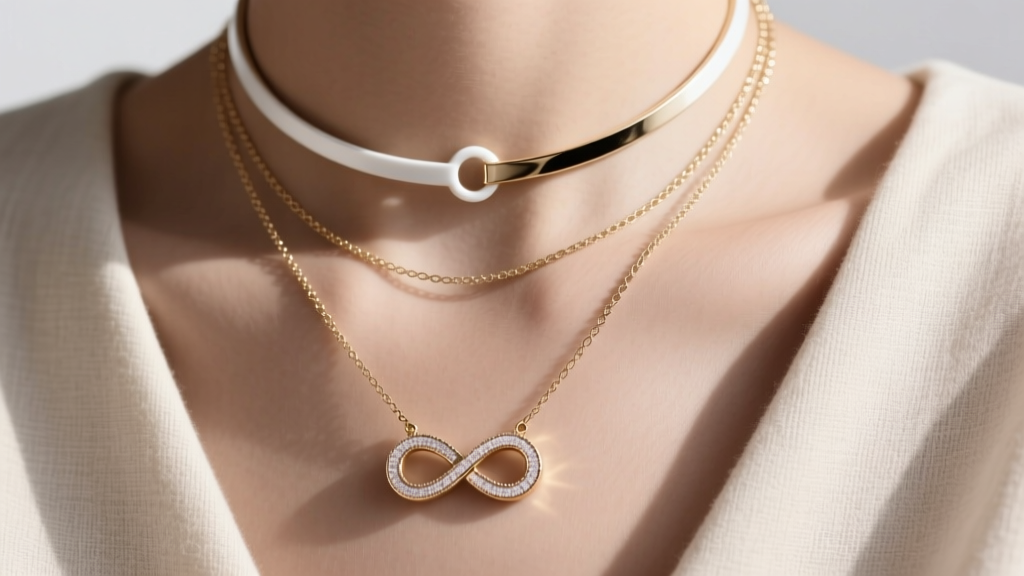
Layering an infinity necklace requires a strategic approach to proportions and motifs to avoid a cluttered neckline. The current trend favors the 'Rule of Thirds' combined with mixed textures. Start with a 14-inch white gold choker or a delicate pearl strand to anchor the collarbone. Position your primary 16-inch or 18-inch infinity necklace white gold piece in the center. Finally, anchor the stack with a 20-inch or 22-inch 14K white gold paperclip chain or a simple lariat. This creates a cascading effect that draws the eye vertically, elongating the neck and allowing the infinity symbol to serve as the focal point of the mid-layer.
Pricing Tiers and Market Analysis
Navigating the market requires an understanding of what drives pricing in the white gold infinity category. Mass-market fashion jewelry often utilizes gold vermeil (sterling silver plated with gold), which can wear off to reveal the dark silver underneath within months. True fine jewelry investments are categorized into three distinct tiers:
Entry-Level Fine ($150 - $350): Typically 10K or 14K white gold, featuring solid but lightweight (1.5g - 2.5g) infinity pendants on 0.8mm cable or box chains. Minimal to no diamond accents.
Mid-Tier Contemporary ($400 - $900): 14K or 18K white gold with heavier metal weight (3.0g - 5.0g). Often includes asymmetrical designs, integrated gemstone accents (like a single flush-set sapphire or diamond), and premium 1.0mm chains with secure lobster clasps.
High-Fine & Designer ($1,200 - $3,500+): 18K palladium-alloyed white gold featuring intricate pavé diamond settings (0.15 to 0.50 ctw), custom magnetic or hidden box clasps, and heavy-flash rhodium plating.
Care, Maintenance, and Replating
Proper maintenance is critical for preserving the icy white luster of your jewelry. According to Jewelers of America, daily exposure to cosmetics, perfumes, and the natural pH of your skin will gradually wear down the rhodium plating, revealing the faint yellow-gray alloy beneath. To clean a plain white gold infinity necklace, use a few drops of mild, phosphate-free dish soap in lukewarm water and gently agitate with a baby-bristle toothbrush. Rinse thoroughly and dry with a lint-free microfiber cloth.
However, if your infinity pendant incorporates fracture-filled diamonds, emeralds, or porous organic gems like pearls or opals into the loops, you must strictly avoid ultrasonic cleaners and harsh chemical dips, as the high-frequency vibrations can shatter treated stones or strip the luster from organics. When the high-polish white finish begins to dull or show a yellowish tint at the high-contact points (like the bail and the clasp), it is time for a professional re-dip. In 2026, the average cost for professional ultrasonic cleaning, polishing, and rhodium replating at a certified bench jeweler ranges from $45 to $85, a minor investment to restore the piece to its original, brilliant factory condition.


