The Messy Necklace Aesthetic: Wire Alloys & Material Properties
Discover how metal memory, tensile strength, and oxidation affect the messy necklace aesthetic. Compare wire alloys for chaotic, sculptural jewelry.

The Anatomy of the Messy Necklace Aesthetic
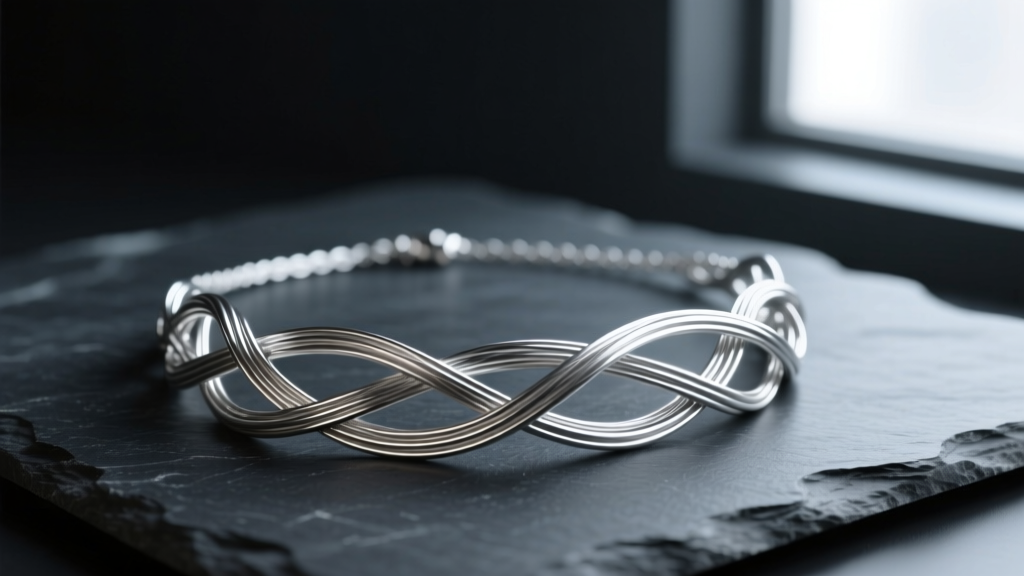
In contemporary jewelry design, the 'messy necklace' has evolved from a bohemian accident into a highly engineered sculptural art form. Characterized by chaotic wire wrapping, asymmetrical multi-strand layering, and intentional tangles, this aesthetic rebels against rigid symmetry. However, executing a successful messy necklace requires a profound understanding of metallurgy. When you introduce hundreds of overlapping wire intersections, sharp bends, and high-surface-area textures, the physical properties of your chosen metal dictate whether the piece becomes a wearable masterpiece or a structural failure.
As we navigate the jewelry landscape in 2026, designers and collectors alike are demanding more from their statement pieces. It is no longer enough for a chaotic wire bib to simply look avant-garde; it must withstand the biomechanical stresses of daily wear, resist localized corrosion, and maintain its deliberate 'messiness' without devolving into actual breakage. This guide dissects the material science behind the messy necklace, comparing specific wire alloys, gauge tolerances, and hardness states to help you engineer chaotic beauty with structural integrity.
Metal Memory and Work-Hardening: The Core Challenge
The greatest enemy of the messy necklace aesthetic is 'metal memory'—the tendency of a metal to return to its original shape after being bent. When creating intentional tangles and bird-nest structures, jewelers must manipulate the wire through dozens of tight, overlapping loops. If a metal possesses high memory and work-hardens too rapidly, it will fight the artisan's hands, kink unpredictably, and eventually snap at stress points.
Work-hardening occurs when the crystalline lattice of the metal is deformed through bending or hammering. In a messy necklace design, where a single strand of 22-gauge wire might be bent back on itself a dozen times, the metal transitions from 'dead-soft' to 'full-hard' in mere seconds. According to technical metallurgical guides from Rio Grande, selecting the correct initial hardness state is non-negotiable. For intricate, chaotic weaving, dead-soft wire is mandatory. For the structural, sweeping loops that frame a messy bib, half-hard wire provides the necessary tensile strength to prevent the necklace from collapsing against the collarbone.
Material Comparison Matrix for Chaotic Wire Designs
Not all metals behave equally when subjected to the extreme manipulation required for a messy necklace. Below is a comparative matrix of the most common alloys used in sculptural wire jewelry, detailing their mechanical properties and failure modes.
| Material / Alloy | Optimal Hardness | Tensile Strength (Approx.) | Crevice Tarnish Risk | Best Messy Application |
|---|---|---|---|---|
| Sterling Silver (925) | Dead-Soft | 38,000 psi | High (Sulfide Trapping) | Fine wire weaving, 26-28g bird-nests |
| Argentium Silver (935) | Dead-Soft | 40,000 psi | Low (Germanium Oxide Layer) | High-wear chaotic bibs, unpolished tangles |
| 14k Gold-Filled (1/20) | Half-Hard | 52,000 psi | Moderate (Core Exposure Risk) | Bold structural loops, 18-20g messy frames |
| Niobium (Reactive) | Dead-Soft | 45,000 psi | Zero (Hypoallergenic) | Anodized colorful messy layering |
| Raw Brass (260) | Dead-Soft | 42,000 psi | High (Intentional Patina) | Bohemian raw crystal cage wrapping |
Deep Dive: Top Alloys for the Messy Aesthetic
1. Dead-Soft Sterling Silver (925) vs. Argentium
Traditional 925 sterling silver remains the industry standard for wire wrapping due to its exceptional malleability in the dead-soft state. A 24-gauge (0.51mm) dead-soft sterling wire can be woven through a chaotic matrix of thicker base wires without snapping. However, the copper content (7.5%) that gives sterling its hardness also makes it highly susceptible to oxidation. In a messy necklace, the overlapping wires create thousands of microscopic crevices where sulfur, sebum, and moisture become trapped. This leads to 'crevice corrosion,' where the tarnish becomes impossible to remove with standard polishing cloths.
For a low-maintenance messy necklace, the Gemological Institute of America (GIA) and modern metallurgists point toward Argentium Silver. By replacing some copper with germanium, Argentium forms a transparent, self-healing germanium oxide layer that drastically slows tarnish. For a chaotic, high-surface-area messy necklace that will be worn against the skin daily, Argentium 935 is vastly superior to traditional sterling, preserving the bright, chaotic shine without requiring aggressive chemical dips.
2. 14k Gold-Filled Wire (1/20) and the Micro-Fracture Risk
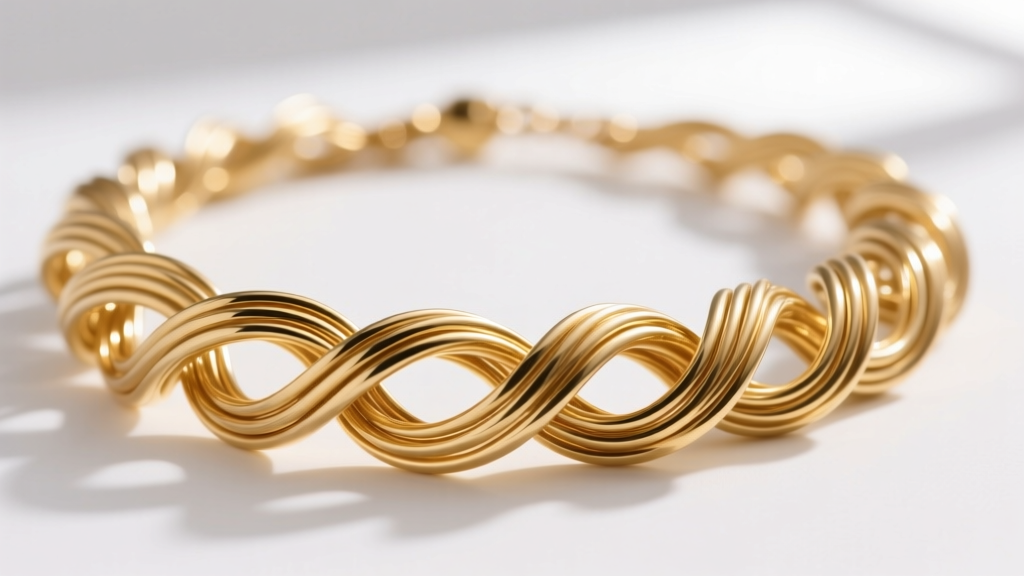
Gold-filled wire offers the luxurious appearance of solid gold at a fraction of the cost, but it presents unique mechanical dangers in messy necklace designs. Unlike gold plating, 14k gold-filled wire consists of a brass core mechanically bonded to a thick outer layer of 14k gold (comprising at least 1/20th of the total weight). While this makes it highly durable for standard chains, the messy necklace aesthetic requires sharp, tight bends.
When you bend an 18-gauge gold-filled wire at a severe angle using flat-nose pliers, the outer radius of the bend stretches. Because gold and brass have different elongation limits, this severe stretching can cause micro-fractures in the gold layer, exposing the brass core beneath. Once exposed, the brass will rapidly oxidize, leaving an ugly green-black stain on the skin and ruining the aesthetic. To use gold-filled wire in a messy design, artisans must use round-nose mandrels to ensure all bends are sweeping and curved, avoiding sharp 90-degree kinks entirely.
3. Niobium: The Hypoallergenic Chaos Maker
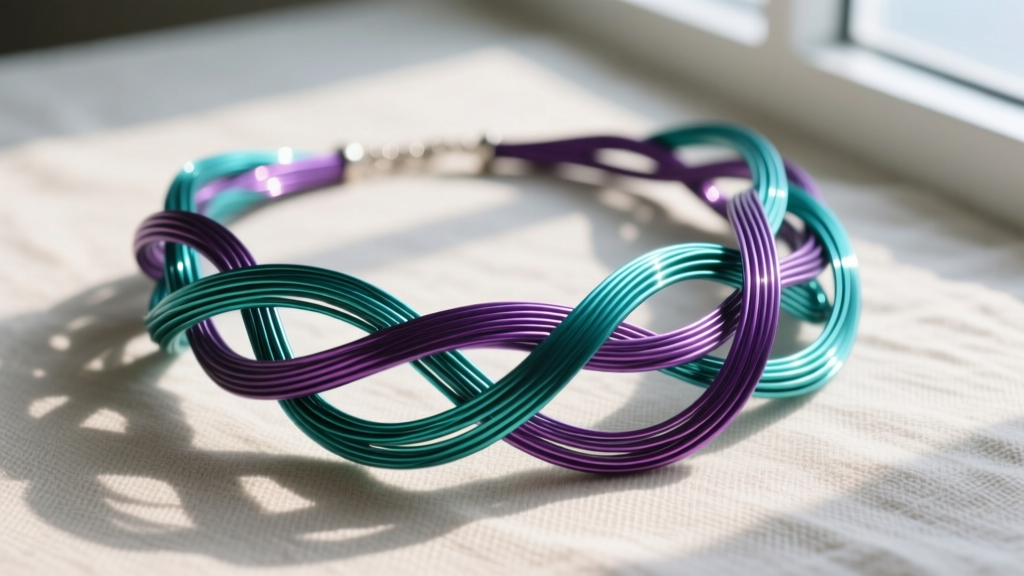
For those seeking a messy necklace that defies traditional metallic color palettes, Niobium is the ultimate medium. As a reactive metal, niobium does not work-harden as aggressively as silver or copper, allowing for prolonged manipulation without the need for constant annealing (heat treating). More importantly, niobium can be anodized using a simple electrical current and a baking soda bath, producing vibrant, permanent colors like electric teal, deep purple, and iridescent gold without the use of dyes or paints.
In a multi-strand messy necklace, mixing anodized niobium wires with raw, un-anodized strands creates a breathtaking, chaotic depth. Because niobium is completely hypoallergenic and highly resistant to corrosion, it completely eliminates the crevice tarnish problem, making it an ideal choice for complex, skin-hugging wire bibs that are difficult to clean.
The Crevice Tarnish Problem and Maintenance Protocols
The defining feature of a messy necklace—its dense, overlapping, tangled structure—is also its greatest maintenance liability. Traditional jewelry cleaning methods fail spectacularly here. Polishing cloths cannot reach the interior wires of a bird-nest pendant, and abrasive pastes will simply pack into the crevices, drying into a chalky white residue that ruins the piece.
Furthermore, ultrasonic cleaners, while excellent for diamond rings, can be disastrous for messy wire necklaces. The high-frequency cavitation bubbles can cause loosely woven wires to vibrate violently against one another. This localized friction can inadvertently work-harden specific stress points or even snap delicate 26-gauge weaving wires. Instead, experts recommend gentle ionic cleaning baths or specialized silver dip solutions (used with extreme caution and thorough rinsing) to dissolve sulfides from the hidden intersections of a chaotic wire design. Always follow a chemical dip with a neutralizing bath of warm water and mild dish soap to halt the chemical reaction.
Final Verdict: Engineering Your Messy Masterpiece
The messy necklace is a triumph of controlled chaos, but it relies entirely on the predictable laws of material science. To achieve the perfect tangled aesthetic, you must match the metal's tensile strength and work-hardening rate to the specific structural demands of your design. Use dead-soft Argentium for intricate, tarnish-resistant weaving; rely on half-hard gold-filled wire for bold, sweeping structural loops; and embrace niobium for vibrant, hypoallergenic layering. By respecting the microscopic properties of these alloys, you can create a messy necklace that is as enduring and resilient as it is beautifully chaotic.