Picture Necklace Engineering: Archival Metals & Print Tech
Explore the technical anatomy of a picture necklace. We analyze archival metals, UV printing vs. enamel, and sealing methods for lifelong wear.

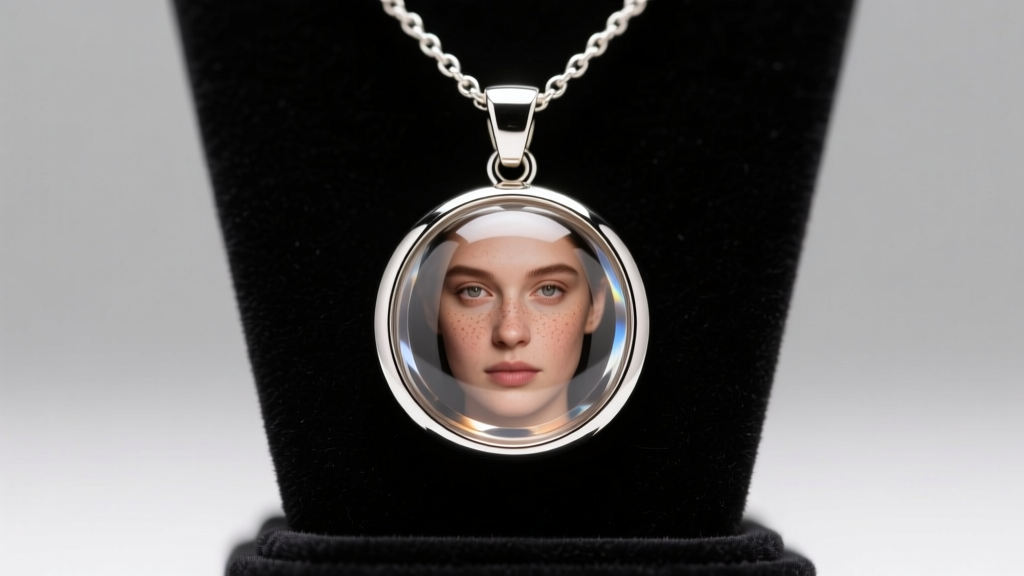
The market for custom jewelry is saturated with ephemeral novelties, but a true archival-grade picture necklace is a complex feat of material science and precision engineering. While mass-produced photo pendants often rely on cheap brass substrates and adhesive-backed paper prints that degrade within months, heirloom-quality picture necklaces demand a rigorous approach to metallurgy, image transfer technology, and encapsulation. In this technical deep dive, we deconstruct the anatomy of a permanent picture necklace, examining the specific alloy grades, printing methodologies, and structural mechanics required to ensure a custom portrait survives decades of daily wear without fading, delaminating, or tarnishing.
The Core Substrate: Metal Alloys and Tarnish Resistance
The longevity of any picture necklace begins at the substrate level. The metal base must provide a stable, non-reactive surface for image adhesion while resisting the corrosive effects of human sebum, environmental humidity, and cosmetic chemicals. According to metallurgical standards outlined by the Gemological Institute of America (GIA), the choice of alloy directly dictates the permissible image transfer methods.
- 316L Surgical Stainless Steel: With a Vickers Hardness (HV) of roughly 150-190, 316L is highly resistant to tarnish and corrosion due to its molybdenum content. It is the ideal substrate for UV-cured resin prints but cannot withstand the extreme heat of vitreous enamel firing.
- 925 Sterling Silver: Softer (approx. 60-120 HV) and prone to sulfur-induced tarnishing, sterling silver requires a protective rhodium or e-coating if left exposed. It is an excellent thermal conductor for kiln-fired enamel picture necklaces.
- Solid 14k Gold: The premium archival standard. Its alloy mix (typically copper and silver) provides structural rigidity while remaining entirely immune to standard environmental oxidation.
| Metal Substrate | Vickers Hardness (HV) | Tarnish Risk | Best Image Transfer Method | Avg. Price Range |
|---|---|---|---|---|
| 316L Surgical Steel | 150 - 190 | Very Low | UV-Cured Resin / Dye-Sub | $45 - $120 |
| 925 Sterling Silver | 60 - 120 | Moderate/High | Vitreous Enamel | $150 - $350 |
| Solid 14k Yellow Gold | 120 - 150 | None | Vitreous Enamel / Micro-Mosaic | $800 - $2,500+ |
Image Transfer Technologies: Dye-Sublimation vs. UV-Cured Resin
How the photograph is permanently bonded to the metal dictates the pendant's resistance to UV degradation and mechanical abrasion. The most common commercial method is dye-sublimation. This requires the metal pendant to be pre-coated with a specialized polymer layer. When heated, sublimation inks turn into gas and bond with the polymer. While cost-effective, the polymer layer is inherently susceptible to photo-oxidation, leading to inevitable yellowing and image fading after 3 to 5 years of sun exposure.
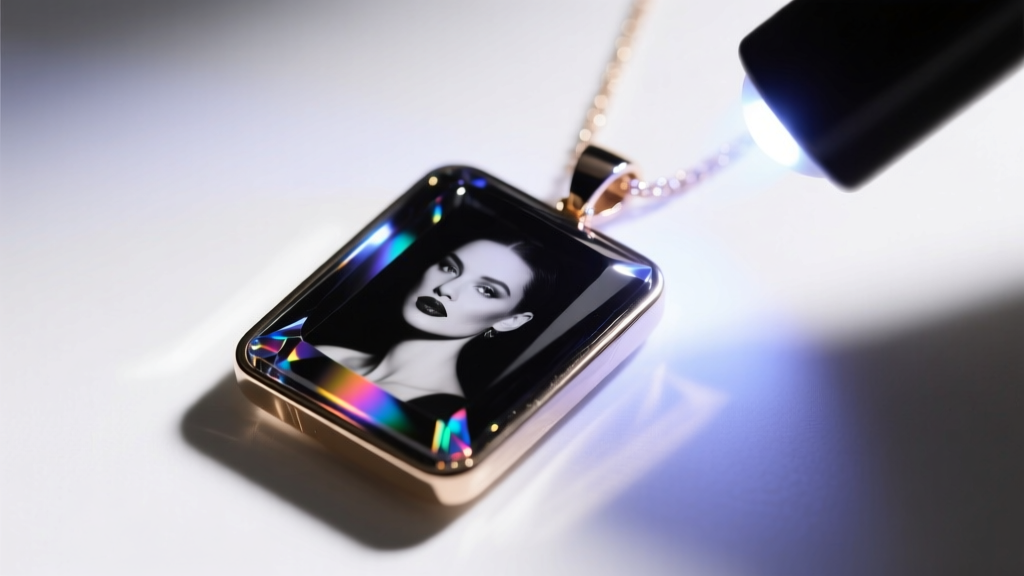
A superior modern alternative is UV-cured resin printing. In this process, specialized UV-curable inks are jetted directly onto the bare or primed metal substrate and instantly polymerized using high-intensity ultraviolet light. The result is a highly cross-linked acrylic polymer that offers significantly better scratch resistance and UV stability than dye-sublimation. However, UV resin alone is not fully waterproof; it requires a secondary encapsulation layer to prevent moisture ingress at the ink-to-metal boundary, which can cause microscopic delamination over time.
The Archival Standard: Vitreous Enamel and Glass Fusing
For a picture necklace intended to become a multi-generational heirloom, vitreous enamel remains the undisputed technical pinnacle. Unlike chemical inks, vitreous enamel utilizes finely ground frit (powdered glass) mixed with metallic oxide pigments. The artisan applies the colored glass powder to the metal substrate and fires it in a kiln at temperatures between 1400°F and 1500°F (760°C - 815°C).
During firing, the glass melts and fuses directly into the crystalline structure of the metal. The resulting image is essentially a layer of solid glass. It is entirely impervious to UV fading, waterproof, and chemically inert. The Canadian Conservation Institute notes that properly fired vitreous enamel on precious metals can survive for centuries without structural degradation, making it the only truly permanent method for rendering a photographic portrait on a picture necklace, albeit at a significantly higher manufacturing cost and requiring master-level artisan skill.
Sealing and Encapsulation: Preventing Delamination and Yellowing
If a picture necklace utilizes UV resin or dye-sublimation, the encapsulation layer is the final line of defense against environmental failure. Many budget manufacturers use standard two-part epoxy resins to dome the image. This is a critical failure point. Standard epoxies contain bisphenol-A (BPA) and aromatic rings that undergo rapid photo-oxidation when exposed to sunlight, resulting in a severe amber yellowing that ruins the color accuracy of the underlying portrait.
Superior Encapsulation Methods:
- Aliphatic Polyurethane: Offers superior UV resistance and remains optically clear for decades, though it requires precise humidity-controlled curing environments.
- Optical Glass Cabochons: The most robust mechanical solution. A precisely cut, domed piece of optical-grade glass is set into a metal bezel over the printed image using a clear, archival-grade silicone adhesive. This provides maximum scratch resistance and zero chemical yellowing.
Chain Mechanics and Bail Engineering for Heavy Pendants
The engineering of a picture necklace extends beyond the pendant itself. Custom photo pendants, especially those encased in glass or featuring thick metal substrates, carry significant mass. A standard 0.5mm chain will rapidly work-harden and snap under the dynamic load of a heavy pendant swinging during daily movement.
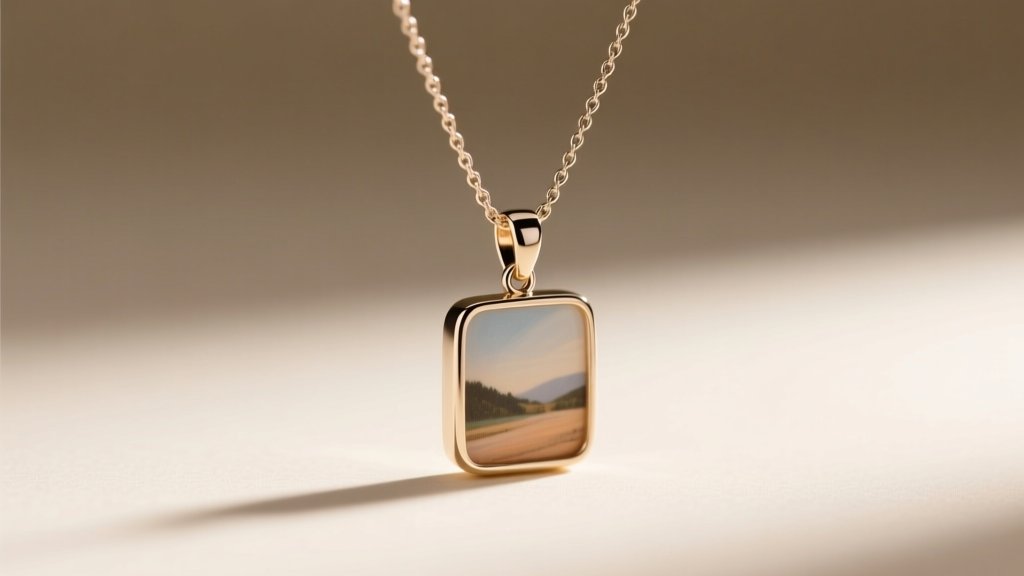
For pendants weighing over 15 grams, the chain gauge must be upgraded to a minimum of 1.0mm to 1.2mm, utilizing high-tensile structures like curb, rolo, or reinforced cable chains. Furthermore, the bail (the loop connecting the pendant to the chain) must be laser-welded or torch-soldered directly to the pendant's metal substrate. Adhesive-backed glue-on bails are strictly prohibited in archival jewelry; the cyanoacrylate or epoxy adhesives used will inevitably become brittle and fail due to the sheer leverage and thermal expansion differentials between the glue and the metal.
Care Protocols for Archival Picture Jewelry
Maintaining the structural and optical integrity of a high-end picture necklace requires specific care protocols that differ from standard gemstone jewelry.
Expert Warning: Never place a resin-sealed or enamel picture necklace in an ultrasonic cleaner. The high-frequency cavitation bubbles can penetrate microscopic fissures in the resin or glass bezel, causing rapid delamination or shattering of the enamel layer. Always clean with a mild, non-ammonia surfactant and a microfiber cloth.
By prioritizing 316L steel or solid gold substrates, demanding UV-stable encapsulation or kiln-fired enamel, and insisting on soldered structural bails, you elevate a simple picture necklace from a fleeting novelty into a permanent, archival-grade artifact capable of preserving a memory for generations.


