2026 Pink Butterfly Necklace Buying Guide: What to Look For
Discover what to look for when buying a pink butterfly necklace in 2026. Expert guide on enamel types, gemstone grades, chain gauges, and pricing.

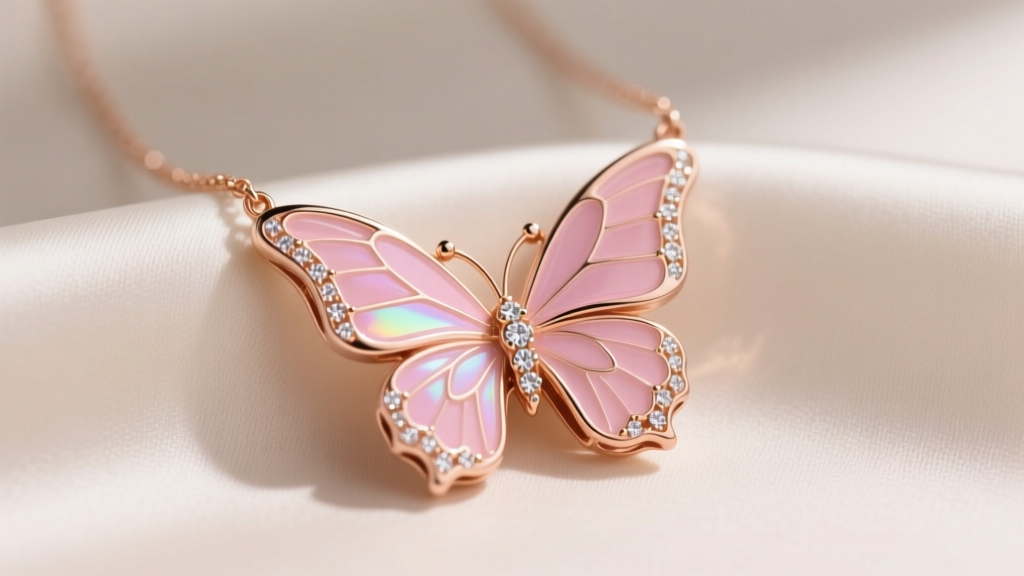
The 2026 Resurgence of Lepidopteran Jewelry
The pink butterfly necklace has evolved far beyond its Y2K nostalgia roots. In 2026, the lepidopteran motif has been embraced by both indie jewelers and heritage fine jewelry houses, merging whimsical silhouettes with serious metallurgical and gemological craftsmanship. Whether you are seeking a playful cold-enamel piece for daily wear or a high-jewelry pink sapphire pendant for evening styling, understanding the structural and material nuances is critical. This buying guide breaks down exactly what to look for, helping you avoid common manufacturing flaws and overpriced fashion tiers.
Decoding Materials: Enamel, Resin, and Gemstones
The visual impact of a pink butterfly pendant relies heavily on its surface material. However, not all 'pink finishes' are created equal. The market is currently saturated with misleading terminology, particularly regarding enamel and resin.
Cold Enamel vs. Vitreous Enamel
When shopping for an enameled pink butterfly necklace, you must distinguish between cold enamel (epoxy resin) and vitreous enamel (fired glass). Cold enamel is essentially a two-part epoxy resin mixed with pigment. While it offers vibrant, opaque pinks and is cheap to produce, it is highly susceptible to UV degradation. Over 12 to 18 months of daily wear, cold resin will yellow, dull, and eventually chip away from the metal backing due to differences in thermal expansion rates.
Vitreous enamel, conversely, involves fusing powdered glass to a metal substrate (usually 14k or 18k gold) in a kiln at temperatures exceeding 1400°F. The resulting translucent or opaque pink finish is incredibly durable, scratch-resistant, and will never yellow. When examining a piece, look for the term 'fired enamel' or 'vitreous.' If the product description simply says 'enamel' and the price is under $100, you are almost certainly purchasing cold resin.
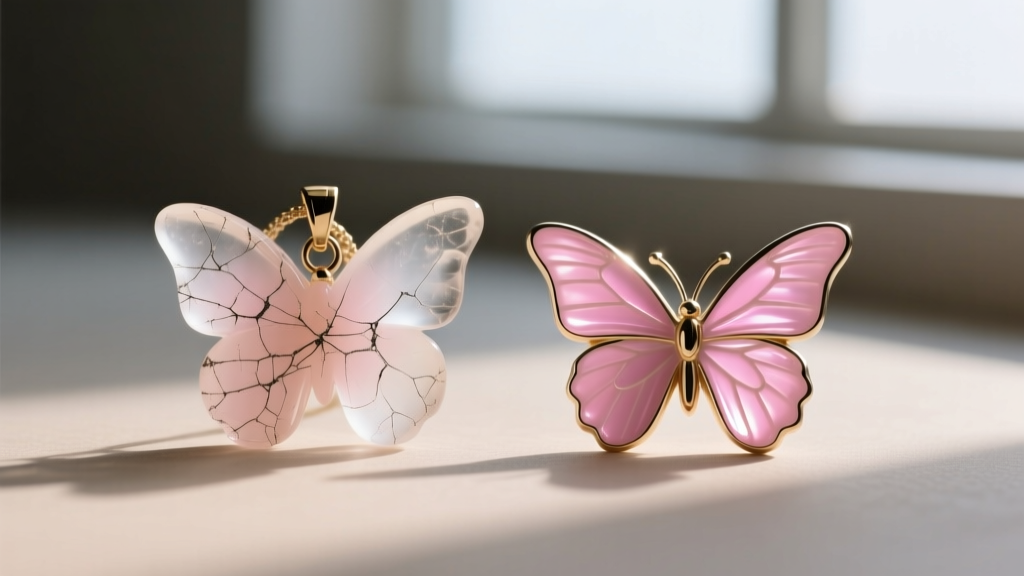
Pink Gemstones: Morganite, Pink Sapphire, and Rose Quartz
For gemstone-set butterfly pendants, the hardness and optical properties of the stone dictate both longevity and price. According to the Gemological Institute of America (GIA), Morganite (a beryl variety) ranks 7.5 to 8 on the Mohs scale. It offers a beautiful pleochroic effect—showing different shades of pink depending on the viewing angle—making it ideal for the multi-faceted wings of a butterfly pendant. However, its distinct cleavage planes mean it can chip if struck against a hard surface.
Pink Sapphire is the premium choice, ranking 9 on the Mohs scale. As noted in GIA's sapphire dossier, natural pink sapphires are exceptionally rare and command high prices. Be highly skeptical of 'pink sapphire' butterfly necklaces priced under $500; these are almost always lab-created or, worse, pink-dyed quartz. Rose Quartz (Mohs 7) is a budget-friendly, translucent alternative, but it is prone to micro-fractures and should be bezel-set rather than prong-set to prevent the stone from falling out.
Chain Selection and Clasp Security
The chain is the structural lifeline of your pendant. Delicate butterfly wings often feature intricate filigree or micro-pavé diamonds that can easily snag on certain chain links, causing the bail (the loop connecting the pendant to the chain) to bend or snap.
- Wheat Chains (0.9mm - 1.2mm): The optimal choice. The smooth, woven, oval links glide through the bail without catching, and the 18-gauge (1.0mm) thickness provides excellent tensile strength without overpowering the pendant.
- Cable Chains: Classic, but the individual open loops can catch on delicate wing edges. If choosing cable, ensure the links are soldered shut.
- Box Chains: Avoid these for butterfly pendants. Box chains are notorious for kinking permanently when bent, and their sharp edges can wear down the metal of the pendant's bail over time.
For the clasp, bypass the standard spring-ring clasp, which is notoriously difficult to operate one-handed and prone to internal spring failure. Opt for a small lobster claw clasp, which offers a much more secure locking mechanism and is easier to manipulate.
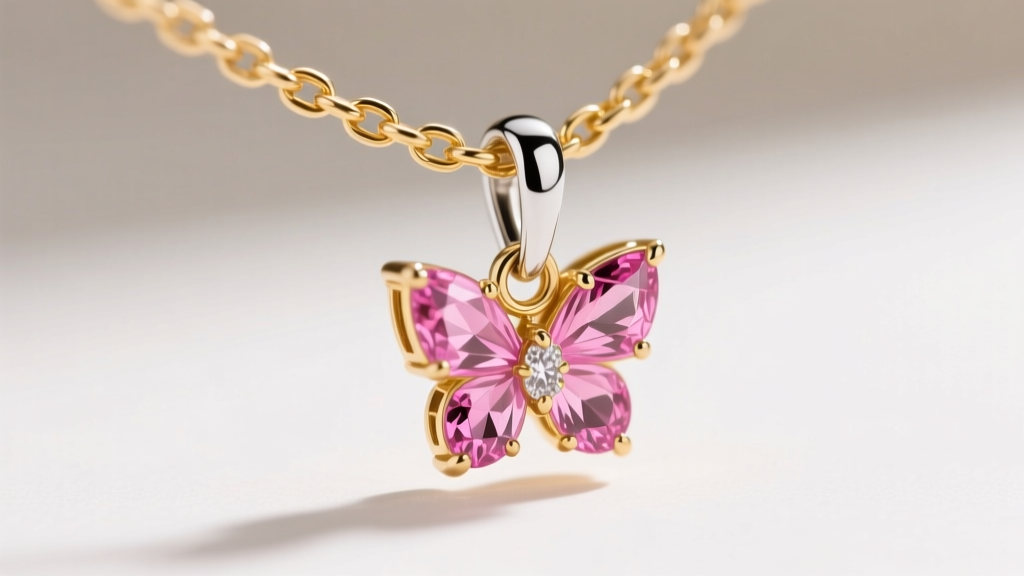
Pricing Tiers: What Should You Actually Pay?
Understanding the fair market value of a pink butterfly necklace prevents you from overpaying for fashion jewelry disguised as demi-fine. Below is a breakdown of expected pricing based on 2026 market standards.
| Tier | Primary Material | Chain & Findings | Fair Price Range |
|---|---|---|---|
| Fashion | Brass/Sterling Silver with Cold Resin | Plated base metal, spring-ring | $25 - $65 |
| Demi-Fine | 14k Gold Vermeil with Vitreous Enamel | 14k Vermeil wheat chain, lobster clasp | $110 - $240 |
| Fine (Semi-Precious) | Solid 14k Gold with Morganite/Rose Quartz | Solid 14k gold chain, soldered jump rings | $450 - $950 |
| Fine (Precious) | 18k Gold with Natural Pink Sapphire & Diamonds | 18k gold, integrated safety catches | $2,200 - $6,000+ |
Red Flags and Common Failure Modes
When inspecting a pink butterfly necklace, either in person or via high-resolution macro photos online, look out for these critical manufacturing flaws:
1. Glued Bails: In lower-tier jewelry, the bail is often glued to the back of the butterfly pendant using industrial epoxy. Over time, exposure to skin oils, perfumes, and temperature changes will degrade the adhesive, causing the pendant to detach and fall. Always look for a soldered bail, where the metal is fused using a torch.
2. 'Nickel-Free' Marketing Traps: The Federal Trade Commission (FTC) Jewelry Guides strictly regulate metal disclosures. Some brands market 'hypoallergenic' or 'nickel-free' base metals, but use nickel-heavy solders to attach the bail or clasps. If you have contact dermatitis, insist on solid 14k gold, platinum, or verified surgical-grade titanium components.
3. Thin Prong Settings: If the butterfly wings are paved with tiny pink sapphires or diamonds, examine the prongs. Mass-produced pieces often use 'cast-in-place' settings where the prongs are barely raised above the stone. A single snag on a sweater can pull the stone out. Look for hand-set stones with distinct, polished prongs.
How to Style a Pink Butterfly Pendant for Modern Necklines
The versatility of a pink butterfly necklace depends heavily on its chain length and pendant scale. For a modern, 2026 aesthetic, avoid the 'choker' look unless the piece is a highly structured, enameled collar. Instead, opt for a 16-inch chain with a 2-inch extender. This allows you to adjust the drop based on your neckline.
When wearing a sweetheart or scoop neckline, position the butterfly pendant to rest exactly in the negative space of the collarbone, acting as a focal point without competing with the garment's hem. For V-necks and button-down shirts, utilize the extender to drop the pendant lower, creating a vertical line that elongates the neck. Layering a delicate 14k pink enamel butterfly with a thicker, 2.5mm gold paperclip chain and a simple diamond solitaire pendant creates a sophisticated, mixed-metal texture that grounds the whimsical motif in everyday luxury.


