Troubleshooting Your Floating Necklace Diamond: Flips & Tangles
Is your floating necklace diamond constantly flipping upside down? Learn expert troubleshooting tips to fix chain tangles, setting flips, and wear.


The Mechanics of the Floating Diamond Necklace
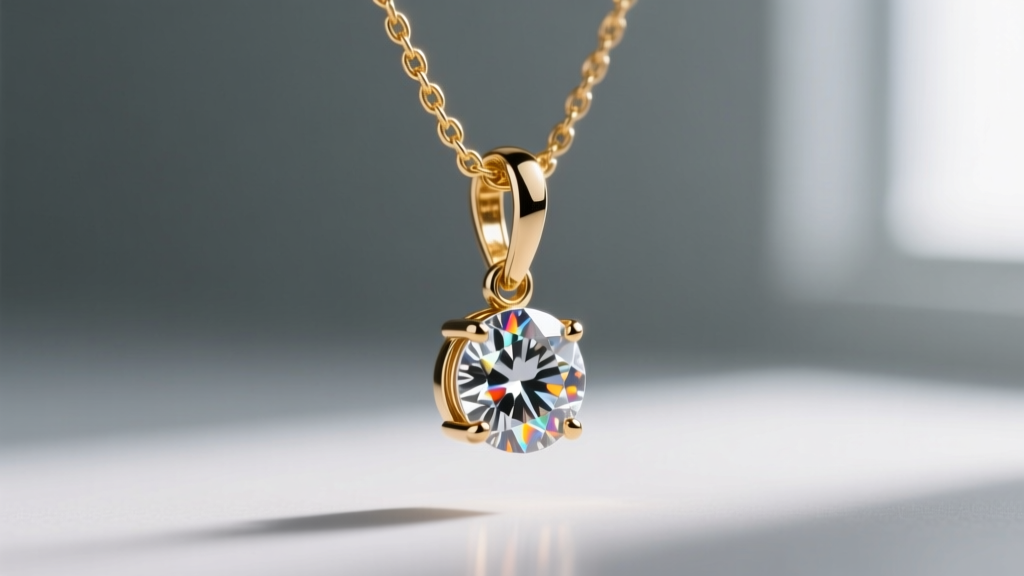
The floating necklace diamond is a triumph of modern jewelry design, creating the optical illusion that a brilliant gemstone is suspended magically against the skin. However, this minimalist aesthetic relies on precise physics and delicate engineering. Whether you own a classic solitaire slide pendant, a tension-set illusion necklace, or a modern track-slide design (popularized by houses like Messika), the lack of a traditional fixed bail introduces unique structural vulnerabilities.
Unlike standard pendants that hang from a fixed jump ring, floating diamonds utilize horizontal threading loops, silicone friction stops, or continuous wire tracks. While beautiful, these mechanisms are highly susceptible to center-of-gravity imbalances, localized chain stress, and sebum buildup. If your floating diamond is misbehaving, flipping, or sticking, the issue is rarely a defect in the stone itself, but rather a mismatch between the chain gauge, the pendant weight, and your specific anatomy. Below, we break down the most common mechanical failures of floating diamond necklaces and provide master-jeweler-approved solutions.
Troubleshooting Issue 1: The Diamond Keeps Flipping Upside Down
This is the single most common complaint among owners of floating solitaire necklaces. You look in the mirror, and your beautiful round brilliant or pear-shaped diamond is resting upside down, showing the flat metal backplate instead of the crown facets.
The Physics of the Flip
A floating diamond flips because of a top-heavy center of gravity combined with a lack of lateral chain tension. If your chain is too long (e.g., 18 inches or more), the necklace drapes loosely in a wide U-shape. Without lateral tension pulling the chain taut across the collarbone, the heavy bezel or slide bail simply rotates around the chain until it finds its lowest gravitational point—which is often upside down.
The Solutions
- The Tension Adjustment: Shorten your necklace to a 15-inch or 16-inch choker/collarbone length. When the chain rests snugly against the clavicle, the lateral tension forces the horizontal bail loops to lay flat against the skin, preventing rotation.
- The Silicone Stopper Hack: If you prefer a longer drape, purchase microscopic clear silicone earring backs or specialized jewelry stopper beads. Slide one onto the chain about two inches away from the diamond on your non-dominant side. This restricts the sliding range, keeping the diamond anchored in the hollow of your neck where body movement is less likely to flip it.
- Counterweighting: For pear or marquise cuts, a jeweler can solder a tiny, discreet 14k gold counter-bead to the bottom of the setting to shift the center of gravity downward.
Troubleshooting Issue 2: The Slide Mechanism Snags or Sticks
In track-style floating necklaces, the diamond is meant to glide smoothly along a rigid gold bar or a specialized chain segment. Over time, owners report that the diamond gets stuck, requiring manual pushing to re-center it.
The Culprit: Microscopic Grime
Because floating diamonds sit flush against the décolletage, they act as magnets for sebum, dead skin cells, body lotions, and perfume. This mixture creates a microscopic, sticky resin along the sliding track or inside the horizontal threading loops. According to the Gemological Institute of America (GIA), oils and lotions significantly reduce the optical brilliance of diamonds while simultaneously creating friction in moving mechanical parts.
The Cleaning Protocol
Do not use ultrasonic cleaners for track-style floating necklaces. The high-frequency vibrations can loosen micro-pave diamonds often set along the sliding track, and can degrade the silicone friction rings used in some modern designs. Instead, use an ionic jewelry cleaner or a manual degreasing bath:
- Mix warm water with three drops of a high-quality degreasing dish soap (like Dawn).
- Soak the necklace for exactly 10 minutes to break down the lipid bonds of the skin oils.
- Use a soft-bristled baby toothbrush to gently agitate the track and the interior of the bail loops.
- Rinse with distilled water (to prevent hard water spots) and dry with a lint-free microfiber cloth.

Troubleshooting Issue 3: Chain Kinking and Bail Wear
A floating diamond concentrates all of its kinetic friction onto just two or three specific chain links. If the chain gauge is too fine for the carat weight of the diamond, those specific links will elongate, weaken, and eventually snap.
Matching Chain Gauge to Carat Weight
Many mass-market jewelers pair 0.50ct diamonds with ultra-delicate 0.4mm chains to maximize the 'floating' illusion. This is a structural error. Use the matrix below to audit your necklace's structural integrity:
| Diamond Carat Weight | Minimum Chain Gauge (mm) | Recommended Chain Style | Expected Lifespan (Daily Wear) |
|---|---|---|---|
| 0.10ct - 0.25ct | 0.5mm - 0.6mm | Cable or Fine Box | 3 - 5 Years |
| 0.30ct - 0.50ct | 0.7mm - 0.8mm | Rope or Bead Chain | 5 - 8 Years |
| 0.75ct - 1.00ct+ | 0.9mm - 1.2mm | Wheat or Franco | 10+ Years |
If your chain is kinking near the diamond, it is a sign of metal fatigue. Take the piece to a jeweler to have the chain upgraded to a higher gauge, or transition to a platinum chain, which offers superior tensile strength compared to 14k or 18k gold.
Troubleshooting Issue 4: Skin Irritation and Necklace Rash
Because the back of a floating diamond setting maintains constant contact with the skin, it can trap sweat and bacteria, leading to contact dermatitis. Furthermore, if your necklace is crafted from white gold, the rhodium plating on the flat backplate may wear away, exposing the nickel alloys beneath to your skin.
The Fix: Wipe the back of the pendant and the immediate chain area with a soft cloth dampened with rubbing alcohol at the end of each day. If you have a known nickel allergy, have a jeweler laser-weld a thin, hypoallergenic platinum or 24k gold backing plate onto the reverse side of the diamond setting to create a permanent barrier.
When to Consult a Master Jeweler
While cleaning and length adjustments can be done at home, certain warning signs require professional intervention. Inspect your floating necklace monthly using a 10x jeweler's loupe. Look for the following failure modes:
- Bail Thinning: The interior of the horizontal threading loops will naturally wear down from the friction of the chain. If the metal looks paper-thin or oval-shaped rather than perfectly round, it needs to be re-tipped or replaced immediately to prevent losing the diamond.
- Bezel Lift: In bezel-set floating diamonds, the constant movement can cause the metal rim to pull away from the diamond's girdle. If you can slide a piece of printer paper between the metal and the stone, the setting is compromised.
Expert Insight: 'The longevity of a floating diamond necklace relies entirely on the tolerances of the slide mechanism. A well-engineered bail will have a microscopic tolerance of less than 0.2mm between the chain and the threading hole. If your diamond slides too freely, the bail is too large for your chain, accelerating wear on both components.' — Master Bench Jeweler Certification Guidelines
By understanding the unique mechanical stresses placed on a floating necklace diamond, you can transition from constant frustration to effortless elegance. Regular maintenance, proper chain-to-carat matching, and strategic length adjustments will ensure your diamond remains perfectly oriented and brilliantly displayed for decades. For further reading on maintaining precious metals and gemstone settings, consult the comprehensive care guides provided by the GIA Gem Encyclopedia.


