Decoding the Setting of the Necklace Story: Vintage Guide
Learn how to read the setting of the necklace story to authenticate vintage gems. Our buyer's guide covers eras, metals, and prong styles.

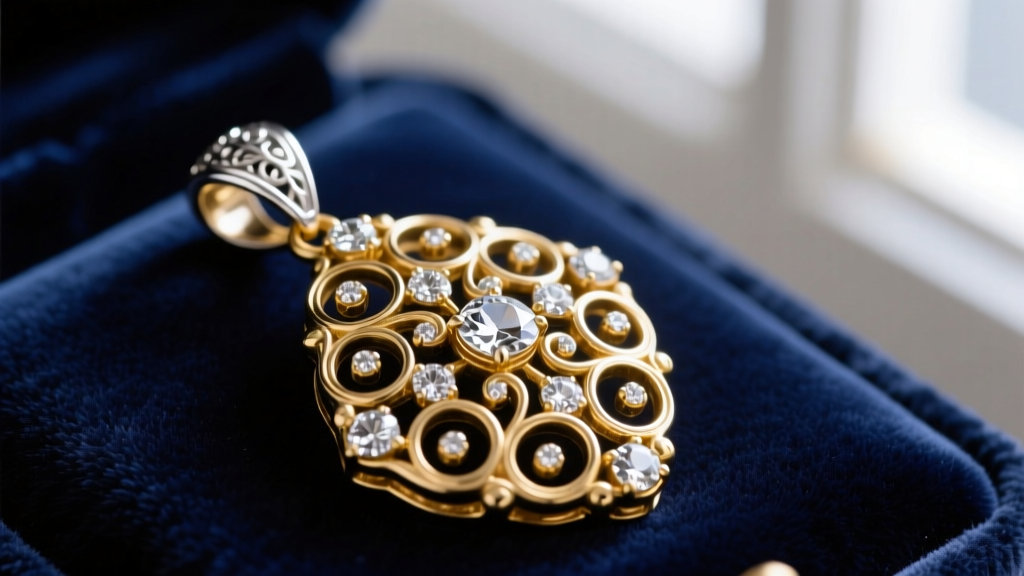
For serious estate jewelry collectors, the setting of the necklace story isn't merely a poetic metaphor; it is the literal physical mount, gallery, and prong work that reveals a piece's true age, origin, and historical journey. When you are evaluating vintage and antique necklaces, the way a gemstone is secured into its metal housing provides more reliable authentication data than almost any paper certificate. In this comprehensive buyer's guide, we decode the metallurgical and structural hallmarks of antique necklace settings, giving you the precise frameworks needed to evaluate provenance, condition, and market value in today's estate landscape.
The Architecture of Antiquity: Georgian and Early Victorian Mounts
To read the earliest chapters of a necklace's history, you must look at the back of the setting. Georgian (1714–1837) and early Victorian necklaces predominantly feature closed-back settings. Because diamond cutting techniques of the era—such as the rose cut or old mine cut—lacked the mathematical precision to maximize light return, jewelers relied on foiling. A thin sheet of tinted or silver foil was placed behind the gemstone, and the metal was burnished tightly over the back to seal out moisture, which would destroy the foil.
What to look for: If you are examining a purported Georgian diamond pendant and the setting is open-backed, you are likely looking at a later reproduction or a piece that has been heavily altered. Furthermore, early settings rarely used prongs; instead, they utilized collet settings, where a smooth band of gold wraps entirely around the gemstone's girdle. According to the educational archives at Lang Antiques, authentic Georgian collets will show microscopic irregularities and hand-forged tool marks, whereas modern cast reproductions will appear perfectly uniform and lack the subtle asymmetry of 18th-century bench work.
Silver-Topped Gold: The Victorian Compromise
As we move into the mid-to-late Victorian era (1850–1901), the setting of the necklace story shifts to accommodate the era's love for white diamonds set in yellow gold. Because platinum was not yet commercially viable for jewelry, Victorians invented silver-topped gold. The gallery and prongs holding the diamonds were crafted from silver to prevent the yellow reflection of gold from dulling the stones' brilliance, while the back of the pendant and the necklace chain were made of 15k or 18k yellow gold to prevent the silver from tarnishing against the wearer's skin.
Authentication Tell: Over a century of wear, the silver tops on these settings often develop a deep, dark patina, while the gold backs remain bright. If a piece claims to be Victorian but features rhodium-plated white gold, it is a 20th-century fabrication. Additionally, look for British hallmarks; 15k gold was a standard British purity that was discontinued in 1932, making it a definitive timestamp for Victorian and Edwardian pieces.
Edwardian Elegance and the Platinum Revolution
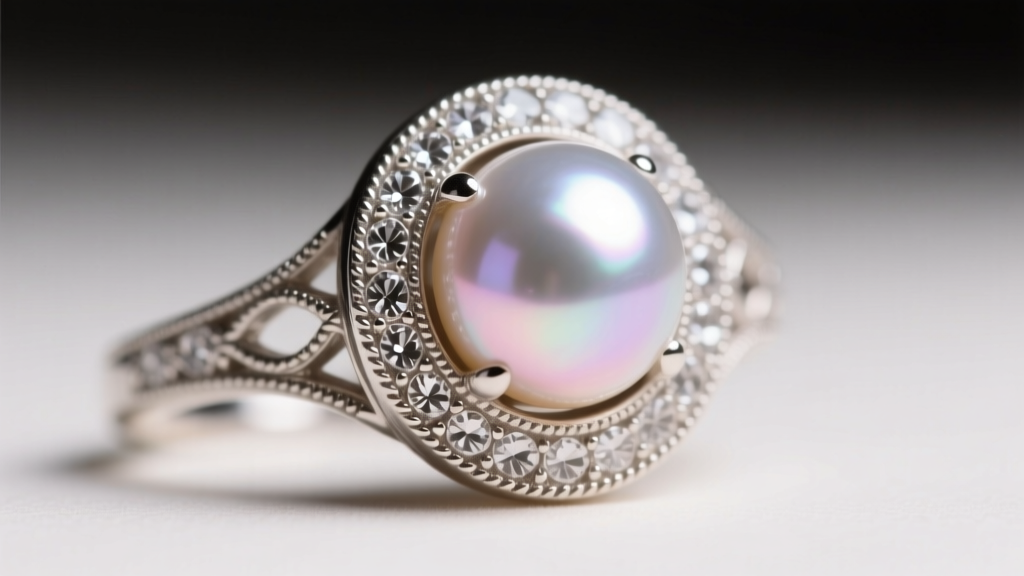
The Edwardian era (1901–1915) fundamentally rewrote the rules of jewelry settings. The introduction of platinum—a metal with immense tensile strength—allowed jewelers to abandon the bulky, heavy gold mounts of the past. The setting of the necklace story from this era is defined by lightness, airiness, and microscopic detailing.
- Millegrain Edging: Tiny beads of metal pressed along the edges of bezels and prongs using a knurling tool. This not only secured the stones but added a delicate, lace-like texture.
- Pierced Openwork (Filigree): Platinum allowed for intricate, saw-pierced galleries beneath the stones, creating necklaces that looked like woven lace.
- Knife-Edge Wires: Settings were often connected by impossibly thin, knife-edge platinum wires that made the diamonds appear to float on the skin.
When buying Edwardian necklaces, inspect the millegrain under a 10x loupe. Authentic Edwardian millegrain will show slight wear or flattening on the high points after 120 years. If the millegrain is perfectly sharp and uniform, it may be a modern CAD/CAM reproduction.
Art Deco Geometry: Calibré and Channel Settings
The Art Deco period (1920–1935) rejected the soft curves of the Edwardian era in favor of stark geometry, high contrast, and architectural precision. The most defining technical achievement of this era was the calibré setting. Gemstones (usually rubies, sapphires, or emeralds) were custom-cut to fit perfectly into a continuous channel or geometric mosaic without any visible metal prongs between them.
| Era | Dominant Metal | Signature Setting Style | Key Authentication Tell |
|---|---|---|---|
| Georgian | 18k Yellow Gold / Silver | Closed-back Collet, Foiled | Sealed back, rose-cut stones, irregular tool marks |
| Victorian | 15k Gold, Silver-Topped Gold | Cluster, Gypsy, Bezel | Darkened silver tops, 15k British hallmarks |
| Edwardian | Platinum over Gold | Millegrain, Filigree, Bezels | Knife-edge wires, pierced openwork galleries |
| Art Deco | Platinum, White Gold | Calibré, Channel, Pavé | Custom-cut stones, geometric symmetry, French dog-head marks |
According to the Gemological Institute of America (GIA), evaluating Art Deco necklaces requires strict attention to stone replacement. Because calibré-cut stones are custom-fitted to their specific channel, a chipped or lost stone is incredibly difficult to replace. If you notice a modern round brilliant cut diamond forced into an Art Deco channel, or a synthetic sapphire that lacks the characteristic silk inclusions of early 20th-century Burmese or Ceylonese stones, the necklace's value is significantly compromised.

Evaluating Condition: Wear Patterns and Prong Integrity
Understanding the setting of the necklace story also means understanding how that setting has survived the last century. Antique necklaces require rigorous condition reports before purchase. Here is a practical checklist for evaluating the structural integrity of vintage mounts:
1. Prong Wear and Retipping
Over decades of wear, the friction of clothing and skin slowly sands away metal prongs. Look closely at the tips of the prongs holding the center stones. If they are flat, hooked, or entirely missing, the piece requires retipping. While retipping is a standard bench repair, it should be factored into your negotiation. A platinum retip on a complex Art Deco cluster pendant can cost between $150 and $400 per stone, depending on the complexity of the gallery.
2. Gallery Thinning and Solder Lines
Flip the pendant over and examine the gallery (the basket holding the stone). In heavily worn Victorian lockets and pendants, the bottom of the gallery can wear paper-thin. Additionally, look for messy, discolored solder lines. A high-quality antique repair will use laser welding or perfectly matched hard solder; a messy, blob-like solder joint indicates a hasty, modern repair that degrades the piece's historical integrity.
3. Bail and Jump Ring Integrity
The bail (the loop connecting the pendant to the chain) is a high-stress friction point. Antique bails are often worn down to a sharp, knife-like edge. Ensure the jump ring connecting the bail to the chain is properly soldered closed; an open jump ring on a heavy antique diamond pendant is a catastrophic loss risk.
Expert Insight: Never clean an antique Georgian or early Victorian foiled necklace in an ultrasonic cleaner or with liquid jewelry dips. The moisture will seep into the collet setting, oxidize the foil backing, and instantly turn a brilliant diamond into a dull, gray stone. Always clean foiled settings with a dry, soft-bristled brush.
Sourcing and Valuation in the Current Estate Market
As we navigate the 2026 estate jewelry market, the premium on untouched, original settings has never been higher. Collectors are increasingly rejecting pieces that have been "modernized"—such as Edwardian pendants that have been re-set with modern brilliant-cut diamonds to increase sparkle. The market demands authenticity. An unsigned Art Deco platinum and diamond necklace with original old European cut diamonds and intact millegrain will consistently outperform a modern reproduction of the exact same design.
When sourcing, always request high-resolution macro photography of the back of the setting. The front of a necklace can be polished and restored to look new, but the back of the gallery, the interior of the collet, and the underside of the prongs will always reveal the true age and condition of the piece. By learning to read the physical setting of the necklace story, you transition from a passive shopper to an informed archivist, capable of spotting genuine historical treasures in a market flooded with modern replicas.


