Deep Aether Aercloud Necklace: Material Properties Guide
Discover the best materials for a deep aether aercloud necklace. We compare resin, dichroic glass, and lab opal for ethereal fantasy jewelry crafting.

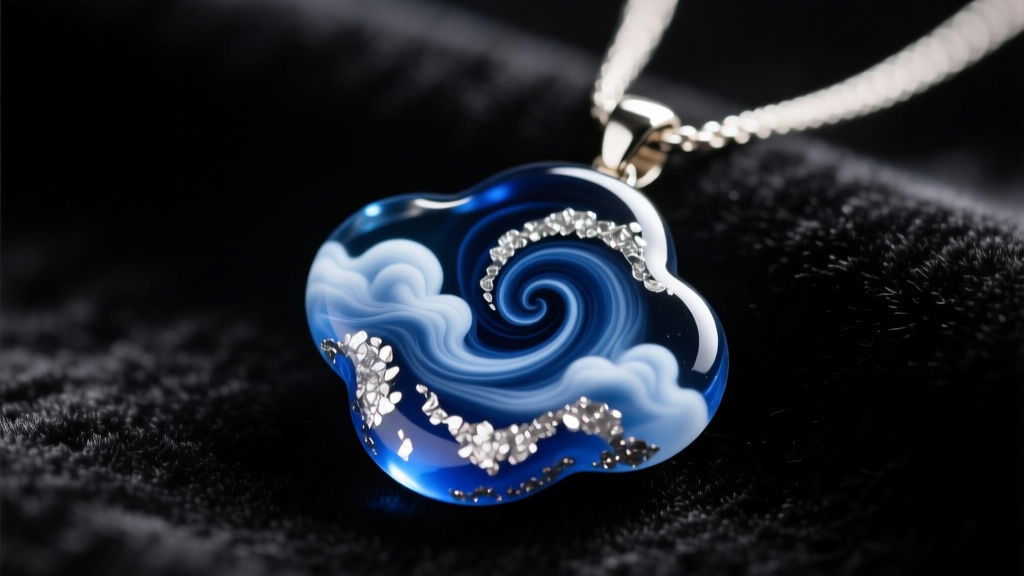
Capturing the ethereal, buoyant essence of fantasy realms in solid jewelry form is one of the most complex challenges in modern artisan metalsmithing and lapidary arts. The deep aether aercloud necklace has emerged as a highly coveted statement piece among fantasy jewelry collectors and gaming enthusiasts alike. Inspired by the luminescent, deep-blue and violet cloud structures of the Aether dimension, this specific pendant style requires materials that can mimic internal fluffiness, shifting light, and a sense of suspended depth. As of 2026, advancements in polymer chemistry and synthetic gemology have given artisans unprecedented tools to recreate this exact aesthetic. However, choosing the wrong medium can result in a piece that looks flat, scratches easily, or degrades under UV exposure.
This comprehensive material comparison breaks down the exact physical properties, refractive indices, and structural limitations of the top three materials used to craft an authentic-looking deep aether aercloud necklace. Whether you are a jeweler planning a new fantasy collection or a collector looking to commission a bespoke piece, understanding these material properties is critical for long-term wearability and visual accuracy.
The Anatomy of an Ethereal Fantasy Pendant
To successfully replicate an 'aercloud' aesthetic, the chosen material must possess three key optical traits: high translucency, internal light scattering (to mimic the fluffy cloud texture), and the ability to hold deep, saturated pigments without appearing opaque. Traditional opaque metals or solid gemstones like lapis lazuli fail this test because they cannot transmit light through the body of the stone. Instead, jewelers must rely on amorphous solids, layered silicas, or synthetic polymers. The deep aether palette specifically demands a gradient from midnight indigo at the pendant's core to a bright, glowing cerulean or violet at the edges, requiring a medium that accepts internal inclusions or specialized dye suspensions.
Core Material Contenders for the Aercloud Effect
Epoxy and UV Resins: The Artisan's Canvas
For independent jewelers crafting a deep aether aercloud necklace, two-part epoxy resin remains the most versatile medium. Unlike polyurethane resins, which cure with a slight amber tint and are prone to rapid UV degradation, high-grade jewelry epoxies (such as those formulated with HALS—Hindered Amine Light Stabilizers) maintain water-clear transparency for decades. Artisans achieve the 'cloud' effect by manipulating the resin's viscosity during the curing process. By introducing microscopic synthetic silica aerogel particles or crushed synthetic fluorite into the indigo-dyed resin, creators can force light to scatter internally, creating a remarkably accurate fluffy texture.
However, resin has distinct mechanical limitations. Most jewelry-grade epoxies cure to a Shore D hardness of 80-85, which translates to roughly a 2.5 to 3 on the Mohs scale. This means the surface is highly susceptible to micro-scratches from daily wear. To counteract this, 2026 resin formulations often include a nano-ceramic topcoat, or the resin is cast inside a protective bezel of Grade 5 titanium to shield the edges from impact.
Dichroic Glass: The Light-Catcher
If the goal is to capture the shifting, iridescent nature of an aercloud block as it catches the virtual sun, dichroic glass is the superior choice. Dichroic glass is created by vaporizing multiple micro-layers of metal oxides (such as titanium, chromium, and aluminum) in a vacuum chamber, which are then deposited onto a glass substrate. When fused into a deep blue or violet base glass at temperatures exceeding 1450°F, the resulting pendant exhibits thin-film interference. This optical phenomenon causes the pendant to reflect brilliant cerulean and magenta hues while transmitting deep indigo light, perfectly mimicking the magical glow of the Aether.
The primary drawback of dichroic glass for a deep aether aercloud necklace is its lack of internal 'fluffiness.' The visual effect is strictly surface-level and highly dependent on ambient lighting angles. Furthermore, glass carries a Mohs hardness of 5.5 to 6, making it more scratch-resistant than resin but highly vulnerable to shattering if dropped on a hard surface. Artisans often use a kiln-carving technique to give the glass a matte, frosted exterior, which diffuses the dichroic reflections and softens the overall look to better resemble a cloud.
Lab-Created Opal: The High-End Alternative
For collectors seeking a premium, gemological approach to the deep aether aercloud necklace, lab-created opal (specifically Gilson-type synthetic opal) offers unparalleled optical depth. According to the Gemological Institute of America (GIA), synthetic opal is composed of silica spheres arranged in a highly ordered, three-dimensional grid. This structure diffracts light into vivid spectral colors. By commissioning a lab-grown opal with a dark 'indigo' body color and strong violet-to-blue play-of-color, jewelers can create a pendant that naturally shifts colors like a living cloud.
While visually stunning and boasting a Mohs hardness of 5.5 to 6.5, lab opal is notoriously difficult to carve into the organic, asymmetrical shapes typical of aercloud designs. It requires master-level lapidary skills to shape without inducing thermal shock or fracturing along its structural grain. Consequently, a genuine lab-opal deep aether aercloud necklace sits at the absolute top of the market in terms of pricing, often exceeding $800 for a well-executed, large-carat pendant.
Material Comparison Matrix
When selecting the base material for your pendant, consider how its physical properties align with your lifestyle and budget. The following matrix outlines the critical data points for each medium.
| Material | Mohs Hardness | Refractive Index (RI) | Avg. Cost (30mm Pendant) | UV Stability (2026 Standards) |
|---|---|---|---|---|
| Jewelry Epoxy Resin | 2.5 - 3.0 | 1.50 - 1.55 | $45 - $120 | High (with HALS additives) |
| Fused Dichroic Glass | 5.5 - 6.0 | 1.52 | $80 - $200 | Absolute (Inorganic) |
| Lab-Created Opal | 5.5 - 6.5 | 1.44 - 1.46 | $350 - $900+ | Absolute (Inorganic) |
Chain Selection: Grounding the Aether
The visual weight and color palette of a deep aether aercloud necklace demand a chain that complements rather than competes with the pendant. Standard sterling silver, while popular, is prone to sulfur-induced tarnishing, which quickly turns the metal black and ruins the bright, ethereal aesthetic of the piece. As noted by industry analysts at JCK, modern fantasy jewelry collectors are increasingly favoring reactive and anodized metals for their chains.
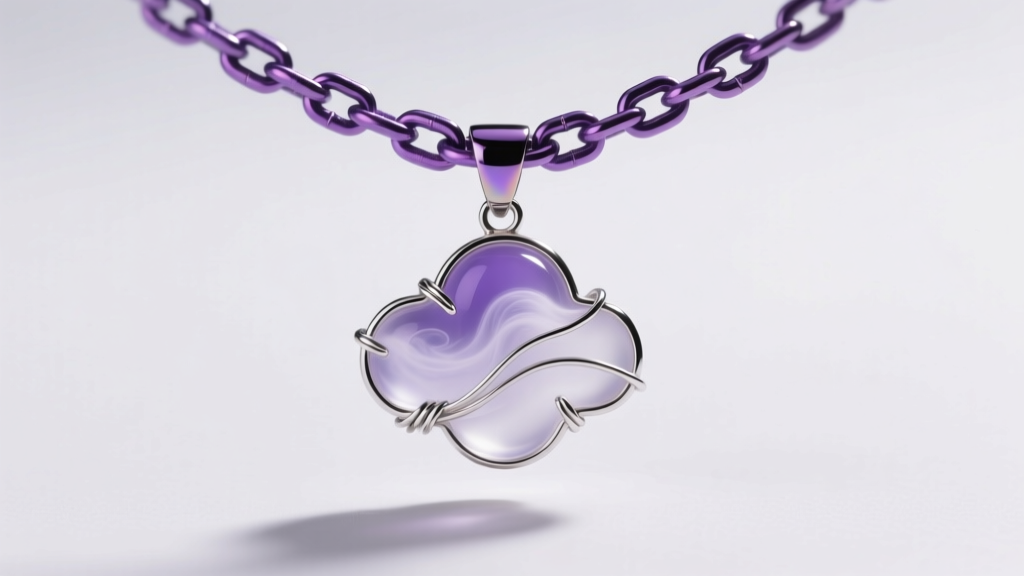
Niobium (Nb): Niobium is a highly biocompatible, hypoallergenic reactive metal. Its most valuable property for fantasy jewelry is its ability to be anodized using direct current electricity. By submerging the niobium chain in an electrolyte bath and applying exactly 90 to 95 volts, the metal's oxide layer thickens to reflect a deep, permanent purple. Pushing the voltage to 115V shifts the color to a brilliant, icy blue. An anodized niobium rope chain provides a vibrant, tarnish-proof connection to the aercloud pendant without requiring any chemical dyes or plating that could eventually wear off.
Grade 5 Titanium (Ti-6Al-4V): If structural integrity is the primary concern, aerospace-grade titanium is the ultimate choice. It possesses a tensile strength of roughly 130 ksi, meaning a delicate 1.5mm titanium cable chain can support heavy, oversized resin or glass pendants without the risk of snapping. Titanium also naturally anodizes to deep blues and purples, though its color palette is slightly less saturated than niobium.
Care and Maintenance for Porous and Glassy Materials
Maintaining the optical clarity of your deep aether aercloud necklace requires strict adherence to material-specific cleaning protocols. Resin pendants should never be cleaned with ultrasonic jewelry cleaners or alcohol-based solutions, as these will induce crazing (micro-fractures) and strip away protective topcoats. Instead, use a mild, phosphate-free dish soap and a microfiber cloth. To restore the high-gloss finish on a scratched resin surface, apply a thin layer of Renaissance Wax or a specialized polymer polish, buffing in tight circular motions.
Dichroic glass and lab opal are more resistant to chemical cleaners but remain vulnerable to thermal shock. Never wear these pendants in hot tubs, saunas, or while swimming in cold water, as rapid temperature fluctuations can cause the internal structures to fracture. For opals specifically, avoid prolonged exposure to extremely dry environments (like heated car interiors in winter), as the loss of trace moisture can lead to structural cracking over time.
Final Verdict: Which Material Suits Your Build?
The ideal material for your deep aether aercloud necklace ultimately depends on your budget, desired aesthetic, and wearability requirements. If you prioritize internal texture, deep pigment saturation, and an affordable entry point, a HALS-stabilized epoxy resin cast in a titanium bezel is the undisputed champion. For those who demand a shifting, iridescent surface that catches the light with every movement, kiln-fused dichroic glass offers unmatched optical magic. Finally, for the high-end collector seeking a permanent, gemological treasure that naturally diffracts light, a dark-bodied lab-created opal remains the pinnacle of fantasy jewelry craftsmanship.


