Dentalium Shell Necklace Repair: Fix Cracks & Restringing
Learn how to troubleshoot, repair, and restring a dentalium shell necklace. Expert tips on fixing cracks, preventing breakage, and proper shell care.

The Anatomy of Dentalium Shell Damage
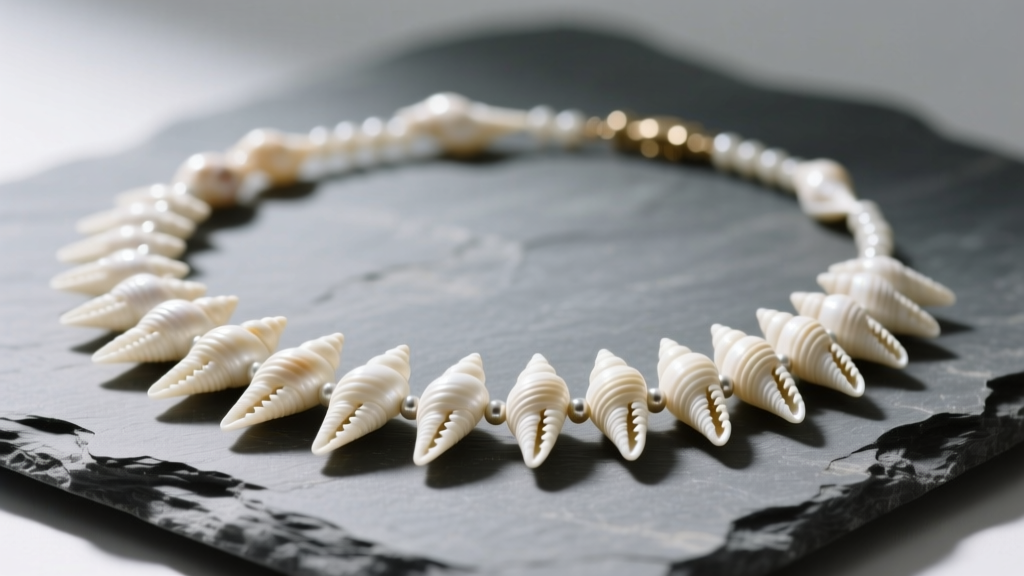
Dentalium shell necklaces, traditionally crafted from the tusk-shaped marine mollusk Antalis pretiosum (and historically Antalis vulgaris), are iconic pieces of Indigenous and coastal fashion jewelry. However, their unique tubular geometry and calcium carbonate composition make them highly susceptible to specific types of structural failure. With a Mohs hardness rating of just 3, dentalium shells are softer than a copper coin and far more fragile than gemstones like turquoise or agate.
The most common point of failure in a dentalium shell necklace is the drill hole. Because these shells are naturally hollow and taper at the ends, the walls at the extremities are paper-thin. When subjected to the lateral tension of a tight stringing material, or when they clatter against one another without adequate spacers, micro-fractures develop around the drill holes. Over time, these micro-fractures propagate, leading to the shell splitting longitudinally or snapping entirely at the tip. Understanding this structural vulnerability is the first step in effective troubleshooting and long-term preservation.
Troubleshooting Stringing Failures: Material & Tension
If your dentalium shell necklace is experiencing frequent breakage, the culprit is almost always the stringing material and the tension applied during assembly. Traditionalists often use natural animal sinew or cotton thread, but these organic materials degrade rapidly when exposed to the acidic pH of human sweat (typically between 4.5 and 6.5) and ambient humidity. When the thread rots, it loses its tensile strength, causing sudden snaps.
Modern jewelry makers and conservators recommend upgrading to high-performance synthetic threads that mimic the drape of sinew but offer vastly superior durability. Below is a troubleshooting matrix to help you select the correct restringing material based on your specific necklace design.
| Stringing Material | Tensile Strength | Stretch Factor | Best Use Case & Troubleshooting |
|---|---|---|---|
| Waxed Natural Sinew | Low-Medium | High | Strictly for historical replication. Fails within 1-2 years of daily wear due to moisture rot. |
| Nylon Beading Thread (Nymo D) | Medium | Low | Lightweight, small dentalium shells. Prone to fraying if the shell drill holes have sharp, unpolished edges. |
| Braided Polyethylene (WildFire 6lb) | Very High | Zero | Heavy, large dentalium shells and multi-strand designs. Thermally fused ends prevent unraveling. |
| Micro Waxed Poly Cord (0.5mm) | High | Minimal | Chunky, bohemian styles. Requires larger drill holes; may not fit through narrow, authentic antique shells. |
The Tension Trap
A critical mistake during restringing is pulling the thread too taut. Dentalium shells need a microscopic amount of 'play' to articulate naturally around the curve of the neck. If the thread is locked tight, the rigid shells are forced into an unnatural arc, creating immense compressive stress on the outer curve of the shell and tensile stress on the inner curve, guaranteeing a snap. Always leave a slight, flexible drape when tying off your finishing knots.
Step-by-Step Restringing Guide for Tubular Shells
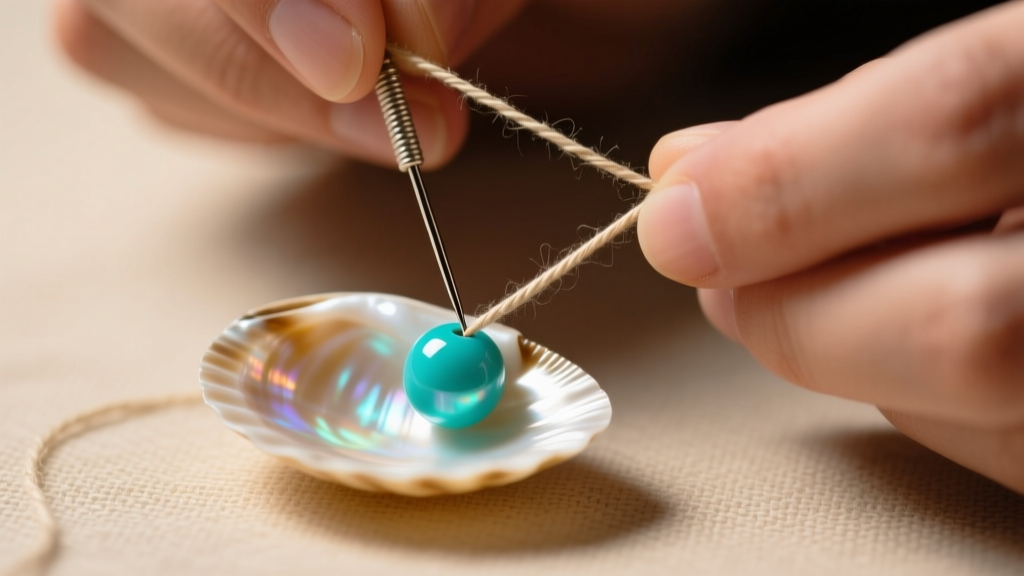
Restringing a dentalium necklace requires patience and the right tools. Because the shells are hollow tubes, standard stiff beading needles will not work. You must use a collapsible eye needle or a twisted wire needle that can compress to pass through the narrowest taper of the shell.
- Step 1: Prep the Shells. Inspect every drill hole. If you feel sharp burrs inside the hole, use a diamond-coated bead reamer to gently smooth the interior. Sharp edges will slice through braided polyethylene thread over time.
- Step 2: Select Spacers. Never string dentalium shells directly against one another. The friction will grind the calcium carbonate down, creating a chalky dust and weakening the structure. Use size 11/0 or 8/0 seed beads (like Miyuki Delicas) or small metal heishi beads as buffers between each shell.
- Step 3: Thread and Tension. Using a 6lb test braided polyethylene thread, pass the collapsible needle through the shell and spacer beads. Maintain a relaxed grip; let the weight of the shells dictate the natural curve.
- Step 4: Secure the Knots. Finish with a surgeon's knot, applying a microscopic drop of flexible jewelry adhesive (like E6000) to the knot. Do not use cyanoacrylate (super glue) on the knot, as it dries brittle and will crack when the necklace flexes.
Fixing Cracks and Chips: When to Repair vs. Replace
When a dentalium shell develops a hairline crack, your instinct might be to glue it. However, because these shells bear the structural load of the necklace's drape, glued repairs rarely hold up to the dynamic movement of daily wear. If a shell is cracked near the drill hole, it is structurally compromised and must be replaced to prevent the entire strand from failing.
If the chip or crack is purely cosmetic and located on the thick, central body of the shell, you can perform a micro-fill repair. Mix a tiny amount of clear, slow-curing epoxy resin with a pinch of fine calcium carbonate powder (crushed from a discarded, broken shell). Apply this paste to the chip using a fine dental pick, let it cure for 24 hours, and gently buff it with a 3000-grit micro-mesh pad. This restores the visual continuity without introducing the brittle, glass-like failure point that standard super glue creates.
Cleaning & Discoloration Troubleshooting
A frequent complaint among collectors is that their dentalium shell necklace has turned dull, chalky, or slightly yellow after a season of wear. This is not dirt; it is chemical etching. Calcium carbonate (the primary mineral in dentalium shells, specifically in its aragonite crystalline form) is highly reactive to acids. When exposed to acidic sweat, perfumes, or harsh commercial jewelry dips, the polished outer layer dissolves, leaving a porous, dull surface that traps oils and appears yellow.
Safe vs. Unsafe Cleaning Agents
- NEVER USE: Ultrasonic cleaners (the vibrations will shatter the hollow tubes), vinegar, lemon juice, commercial silver dips, ammonia, or baking soda pastes (baking soda is mildly abrasive and alkaline, but the mechanical friction of rubbing it will scratch the Mohs 3 surface).
- ALWAYS USE: Distilled water (tap water contains chlorine and trace minerals that can stain), a single drop of pH-neutral castile soap, and a soft, lint-free microfiber cloth.
To restore the luster of an etched shell, avoid liquid polishes. Instead, apply a minuscule drop of food-grade mineral oil to a dry microfiber cloth and gently buff the shell. The oil fills the microscopic pores created by acid etching, temporarily restoring the pearlescent shine and providing a hydrophobic barrier against future sweat damage. According to conservation guidelines from institutions like the National Museum of the American Indian, minimizing liquid exposure is paramount for preserving both the shell and the historical integrity of the stringing materials.
Authenticity Checks: Real Shell vs. Bone or Plastic
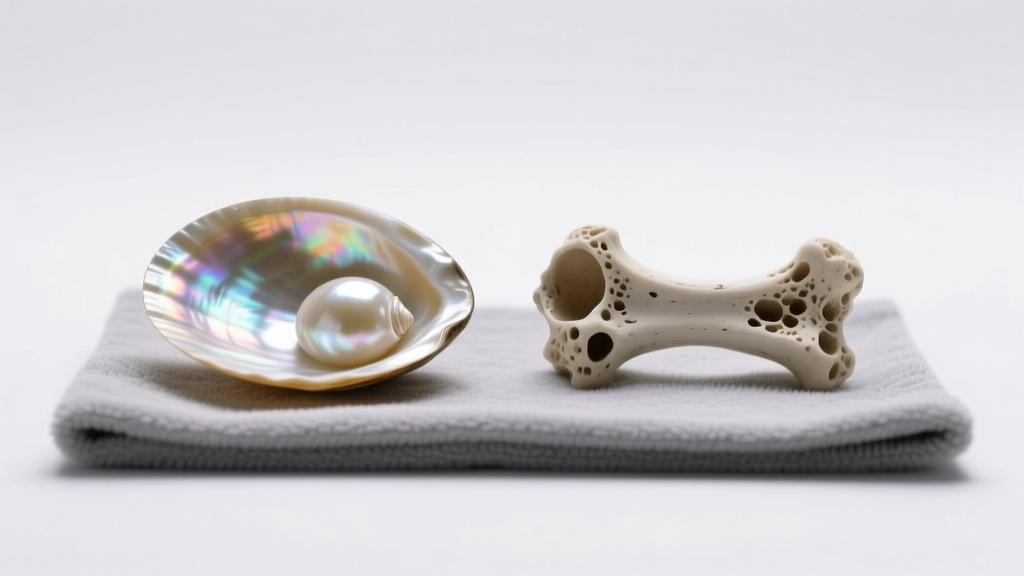
As the demand for authentic, ethically harvested dentalium shells has risen, so has the market for imitations. Troubleshooting a 'fake' necklace is essential before attempting any repairs, as bone and plastic react entirely differently to adhesives and cleaning agents.
The Thermal Conductivity Test: Genuine marine shell has high thermal conductivity. When you press a real dentalium shell against your upper lip or the inside of your wrist, it will feel distinctly cool and take several seconds to warm to your body temperature. Carved bone feels room-temperature, and plastic or resin feels unnaturally warm almost immediately.
The Magnification Test: Using a 10x jeweler's loupe, examine the surface and the interior of the hollow tube. Real shell exhibits subtle, concentric growth rings and a smooth, often pearlescent interior. Carved bone (often sold as 'white coral' or 'carved dentalium') will reveal Haversian canals—tiny, dark, irregular dots and dashed lines scattered across the surface. Plastic imitations will often show faint, longitudinal mold lines and lack the microscopic crystalline structure entirely. For deeper gemological and material identification insights, resources like the Gemological Institute of America (GIA) provide extensive data on the structural properties of aragonite and calcite in organic gems.
Preventative Maintenance for Longevity
The ultimate solution to dentalium shell necklace troubleshooting is proactive care. Always store your necklace flat in a lined jewelry box; hanging it on a necklace bust for months at a time places constant, unyielding gravity stress on the topmost drill holes, eventually causing them to elongate and crack. Remove the necklace before swimming (chlorine and saltwater are highly corrosive to aragonite) and apply all perfumes and lotions at least 15 minutes before putting the jewelry on. By respecting the organic, fragile nature of the Antalis shell and utilizing modern, high-tensile synthetic stringing materials, your dentalium necklace can remain a pristine, wearable artifact for generations.


