Step-by-Step Guide to Designing a Personalized Necklace for Mom
Design the perfect personalized necklace for mom with our step-by-step guide. Learn how to choose metals, birthstones, and engravings for a timeless gift.

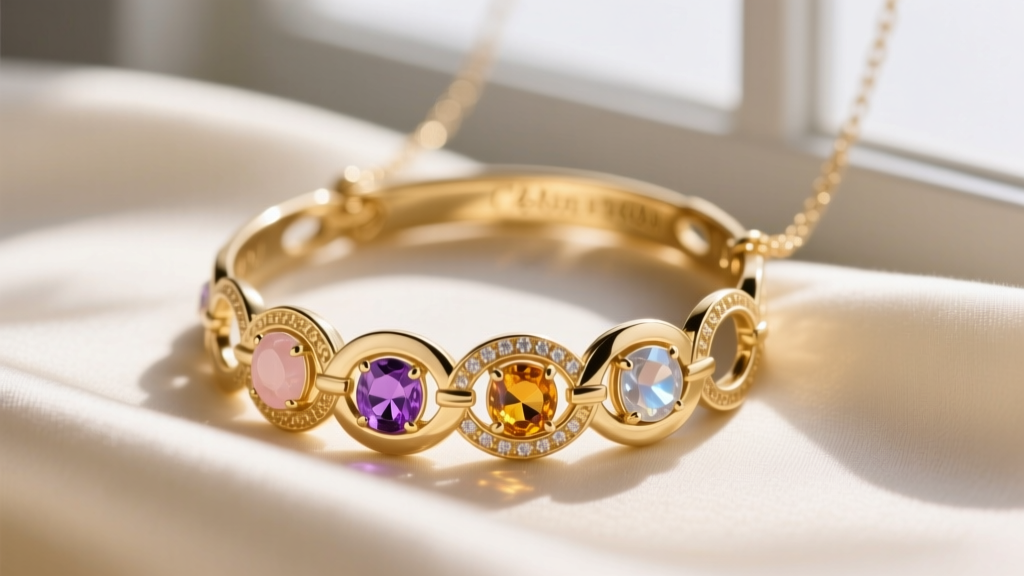
The Ultimate Blueprint for Custom Mother's Jewelry
Finding a meaningful gift for a mother figure often leads to the same conclusion: custom jewelry. However, designing a personalized necklace for mom requires more than just picking a pretty font and adding a birthstone. The difference between a cherished heirloom and a tarnished trinket sitting in a drawer comes down to metallurgical choices, gemstone durability, and precise chain engineering. This step-by-step guide will walk you through the technical and aesthetic decisions required to commission a high-quality, custom piece that withstands decades of daily wear.
Step 1: Selecting the Base Metal (Avoiding the 'Green Neck' Trap)
The foundation of any custom pendant is the metal. Many mass-market personalized jewelry brands cut costs by using brass or copper bases with microscopic gold plating. To ensure your personalized necklace for mom lasts, you must understand the hierarchy of jewelry metals.
- Solid 14k Gold: The gold standard for daily wear. Composed of 58.5% pure gold alloyed with metals like copper and zinc, it offers exceptional tensile strength and will never tarnish or wear away. Expect to pay $250 to $600+ for a solid 14k custom pendant and chain.
- Gold Vermeil (Pronounced Ver-may): Not to be confused with standard gold plating. By Federal Trade Commission (FTC) guidelines, vermeil must have a 925 sterling silver base and a gold layer of at least 2.5 microns thick. It is hypoallergenic and highly durable, though it will eventually require re-plating after 5 to 10 years of heavy wear. Price range: $80 to $180.
- 925 Sterling Silver: A classic, affordable choice. However, silver contains 7.5% copper, which reacts with sulfur in the air to cause tarnish. If choosing silver, ensure the jeweler applies a rhodium flash plating to delay oxidation.
Expert Warning: Avoid 'gold plated' or 'gold filled' over brass bases if your mother has sensitive skin. The American Academy of Dermatology (AAD) notes that nickel and cobalt, often found in cheap alloy bases, are the leading causes of contact dermatitis in jewelry wearers.
Step 2: Choosing Birthstones That Survive Daily Wear
Birthstone jewelry is a staple of mother's necklaces, but not all gems are created equal. When a necklace is worn daily, the pendant is subjected to accidental bumps, temperature changes, and exposure to cosmetics. You must evaluate stones using the Mohs Hardness Scale.
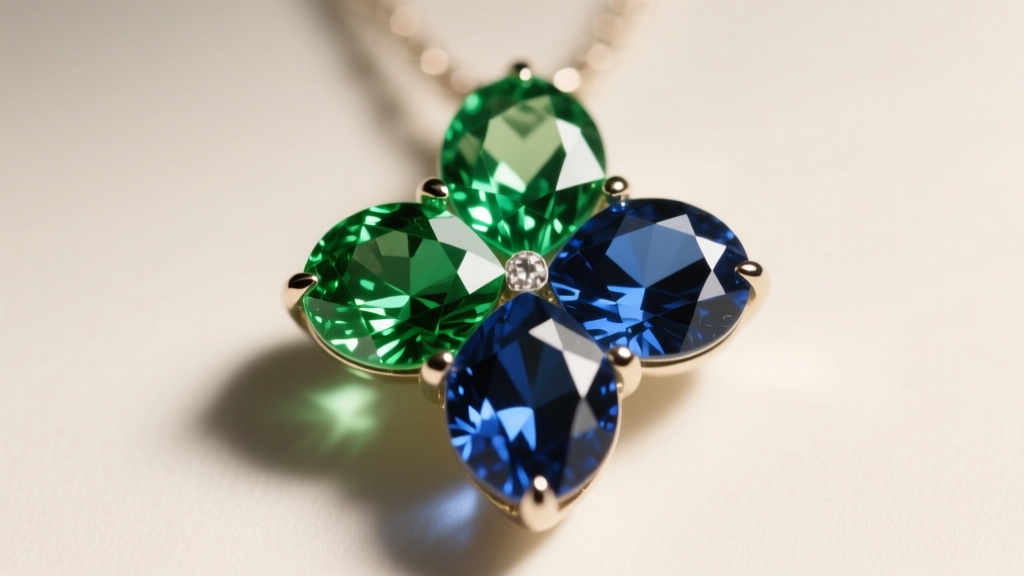
According to the Gemological Institute of America (GIA), a stone's hardness dictates its resistance to scratching, while its 'toughness' dictates its resistance to chipping. Here is a durability matrix for common birthstones used in custom pendants:
| Birthstone | Mohs Hardness | Daily Wear Rating | Setting Recommendation |
|---|---|---|---|
| Diamond (April) | 10 | Excellent | Prong or Bezel |
| Sapphire/Ruby (Sept/July) | 9 | Excellent | Prong or Bezel |
| Amethyst (Feb) | 7 | Good | Bezel (prevents edge chipping) |
| Peridot (Aug) | 6.5 - 7 | Fair | Bezel (highly prone to chipping) |
| Opal (Oct) | 5.5 - 6.5 | Poor | Solid cabochon, avoid heat |
| Pearl (June) | 2.5 - 3 | Very Poor | Destroy by perfume/sweat; avoid daily wear |
If your mother's birthstone is a delicate pearl or opal, consider substituting it with a sapphire or ruby in her birth month's color to ensure the personalized necklace for mom survives her active lifestyle.
Step 3: Customizing the Engraving and Pendant Proportions
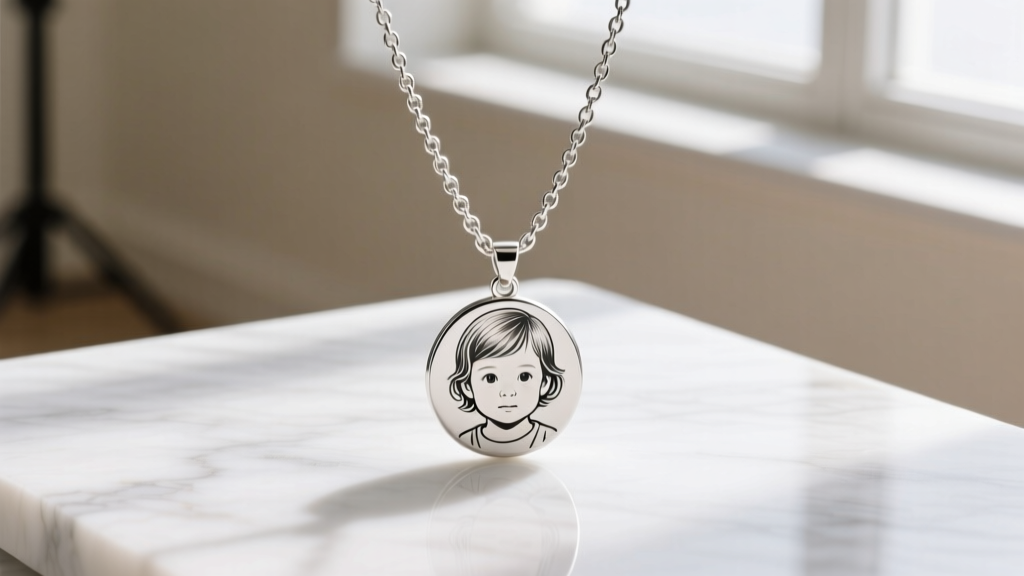
Personalization goes beyond names and dates. Modern laser technology allows for exact replicas of a child's handwriting or a fingerprint. However, the method of engraving drastically impacts the longevity of the text.
Laser vs. Rotary Engraving
Rotary engraving uses a physical diamond or carbide bit to carve into the metal. It is deep and highly durable but limited to standard block or script fonts. Laser engraving uses concentrated light to vaporize the metal surface, allowing for intricate details like actual handwriting or fingerprints.
The Depth Rule: When ordering laser engraving, specify to the jeweler that you require a minimum engraving depth of 0.01 inches (0.25mm). Surface-level laser etching (often less than 0.002 inches) will polish away within a few years of daily friction against clothing and skin.
Sizing the Pendant
A common mistake in custom jewelry is oversizing the pendant. For a sophisticated, modern look, the pendant should be proportional to the chain and the wearer's frame. A disc pendant should rarely exceed 15mm in diameter for a delicate chain, and the metal gauge (thickness) should be at least 1.2mm to prevent the pendant from bending if caught on a sweater.
Step 4: Matching Chain Length, Style, and Clasp Hardware
The chain is the structural suspension system for your personalized necklace for mom. Choosing the wrong chain type or length will result in a tangled, frustrating experience.
| Chain Length | Placement | Best Pendant Style |
|---|---|---|
| 16 Inches (Choker) | Rests tightly on the collarbone | Small, lightweight discs (under 12mm) |
| 18 Inches (Standard) | Rests just below the collarbone | Versatile; fits most birthstone and name pendants |
| 20 Inches (Matinee) | Rests on the upper chest | Larger statement pieces or layered lockets |
Chain Weave and Clasp Mechanics
Avoid 'snake chains' at all costs. While they look sleek, the tightly interlocked rings easily kink and trap hair, eventually snapping under the weight of a pendant. Instead, opt for a Box Chain or a Rolo Chain. Box chains distribute weight evenly and are incredibly difficult to break. Rolo chains feature thick, round links that resist pulling apart.
Furthermore, upgrade the clasp. Standard spring-ring clasps are notoriously difficult for older adults or those with limited dexterity to operate. Request a lobster clasp (preferably with an oversized 12mm trigger) or a magnetic neodymium clasp converter for effortless daily wear.
Step 5: Vetting the Jeweler and Finalizing the Order
Before submitting your design and payment, vet the custom jeweler using this checklist:
- Hallmarking: Does the jeweler stamp the piece with a quality mark (e.g., '14k' or '925') and their unique maker's mark? This is a legal requirement in many countries and guarantees metal purity.
- CAD Proofs: For complex interlocking rings or custom silhouettes, the jeweler should provide a Computer-Aided Design (CAD) rendering showing exact millimeter dimensions before casting.
- Stone Sourcing: If using multiple birthstones, ask if they use natural, lab-created, or simulated (glass/cubic zirconia) stones. Lab-created stones offer the exact same chemical and physical properties as mined stones but at a fraction of the cost and with zero ethical concerns.
Long-Term Care for Personalized Pieces
Once the personalized necklace for mom is delivered, proper maintenance is key. Instruct her to remove the necklace before swimming in chlorinated pools, as chlorine reacts catastrophically with the copper alloys in 14k gold and sterling silver, causing microscopic stress fractures that lead to sudden chain breakage. For routine cleaning, a simple soak in warm water with a few drops of mild, phosphate-free dish soap, followed by a gentle brush with a baby-soft toothbrush, will keep the engraving crisp and the birthstones brilliant for a lifetime.


