Designer Flower Necklace Trends: 2026 Botanical Luxury
Explore 2026 designer flower necklace trends, from titanium petals to enamel blooms. Discover how top brands are redefining botanical luxury jewelry.

The Botanical Renaissance in High Jewelry
The botanical motif has been a staple in fine jewelry since the Victorian era, but the 2026 landscape of haute joaillerie has completely dismantled the traditional, symmetrical gold rose. Today, the modern designer flower necklace is an exercise in structural engineering, avant-garde metallurgy, and abstract expressionism. As luxury consumers pivot away from overt, logo-driven pieces, high-end jewelry houses are responding with hyper-detailed, nature-inspired creations that blur the line between wearable art and organic sculpture.
According to recent luxury market analyses by Vogue Business, nature-inspired high jewelry categories have seen a 22% year-over-year growth in client requests, driven largely by a desire for unique, non-replicable statement pieces. The contemporary designer flower necklace is no longer just a decorative pendant; it is a conversation piece that leverages cutting-edge material science to capture the ephemeral beauty of flora in permanent, precious mediums.
Material Innovations Driving the 2026 Floral Aesthetic
The most significant shift in the designer flower necklace market is the departure from standard 18k yellow gold and pavé diamonds. While diamonds remain a staple for stem detailing, the petals and structural cores are undergoing a radical material evolution.
Aerospace-Grade Titanium and Anodization
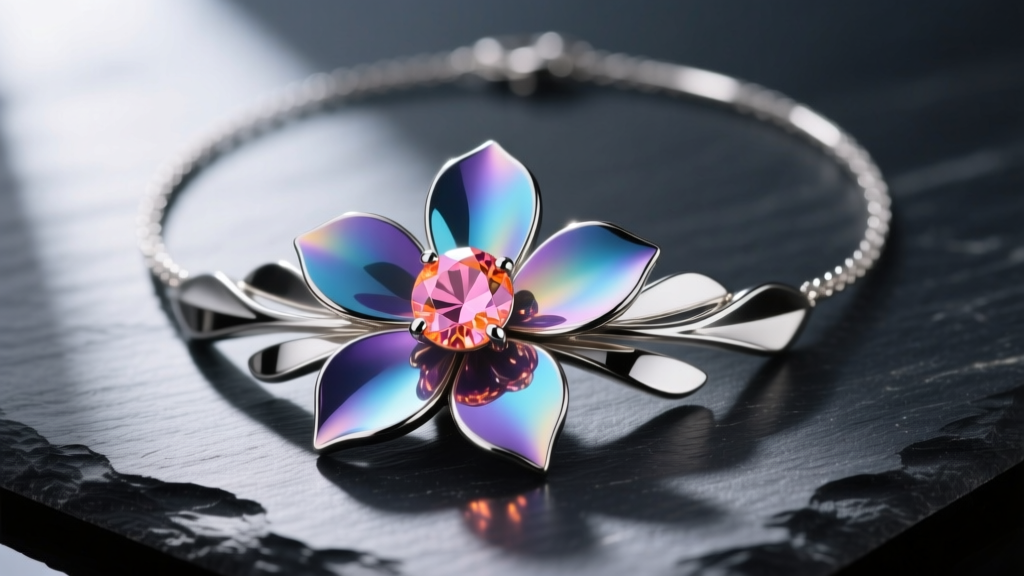
Titanium, specifically Grade 5 (Ti-6Al-4V), has become the metal of choice for avant-garde floral pendants. Unlike traditional gold, titanium can be anodized using electrical currents to produce vivid, iridescent colors—such as deep orchid purples, peacock blues, and sunset oranges—without the use of surface plating that can wear away over time. This allows designers to create massive, sweeping petals that remain incredibly lightweight. A titanium orchid pendant measuring three inches across can weigh less than eight grams, ensuring the necklace sits comfortably on the clavicle without pulling the chain.
Grand Feu Enamel and Guilloché Techniques
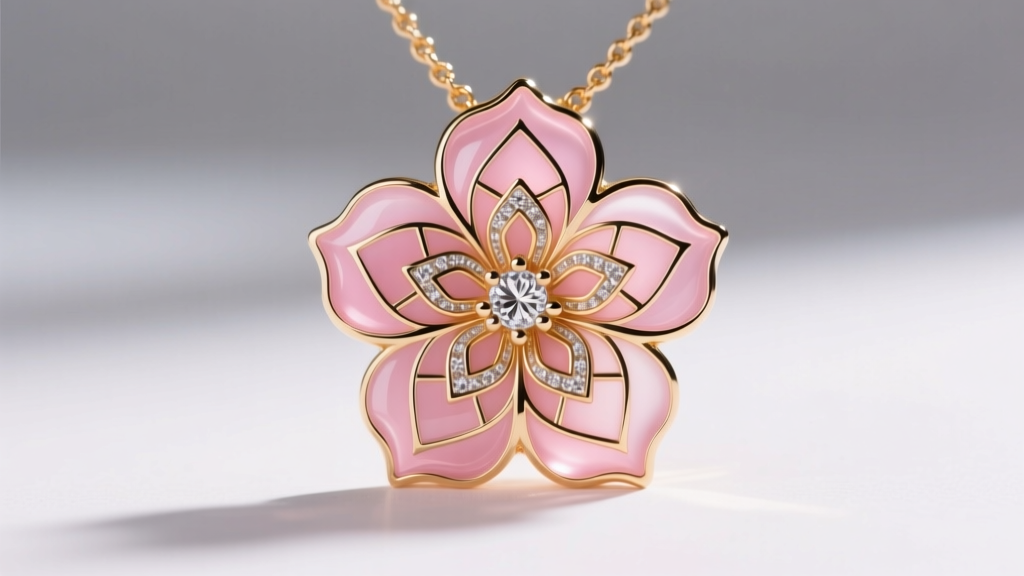
For houses that prefer traditional craftsmanship, the revival of grand feu (great fire) enamel is defining the premium tier of floral necklaces. Designers are pairing hand-engraved guilloché bases with translucent, lead-free enamel to create petals that mimic the cellular structure of real leaves. When light hits a guilloché enamel camellia or peony, the geometric patterns beneath the glass-like surface create a sense of depth and movement that solid metal simply cannot achieve.
Lab-Grown Gemstones as Floral Stamens
The center of the flower—the stamen or pistil—is where designers are taking risks with color. The Gemological Institute of America (GIA) notes that the precision of modern lab-grown gemstones allows for the creation of massive, flawless colored stones that would be prohibitively expensive or ethically complex to source naturally. Lab-grown padparadscha sapphires, alexandrites, and vivid pink spinels are now routinely used as the striking, oversized centerpieces of designer floral pendants, providing a vibrant contrast to metallic or enamel petals.
Kinetic Engineering: Flowers That Move
Static pendants are giving way to kinetic jewelry. In 2026, the most sought-after designer flower necklaces feature micro-hinges and hidden tension springs that allow the petals to open, close, or flutter in response to the wearer's body heat and movement. This requires microscopic precision; jewelers are utilizing 3D wax printing and laser-welding to create hinges smaller than a millimeter. A kinetic lotus necklace, for example, might feature petals that gently fold inward when the wearer is at rest and bloom outward as body temperature rises, creating a deeply personal, interactive relationship between the jewelry and the client.
Brand Spotlight: Leaders in Botanical Luxury
To understand the current market, we must look at the heritage and contemporary houses pushing the boundaries of the designer flower necklace. The table below outlines the distinct approaches taken by three industry leaders in the botanical space.
| Brand | Signature Motif | Primary Materials | Price Tier (USD) |
|---|---|---|---|
| Hemmerle | Abstract Nature / Flora | Titanium, Iron, Demantoid Garnets | $85,000 - $250,000+ |
| Silvia Furmanovich | Tropical Marquetry | Wood Inlay, 18k Gold, Tourmaline | $12,000 - $35,000 |
| Chanel Fine Jewelry | The Camellia | 18k White Gold, Diamonds, Onyx | $15,000 - $60,000 |
Hemmerle remains the undisputed king of unconventional materials, often oxidizing iron or using copper to create hyper-realistic, slightly decaying botanical forms that challenge traditional notions of luxury. Silvia Furmanovich, conversely, focuses on the vibrant life of the Amazon, using intricate wood marquetry to build floral pendants that are rich in texture and color. Chanel continues to iterate on its iconic Camellia, introducing asymmetrical, diamond-paved variations that appeal to a younger, high-net-worth demographic.
Styling Framework: Necklines and Layering Techniques
A high-end floral pendant requires deliberate styling to ensure it remains the focal point of an ensemble. The heavy, structural nature of modern botanical pieces means they cannot be treated like delicate, everyday chains. Here is the 2026 styling framework for the designer flower necklace:
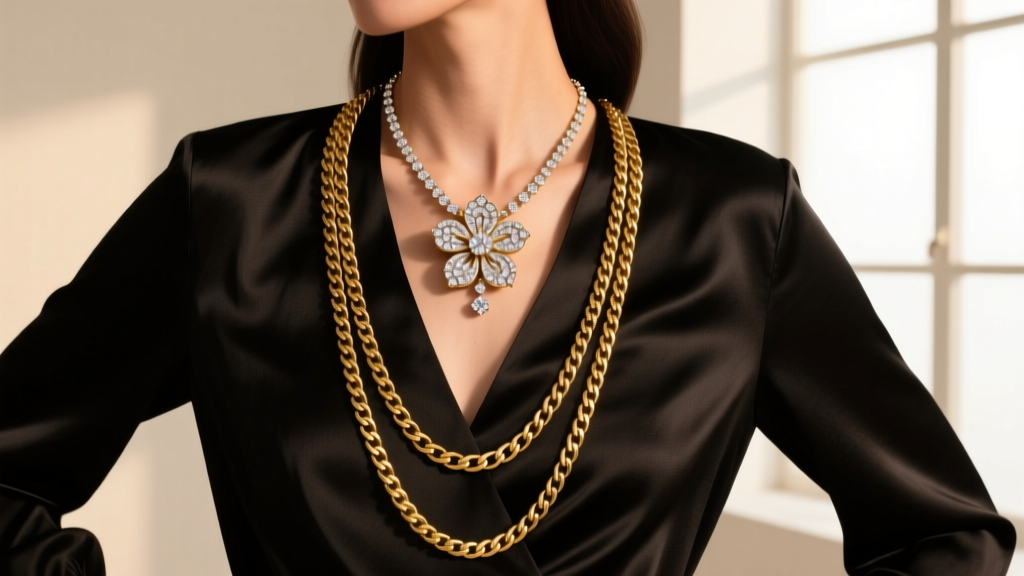
- The Plunging V-Neck (20 to 24-inch lengths): Large, kinetic floral pendants (2 inches or larger) demand negative space. A deep V-neckline in silk or crepe allows the pendant to rest directly on the skin, maximizing the visual impact of anodized titanium or vibrant enamel. Use a heavy, 2.5mm cable chain to support the weight of the pendant without tangling.
- The Asymmetric Layer (16 and 18-inch lengths): For medium-sized floral pendants, pair them with a minimalist, 16-inch diamond station chain. The contrast between the geometric sparkle of the station chain and the organic curves of the floral pendant creates a sophisticated, curated look. Avoid adding a third chain; the complexity of the floral motif will clash with excessive layering.
- The High Collar / Turtleneck (Lariat styles): If wearing a high neckline, opt for a floral lariat necklace. The vertical drop of the lariat elongates the torso, while the floral motif acts as a structural anchor at the base of the throat. Matte black or deep navy cashmere provides the ideal high-contrast backdrop for gold and diamond florals.
Investment Value and Secondary Market Performance
Are designer flower necklaces a sound financial investment? In the realm of high jewelry, uniqueness commands a premium on the secondary market. While generic diamond solitaire pendants often depreciate by 40-50% the moment they leave the boutique, highly crafted, signed botanical pieces from heritage houses retain significant value. Auction data from recent years indicates that one-of-a-kind nature-inspired pieces from houses like Hemmerle or JAR can appreciate or, at minimum, retain 70-85% of their retail value. The key drivers of this retention are the complexity of the craftsmanship, the use of rare or unconventional materials, and the unmistakable signature of the designer. For collectors, a designer flower necklace is not merely an accessory; it is a tangible asset that captures the pinnacle of 2026's jewelry artistry.


