How to Detangle Necklaces: Expert Guide to Stubborn Chain Knots
Learn how to detangle necklaces using expert metallurgical insights, precise tools, and specialized lubricants to safely resolve stubborn chain knots.

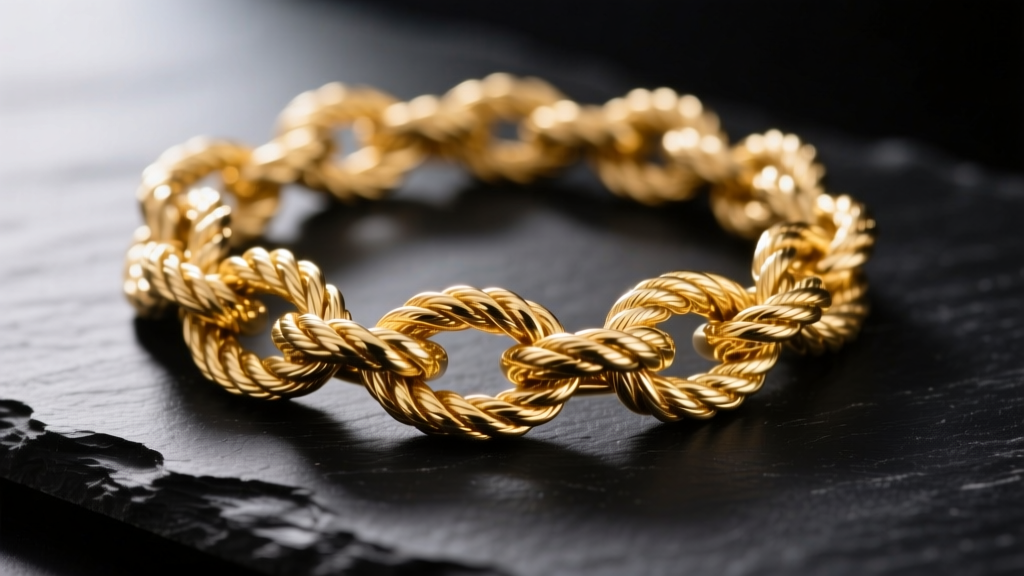
When a delicate chain collapses into a seemingly impossible bird’s nest of metal, the instinct is to pull. For jewelry professionals, this is the exact opposite of the correct approach. Understanding how to detangle necklaces requires moving beyond generic internet hacks and delving into the physics of knot theory, the tribology of metal friction, and the precise mechanics of chain weaves. In 2026, as layered necklace stacking remains a dominant trend, the kinetic friction between multiple chains in a jewelry box has made advanced detangling an essential skill for collectors and stylists alike. This guide provides an expert-level, metallurgical framework for resolving stubborn knots without inducing micro-fractures or permanent work-hardening in your precious metals.
The Physics of Chain Tangling: Why Specific Weaves Knot
Tangling is not merely a matter of bad luck; it is a predictable outcome of kinetic agitation and chain geometry. According to landmark research published in the Proceedings of the National Academy of Sciences (PNAS), spontaneous knotting of an agitated string occurs when the ends of a flexible material thread through adjacent loops. In jewelry, the 'string' is a metallic chain, and its propensity to knot is dictated by its weave architecture.
Weave Geometry and Flexibility
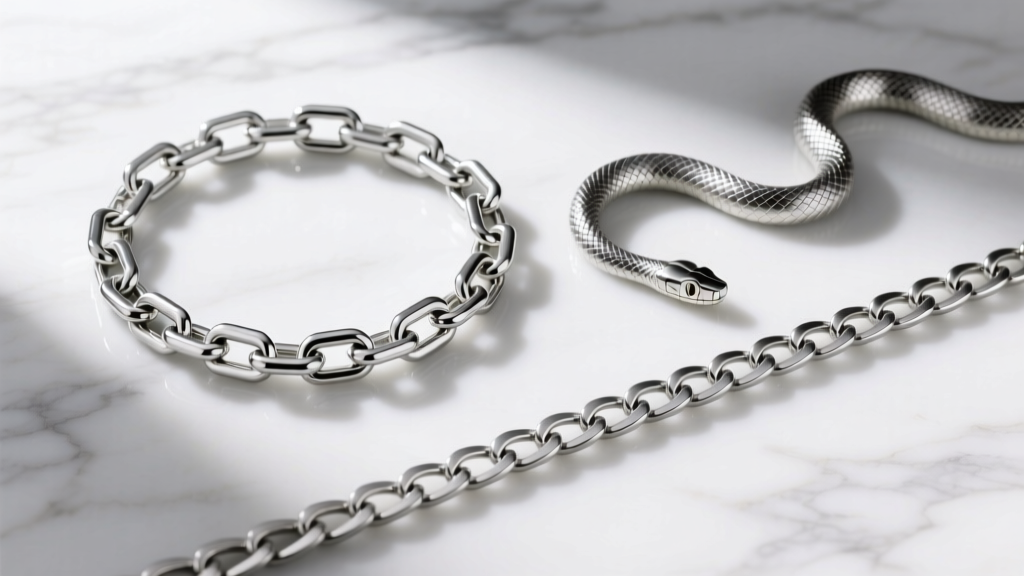
Chains with high degrees of multi-axis flexibility are the most susceptible to severe knotting. Rope chains and snake chains possess continuous, interlocking surfaces that allow them to fold back on themselves with near-zero resistance. When placed in a shared compartment, the microscopic vibrations from daily movement (walking, driving, or even closing a drawer) provide the kinetic energy required for the chain ends to weave through the bight (the curved part of the knot). Conversely, rigid weaves like box chains or wide curb chains possess a high bending stiffness, physically preventing the tight loop formations necessary for complex knotting.
Metallurgical Friction: How Metal Grades Affect Snagging
Once a knot forms, the metal's hardness and ductility determine how tightly it will lock. When tension is applied to a knot, the interior links press against one another with immense localized force. Softer metals will physically deform, creating micro-abrasions that act like ratcheting teeth, locking the knot in place. Understanding the Vickers Hardness (HV) of your chain is critical before applying any physical force.
| Metal / Alloy | Vickers Hardness (HV) | Knot Deformation Risk | Failure Mode Under Tension |
|---|---|---|---|
| 24k Pure Gold | ~25 HV | Extreme | Severe galling, cold-welding of links |
| 18k Yellow Gold | ~125 HV | High | Micro-scratching, link elongation |
| 14k Gold | ~160 HV | Moderate | Stress corrosion cracking if exposed to chemicals |
| Sterling Silver (925) | ~65 HV | High | Oxidation trapping inside the knot friction point |
| Platinum (950) | ~110 HV | Moderate | Work-hardening, permanent wire thinning |
The Expert Detangling Protocol: Tools and Lubricants
The most common mistake consumers make is reaching for household lipid-based oils, such as baby oil, olive oil, or coconut oil. While these provide temporary slip, they eventually oxidize, turn rancid, and trap microscopic dust particles. This creates an abrasive paste that grinds away at the interior of the chain links and can severely damage porous gemstones like pearls or opals attached to pendants.
Approved Lubricants and Instruments
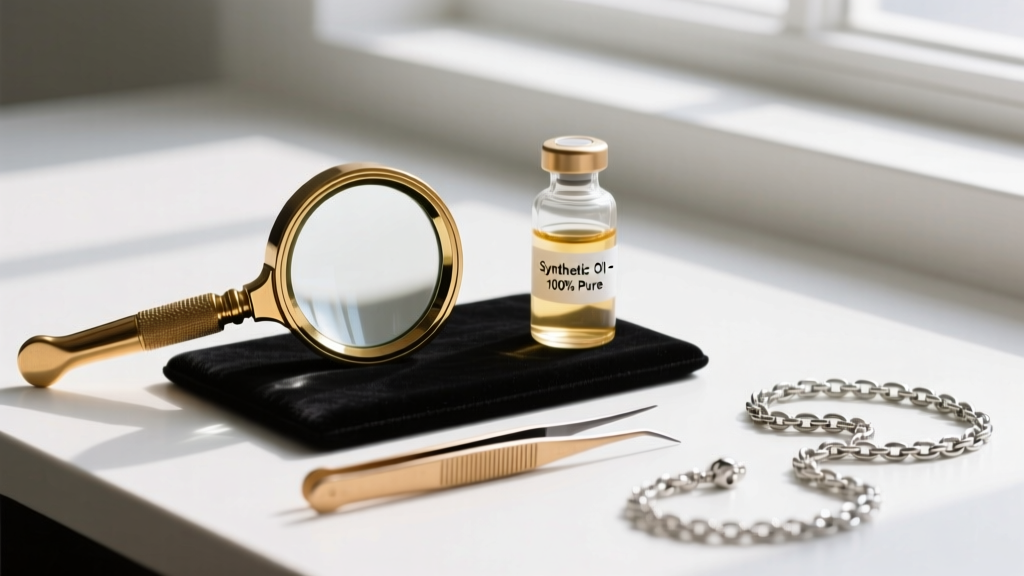
- Synthetic Watch Oil: Products like Moebius 9010 are chemically stable, provide immense surface slip, and evaporate or wipe clean without leaving a gummy residue.
- Food-Grade Mineral Oil: A highly stable, non-oxidizing alternative that is safe for all metals and most gemstones.
- Brass-Tipped Tweezers: Brass is softer than gold, silver, and platinum. Using Dumont #5 brass-tipped tweezers ensures that if the tool slips, the tool will deform rather than scratching your precious metal.
- Acupuncture Needles: A 0.16mm gauge stainless steel needle is the ultimate tool for feeding through micro-links and expanding the core of a tightened knot without applying lateral tension.
- 10x or 20x Jeweler's Loupe: Essential for identifying the 'working end' of the knot where the chain first threaded through.
Step-by-Step Micro-Knot Resolution Framework
Resolving a complex chain knot requires a systematic approach focused on relaxing the structure rather than forcing it apart. Follow this precise framework to restore your necklace to its original state.
- Isolate and Immobilize: Place the necklace on a high-friction, non-abrasive surface like a neoprene mat or a piece of felt. This prevents the chain from sliding and re-tightening as you work.
- Targeted Lubrication: Using a needle or pin, apply a micro-drop of synthetic watch oil directly to the center of the knot. Allow it to wick into the interstitial spaces between the links via capillary action for 60 seconds.
- The 'Push, Don't Pull' Technique: Never pull the ends of the chain. Instead, use your brass tweezers to gently push the outer loops toward the center of the knot. This increases the slack inside the bight, reducing the friction coefficient.
- Needle Threading: Insert the acupuncture needle into the tightest central loop. Gently twist the needle to widen the gap between the links. Once a millimeter of space is created, use the tweezers to feed the adjacent link through the gap.
- Clean and Inspect: Once untangled, clean the chain with a mild, ammonia-free jewelry soap and warm water to remove the oil. Inspect the links under a loupe for any signs of stress-induced thinning or micro-fractures.
Preventative Storage Architecture
Preventing kinetic tangling is vastly superior to resolving it. The Jewelers of America emphasizes that proper storage is the first line of defense against jewelry damage. To eliminate the kinetic energy that causes spontaneous knotting, chains must be immobilized and chemically protected.
Store individual necklaces in polyethylene (PE) zip bags. Avoid PVC plastics, which can off-gas sulfur and chlorides that accelerate tarnishing, particularly in sterling silver. Include a 3M anti-tarnish strip in each bag to absorb ambient sulfides. For travel, utilize a felt jewelry roll with individual snap-button channels. By snapping the clasp securely and immobilizing the chain within a tight, fabric-lined channel, you completely eliminate the spatial freedom required for the chain ends to weave into complex topological knots.
Expert Insight: If you are layering multiple necklaces, intentionally mix the weave geometries. Pairing a rigid box chain with a delicate cable chain drastically reduces the likelihood of inter-chain tangling, as the differing flexibilities prevent the chains from binding together under movement.
By respecting the physics of chain geometry and the metallurgical properties of your jewelry, you can safely detangle even the most stubborn knots and preserve the structural integrity of your collection for decades to come.


