2026 Style Guide: The Skull Gold Necklace Trend Analysis
Discover how the skull gold necklace evolved in 2026. Explore karat options, chain pairings, and styling frameworks for this bold jewelry staple.

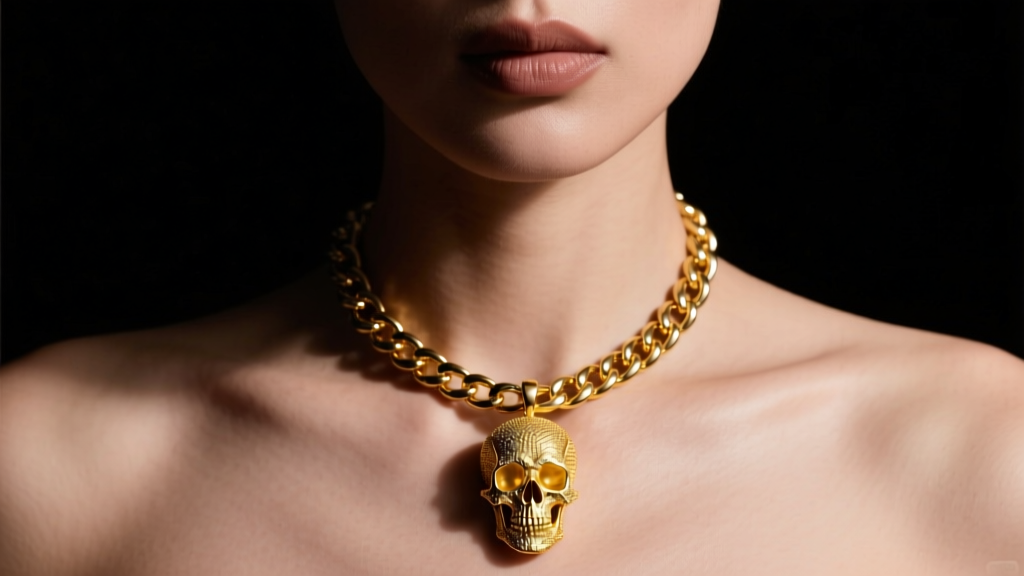
The Renaissance of Macabre: Why Skull Motifs are Surging in 2026
Once relegated to subcultures, punk aesthetics, and biker gangs, the skull gold necklace has undergone a radical elevation in the high jewelry sector. As we navigate the 2026 style landscape, the 'memento mori' (remember you must die) philosophy has transitioned from a niche gothic statement to a mainstream luxury staple. This shift reflects a broader cultural pivot toward existential mindfulness and personalized, narrative-driven jewelry. According to the Bain & Company Luxury Study, modern consumers are increasingly investing in pieces that offer emotional resonance and bold self-expression over quiet, traditional luxury. The skull gold necklace perfectly encapsulates this demand, serving as a juxtaposition of mortality and the eternal nature of precious metals.
However, the modern skull pendant is far removed from the crude, heavy castings of the early 2000s. Today's iterations feature micro-pavé diamond accents, anatomical precision, and oxidized detailing that highlights the cranial sutures. To truly master this trend, one must look beyond the motif and understand the metallurgy, structural integrity, and styling frameworks that define a premium piece.
Metallurgy & Craft: Decoding Gold Purity for Skull Pendants
When investing in a skull gold necklace, the karat weight dictates not only the color and price but the structural viability of the pendant. Skulls require deep undercuts, hollow eye sockets, and delicate teeth detailing. The Gemological Institute of America (GIA) notes that the alloy metals mixed with pure gold fundamentally alter the hardness and wearability of the final piece. Choosing the wrong karat for a highly detailed skull can result in bent teeth or warped cranial ridges over time.
14K vs. 18K vs. 22K: A Structural Comparison
| Karat | Gold Purity | Vickers Hardness (Approx) | Price Range (5g Solid Pendant) | Best Application |
|---|---|---|---|---|
| 14K | 58.5% | ~130 HV | $350 - $500 | Everyday wear, intricate teeth/suture detailing, high impact resistance |
| 18K | 75.0% | ~110 HV | $550 - $850 | High jewelry, rich color contrast, oxidized recesses, luxury gifting |
| 22K | 91.6% | ~70 HV | $900+ | Investment pieces, smooth bezels, abstract skull silhouettes (avoid fine details) |
For a highly detailed, anatomically correct skull pendant, 14K or 18K gold is mandatory. 22K gold is simply too soft; the nasal cavity and teeth will warp if the pendant is dropped or caught on clothing. Furthermore, 18K gold offers a richer, deeper yellow hue that creates a striking contrast when the recessed areas of the skull are treated with a dark oxidized or rhodium patina.
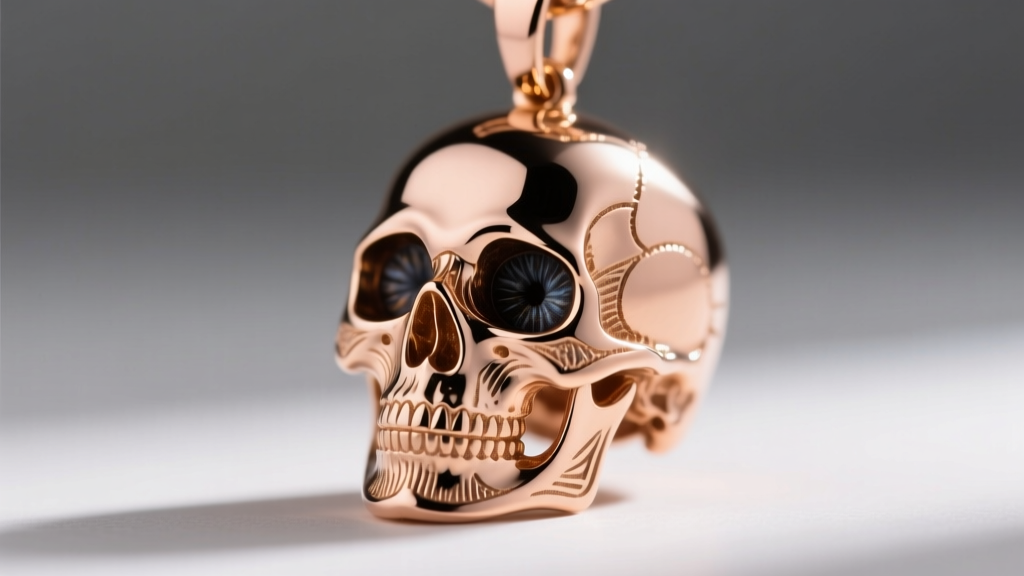
Chain Pairing Frameworks: Matching Weight and Aesthetic
A skull gold necklace is only as cohesive as its chain. The pendant-to-chain weight ratio should ideally be 1:3 or 1:4 to ensure the pendant hangs correctly without flipping or dragging the chain out of shape. Here is the definitive 2026 pairing matrix:
- The Cuban Link (4mm - 8mm): The undisputed king of streetwear pairings. A solid, flattened Cuban link provides a broad, reflective canvas that grounds a heavy, oversized skull pendant. Opt for a 5mm width for a standard 1-inch skull, and scale up to 8mm for 'maximalist' statement pieces.
- The Figaro Chain (3mm - 5mm): Offers a heritage, vintage feel. The alternating link pattern draws the eye down toward the pendant, making it an excellent choice for 18K yellow gold skulls with antique or oxidized finishes.
- The Box Chain (2mm - 4mm): Ideal for minimalist, micro-skull pendants or diamond-encrusted pieces. The geometric, square links complement the angular lines of the cheekbones and jawline on the skull motif without competing for visual attention.
- The Rope Chain (3mm - 6mm): Provides a twisted, liquid-metal illusion. This is the preferred choice for rose gold skull necklaces, as the twisting links catch the light and amplify the warm, coppery tones of the alloy.
Styling the Skull Gold Necklace: Neckline & Occasion Matrix
Styling a skull gold necklace requires an understanding of visual weight and juxtaposition. The goal in 2026 is to avoid looking like you are wearing a costume; instead, the piece should act as an unexpected anchor to an otherwise refined outfit.
'The power of the skull motif lies in its ability to disrupt perfection. Pairing a macabre, heavy gold skull with a pristine, tailored silk blouse or a sharp tuxedo lapel creates a tension that is inherently modern and deeply personal.' — Editorial Director, Jewel Style Radar
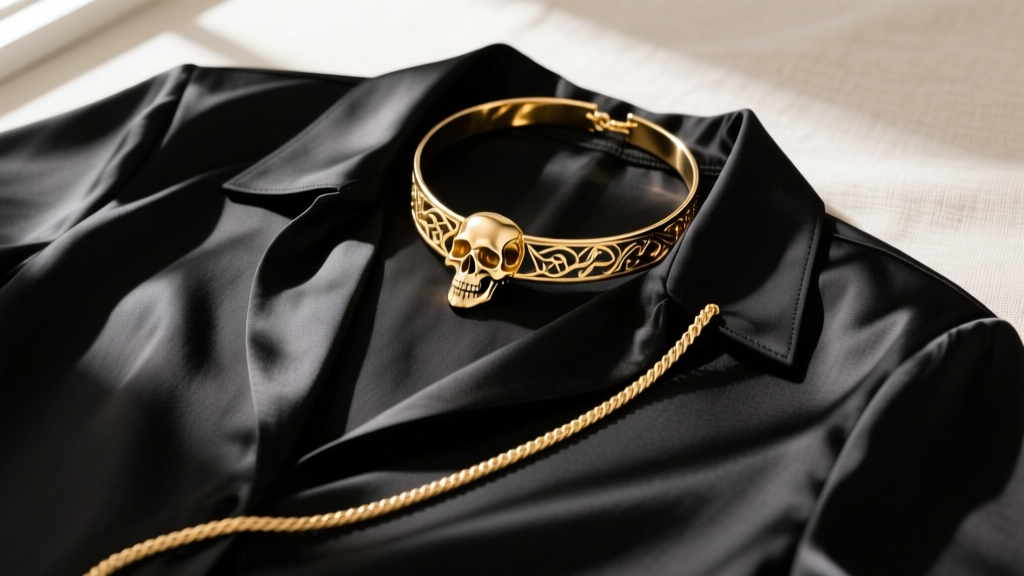
For V-Necks and Deep Plunges: Utilize a 20-inch to 24-inch chain. The skull should rest precisely at the sternum, following the natural geometry of the neckline. A 14K gold skull with diamond-set eyes works beautifully here, catching ambient light in low-lit evening environments.
For Crew Necks and Turtlenecks: Opt for a shorter 16-inch to 18-inch choker-style chain or a heavy pendant that rests just above the collarbone. When wearing dark, heavy winter fabrics like cashmere or wool, an 18K yellow gold skull provides a necessary focal point and breaks up the monotony of the fabric.
For Formal and Black-Tie Events: Subtlety is key. Swap the heavy Cuban link for a 2mm black rhodium-plated white gold chain, and choose a micro-skull pendant (under 15mm) fully paved with black or white diamonds. This reads as high horology-adjacent luxury rather than casual streetwear.
Investment & Sourcing: Avoiding Hollow Casts and Electroforming
As the demand for the skull gold necklace has surged, so too have deceptive manufacturing shortcuts. When sourcing a premium piece, you must understand the difference between lost-wax casting, CAD/CAM milling, and electroforming.
High-end jewelers utilize lost-wax casting or 3D resin printing to create a master model, which is then cast in solid gold. This ensures the piece has structural integrity, a satisfying heft, and can be repaired or polished by a bench jeweler for decades. Conversely, you must actively avoid electroformed or hollow-cast skull pendants. Electroforming builds a microscopic layer of gold over a wax or resin core, which is later melted out. While this creates massive, oversized skull pendants that weigh almost nothing and cost a fraction of the price, they are essentially gold foil. A hollow electroformed skull will dent if squeezed, cannot be resized, and is virtually impossible to repair if the bail snaps or the gold cracks. Always verify with the jeweler that the pendant is 'solid cast' or 'semi-solid' with reinforced interior struts.
Final Verdict: The Enduring Appeal of the Macabre
The skull gold necklace has successfully transcended its rebellious origins to become a sophisticated pillar of modern jewelry wardrobes. By prioritizing 14K or 18K solid castings, matching the chain weight to the pendant's visual gravity, and leveraging the power of sartorial juxtaposition, you can wield this ancient symbol of mortality as a masterclass in contemporary style. Whether you prefer the warm, romantic tones of rose gold or the stark, icy contrast of white gold and black diamonds, the skull remains the ultimate emblem of living boldly.


