Detroit Lions Necklace Buying Guide: 2026 Budget & Value Review
Find the perfect Detroit Lions necklace without overpaying. Our 2026 value guide compares materials, pricing, and durability for every fan's budget.

The True Cost of Fandom: Pricing Tiers Explained
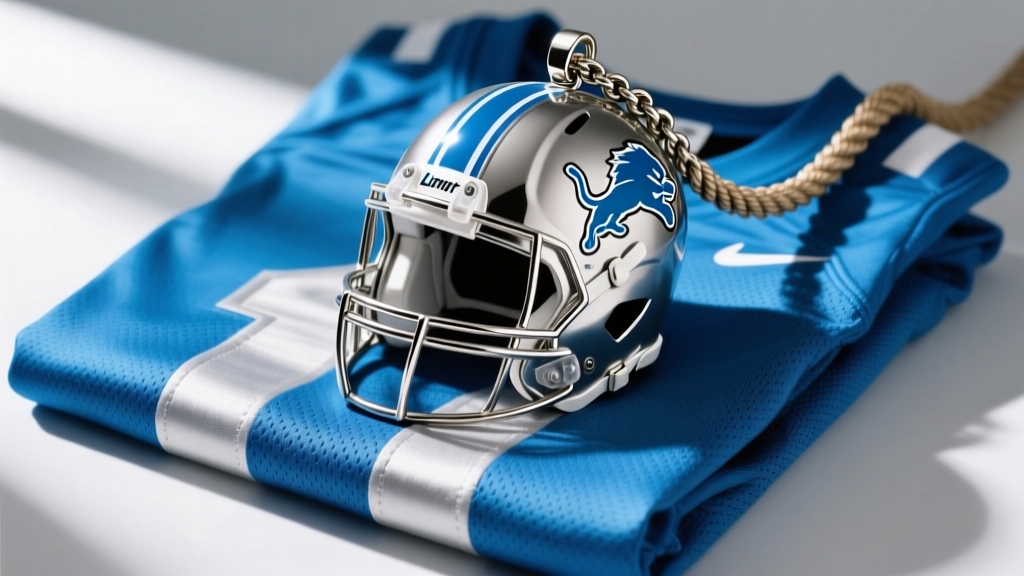
As the Detroit Lions continue to dominate the NFC, the demand for high-quality fan gear has skyrocketed. However, when shopping for a Detroit Lions necklace, fans often fall into the trap of prioritizing the logo over the metallurgy. Sports jewelry is notoriously saturated with cheap, mass-produced items that degrade after a single season. To make a smart purchase in 2026, you must understand the three distinct pricing tiers and what they actually deliver in terms of longevity, skin safety, and intrinsic value.
Tier 1: The Budget Trap ($10 - $25)
At this price point, you are almost exclusively looking at Zamak (zinc alloy) bases with a microscopic layer of silver-tone electroplating. While the upfront cost is low, the value proposition is terrible. The plating is typically less than 0.5 microns thick. Once it wears off from friction against your jersey or exposure to sweat, the underlying copper and nickel in the alloy will oxidize, leaving a green or black residue on your skin. Furthermore, the chains included in this tier are usually hollow, stamped-link cable chains that snap under the weight of the pendant within weeks.
Tier 2: The Value Sweet Spot ($30 - $75)
This is where smart money is spent. A mid-range Detroit Lions necklace is typically crafted from solid 316L surgical stainless steel. This material offers exceptional resistance to tarnish, sweat, and humidity. Pendants in this tier often feature deep enamel fills for the team colors (Honolulu blue and silver) rather than cheap surface paint, ensuring the logo remains vibrant for years. The chains are solid-core, usually ranging from 2mm to 3mm in width, providing the necessary tensile strength for daily wear.
Tier 3: The Premium Collector ($85 - $250+)
Premium necklaces utilize 925 sterling silver or 10k/14k gold accents. These pieces are often officially licensed, featuring cubic zirconia (CZ) accents or intricate 3D casting. While the intrinsic metal value is higher, you are also paying a premium for the brand name and the complexity of the casting. For the average fan attending games at Ford Field, sterling silver requires more maintenance than stainless steel, making it a better choice for display or occasional wear rather than rugged game-day use.
Material Breakdown: What Are You Actually Paying For?
To accurately assess the budget and value of any sports pendant, you must look past the team branding and examine the base metal. The Federal Trade Commission's Jewelry Guides strictly regulate how metals are marketed, yet many overseas manufacturers bypass these rules on third-party marketplaces. Here is a data-driven comparison of the most common materials used in NFL fan jewelry.
| Material Base | Average Price | Tarnish Risk | Skin Safety (Nickel-Free) | Best Use Case |
|---|---|---|---|---|
| Zinc Alloy (Zamak) | $12 - $25 | High (Turns skin green) | Poor (High allergy risk) | Single-event costumes |
| Brass with Plating | $20 - $40 | Medium (Plating wears off) | Fair (Depends on plating) | Infrequent game-day wear |
| 316L Stainless Steel | $35 - $70 | Extremely Low | Excellent (Hypoallergenic) | Daily wear & stadium games |
| 925 Sterling Silver | $85 - $200 | Medium (Oxidizes over time) | Good (Contains 7.5% copper) | Collector gifts & formal wear |
The undisputed champion for sports jewelry is 316L stainless steel. The 'L' denotes low carbon, but the real secret is the inclusion of 2-3% molybdenum. Molybdenum drastically increases resistance to pitting corrosion from chlorides—meaning your necklace will survive the salt in your sweat and the humidity of a crowded stadium without degrading. When evaluating a Detroit Lions necklace, always check the product description for '316L' or 'surgical steel'. If it simply says 'metal alloy' or 'silver-tone', assume it is zinc and adjust your budget expectations accordingly.
Officially Licensed vs. Unlicensed: The Value Proposition
A critical factor in budget assessment is licensing. Officially licensed NFL gear is produced by authorized manufacturers (like Fanatics or Wincraft) who pay royalties to the league and the NFLPA. This ensures the team colors are exact (Pantone 653 C for Honolulu Blue) and the logos are geometrically perfect.
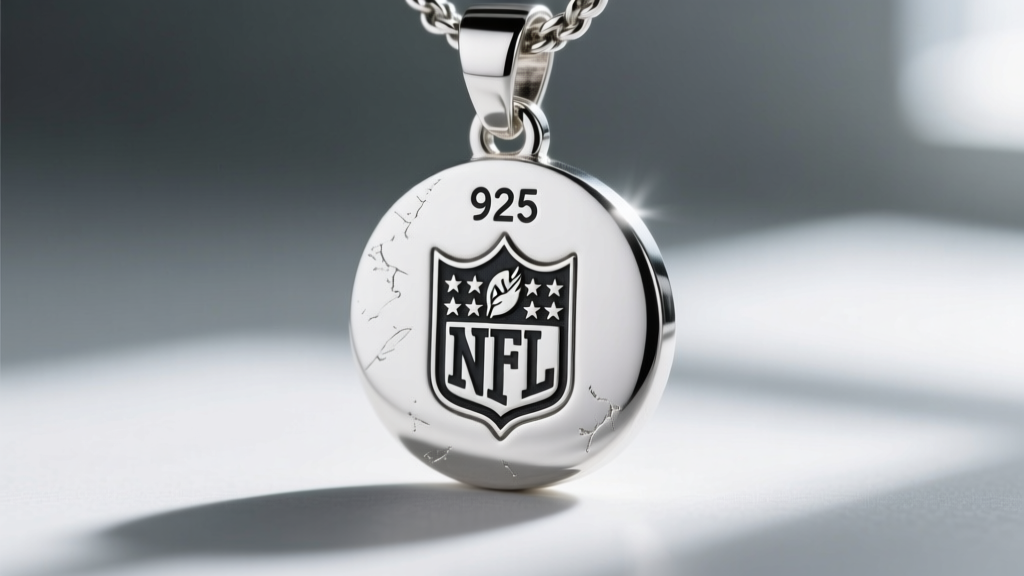
The Hologram Rule: Authentic, licensed sports jewelry will almost always feature a small, metallic NFL hologram sticker on the packaging or a stamped NFL Shield hallmark on the back of the pendant. If a $15 necklace lacks this, it is unlicensed bootleg merchandise.
From a pure value perspective, unlicensed necklaces are a financial risk. Not only do they often use unregulated, lead-heavy alloys that pose severe health risks, but they also have zero resale value. A licensed 925 sterling silver Detroit Lions pendant retains a secondary market value among collectors, whereas an unlicensed zinc pendant is destined for the landfill once the plating flakes off.
Chain and Clasp Mechanics: The Hidden Value Killers
Many buyers focus 100% of their attention on the pendant and completely ignore the chain. A $60 solid steel helmet pendant is worthless if it is hung on a fragile chain that snaps in the parking lot. When assessing the total value of the package, inspect the chain width and the clasp mechanism.
- Chain Width: For standard logo pendants (approx. 1.25 x 1.5 inches), a chain width of 2.0mm to 3.0mm is required for structural integrity. Anything under 1.5mm is prone to kinking and snapping.
- Chain Style: Rope chains and Franco chains are superior for sports jewelry. Their interlocking, multi-directional links hide dirt, lint, and stadium dust far better than flat cable or box chains, which trap grime in their 90-degree corners.
- Clasp Type: Avoid spring-ring clasps at all costs. The tiny internal spring mechanism fails frequently under the pendulum weight of a metal pendant. Always demand a lobster claw clasp (minimum 10mm in size) which features a robust, solid-lever tension spring that locks securely against the jump ring.
Maintenance Costs: Keeping Your Gear Game-Day Ready
True value is measured by the cost of ownership over time. A cheap necklace requires constant replacement, while a quality piece requires minimal, inexpensive maintenance. Detroit's weather—ranging from humid training camp days to freezing, snowy December games—takes a toll on all metals.
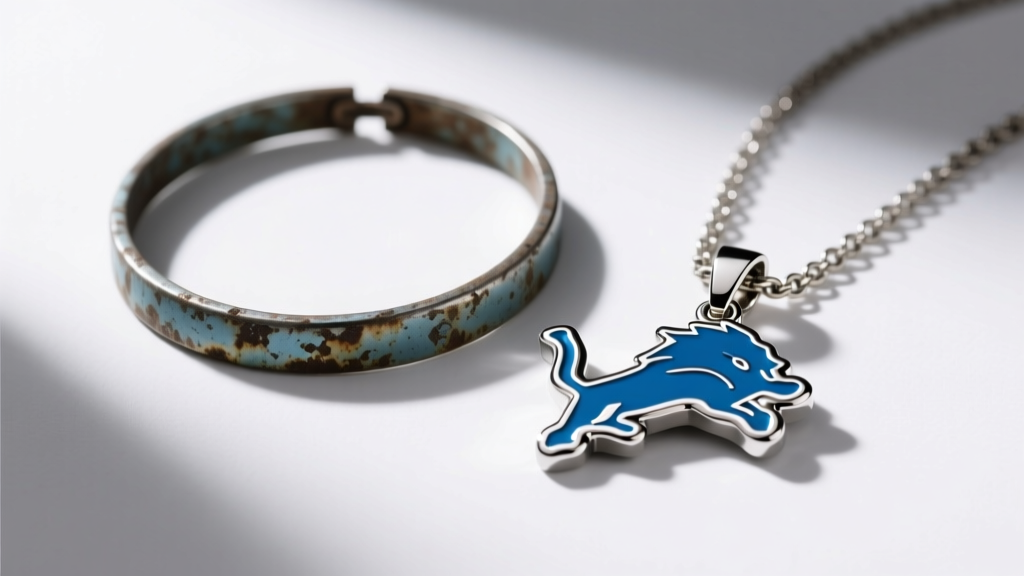
If you invest in a 316L stainless steel Detroit Lions necklace, your maintenance cost is virtually zero. An occasional wipe with a microfiber cloth and a drop of mild dish soap is all that is required to remove body oils and stadium dust. However, if you opt for a premium 925 sterling silver piece, you must factor in the cost and time of polishing. Sterling silver reacts with sulfur compounds in the air and sweat, creating a layer of black silver sulfide (tarnish). You will need to keep a specialized silver polishing cloth (costing roughly $5 to $8) in your gear bag to restore the shine before prime-time matchups. Never use abrasive toothpaste or harsh chemical dips on enameled sports jewelry, as this will strip the Honolulu blue paint from the recessed areas of the logo.
Final Verdict: Which Tier Should You Choose?
When conducting a final budget and value assessment for a Detroit Lions necklace, the 316L stainless steel tier ($35 - $70) offers the highest return on investment for 90% of fans. It provides the durability needed to survive tailgates, the hypoallergenic safety for all-day wear, and the structural integrity to last for decades without tarnishing. Avoid the sub-$20 zinc alloy traps that masquerade as bargain deals, and reserve the $150+ sterling silver and gold pieces for climate-controlled display cases or formal corporate suite events. By prioritizing metallurgy and clasp mechanics over flashy, cheap finishes, you ensure your jewelry is as resilient as the team you support.


